Metacognitive Decoding: A New Paradigm for Efficient Reasoning in Diffusion Language Agents

A lightweight Metacognitive Controller dynamically decides token finalization and generation length for diffusion language agents, saving an average of 20.6% inference FLOPs.
Targeting the efficiency bottleneck of diffusion language models in agent tasks, this article proposes a lightweight Metacognitive Controller. Embedded as a plugin into the diffusion backbone, it dynamically predicts token finalization timing and generation length by analyzing denoising states and interaction history, balancing correctness and computational cost. Across five benchmarks, the method reduces inference FLOPs by an average of 20.6% while maintaining competitive task accuracy, and is orthogonal to and stackable with existing diffusion acceleration techniques. This work directly couples the generation process with agent interaction goals, offering a new approach for building low-latency, highly responsive intelligent agents.
Diffusion language models open a new path toward efficient intelligent agents by generating tokens in parallel, but efficient interaction requires not only controlling the allocation of computational resources but also dynamically adjusting the length of generated text. The Metacognitive Controller introduced in this article is a lightweight solution to exactly this challenge.

The efficiency bottleneck of diffusion language agents
Traditional autoregressive language models generate tokens one at a time, and inference latency grows linearly with output length, which becomes a bottleneck in agent tasks with high real-time requirements. Diffusion language models, by contrast, generate multiple tokens simultaneously through a parallel denoising process, promising to substantially reduce inference time. However, parallel generation does not mean the end of wasted computation—the model still has to process all sequence positions at every denoising step, and generating text that is too long or too short both impair the efficiency of the agent's interaction with its environment.
Existing acceleration methods mostly focus on reducing the number of denoising steps or optimizing sampling strategies, yet pay relatively little attention to the decision of "when to stop generating." For agent tasks, the completeness of an answer often depends on environmental feedback rather than a fixed length. For example, in scenarios that require tool calls, ending generation too early may lead to missing information, while ending too late wastes compute. Therefore, a mechanism capable of dynamically adjusting generation depth according to task complexity is essential.
Diffusion Language Models borrow the idea of diffusion from image generation: starting from a fully noisy sequence and gradually recovering text through multiple denoising steps. Unlike autoregressive models, which generate from left to right one token at a time, diffusion models can simultaneously update the token representations at all positions at each step, and thus have the potential for parallel generation. Their inference process typically involves a fixed number of denoising iterations, each transforming the entire sequence, ultimately producing the complete output. This parallelism decouples generation latency from strict linear growth with output length, but it also brings new computational overhead—every step must process all positions, and the number of denoising steps itself may become a bottleneck. Understanding this mechanism helps clarify why "when to stop" is an independent and important optimization dimension in diffusion language models.
Design philosophy of the Metacognitive Controller
The core idea of this controller is to let the model learn "metacognition": that is, to monitor and regulate its own generation process. Specifically, it is embedded as a lightweight plugin into the diffusion backbone network and, by analyzing the current denoising state and the interaction history between the agent and the environment, predicts two key decisions: whether the current token should be finalized, and how far generation should extend.
During training, the controller is optimized over agent trajectories, with the goal of striking a balance between correctness and generation cost. This is akin to teaching the model "when to think" and "how long to think." Because the plugin structure is lightweight, it does not significantly increase the model's parameter count, yet it can deliver substantial computational savings.
In cognitive science, metacognition refers to an individual's monitoring and regulation of their own thought processes—for example, judging whether one has already grasped enough information to answer a question. In machine learning, this concept is extended to a model's ability to self-assess its own reasoning state. The Metacognitive Controller does not generate tokens directly; instead, it observes the intermediate states of the backbone network (such as the confidence distribution of denoising steps and hidden-layer activations) as well as the interaction history between the agent and the environment, and outputs two decision signals: whether the current token is sufficiently determined to be finalized, and whether more tokens should continue to be generated. This design decouples "generation" from "control." The controller itself has very few parameters, and during training it is optimized over agent trajectories through reinforcement learning or differentiable decision objectives, thereby balancing correctness and computational cost.
Experimental results and validation
The researchers evaluated the method on five benchmarks. Compared with the most efficient baseline, the Metacognitive Controller reduces inference FLOPs by an average of 20.6% while maintaining competitive task accuracy. Ablation studies further confirm the effectiveness of each component of the controller.
This result implies that, in agent scenarios, by dynamically allocating computational resources, diffusion language models can significantly improve efficiency without sacrificing performance. In particular—to note one detail—this method is orthogonal to existing diffusion acceleration techniques and can be stacked with them.
FLOPs (Floating Point Operations) is a commonly used metric for measuring the computational cost of neural network inference and is highly correlated with latency and energy consumption. In diffusion language models, inference FLOPs mainly come from the product of the number of denoising steps and the sequence length. Reducing FLOPs by 20.6% means that more requests can be handled on the same hardware or that the energy consumption per inference can be lowered. Ablation studies verify the contribution of each part to final performance by removing or replacing components of the controller one at a time (such as interaction history encoding and confidence prediction heads), thereby ruling out the possibility that "the whole is effective but some parts are redundant." Together, these evaluation methods support the soundness of the controller design.
Implications for agent system design
Metacognitive decoding directly links the agent's generation process to the interaction goals it serves. Traditionally, generative models and agent policies are separate, whereas this method couples the two through the controller, making generation better aligned with actual needs. This offers a new approach for building low-latency, highly responsive intelligent agents: the model must not only know "how to generate" but also learn "when to stop."
In the future, this metacognitive mechanism may be extended to multimodal agents or more complex decision-making scenarios, further advancing efficient reasoning.
Related articles

DeepSeek Harness: A Beginner's Installation and Testing Guide
A DeepSeek Harness tutorial for test engineers: set up Node.js, launch with one NPX command, configure official and third-party models, and explore web search, file I/O, and trace-view agent observability.
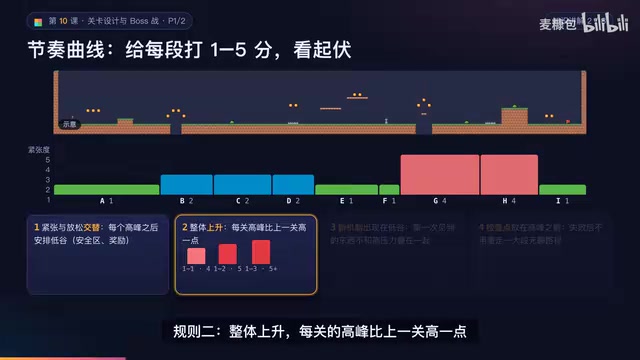
AI Game Development in Practice: Designing Levels with the Four-Step Method and Pacing Curves
AI game development lesson 10: design levels with the four-step method (teach, practice, combine, test) and a 1-5 pacing curve, plus sightline guidance and safety zones—implement Animatable Body 2D moving platforms and generate ASCII sketches for 1-2 Underground Cavern and 1-3 Guard Hall.

AI Game Development in Practice: Two-Phase Boss State Machines and Death Heatmap Tuning
AI game development lesson 10: implement a two-phase Boss with a state machine, guarantee fairness with color signals and a 0.4-second warning floor, locate difficulty cliffs with a death heatmap, and apply lightest-to-heaviest fixes one at a time, with an acceptance checklist and common pitfalls.