MiniMax M3.1 Flash Goes to Production: A Milestone for the Open-Source Inference Ecosystem

MiniMax M3.1 Flash reaches production scale and contributes back to vLLM, reflecting the virtuous cycle of the open-source inference ecosystem.
The article discusses a social media announcement that MiniMax's M3.1 Flash model is running in production at scale, with SLA-backed inference services from @inferact and engineering improvements flowing back upstream to vLLM. The author notes that "running in production at scale" means the model has cleared multiple engineering hurdles including stability, throughput, latency consistency, and cost control, while SLA commitments serve as quantified backing for availability and performance—often influencing commercial adoption more than peak performance. The announcement names both the model provider and the inference hosting provider, reflecting the decoupling of model capabilities from inference delivery and the growing specialization of the inference supply chain. Engineering improvements flowing upstream create a virtuous cycle of "deployment uncovers problems—optimization—community feedback—more people benefit," which is more critical to long-term ecosystem health than model open-sourcing alone. The article concludes with three selection recommendations: prioritize production readiness, include upstream contribution capability in evaluations, and leverage mature engines to lower barriers.
Recently, a post on social media drew attention: MiniMax's M3.1 Flash model is now running in production at scale, with SLA-backed inference services provided by @inferact, while related engineering improvements are flowing back upstream to vLLM. This is not just the deployment of a single model—it reflects the maturing collaboration model of the open-source inference ecosystem.

What Large-Scale Production Deployment Means
"Running in production at scale" is the key phrase in this announcement. Moving a model from demo to production requires clearing far more than just inference speed: stability, throughput, latency consistency, failure recovery, and cost control—each demands engineering refinement. The fact that M3.1 Flash can be served to external users with "guaranteed SLAs" at this stage indicates that its inference pipeline already delivers predictable service quality.
For users, an SLA commitment is the foundation of trust. It means the service provider makes quantified commitments on availability and performance, rather than "best effort." In today's increasingly competitive inference services landscape, the ability to offer guaranteed SLAs often determines a model's commercial adoption rate more than peak performance does.
Interestingly, the announcement names two entities: @inferact and @MiniMax_AI—the former handles inference service hosting and SLA guarantees, while the latter is the model provider. This division of labor itself reflects the growing specialization of the inference service supply chain—model capabilities and inference delivery capabilities are being decoupled, with specialists focusing on their respective domains.
SLA (Service Level Agreement) is a quantified agreement between a service provider and a user regarding service quality, typically expressed in terms of availability percentage (e.g., 99.9%), P95/P99 latency ceilings, error rate thresholds, and corresponding compensation clauses. For inference services, the challenge with SLAs lies in the fact that latency metrics are heavily influenced by input length, concurrency, and output token count—the same model can perform several times differently under different loads. Therefore, committing to an SLA requires the service provider to have mature capacity planning, queue scheduling, and overload protection mechanisms. The industry commonly measures availability in "number of nines": 99.9% means approximately 43 minutes of monthly downtime, while 99.99% compresses that to about 4 minutes—each order of magnitude improvement significantly increases the redundancy and operational costs behind it.
Engineering Improvements Flowing Back to vLLM: A Virtuous Cycle in the Open-Source Ecosystem
Another point worth exploring in the announcement is "engineering improvements flowing back upstream to vLLM." vLLM is one of the mainstream high-performance inference engines today, and its upstream community aggregates a wealth of inference optimization practices. If the problems exposed in real production environments and their corresponding optimizations remain only in private branches, their value is limited; flowing them back upstream benefits all projects using vLLM.
This is precisely the core of what the original author called "open-source inference ecosystem is all about." Once engineering improvements generated from production deployments—whether scheduling strategies, memory management, or batching optimizations—enter upstream, they form a virtuous cycle: "deployment uncovers problems → optimization → community feedback → more people benefit." Compared to simply open-sourcing a model, this kind of engineering-level contribution is often harder to see but more critical to the long-term health of the ecosystem.
From the vLLM community's perspective, improvements from real production workloads are among the most valuable inputs. Laboratory benchmarks struggle to cover long-tail request distributions and extreme concurrency scenarios, and feedback from production environments fills exactly this gap.
vLLM is an open-source large model inference engine initiated by a team at UC Berkeley. Its core innovation is PagedAttention—which borrows the virtual memory paging concept from operating systems to manage KV Cache, significantly reclaiming memory previously wasted on fragmentation and thereby substantially improving concurrent throughput on the same hardware. It also features mechanisms such as Continuous Batching (request-level dynamic batching, where new requests can be inserted into an executing batch at any time without waiting for the entire batch to finish). vLLM provides an OpenAI-compatible API Server and is used as the underlying engine by numerous self-hosted and managed inference services, making it a de facto convergence point for inference optimization practices. "Upstream" in the open-source context refers to the project's main repository and trunk branch; if downstream vendors' patches are merged upstream, they can be reused by the entire ecosystem with official releases.
Understanding the value of "flowing back upstream" requires distinguishing between private branches and the upstream trunk. Service providers often make custom optimizations on forks to meet their own business needs, but such changes continuously generate merge conflicts as upstream evolves rapidly, incurring high maintenance costs and preventing others from validating them. Abstracting, organizing, and submitting broadly applicable improvements as PRs merged upstream transfers maintenance responsibility to the community while also subjecting the changes to validation across more scenarios. Common contributions include scheduling and preemption strategies, KV Cache allocation and eviction logic, quantized operator support, multi-GPU parallelism, and implementation details of speculative decoding. This process also explains why mature inference service providers are often active upstream contributors—the two roles reinforce each other.
Implications for Developers and Enterprises
For teams evaluating inference solutions, this announcement offers several useful dimensions for assessment.
First, focus on a model's "production readiness" rather than just leaderboard scores. The M3.1 Flash case demonstrates that whether a model can be delivered with SLAs by a hosting provider is an important signal of its engineering maturity.
Second, when evaluating inference services, include upstream contribution capability in your assessment. A service provider willing and able to flow optimizations back to open-source projects like vLLM is generally more trustworthy in terms of engineering transparency, and it means your technology stack will continue to benefit from community improvements.
Third, the collaborative model of the open-source inference ecosystem is lowering the barrier to entry for small and medium-sized teams. You don't need to build the full stack of inference optimization capabilities yourself—by leveraging mature inference engines and managed services, you can still obtain guaranteed production-grade service.
Summary
Behind this brief announcement is a microcosm of collaboration among models, inference service providers, and open-source engines. The large-scale production operation of MiniMax M3.1 Flash validates the model's usability, SLA guarantees reflect delivery maturity, and engineering improvements flowing back to vLLM demonstrate the open-source ecosystem's self-reinforcing capability. For practitioners focused on inference infrastructure, this is a signal worth watching closely.
(This article is based on publicly available social media posts. Specific deployment scale and SLA details are subject to official disclosure.)
Related articles
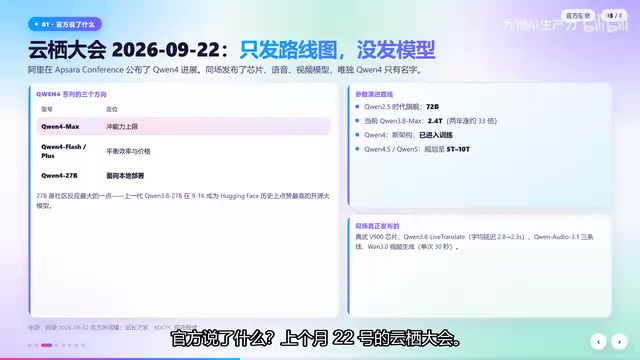
Qwen4 Architecture Preview Open-Sourced: 125B Parameters, 512 Experts, Designed for VRAM-Constrained Hardware
Qwen4 isn't released yet, but its architecture is previewed via open-source Qwen3.8 Flash Next: 125B params, 6B activated per token, 512 experts, 262K context, built for VRAM-limited hardware. This article covers official confirmations, key config.json metrics, and local deployment tests on 24G memory.
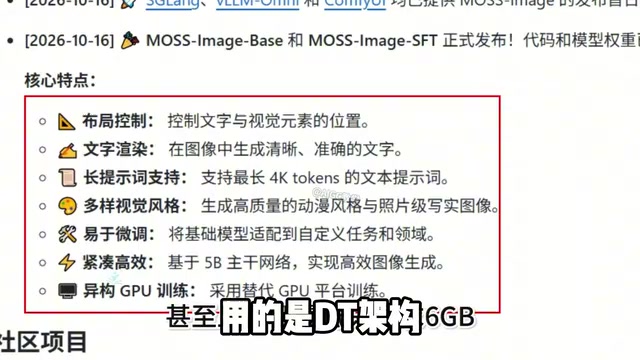
Run 8K Images on 6GB VRAM! Hands-On Test of Fudan's Open-Source MOSS-Image Model
Fudan OpenMouse team and Shanghai MOSS Intelligence open-source MOSS-Image, a 500M-parameter DT architecture text-to-image model that runs locally on 6GB VRAM with precise text rendering, structured layout control, and 4K Token prompt support—ideal for e-commerce posters and local deployment by individual creators.
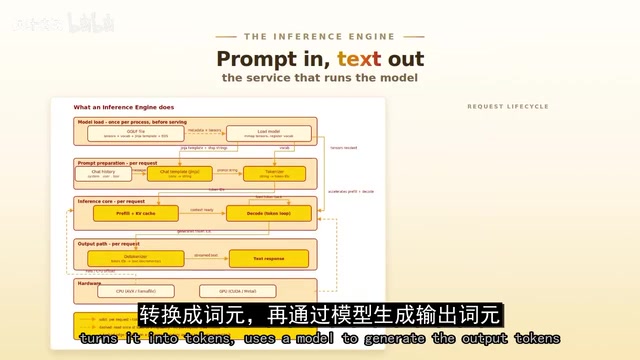
Overseas Blogger Tests Local Deployment of 100B-Parameter MoE Model: Key Lessons on Quantization and Tool Calling
Overseas blogger tests local deployment of Alibaba's Qwen 3.8 Flash Next 100B MoE model on a Strix Halo mini PC and CUDA workstation, revealing how quantization precision affects tool-calling success and the real-world performance of the Strata and GUFO inference engines.