Monkey Island's 13 Versions Compared: A Technical Tour of Retro Gaming

A side-by-side comparison of 13 Monkey Island versions sparks tech community discussion on game porting history.
A project showcasing 13 versions of Monkey Island side by side earned 306 points and 92 comments on Hacker News. The article argues the real value isn't in viewing screenshots but in revealing how the same game gets re-translated across hardware: resolution, color palettes, sound sources, and mouse interaction all require per-platform rework. Technical constraints directly shaped each version's art style, while the shift from verb bars to single-cursor interfaces records the evolution of adventure game interaction design. Community discussion pulls retro gaming from nostalgia back into engineering, reminding today's developers that higher abstraction levels mask underlying differences—and that visual comparison is an underrated form of documentation.
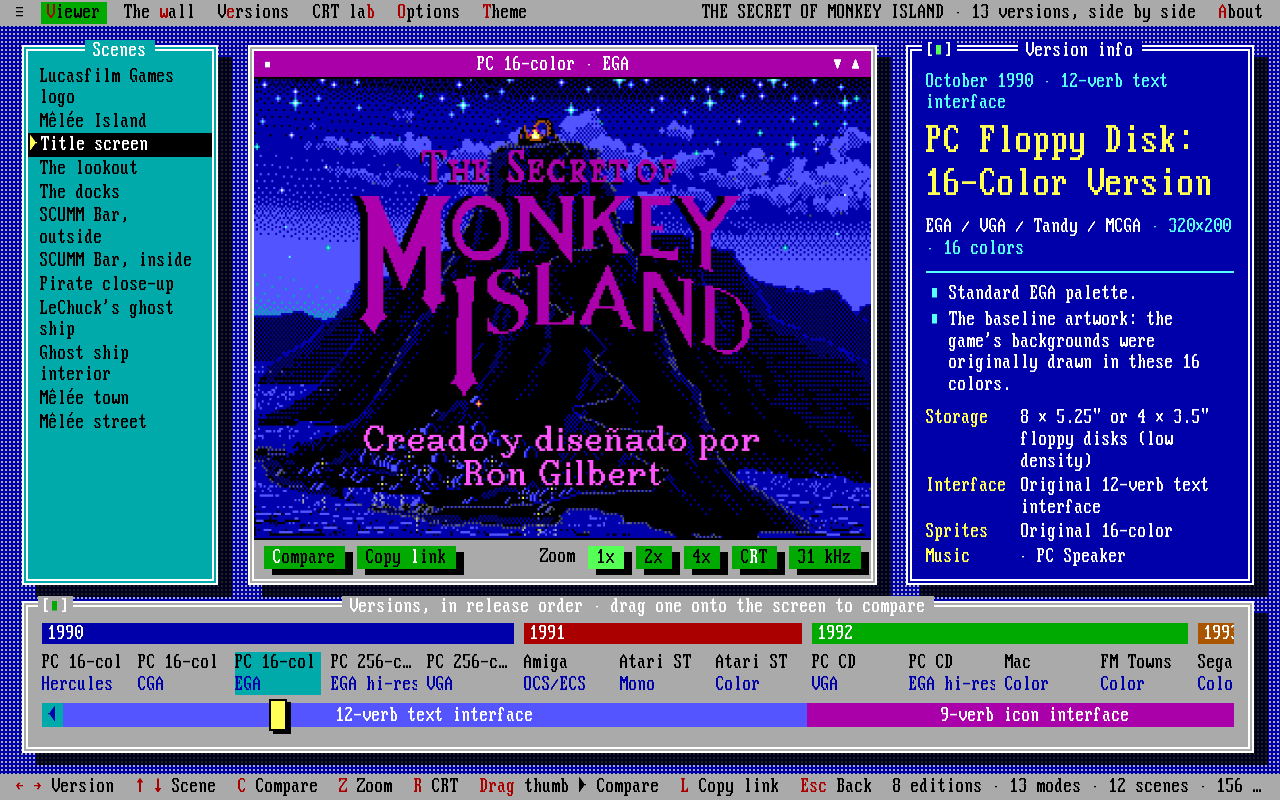
A project titled "Monkey Island: all 13 versions side by side" earned 306 points and 92 comments on Hacker News, placing over a dozen versions of this classic adventure game next to each other. For older players who lived through the floppy disk era, it's a trip down memory lane; for those studying the history of game porting, it's more like a visualized technical archive.
One Page, Thirteen Flavors of "Monkey Island"
The project's core approach is straightforward: present different versions of the Monkey Island series side by side, letting visitors compare visuals, interfaces, and details within a single view. The original piece doesn't enumerate which platforms or languages each of the 13 versions corresponds to, but judging from the series' history, such comparisons typically cover PC, Amiga, SEGA CD, Mac, and other platforms, along with different languages and remastered editions.
One detail worth noting: the real value of such projects isn't "looking at screenshots" but rather making people realize that the same game gets "re-translated" on different hardware—resolution, color palette, sound source, and mouse interaction all have to be redone.
The Secret of Monkey Island is a graphic adventure game released by LucasArts in 1990, designed by Ron Gilbert, and one of the representative works of the SCUMM engine. SCUMM (Script Creation Utility for Maniac Mansion) is a scripting system developed specifically for adventure games that abstracts scenes, dialogue, and item interactions into scriptable commands, making it relatively easy to port the same game logic to different hardware. However, the engine only solves the logic layer—graphics, audio, and input still need to be adapted separately for each platform, which is precisely the root cause of the huge visual differences between versions. The series later spawned sequels and multiple remasters, including the 2009 Special Edition, which fully revamped the visuals and voice acting—so the "13 versions" likely include original releases, platform ports, and remastered editions alike.
Why Version Comparisons of Old Games Are Worth Seeing
How Technical Constraints Shaped Art Style
From the late 1980s to the early 1990s, PC graphics capabilities, audio chips, and memory capacity varied enormously. For a game to launch on multiple platforms, art assets often had to be redrawn or compressed, and soundtracks re-arranged for different audio sources. Side-by-side comparisons expose these "traces of compromise" directly: one version has coarser pixel grain, another has more saturated colors, and yet another has simplified character portraits.
Behind this lies the porting team's judgment about hardware characteristics—not just an issue of artistic taste.
Understanding version differences requires a bit of hardware background. Early PCs commonly used EGA (16-color) and VGA (256-color) display standards, with the latter only becoming widespread after 1987; the Amiga had its own graphics chipset capable of special color modes and interlaced scanning effects; the SEGA CD, as a CD add-on for the Sega Genesis, brought larger storage capacity and CD audio tracks, significantly improving cutscene and soundtrack quality. Audio was similarly fragmented: AdLib and Sound Blaster sound cards, MT-32 sound modules, and PC Speaker beepers—each audio source required re-arrangement or downgrading. These hardware differences directly determined color palette depth, sprite dimensions, and soundtrack performance, and they are the technical source of the visual disparities seen in side-by-side comparisons.
Clues to the Evolution of Interaction Design
The core interaction in adventure games is "point-and-click." Early versions might rely on text commands or simplified verb bars, while later versions introduced more intuitive interfaces. Viewing multiple versions together is equivalent to laying out the evolution of game UI along a timeline. For product designers, this kind of "multiple solutions to the same need" is more intuitive than any textbook.
The SCUMM engine's most representative design is the verb interface: a row of verbs such as "Pick up," "Open," and "Talk to" listed at the bottom of the screen, where players first select a verb and then click a target, forming a "verb + noun" interaction grammar. This interface was continuously streamlined in later versions, reduced to nine verbs by Monkey Island 2, while 1997's Monkey Island 3 shifted entirely to a single-cursor interface similar to Indiana Jones. Therefore, observing different versions side by side actually reveals the complete evolutionary path of adventure games from "text parser" to "verb bar" to "context-sensitive cursor"—which is precisely what the article means by "multiple solutions to the same need."
What Community Reactions Tell Us
The 92 comments and 306 points on Hacker News show that this topic resonates naturally within the tech community. Comment threads typically go in two directions: one group of players shares the platform and version through which they first encountered the series, while another group of developers discusses the porting challenges of yesteryear—such as asset reuse under memory constraints and compatibility issues with sound drivers.
The value of such discussions is that they pull "retro gaming" from a nostalgia topic back into an engineering topic. Many implementations that seemed obvious at the time are actually difficult to reproduce with today's toolchains.
What Today's Developers Can Learn
Compatibility Is Never a Free Lunch
Multi-platform releases are something engines handle for us today, but back then it meant manual adaptation platform by platform. Side-by-side comparisons remind us: the higher the level of abstraction, the easier it is to mask underlying differences; and once differences are masked, fragmentation in user experience surfaces in the details.
Visual Comparison Is an Underrated Form of Documentation
Rather than describing in words that "one version's visuals are rougher," a single side-by-side screenshot conveys both information density and the basis for judgment. This format is increasingly common in open-source communities, used to showcase rendering differences, font rendering effects, or UI regression issues. The Monkey Island project applies this approach to game archaeology.
Conclusion
The project itself isn't complex, but it provides an entry point: people from different backgrounds see different things in the same set of comparison images—players see memories, designers see interaction evolution, engineers see porting costs. The original piece doesn't elaborate on the detailed technical specifications of each version, which is both a pity and leaves room for further exploration.
Visit the original page to see the complete side-by-side comparison: https://monkeyisland.pages.dev/
Related articles
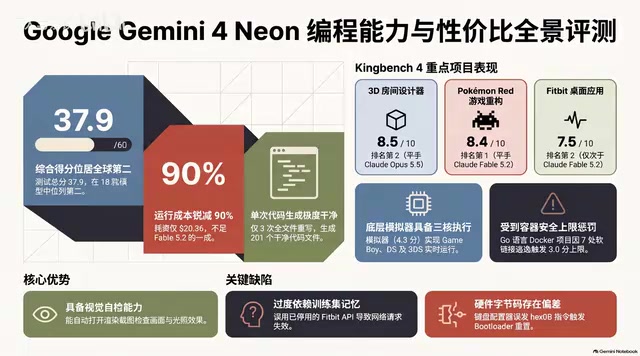
Gemini 4 Neon Hands-On: Value King or Confident Catastrophe?
Gemini 4 Neon review: 1M-token context, four thinking levels, 201 files in one KingBench4 pass at one-tenth Fable 5.2's cost—but it hallucinates fake data, leaves 7 symlink escapes, and bricks keyboards.

Google Gemini 4 Neon Hands-On: 6 3D Works That Impress and Fail
Hands-on with Google Gemini 4 Neon on a 3060 laptop: 6 3D works tested. Sunshower Fishing Harbor and mechanical keyboard impress; soft-body physics and faces fall short.

Gemini 4 Neo Web Novel Writing Test: Faint AI Flavor, Textured Dialogue
Bilibili creator's first-look review of Gemini 4 Neo for Chinese web novel writing: testing a Three Kingdoms transmigration opening with faint AI flavor, emotionally textured dialogue, and strong crisis building, plus comparison of 4A/4H/4C models and full workflow demos.