Nature's Computational Power: How Slime Molds, Fruit Flies, and Turbulence Inspire AI

Nature's computation inspires AI: robustness over optimality, local computation, and problem re-formalization.
Based on a conversation in the Lex Fridman podcast about fluid dynamics and computational complexity, this article explores the perspective of nature as a computational system. Slime mold pathfinding demonstrates distributed parallel computation; the ability of turbulence to simulate Turing machines implies fundamental limits to dimensionality reduction; Conway's Game of Life shows that minimal rules suffice to produce universal computation. Fruit fly flight control represents another extreme: a small number of strain neurons enabling fast, robust local responses without central involvement. The baseball outfielder's curved path shows that robust strategies under uncertainty outperform the optimal solution of an omniscient model. The article concludes with three insights for AI research: robustness over optimality, local computation and distributed control, and re-formalizing the problems themselves.
Introduction: When Nature Becomes a Computer
In a Lex Fridman podcast episode, a conversation about fluid dynamics and computational complexity revealed a thought-provoking perspective: nature has long been solving problems that even supercomputers find daunting. From slime molds finding the shortest path through mazes to fruit flies achieving precise flight control in turbulent air, these phenomena point to a fundamental question—where are the boundaries of computation? Theoretical computer scientists point out that the algorithmic lens applies not only to silicon chips but also to understanding the rules by which nature operates.
Nature's Algorithms: From Slime Molds to Turing Machines
Slime Mold Path Optimization
The phenomenon of slime molds finding the shortest path through mazes is well known. This is not a simple biological instinct but a form of distributed computation: the organism explores all possible paths in parallel through chemical signal gradients, ultimately converging on the optimal solution. This "centralized-computation-free" mode directly inspires the AI field—current multi-agent systems and swarm intelligence algorithms essentially mimic this decentralized problem-solving strategy.
Turbulence and the Limits of Computation
The conversation mentions Terry Tao's work on blow-up in the Navier-Stokes equations, whose core insight is that certain fluid equations can simulate Turing machines. This means turbulence is not merely a physical phenomenon—it is itself a computational process. If turbulence possesses universal computational capability, then finding a "good coordinate system" that can substantially reduce turbulence complexity may face fundamental limits—as the theoretical computer scientist put it, if a system can compute arbitrarily complex things, it is very difficult to fully describe it with a small number of parameters.
The Navier-Stokes equations are the core partial differential equations describing fluid motion, and the question of the existence and smoothness of their solutions is one of the seven Millennium Prize Problems for which the Clay Mathematics Institute offers a million-dollar reward. "Blow-up" refers to solutions of the equations tending to infinity within finite time (velocity or vorticity diverging); proving or disproving this would profoundly change our understanding of the nature of turbulence. Terry Tao's work does not directly solve this problem but instead constructs a modified class of equations and proves that their solutions can "blow up" in finite time, and that this process can encode the computational steps of a Turing machine. The significance of this result is: if the original Navier-Stokes equations also possess similar universal computational capability, then no universal, substantially dimension-reducing coordinate system exists that can fully reduce turbulence—because that would imply the ability to "predict" the halting problem of an arbitrary Turing machine, which computational complexity theory forbids.
Conway's Game of Life and the Minimality of Rules
The Game of Life demonstrates how extremely simple rules can produce behavior as complex as a universal Turing machine. This raises a key question: is nature also using very few rules to perform massive computation? If so, understanding nature's computational rules may be more efficient than simulating all its details.
Conway's Game of Life is a cellular automaton proposed by British mathematician John Horton Conway in 1970. It is played on an infinite two-dimensional grid, where each cell has only two states, "alive" or "dead," and the next generation's state is determined by the number of live cells in the current cell's eight-neighborhood: a live cell survives when the neighbor count is 2 or 3, a dead cell becomes alive when the neighbor count is exactly 3, and otherwise the cell dies. Despite the extremely simple rules, the Game of Life has been proven Turing-complete—through carefully designed initial patterns, it can simulate an arbitrary Turing machine and even construct self-replicating structures. This fact is often used to argue that complex computation does not require complex underlying rules; minimal local interactions, through iteration, are sufficient to give rise to universal computational capability. This is also the direct theoretical basis for the question of whether nature is using minimal rules to perform massive computation.
Two Extremes: From Global Climate to Fruit Fly Flight
Extreme Complexity: The Earth's Climate System
The Earth's weather and climate system is a typical case where "all scales matter." The weather in a particular zip code area is something local residents feel firsthand, and reducing the entire system to a few numbers would lose the descriptive capability we truly care about. In such problems, dimensionality reduction means information loss.
Extreme Refinement: Fruit Fly Flight Control
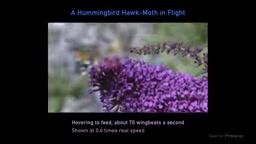
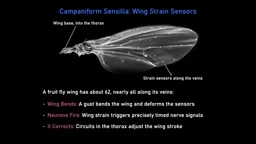
In contrast, the flight of fruit flies in turbulence represents another extreme. They have no PhD in fluid mechanics and do not run supercomputer simulations, yet they can control forces and torques to maintain rich life activities amid gusts and rain. According to the conversation, strain-sensitive neurons are embedded in fruit fly wings, numbering roughly in the tens to hundreds, distributed in very fixed positions. When the wing bends due to a gust, these neurons fire in specific temporal patterns, and the local computation is completed directly in the shoulder muscles without the involvement of the brain's central processing—the response is faster than the time it takes for information to travel to and from the brain.
This provides a key insight: under uncertainty and partial information, biological systems have found extremely robust solutions. This is highly consistent with the current AI field's pursuit of robustness.
The fruit fly (Drosophila melanogaster) is a classic model organism in neurobiology, with a nervous system containing about 100,000 neurons, far fewer than the human's 86 billion. The strain-sensitive neurons distributed on fruit fly wings are mechanoreceptors capable of detecting tiny deformations of the wing caused by aerodynamic and inertial forces during flight. These neurons convert mechanical signals into electrical signals and directly regulate flight muscles through local reflex circuits, achieving millisecond-level posture correction. This "edge computing" architecture corresponds in engineering to the design philosophy of pushing control laws down to near sensor nodes and reducing the burden on central processors, highly consistent with the current AI field's edge intelligence and event-driven computing paradigms.
Uncertainty: The Core Wisdom of Natural Optimization
The Curved Path of the Baseball Outfielder
The conversation cites an interesting case from a mathematics paper: when a baseball outfielder catches a fly ball, he does not take a straight-line path but instead follows a slightly curved one. The reason is that a curved path allows the outfielder to continuously reassess the ball's trajectory and adjust in real time. This is a robust strategy under incomplete information rather than optimal path planning.
From Omniscient Models to Partial-Information Decisions
Traditional modeling usually assumes known boundary conditions and initial conditions, but organisms in nature do not possess this "omniscient" perspective. Only by reframing optimization problems as decision problems under uncertainty can truly robust solutions be obtained. This line of thinking has direct value for AI system design: agents deployed in the real world likewise face incomplete information and dynamic change, and pursuing "the optimal solution under a perfect model" is often less effective than "a robust strategy under partial information."
The Cross-Disciplinary Value of the Algorithmic Lens
The theoretical computer scientist emphasizes that the algorithmic lens is an exportable thinking tool. The Nash equilibrium, as a solution concept, is elegant, but its computational difficulty undermines its universality as a general mechanism. Kamal Jain's remark—"if my laptop can't find it, the market can't find it"—precisely expresses the constraints that computational complexity places on economic models.
This lens also applies to understanding nature's computation: computational complexity constrains not only artificial systems but also the strategy space that natural systems can adopt. When we encounter intractable optimization problems in AI research, nature's solutions often prompt us to re-examine the formalization of the problem itself.
Implications for AI Research
Drawing together several viewpoints from the conversation, three insights with practical significance for the AI field can be distilled:
- Robustness over optimality: Biological systems' decision strategies under uncertainty suggest that AI systems should place greater emphasis on adaptability to environmental change rather than theoretical optimality under a perfect model.
- Local computation and distributed control: The fruit fly's strain neuron mechanism demonstrates the value of fast local response. In AI systems, delegating part of the computation to edge nodes and reducing reliance on central control may yield better real-time performance and robustness.
- Re-formalizing problems: Nature's computation suggests that the correct formalization of many problems may differ from our intuition. In AI research, re-examining the definition of an optimization problem is often more important than improving solution algorithms.
Nature's computation is not mysticism but a series of engineering solutions that can be examined through the algorithmic lens. Understanding these solutions may open new avenues for AI system design.
Related articles

AI Comic Drama with WorkBuddy from Scratch: A Step-by-Step Skill Pack Installation Guide
Learn how to create AI comic dramas with WorkBuddy from scratch. This guide covers installation, Skill pack import and invocation, plus a script generation demo with manual revision tips to get you through the first step from script to storyboard.

WorkBuddy Agent Runs the Entire GEO Database Mining Pipeline with a Single Prompt
WorkBuddy agent automates GEO database mining: from data search and curation to batch correction, differential analysis, co-expression networks, feature gene screening, and immune infiltration—a single prompt generates a complete bioinformatics report, greatly lowering the barrier to bioinformatics analysis.

PC Memory Wasted? Hacker News Debates Centralized Data Centers
Hacker News users argue that personal computer memory is wasted and should be centralized in data centers, sparking debate on centralized vs. distributed computing resource allocation. This article analyzes the logic behind the claim, the costs of centralization, and new tensions in memory resource allocation in the AI era.