Nevada Midterms: Trump's Economic and Immigration Policies Fuel Working-Class Discontent

Nevada Culinary Union canvassing shows economic anxiety and immigration fears reshaping swing-state voters.
This article follows Nevada's roughly 60,000-member Culinary Union as it canvasses Las Vegas door to door, exploring how national issues play out in local elections. Though Nevada backed Trump in 2024, the tariff war has cut Canadian and Mexican tourists by 30 percent, hitting hotel jobs, and economic strain is voters' top concern. Immigration enforcement has left Latino members fearful, and some Trump voters now feel buyer's remorse. The union uses worker-to-worker outreach focused on living costs and education, and Nevada's role as the second Democratic primary state is also examined.
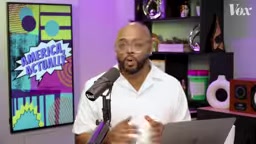
This episode is produced by America, Actually, a podcast under Vox Media. The host travels to Las Vegas, Nevada, to join the Culinary Union—which has roughly 60,000 members—in its door-to-door canvassing, seeking to answer a core question: how have the past year's national issues—especially economic strain and immigration policy—actually played out in local elections. Nevada voted for Donald Trump in the 2024 presidential election, yet a sense of "buyer's remorse" is pervasive among key local voter groups.
Nevada's Character as a Key Swing State
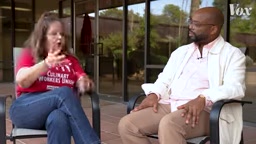
Nevada is an excellent window into American midterm elections. Trump won here in 2024, but this year's political atmosphere has shifted. The Culinary Union represents roughly 60,000 hotel, casino, and food-service workers in Las Vegas and Reno, and most of its members are immigrants and Latinos. Union leadership typically supports the Democratic Party, but rank-and-file members don't always vote the way leadership does—in 2024, quite a few union members cast their ballots for Trump.
This split is key to understanding the midterms. Union president Diana Vallis has held the role since 2022, after more than three decades working on the front lines of the industry. She acknowledged to the host that even though union members have good union jobs, they now find life difficult—"that never used to happen." The "Trump slump" she describes—including the tariff war, immigration enforcement, and high prices—is reshaping members' political attitudes.
"Swing state" refers to states with no stable partisan lean in presidential elections, where the two parties' vote shares are close and whose electoral votes often decide the outcome. Nevada has long been seen as a classic swing state: demographically diverse, with strong union organization and a high Latino share, but its economy is highly dependent on tourism and hospitality and is extremely sensitive to macroeconomic shocks. In 2024, Trump carried the state by about 3 percentage points—the first time a Republican presidential candidate had won there since 2004. Precisely for this reason, Nevada is viewed as a bellwether for both the 2026 midterms and the 2028 presidential race—its local contests can preview how national issues (the economy, immigration) actually land with key voter groups.
Economic Anxiety Is the Number-One Issue
When asked what issue comes up most while canvassing, Vallis says without hesitation: "The economy." She describes members' situation: even with good jobs that pay well, the price of everything is soaring. Union member Jessica Palomino, while knocking on doors, heard specific complaints including food pantries running low, rents that are too expensive, and no one being able to afford a house.
The host mentions a data point: the number of visitors from Canada has dropped 30 percent in the state. Vallis attributes this directly to the Trump administration's trade friction with Mexico and Canada and to harsh rhetoric on immigration. She notes that Canadian and Mexican tourists are among the groups that stay longest and spend the most in Las Vegas, and the president's aggressive language toward neighboring countries has kept them away. In addition, Latino tourists from California have cut back on weekend trips because of the immigration enforcement climate.
The tourism downturn quickly feeds through to employment. Al Tate, a hotel room attendant, explains that without tourists there are no room sales, and without room sales, floor attendants, linen staff, and utility workers get laid off or have their hours cut. He himself went from five days a week, eight hours a day, to fewer shifts. Another union member, Jessica, mentions that many members have to work two jobs to get by.
"Trump slump" is not a formal economic term but rather one used by media and commentators to describe signs of economic weakness during Trump's second term caused by the tariff war, tighter immigration enforcement, and declining consumer confidence. The logic runs: higher tariffs push up the prices of imported goods, a smaller immigrant workforce raises service-sector costs, and together they intensify inflationary pressure; at the same time, harsh immigration rhetoric and an enforcement climate deter international tourism, further hurting cities that depend on visitors. For a city like Las Vegas, whose pillars are hotels, restaurants, and entertainment, this "policy-induced demand contraction" quickly translates into reduced hours and layoffs, so working-class people feel the cost of political decisions directly.
The Real-World Impact of Immigration Policy
Immigration comes right after the economy. Vallis stresses that most union members are immigrants and Latinos, and they are watching their compatriots get detained, arrested, and separated from their families. She mentions a detail that shocked her: during enforcement operations, there were cases of U.S. citizens being detained or even dying. "If someone had told me ten years ago that this would happen in this country, I'd have said it was impossible."
The host presses a pointed question: Trump made mass deportation a core promise during the 2024 campaign, so why do many voters only feel regret now? Vallis's answer is that at the time Trump claimed he would deport violent criminals, but what actually happened was targeting ordinary working-class parents and children.
Al Tate adds from another angle: it is precisely this atmosphere that makes immigrant workers afraid to go to work and tourists afraid to visit, which in turn worsens the economic hardship. He describes the current situation as making everyone feel "like we're back in the pandemic again."
Mass deportation was one of the core promises of Trump's 2024 campaign, and its framing usually focused on "violent criminals." But in practice, Immigration and Customs Enforcement (ICE) operations often cover a much broader range, including long-term residents with no criminal record, and there have even been cases of U.S. citizens being mistakenly detained. This "gap between promise and implementation" is key to understanding the shift in some voters' attitudes: what they supported was targeted enforcement against criminals, not a broad crackdown on working-class families. When enforcement reaches the friends, relatives, and coworkers of union members, economic anxiety and fear for personal safety compound, giving rise to the so-called "buyer's remorse."
Voter Sentiment and Canvassing Strategy
The host meets a young woman who has just moved to Las Vegas and says she has no interest in politics at all. After a brief conversation, she ends up asking where the nearest polling place is and completes her registration and vote that same day. Union members see this as direct proof of the value of face-to-face canvassing.
Al Tate explains the union's door-knocking strategy: don't talk partisan politics, just ask about the cost of living, medical expenses, and gas prices. His exact words: "Workers listen to workers." As a Black union member, he also addresses the question of racial coalitions—Republicans try to create division between Black and Latino communities, but he believes people are close at work and won't be easily split.

Jessica adds her canvassing insights: with voters who don't agree with the Democratic Party's social issues, she pivots to education and the future of the next generation. She notes that Nevada ranks 49th in the nation for education and asks whether they are willing to make a change for their children.
Previewing the 2028 Election
The program frames Nevada's union mobilization as an important outpost for future presidential campaigns. Democrats have announced that Nevada will vote second in the presidential primary, and this union has a unique organizing capacity—members take extended leave to canvass full-time, driving turnout door to door. Union president Vallis says they don't set a single-issue "litmus test," but they will support candidates who back workers' issues, regardless of party. The union is even encouraging its own members to run for office.
The host concludes that from the data-center town hall in New Jersey to the UFC event in Washington, D.C., to the town hall meeting in Ohio, the same signal keeps appearing this election cycle: the core of the fight is no longer just left versus right, but top versus bottom—the tension between ordinary working people and the elite. And Trump himself remains at the center of this dynamic.
You may not have noticed that the "buyer's remorse" narrative in the program comes from a single perspective—union activists and some voters—and lacks contrasting interviews with Trump supporters who remain loyal. In addition, the 30 percent drop in visitor numbers is cited by the union president during the conversation, and the program does not show the specific statistical source.
The order of "early states" in the Democratic presidential primary has long been a focus of intraparty power struggles. Traditionally Iowa and New Hampshire voted first, but the Democratic National Committee reformed the calendar in 2024, moving South Carolina to the front and placing Nevada second. Nevada's significance lies in its demographics being closer to national trends—a high share of Latinos, union members, and urban working-class voters, plus a strong field organizing network. The Culinary Union's "ground game" capacity to mobilize members to take leave and canvass full-time is especially critical in low-turnout primary environments, so the state's results often reveal early which candidates genuinely have the support of working-class voters.
One-line Summary
Door-to-door canvassing by Nevada's Culinary Union reveals how economic anxiety and immigration fears are reshaping swing-state voter attitudes.
Paragraph Summary
This article follows Nevada's Culinary Union, which has roughly 60,000 members, as it canvasses door to door in Las Vegas, exploring how national issues land in local elections. It notes that although Nevada backed Trump in 2024, the tariff war has caused a 30 percent drop in Canadian and Mexican tourists, and the tourism downturn has hit hotel employment directly, making economic strain voters' top concern. Immigration enforcement has left Latino members fearful, and some voters who backed Trump last year now feel "buyer's remorse." The union uses a face-to-face "worker-to-worker" strategy, avoiding partisan labels and focusing on the cost of living and education. The article also analyzes Nevada's significance as the second state to vote in the Democratic primary and cautions that the "buyer's remorse" narrative comes from a single perspective and that the visitor data lacks a source.
Related articles

Why Local Models Beat Jev AI API in Doom Game Decision-Making
A YouTube video comparison shows that the local model GLiNER, with 12 ms response and 8.8 decisions/sec in Doom, far outperforms the Jev AI API's 2.5 decisions/sec, doubling the score.

Screen Studio 4.0 Released: Glass Magnifier, Camera Keying, and Text-Based Editing
Screen Studio 4.0 released with glass magnifier, text-based editing, camera keying, and improved export performance. This Mac screen recorder ranks #1 on Product Hunt, simplifying video production.

ClawsGO Science: An AI Research Agent with a Built-in Cloud Lab
ClawsGO Science is an AI research agent launched on Product Hunt with a built-in cloud lab, 500+ tools, 90+ datasets, and clusters of Claude and GPT agents that can run for days to auto-generate cited papers from a question.