Nvidia Accused of Using Circular Financing to Inflate GPU Prices

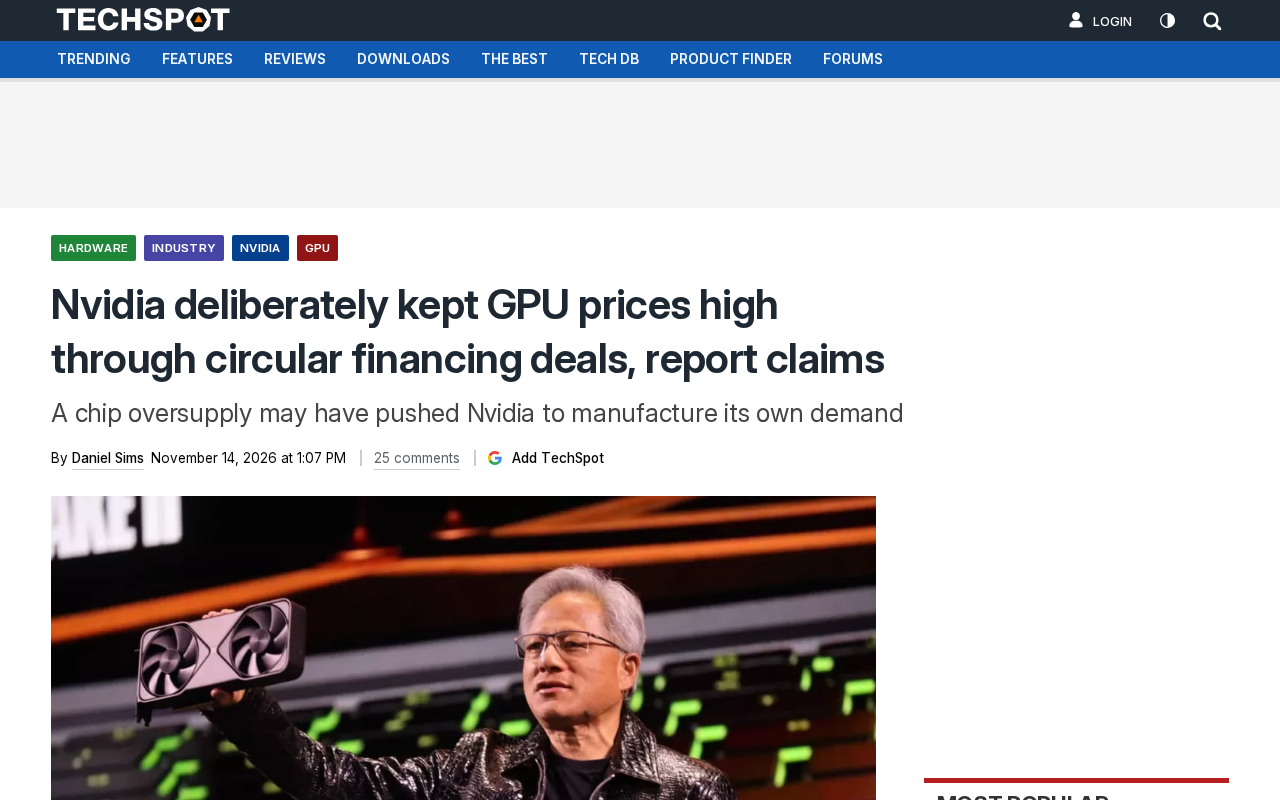
TechSpot report accuses Nvidia of using circular financing to keep GPU prices high, sparking heated community debate.
The article centers on a TechSpot report that sparked discussion on Hacker News, alleging Nvidia may be artificially maintaining high GPU prices through circular financing. Circular financing refers to a closed-loop structure in which an investor funds customers who then buy its products, distorting demand signals and preventing prices from falling in line with normal supply and demand. Community comments are polarized: some see it as common ecosystem strategic investment, with the key being sufficient disclosure; others worry that overlapping investors and customers undermines price discovery. The article further infers that if the allegations hold, AI infrastructure capex may be overstated, cost structures for cloud providers and model companies will face revaluation, and the quality of Nvidia's revenue will be questioned. The author stresses that no regulatory conclusion exists yet, but the capital structure behind GPU pricing deserves continued tracking.
A Controversy Over GPU Pricing
Recently, a report from TechSpot sparked widespread discussion on Hacker News, with the post garnering 281 points and 153 comments. The report's core allegation is quite pointed: Nvidia may be artificially maintaining high GPU prices through circular financing. The reason this topic is so sensitive is that it touches on the most fundamental contradiction in the current AI compute market—GPUs are both the "oil" of the AI industry and the absolute pillar of Nvidia's profits.
It should be noted that this analysis is primarily based on the report and community discussion. Readers should judge for themselves the details of the allegations and the strength of the evidence.
What Is Circular Financing, and Why Is It Worth Watching?
Circular financing refers to a business arrangement in which Company A invests in or provides funds to Company B, and Company B then uses that money to purchase Company A's products. From an accounting perspective, both parties record revenue or assets, but the funds are actually circulating in a closed loop and have not truly independently validated market demand.
In the GPU market, this structure could manifest as: Nvidia or its affiliates investing in AI cloud service providers and startups, which then purchase Nvidia GPUs in large quantities. If this pattern is used on a large scale, the demand signal for GPUs becomes "watered down," and prices become difficult to fall back in line with normal supply and demand. The report's allegation points precisely to this mechanism.
For ordinary consumers and small-to-medium developers, this means GPU prices remain persistently high, and compute costs are structurally inflated.
Price discovery is a key economic concept for understanding this controversy. It refers to the process by which a market, through free bidding between buyers and sellers, aggregates dispersed supply and demand information into a public price. Price discovery works effectively only when both parties to a transaction are independent and each pursues its own interests. When the investor is also the main customer, the buyer-seller relationship is overridden by the capital relationship, transaction volume no longer simply reflects end users' true willingness to pay, and prices may deviate from the equilibrium level determined by independent demand. This is the core of critics' concern: high GPU prices may not be a signal of scarcity but an illusion created by closed-loop capital. Conversely, supporters argue that demand generated by strategic investment is also real demand, and as long as disclosure is sufficient, price discovery has not failed.
Disclosure rules for related-party transactions are an important reference for judging whether such arrangements are compliant. Under accounting standards, transactions between a company and its investees, subsidiaries, or entities controlled by key management personnel typically require separate disclosure in the notes to financial statements of the nature, amount, and pricing basis of the transaction. The regulatory focus is not the transaction itself but whether pricing is fair and whether it harms the interests of other shareholders. For Nvidia, if its investments in AI cloud service providers and startups are accompanied by purchase commitments, they would in theory constitute related-party arrangements requiring clear disclosure. Whether the report's allegations hold depends largely on the scale of these investments, the transparency of their terms, and whether there is evidence of price manipulation—and no regulator has yet reached a conclusion on this information.
Divisions in the Community Discussion
The Hacker News comment section shows clear polarization. Some commenters argue that circular financing is a common means of ecosystem investment in the tech industry—Nvidia investing in customers and customers buying products is not inherently illegal; the key is whether disclosure is sufficient and whether pricing has been manipulated. Other commenters worry that when investors and customers overlap heavily, the market loses its independent price discovery function, and high GPU prices may not reflect true scarcity.
The difficulty with this kind of controversy is that the line between circular financing and normal strategic investment is blurry. Without a regulatory investigation and conclusion, it is hard to make a definitive judgment. But the questions raised by the report deserve attention from the entire AI industry chain: how much of the boom in compute demand is driven by real applications, and how much is an illusion created by capital circulation?
Potential Impact on the AI Industry Landscape
If the report's allegations hold, the impact would go far beyond GPU prices themselves. First, capital expenditure on AI infrastructure may be overstated; once the capital circulation slows, the adjustment on the demand side could be quite severe. Second, cloud service providers and model companies that rely on high-priced GPUs will face a revaluation of their cost structures. Third, the quality of Nvidia's revenue will be questioned—how much revenue comes from genuine end-demand conversion rather than the return of investment funds?
At present, these remain inferences based on the report rather than proven facts. But the anxiety reflected in the 153 comments on Hacker News shows that the market's sensitivity to this issue is rising. For those following the AI industry, the capital structure behind GPU pricing mechanisms may be more worth tracking than the specifications of any single chip.
The sustainability of capital expenditure (capex) is another dimension for assessing the scope of impact of this controversy. Funding for AI infrastructure construction mainly comes from cloud providers' own cash flow, debt financing, and venture capital, with the latter two being highly sensitive to interest rates and capital market sentiment. If a considerable share of GPU purchases is indirectly supported by Nvidia's own investment funds, then this portion of demand will contract rapidly when capital circulation slows, creating an adjustment similar to "demand front-loading." Historically, industries such as telecom equipment and fiber-optic networks have experienced capital-driven capacity expansion followed by sharp corrections. Therefore, tracking changes in the scale of Nvidia's investment portfolio and the share of purchases by investee companies can better indicate the true quality of demand than looking at quarterly revenue growth alone.
Conclusion
The circular financing controversy behind Nvidia's high GPU prices is essentially a collision between the narrative of AI prosperity and the workings of capital markets. Whether or not the allegations are ultimately proven, it reminds us that when assessing the AI compute market, we should not look only at demand figures but also at where the money behind that demand comes from.
Related articles
Gemini 4 Neon Hands-On: Value King or Confident Catastrophe?
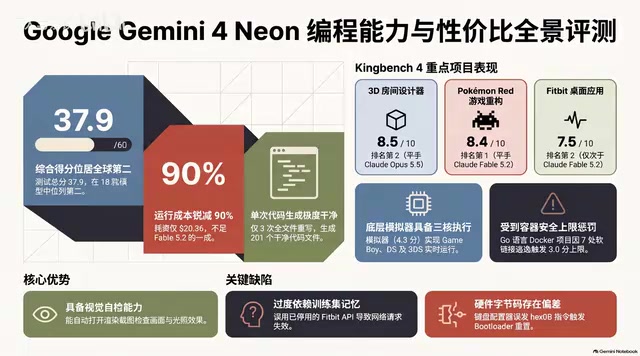
Gemini 4 Neon review: 1M-token context, four thinking levels, 201 files in one KingBench4 pass at one-tenth Fable 5.2's cost—but it hallucinates fake data, leaves 7 symlink escapes, and bricks keyboards.

Google Gemini 4 Neon Hands-On: 6 3D Works That Impress and Fail
Hands-on with Google Gemini 4 Neon on a 3060 laptop: 6 3D works tested. Sunshower Fishing Harbor and mechanical keyboard impress; soft-body physics and faces fall short.

Gemini 4 Neo Web Novel Writing Test: Faint AI Flavor, Textured Dialogue
Bilibili creator's first-look review of Gemini 4 Neo for Chinese web novel writing: testing a Three Kingdoms transmigration opening with faint AI flavor, emotionally textured dialogue, and strong crisis building, plus comparison of 4A/4H/4C models and full workflow demos.