Nvidia's Governance Crisis: Why Corporate Governance Experts Are Watching en Masse

Nvidia is in a crisis governance experts call unprecedented, potentially shaking confidence in the AI chip supply chain.
Nvidia is facing a crisis that corporate governance experts find rare, with multiple experts saying they have never seen anything like it. The article notes that governance experts typically focus on checks on power, transparency, and board independence, and that Nvidia's case may touch on an uncommon combination of these principles—suggesting unprecedented structural governance issues rather than simple management changes or financial irregularities. As a core player in the global AI chip sector, Nvidia's governance stability directly affects downstream customers' procurement decisions and institutional investors' risk exposure. However, the original report does not indicate how the crisis will be resolved; the experts' attention reflects professional vigilance rather than a prediction of the outcome.
Nvidia is mired in a crisis that even corporate governance experts find rare. Multiple experts say they have never seen anything like what is currently unfolding.
A Governance Crisis Without Precedent
Corporate governance experts are usually unfazed by internal corporate disputes, but Nvidia's current situation has them collectively "grabbing the popcorn." According to governance experts reached for comment, no one has seen a crisis unfold like this one. The weight of that statement lies in the fact that researchers in corporate governance have long tracked all manner of corporate scandals, boardroom battles, and executive turmoil—events that genuinely surprise them are few and far between.
As a core player in the global AI chip sector, Nvidia's every governance move is closely watched by investors and the industry. The specific details of the crisis have not been elaborated in the original material, but the experts' reactions alone suggest that the nature of the problem may extend beyond conventional corporate governance.
Corporate governance is the study of the institutional arrangements by which companies are directed and controlled. Its core topics include the principal-agent problem between shareholders and management, the board's oversight function, the integrity of information disclosure, and the protection of stakeholder rights. Governance frameworks in mature markets typically rely on checks and balances such as independent directors, audit committees, and shareholder voting rights. Governance experts usually study classic scenarios like boardroom infighting, CEO turnover, financial fraud, or takeover defenses—all of which have ample precedent for reference. That is precisely why, when experts describe an event as "never seen before," it often means the event exceeds existing analytical frameworks in terms of power structure, information transparency, or the form of conflicts of interest, requiring new theoretical tools to interpret.
Why Governance Experts Are So Focused
The core concerns of corporate governance experts typically revolve around checks on power, transparency of information disclosure, and board independence. The reason Nvidia's case has drawn such attention is likely that it touches on some uncommon combination of these fundamental principles. For a company at the pinnacle of its industry, cracks at the governance level tend to be magnified—supply chain partners, institutional investors, and regulators will all reassess their risk exposure.
It is worth noting that experts describe the current situation as "no one has seen this before," implying that the crisis may involve unprecedented governance structure issues rather than simple management changes or financial irregularities.
Board independence is one of the key indicators of governance quality, typically referring to the proportion of independent directors on the board and whether they can exercise oversight without management influence. Independent directors do not participate in day-to-day operations and are theoretically better positioned to represent the interests of minority shareholders, objectively reviewing related-party transactions, executive compensation, and major strategic decisions. When a company's governance structure shows anomalies, experts first examine whether the composition of independent directors has been weakened, whether the audit and compensation committees are functioning properly, and whether management is bypassing board decisions. In addition, transparency of information disclosure requires companies to promptly, accurately, and completely disclose material matters; any selective or delayed disclosure amplifies market information asymmetry, which in turn affects valuation and investor confidence.
What It Means for the AI Chip Industry
Nvidia's dominant position in the AI computing market means its governance stability directly affects downstream customers' long-term procurement decisions. When governance experts begin publicly expressing surprise, market doubts about Nvidia's future decision-making efficiency and strategic continuity may rise accordingly.
However, the original report does not provide information on how the crisis will be resolved. The experts' watching posture is more a form of professional vigilance than a prediction of the outcome. For those following the AI industry, the trajectory of this situation is worth continued tracking.
One-line Summary
Nvidia is in a crisis that governance experts call unprecedented, potentially affecting confidence in the AI chip supply chain.
Paragraph Summary
Nvidia is facing a crisis that corporate governance experts find rare, with multiple experts saying they have never seen anything like it. The article notes that governance experts typically focus on core principles such as checks on power, transparency of information disclosure, and board independence, and that Nvidia's case may touch on an uncommon combination of these principles—suggesting the crisis involves unprecedented structural governance issues rather than simple management changes or financial irregularities. As a core player in the global AI chip sector, Nvidia's governance stability directly affects downstream customers' long-term procurement decisions and institutional investors' risk exposure. However, the original report does not provide information on how the crisis will be resolved; the experts' attention is more professional vigilance than a prediction of the outcome.
Related articles

Anker SOLIX X1 Three-Month Test: Seamless Outage Switching and How Home Energy Storage Cuts Electricity Bills
Three-month real-world test of Anker SOLIX X1 and PowerDock Pro: millisecond seamless outage switching, September usage of 735 kWh with only 16 kWh bought from the grid, solar plus battery covering about 98% of demand, 358 kWh battery discharge, and 495 kWh surplus exported to the grid.

Ollama Beginner's Guide: Zero-Basics Local Deployment of AI Large Models
Zero-basics Ollama installation and deployment tutorial: three installation methods with software and models stored separately, how to change the model directory, how to run models with commands after installation, plus VRAM-based model selection advice and tips for turning off thinking mode.
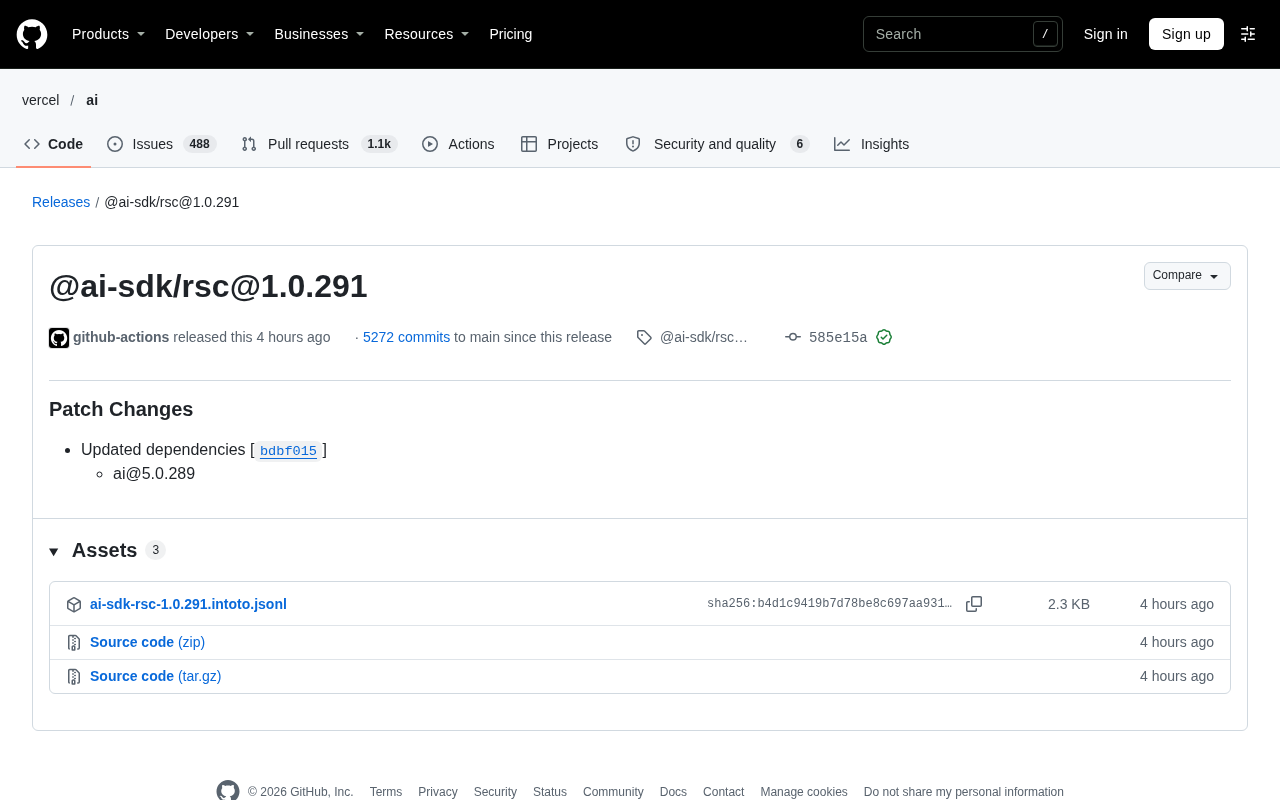
@ai-sdk/rsc Version 1.0.291 Released: Patch Fixes and Dependency Updates
@ai-sdk/rsc releases patch version 1.0.291, updating its dependency to ai@5.0.289. Learn about the changes, dependency relationships, and upgrade recommendations.