OpenAI May Rename Data Centers 'AI Compute Campus' — What's the Strategy?

OpenAI reportedly plans to rename data centers 'AI compute campus' to improve public narrative and social license.
According to The Verge, OpenAI may rename data centers 'AI compute campus.' The rename doesn't change physical facts like energy use or water consumption, but shifts the starting point for public communication, serving community engagement, talent attraction, and capital narrative. The core controversy remains substantive environmental data — without transparency, the rename risks being seen as greenwashing.
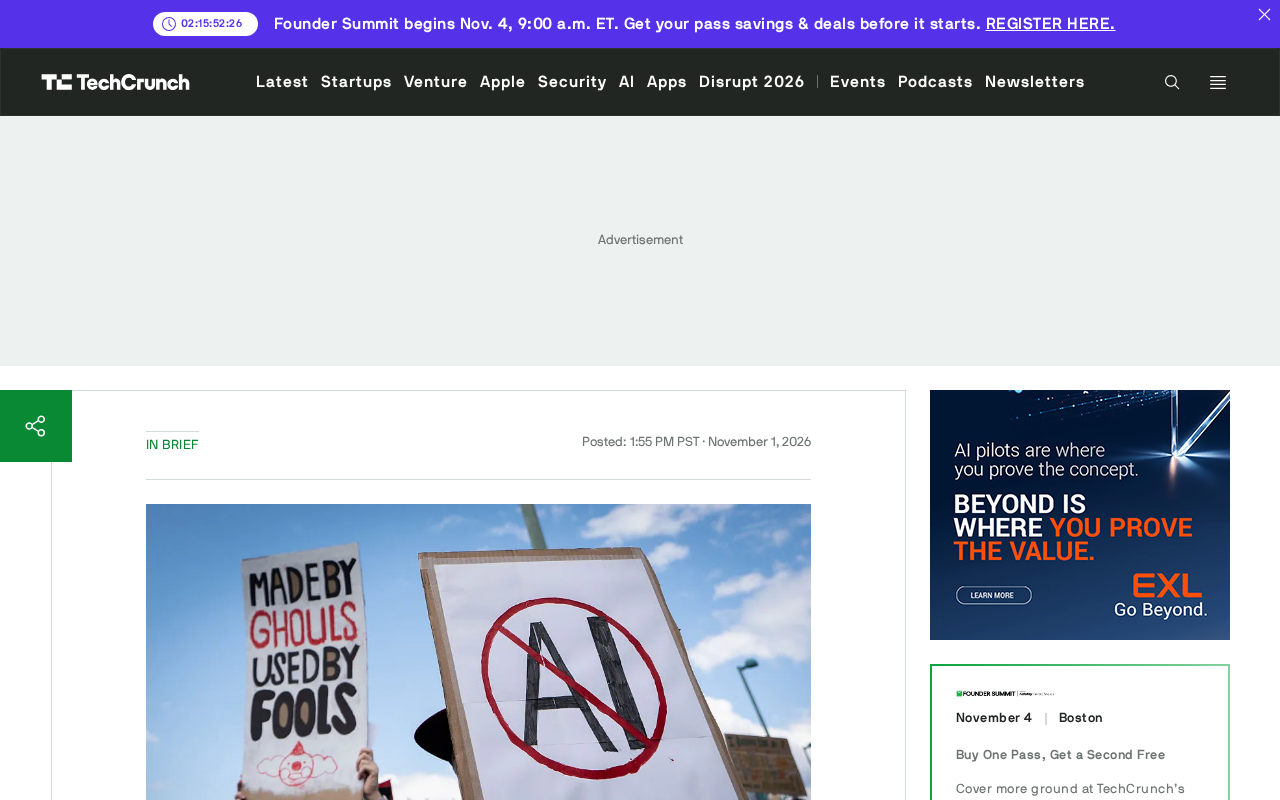
Data centers are becoming a target of public scrutiny. Controversies over energy consumption, water usage, and community disruption have given the term "data center" a built-in negative connotation in many places. According to tech media outlet The Verge, OpenAI may be considering a new name for its data centers — calling them "AI compute campus." This signal is telling: when an industry's infrastructure starts getting renamed, it usually means it's no longer just facing engineering problems, but narrative problems.
Why a Name Matters
"Data center" is itself a neutral term, but the public imagination it carries is shifting. Large-scale GPU clusters mean high power loads, continuous cooling demands, and land occupation — all of which get amplified during site selection, permitting, and community communication. Renaming won't change the physical facts, but it will change where the conversation starts.
The word "campus" carries an air of education, research, and open space. It's softer than "data center" and more easily linked to positive associations like long-term investment and talent development. OpenAI's choice of this wording suggests it's trying to reframe compute facilities from an "industrial burden" into "innovation infrastructure."
"Social license to operate" is a concept commonly used in heavy-asset industries like mining and energy, referring to the informal acceptance a company needs from local communities and stakeholders beyond government approval. In the expansion of AI compute facilities, this concept is becoming critical: even if a project passes environmental review and permitting, sustained community opposition can lead to lawsuits, delays, or even shelving. Social license cannot be obtained through a single permit — it can only be built gradually through transparent communication, community co-development, and verifiable commitments. OpenAI's renaming move can be understood as an attempt to cultivate social license ahead of formal approvals.
Three Considerations Behind the Rename
The first layer is public communication. When a project requires support from local governments and community residents, naming directly affects the first impression at hearings. The second layer is talent competition. Calling compute facilities a "campus" aligns with the discourse system of tech company campuses, helping attract engineers to work on-site. The third layer is capital narrative. Compute is one of OpenAI's most core cost items, and packaging this as long-term "campus-style" assets fits investors' expectations for infrastructure investment better than "server rooms."
These three considerations are not independent of each other. The rename itself doesn't solve any technical problems, but it reduces communication friction — and communication friction is often underestimated in hyperscale compute expansion.
Can Renaming Resolve Community Resistance?
What needs to be viewed calmly is that the core of the controversy has never been about vocabulary. Energy and water consumption data, pressure on local power grids, noise, and land use — these are substantive issues. Community opponents typically care about verifiable commitments, not naming strategies.
In other words, renaming may improve the atmosphere of the first round of communication, but if substantive environmental and operational data aren't made transparent simultaneously, it could instead be seen as a "greenwashing"-style rhetorical maneuver, further damaging trust. Many infrastructure industries throughout history have attempted similar semantic upgrades, and success has depended on accompanying transparency efforts.
"Greenwashing" refers to companies using publicity, naming, or PR tactics to package themselves as more environmentally friendly or responsible than they actually are, without substantive action to back it up. In the data center context, greenwashing might manifest as emphasizing renewable energy procurement while avoiding specific data on local grid pressure and water consumption. Once communities or regulators determine that a rename constitutes greenwashing, the cost of repairing trust will far exceed the communication convenience the rename brings. Therefore, whether a rename is effective depends on whether it advances in sync with the disclosure of operational data on energy consumption, water usage, and noise.
Signal Significance for the Industry
If OpenAI actually pushes this branding adjustment forward, other compute operators will likely follow with similar messaging. This would create a phenomenon worth watching: competition in AI infrastructure is gradually extending from pure compute scale to social license. Whoever can embed facilities into local communities, education systems, and local economies earlier will encounter less resistance in the next round of expansion.
From this perspective, "AI compute campus" is not just a PR move, but an attempt by AI companies to bind infrastructure strategy with social relationship management. Its effectiveness will ultimately depend on what's done beyond the name.
Frequently Asked Questions
Has OpenAI officially announced the rename?
According to currently public information, this remains at the rumor and discussion stage, with no official confirmation yet.
Will the rename affect the actual operation of data centers?
It won't directly affect hardware, energy consumption, or site selection. Its impact is mainly concentrated at the level of brand communication and stakeholder engagement.
Why choose the word "campus"?
In English-language contexts, "campus" carries associations of research, long-term investment, and community. It's easier to generate positive associations than "data center" and aligns with the expression habits of tech company campuses.
One-line Summary
OpenAI reportedly plans to rename data centers "AI compute campus" to improve public narrative and social license.
Paragraph Summary
According to The Verge, OpenAI may be considering renaming its data centers "AI compute campus." The article analyzes that the rename itself doesn't change physical facts like energy consumption, water usage, and land occupation, but it can change where public communication starts, serving three considerations: community engagement, talent attraction, and capital narrative. The core of the controversy has always been substantive environmental and operational data — without accompanying transparency, the rename could be seen as "greenwashing" rhetoric. If realized, it could drive the compute industry from competing on scale to competing on social license.
Related articles

AI Tools Quietly Altering Settings: Postman Silently Installs Plugin, Codex Sharing Option Auto-Resets
AI Daily reports: Postman silently installs a Mac plugin and self-approves startup hooks, logged as auto-existing upgrade; Hacker News developers say Codex data-sharing opt-out flips back. Plus Simon Willison's raw float weight experiment with QEN 3.8-27B.

AI Learns to Rewrite AI: MIT's "Weightspace Programming" Redraws the Path to Recursive Self-Improvement
MIT team proposes weightspace programming: GPT-6 Astra reads and edits AI model weights directly. Math scores jump several-fold, hand-written networks beat trained models. Eight experiments analyzed, plus Anthropic's same-day warning and the real boundaries of recursive self-improvement.

Running Qwen 3.8 on a Laptop to Read Raw Weights: 46 Minutes Per Answer
Simon Willison reproduced weight space programming with Qwen 3.8 27B on a laptop: a 17GB model file, 46 minutes per answer, 43,506 reasoning tokens, Pong over an hour, Freeway failed. Suited for interpretability researchers.