Own 1: A Fanless Local AI Computer That Puts Data and Intelligence Truly in Your Hands

Own 1 is a $3,899 fanless desktop device that brings LLM and agent compute back to local hardware.
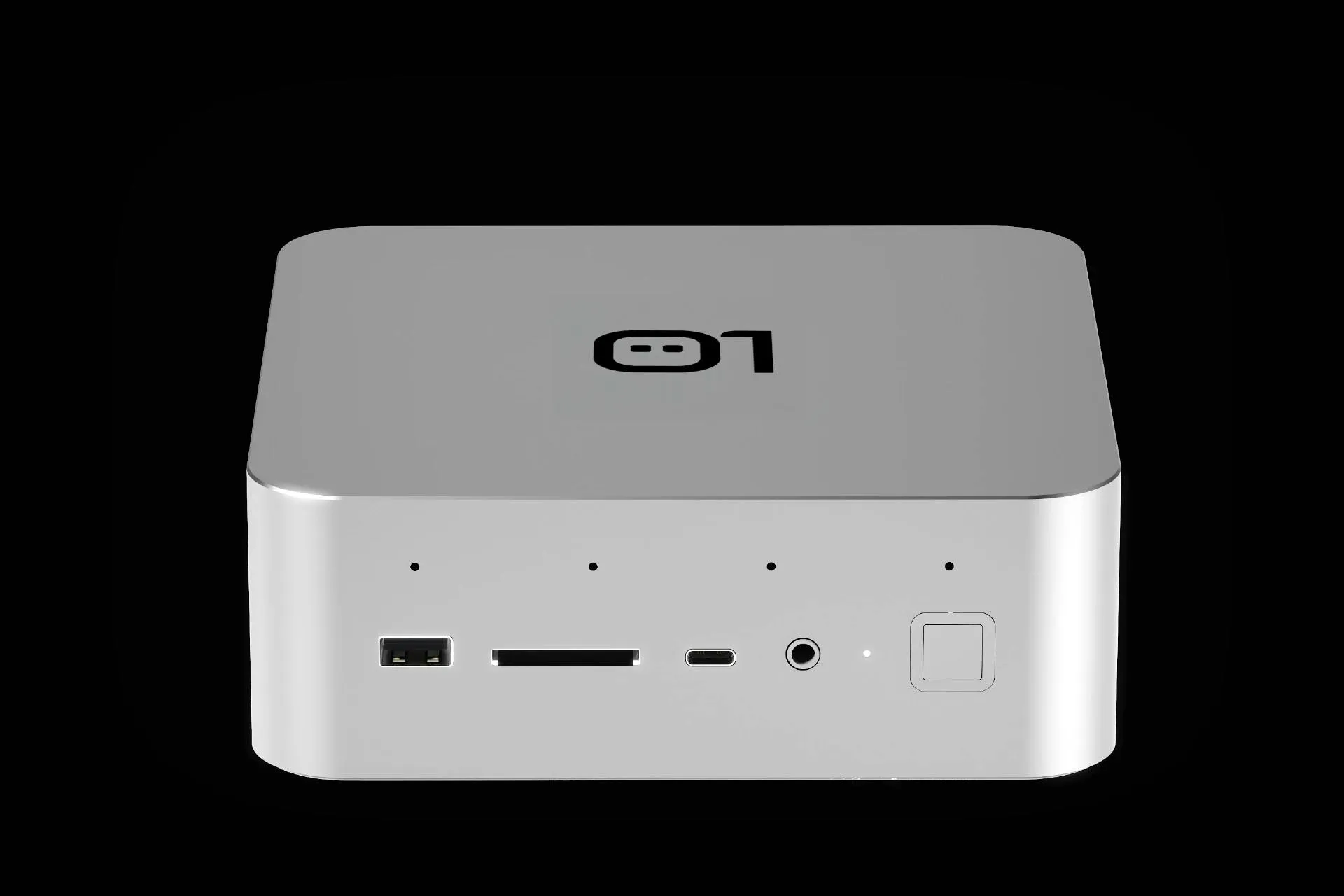
Own 1 is a fanless desktop AI computer starting at $3,899 that keeps compute, data, and memory entirely local, with no subscription fees or per-token billing, and can run two large language models and eight agents locally. Its core is the AI-native OwnXOS: each agent has an independent identity, budget, and audit receipts, and the system includes a built-in crypto wallet supporting x402 USDC payments for machine-to-machine payments; with user permission, compute can burst on demand to OwnXCloud. The device comes preinstalled with a private AI colleague, Nexy, responsible for orchestrating hundreds of agents. The article argues that it addresses demand for data sovereignty and subscription fatigue, but whether it succeeds still depends on local model capabilities, system ecosystem, and the actual productivity of agent orchestration.
When AI Computing Returns to the Desktop: The Ambition of Own 1
At a time when cloud-based large models dominate, a product called Own 1 proposes the opposite approach: bring AI compute back to your desktop and keep data and memory entirely local. This fanless personal AI computer, which received 71 upvotes and ranked 15th on Product Hunt, starts at $3,899 and promises no subscription fees and no per-token billing, attempting to redefine the boundaries of personal AI through a combination of hardware and operating system.
A Desktop Device Running Two LLMs and Eight Agents
The core selling point of Own 1 is very direct: a fanless desktop AI computer capable of running two large language models and eight agents locally, without sending any data to the cloud. Unlike AI hardware that depends on network connectivity, its computation happens entirely inside the device, meaning your conversations, files, and memories never leave the desk.
From a pricing standpoint, the $3,899 starting price is not cheap, but the company emphasizes "no subscription, no per-token billing." For heavy AI users or teams highly sensitive to data privacy, the long-term cost may actually be lower than continuously paying for cloud services. The fanless design also suggests a positioning of low power consumption and silent operation, suitable for long hours on an office desk.
OwnXOS: An AI-Native Operating System Designed for Agents
What truly sets Own 1 apart is the OwnXOS it runs. This is not a solution that layers AI features on top of a traditional operating system, but a system designed from the ground up for AI agents. Each agent has its own independent identity, budget, and audit receipts—in other words, agents are no longer black-box calls, but traceable, controllable execution units with cost boundaries.
The system also includes a built-in crypto wallet supporting x402 USDC payments, providing infrastructure for machine-to-machine payments between agents. When an agent needs to call external services or resources, it can complete small payments through this wallet without human intervention. This design makes an "agent economy" feasible on a local device.
A Hybrid Architecture with On-Demand Bursting
Own 1 does not completely reject the cloud. It adopts an "on-demand bursting" mechanism: only when the user explicitly allows it will computing tasks overflow to OwnXCloud. This design strikes a balance between privacy and elasticity—everyday tasks are handled locally, while sudden heavy workloads can temporarily leverage the cloud, but control always remains in the user's hands.
x402 is an open protocol for machine-to-machine payments, named after HTTP's "402 Payment Required" status code. Its core idea is to embed payment capability directly into the HTTP request flow: when a client (here, an agent) accesses a resource that requires payment, the server returns 402 along with payment requirements, and the client completes payment in cryptocurrency and then retries the request to obtain the resource. In the Own 1 scenario, x402 is combined with USDC (a stablecoin pegged 1:1 to the US dollar), enabling agents to pay for API calls, compute, or data in a programmable, approval-free manner. Compared with the traditional API key plus billing model, this mechanism requires no pre-registered account or credit card binding, making it particularly suitable for autonomously operating agents that transact with one another, and it provides a settlable underlying channel for the "agent economy."
Nexy: A Preinstalled Private AI Colleague
Every Own 1 comes preinstalled with Nexy, an agent positioned as a "private AI colleague." Its role is to orchestrate hundreds of agents working together, effectively acting as the manager of a local AI team. Users do not need to configure agents one by one; instead, they use Nexy as a unified entry point to dispatch tasks, allocate budgets, and review audit records.
From a product logic perspective, Nexy plays the role of the "human-machine interface," packaging complex multi-agent orchestration into an experience similar to collaborating with a colleague. The company emphasizes that "your data and memory stay local," meaning the context and preferences Nexy accumulates over long-term use will not leak out, forming AI memory that truly belongs to the individual.
"Agent orchestration" refers to a scheduling layer that determines task decomposition, execution order, context passing, and result aggregation among multiple agents. A single agent is usually only good at specific tasks, while complex goals often require collaboration among different roles such as planners, executors, and reviewers. The key problems the orchestration layer must solve include: how tasks are decomposed, who subtasks are assigned to, how to retry after failure, how each agent's budget and permissions are constrained, and how to maintain audit trails throughout. In Own 1, Nexy plays exactly this role, packaging the collaboration of hundreds of agents into a single conversational delegation—users only need to describe the goal, and Nexy handles decomposition and scheduling. This is also the key to whether multi-agent systems can truly generate productivity.
Market Signals for Local-First AI Hardware
The emergence of Own 1 is not an isolated phenomenon. As privacy awareness grows and local model capabilities improve, a wave of AI hardware focused on "data sovereignty" has begun to appear. Compared with pure software solutions, dedicated hardware's advantage lies in performance determinism and out-of-the-box experience; its disadvantages are the price threshold and upgrade flexibility.
The $3,899 price positions it in the high-end productivity tool segment, with target users likely being developers, researchers, privacy-sensitive professionals, or small teams. Its 71 upvotes on Product Hunt show it has attracted some attention, but only 1 comment also reflects limited early discussion. Whether this type of product can succeed depends crucially on the actual capabilities of local models, the richness of the OwnXOS ecosystem, and whether agent orchestration can truly deliver productivity gains.
For users tired of subscriptions and cloud data collection, Own 1 offers an option worth watching: truly holding ownership of AI in their own hands.
One-line Summary
Own 1 is a $3,899 fanless desktop device that brings LLM and agent compute back to local hardware.
Paragraph Summary
Own 1 is a fanless desktop AI computer starting at $3,899 that advocates keeping compute, data, and memory entirely local, with no subscription fees and no per-token billing, and can run two large language models and eight agents locally. Its core is the AI-native OwnXOS: each agent has an independent identity, budget, and audit receipts, and the system includes a built-in crypto wallet supporting x402 USDC payments to provide a foundation for machine-to-machine payments; with user permission, compute can burst on demand to OwnXCloud. The device comes preinstalled with a private AI colleague, Nexy, responsible for orchestrating hundreds of agents. The article argues that it addresses demand for data sovereignty and subscription fatigue, but whether it succeeds still depends on local model capabilities, system ecosystem, and the actual productivity of agent orchestration.
Related articles

LLM Application Development: A High-Paying Career Guide for Ordinary People
LLM application development offers fresh graduates up to 35K/month, with SP offers reaching 600K. This article explains the core skills, how to break in, and how ordinary people can seize AI opportunities through learning by doing.

Say Goodbye to AI Influencer Faces: A Complete Guide to Creating Visual Assets for AI Comic Dramas from Scratch
Bilibili creator shares a full workflow for zero-basics AI comic drama visual assets: use Doubao Work skills with script-first, visual references, and real-person texture to escape AI influencer faces, then lock character and scene consistency with asset sheet layouts, weapon detail images, scene nine-grids, and cinematic color palettes.

The AI Production Pipeline Behind Great Videos: From Research to Agent Validation
AI video production isn't just a model race. This article breaks down a transferable four-step pipeline: researching professional workflows, organizing a skill checklist, configuring agents, and experimental validation—and explains how general-purpose LLMs like DeepSeek can replace paid tools to run the entire process.