Paper Airplanes Meets Hardcore Engineering: The Foldable Flight Project Sparks Discussion
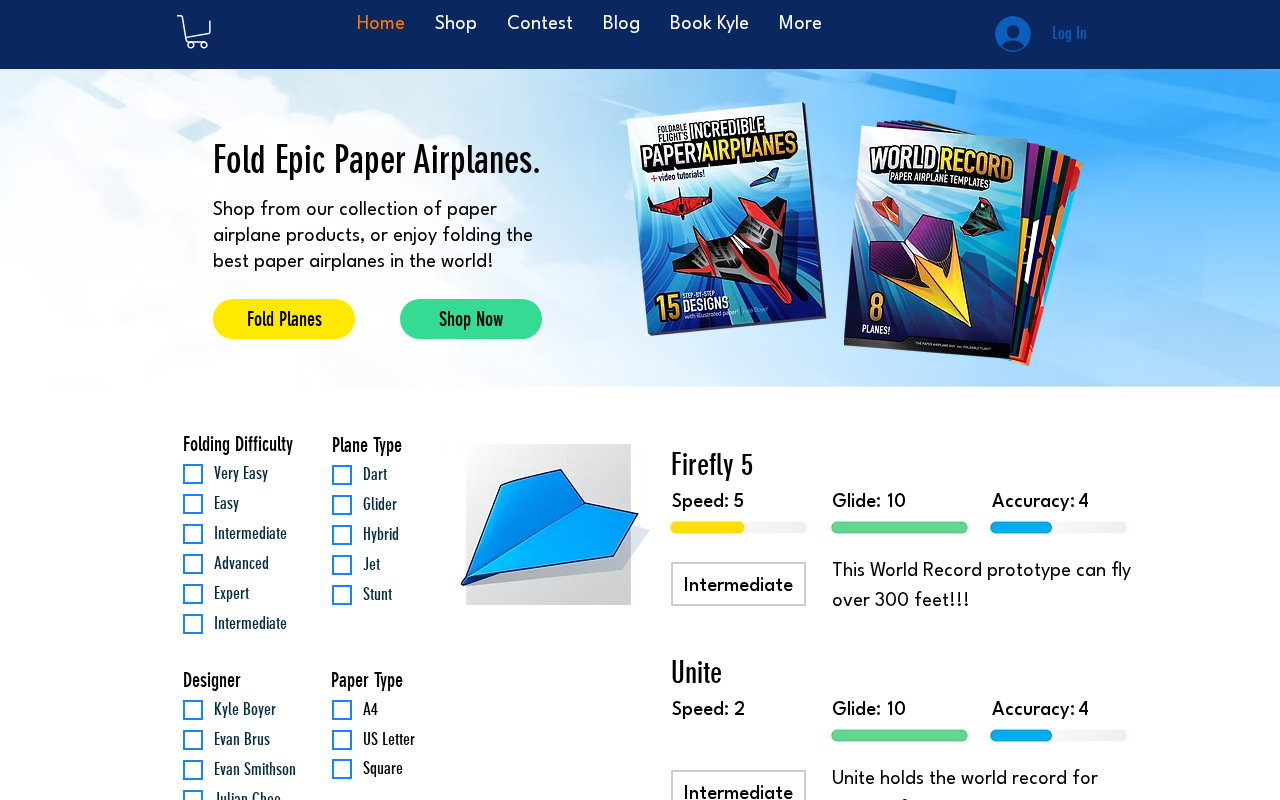
Foldable Flight's advanced paper airplane designs hit Hacker News, sparking tech community discussion on low-barrier engineering practice.
Foldable Flight is a project teaching epic, high-difficulty paper airplanes that earned 209 points and 44 comments on Hacker News. The article analyzes why it went viral: paper airplanes compress aerodynamics, geometric symmetry, and material mechanics into the folding of a single sheet. Folding precision, symmetry, and tunable-parameter thinking connect to assembly tolerance control and prototype iteration. Community discussion focuses on reproducibility, paper material effects, and design documentation. Meeting zero cost, intuitive results, and a large design space gives it natural shareability and offers indie developers a reference for making simple things systematic.
On Hacker News, a project called Foldable Flight climbed to the top of the charts with 209 points and 44 comments. Its content sounds surprisingly plain—teaching you how to fold epic, high-difficulty paper airplanes. But it is precisely this combination of everyday materials with precision structural design that has stirred the tech community's interest in discussing "low-barrier engineering practice."
Why Can a Paper Airplane Website Make It onto Hacker News?
The Hacker News readership consists mainly of engineers, developers, and hardcore tech enthusiasts, and daily discussions tend to revolve around programming languages, hardware, AI, and open-source projects. The fact that Foldable Flight gained attention here shows that what it offers is not an ordinary children's craft tutorial. Judging by the project's positioning, it focuses on "Epic Paper Airplanes"—paper airplane designs that pursue flight performance, structural complexity, and folding precision.
The value of this kind of content lies in how it compresses engineering concepts like aerodynamics, geometric symmetry, and material mechanics into the folding process of a single sheet of paper. Readers don't need any equipment or budget to get hands-on and verify whether a design is sound. For people accustomed to debugging code on a screen, this is a rare, tangible engineering feedback loop.
Hacker News (HN) is a tech community founded by Paul Graham in 2007 and operated by Y Combinator. Its ranking algorithm weighs vote counts, comment activity, and time decay together, so projects that make it to the front page usually combine technical substance with discussion value. HN's readership is highly concentrated among engineers, founders, and open-source contributors, and its content preferences lean toward projects that can be verified hands-on and have a clear technical core. That a paper airplane tutorial can reach the front page means it has passed this group's filter on two dimensions: "reproducibility" and "engineering depth."
The Engineering Bar Behind Paper Airplanes
Folding Precision Determines Flight Performance
The gap between an ordinary paper airplane and a high-performance one comes largely from the symmetry of the folds and the sharpness of the creases. Even a tiny deviation on either side of the wing will be amplified during flight into yaw or roll. The complex models showcased by Foldable Flight typically require multiple rounds of pre-folding, precise alignment, and symmetrical calibration—a process that itself resembles assembly tolerance control in engineering.
From an aerodynamic perspective, a paper airplane's lift comes from the pressure difference between the upper and lower surfaces of the wing, while pitching, yawing, and rolling often stem from an imbalance in lift between the left and right wings. Tiny asymmetries during folding change the angle of attack of the airfoil, making one side generate more lift than the other and thereby producing a rolling moment; creases that aren't sharp enough increase the surface roughness of the wing and raise induced drag. The "tolerance control" approach commonly used in engineering applies here as well: first complete a reference crease as a positioning guide, then fold symmetrically step by step, and finally verify the geometric consistency of both sides visually or with simple tools. This is exactly the assembly-tolerance concept migrated into a hands-on setting.
From "It Flies" to "It Flies Controllably"
Simple paper airplanes chase only gliding distance, whereas epic designs tend to focus on adjustability: changing the flight path by tuning the elevator angle, wing dihedral, or center of gravity. This mindset of tunable parameters is directly in line with the iterative methods of engineering prototypes. Many discussions in the comments also revolve around "why won't my version fly stably," reflecting that readers are approaching this with a debugging mindset.
The adjustable parameters of a paper airplane correspond to the control surfaces of a real aircraft: the elevator deflection angle affects pitch trim, wing dihedral determines lateral stability, and the center of gravity relates to the static stability margin. When the center of gravity is too far back, the paper airplane becomes sensitive, prone to stalling or entering a spiral; moving the center of gravity forward improves pitch stability but sacrifices gliding efficiency. This loop of "tune—test fly—observe—tune again" is highly consistent with the iterative methods of engineering prototypes, and it is also why tech readers find it easy to relate to.
What the Tech Community Is Focusing On
Among the 44 comments on Hacker News, the discussion did not stop at the "looks cool" level. The tech community's habit is to break a hobby project down into an analyzable system, and paper airplanes are no exception. It is reasonable to infer that the discussion touched on the reproducibility of folding steps, the impact of different paper materials on flight, and how to record and share designs in a more systematic way.
This discussion atmosphere illustrates a phenomenon: when a project is concrete enough and the barrier is low enough, engineers are more willing to participate, because they can quickly reproduce it, quickly verify it, and quickly propose improvements. That is more appealing than simply reading an abstract concept.
The Spread Logic of Low-Barrier Projects
Foldable Flight's rise is no accident. It satisfies several conditions at once: zero cost to get started, results that can be judged intuitively, and a design space large enough to explore. These three points give it a natural "shareability"—after someone folds a model that performs well, they easily feel the urge to show it off and discuss it.
For content creators and indie developers, this is also a sample worth referencing. A project's technical depth doesn't necessarily depend on complex tools or a massive budget; doing one thing finely enough and reproducibly enough can also earn recognition from the tech community. Paper airplanes seem simple, but making simple things systematic is itself an engineering capability.
(Note: The original material contains only the project link and community popularity data, with no specific model details or comment content. This article's analysis of technical details is based on reasonable inferences from the project's positioning.)
Related articles

GPT-6 Security Model and the AI Attack-Defense Escalation: This Week in AI
This week in AI: OpenAI's GPT-6 Saber found 948 Linux kernel root-escalation paths; Cursor deploys full apps from one sentence; Binance details a social engineering attack; C++26 fails ISO vote.

KIKUmap: Manage Your Claude and ChatGPT Conversations with Mind Maps
KIKUmap is a macOS menu bar app that visualizes Claude and ChatGPT conversations as mind maps with real-time status. Free and open source.

Hugging Face Executive Warns: Cyberattacks Are Eroding the Openness of Open-Source AI
Hugging Face executive Irene Solaiman warns that rising cyberattacks on open AI platforms may force stricter security limits, threatening the openness of the open-source community and affecting the developer ecosystem.