Protecting Democracy and Free Elections: A Technology Perspective on Long-Term Progress

Analyzing the double-edged sword of technology on election integrity and paths to long-term progress from a tech and AI perspective.
The article uses a social media statement about protecting democracy and free elections as a starting point to analyze from a technology and AI perspective. It first points out technology's dual impact on elections: while electronic voting and social media improve efficiency, AI-generated disinformation and cyberattacks threaten integrity. It then introduces countermeasures like blockchain for immutable voting records and AI detection tools. The article further explores technology's role in long-term social progress, emphasizing AI and big data in policy and public services, while warning of ethical risks like algorithmic bias and privacy breaches, calling for transparent AI governance and public participation. The conclusion stresses collaborative efforts between technology and society, with technology for good as key to a just future.
Introduction
In today's digital era, the protection of democracy and free elections has become a global focus. A brief statement from social media—"I love democracy. Congrats and thank you to all Americans on protecting free and fair elections. We must protect the long arc of progress."—has resonated widely. This article will explore the deeper meaning behind this view from the perspective of technology and AI, analyze how technology affects election integrity, and consider how to safeguard long-term social progress.
Technological Challenges to Democracy and Free Elections
The Impact of Technology on Elections
While technological development improves election efficiency, it also brings new challenges. From electronic voting systems to social media information dissemination, every link may affect election integrity. For example, AI-generated disinformation may mislead voters, while cyberattacks may threaten the security of voting infrastructure. Although the original statement did not mention specific cases, the technological risks in this field cannot be ignored.
AI-generated disinformation (Deepfake and synthetic content): This refers to the use of technologies such as generative adversarial networks (GANs) or diffusion models to automatically synthesize highly realistic text, images, audio, or video content. In election scenarios, such technologies can be used to fabricate candidate statements, create fake news or inflammatory videos, and spread them rapidly through social media algorithms, thereby misleading voters' perceptions and exacerbating social division. The core risk lies in the difficulty of distinguishing content authenticity with the naked eye, coupled with extremely low production costs and rapid dissemination, posing a direct threat to election integrity. Current main countermeasures include AI content detection tools, digital watermarking and content provenance technologies, as well as platform-level labeling and downranking mechanisms for disinformation.
Technological Means to Protect Elections
To address these challenges, the tech community is actively developing solutions. Blockchain technology is being explored to ensure the immutability of voting records, while AI detection tools are used to identify and intercept disinformation. The goal of these technological means is to enhance election transparency and maintain the credibility of the democratic process.
Blockchain voting records: Blockchain is a distributed ledger technology that, through cryptographic hash chains and consensus mechanisms, makes data difficult to tamper with once written and allows all nodes to verify jointly. When applied to election scenarios, the core idea is to record voting records on-chain for certification, achieving transparent auditability and tamper resistance in the voting process. However, blockchain is not a panacea: it mainly ensures the integrity of the record layer and cannot solve problems such as the voting terminal itself being compromised, voter identity verification, or ballot privacy (such as voting anonymity). Therefore, practical applications usually adopt a hybrid architecture of "off-chain voting, on-chain certification" and require strict cryptographic protocols and audit processes to form a complete election security system.
Technological Support for Long-Term Progress
The Interaction Between Technology and Social Progress
"Protecting the long arc of progress" is not only a political slogan but also a core goal of technological development. AI and big data are playing an increasingly important role in policy-making and public service optimization. Through data-driven decision-making, society can more accurately identify problems and formulate solutions, thereby promoting long-term progress.
Technology Ethics and Responsibility
However, technological progress is also accompanied by ethical risks. Issues such as algorithmic bias and privacy breaches may exacerbate social inequality and hinder progress. Therefore, tech practitioners need to uphold a responsible attitude to ensure that technological development serves the public interest. This includes establishing transparent AI governance frameworks and strengthening public understanding of and participation in technology.
Algorithmic bias: This refers to systematic bias introduced in machine learning models during training data or design, leading to unfair output results for specific groups. In election and public governance scenarios, algorithmic bias may manifest as: misjudgments of minority or low-income groups by voter profiling models, information recommendation algorithms exacerbating "information cocoons" and polarization, and unfairness in resource allocation by automated decision-making systems. Its roots often lie in historical biases in the training data itself, improper feature selection, or single optimization objectives. Mitigating algorithmic bias requires data audits, fairness constraints (such as debiasing algorithms), model interpretability tools, and governance mechanisms with multi-stakeholder participation, which is also one of the core topics of AI ethics governance frameworks.
Conclusion
Protecting democracy and free elections and safeguarding long-term progress require collaborative efforts between technology and society. From ensuring election security to promoting responsible innovation, every step is crucial. As emphasized in that social media statement, each of us has a responsibility to uphold this process. Through technology for good, we can jointly build a more just and progressive future.
One-line Summary
An analysis from a technology and AI perspective of the double-edged sword effect of technology on election integrity and the path to safeguarding long-term progress.
Paragraph Summary
The article takes a social media statement about protecting democracy and free elections as a starting point and analyzes it from a technology and AI perspective. First, it points out the dual impact of technology on elections: while electronic voting systems and social media dissemination improve efficiency, AI-generated disinformation and cyberattacks also threaten election integrity. Second, it introduces the tech community's countermeasures, including blockchain to ensure immutable voting records and AI detection tools to intercept disinformation. The article further explores the interaction between technology and long-term social progress, emphasizing the supporting role of AI and big data in policy-making and public service optimization, while warning of ethical risks such as algorithmic bias and privacy breaches, and calling for the establishment of transparent AI governance frameworks and strengthened public participation. The conclusion emphasizes that protecting democracy and long-term progress require collaborative efforts between technology and society, and that technology for good is the key to building a just future.
Related articles
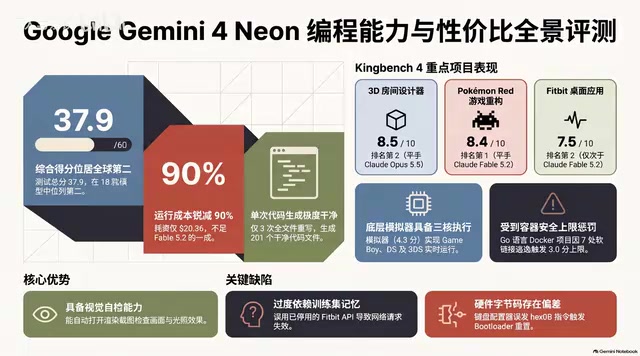
Gemini 4 Neon Hands-On: Value King or Confident Catastrophe?
Gemini 4 Neon review: 1M-token context, four thinking levels, 201 files in one KingBench4 pass at one-tenth Fable 5.2's cost—but it hallucinates fake data, leaves 7 symlink escapes, and bricks keyboards.

Google Gemini 4 Neon Hands-On: 6 3D Works That Impress and Fail
Hands-on with Google Gemini 4 Neon on a 3060 laptop: 6 3D works tested. Sunshower Fishing Harbor and mechanical keyboard impress; soft-body physics and faces fall short.
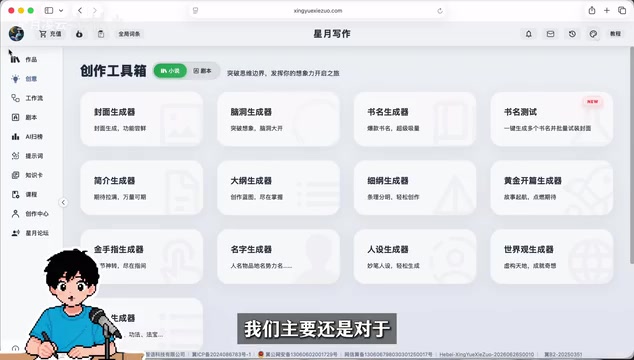
Gemini 4 Neo Web Novel Writing Test: Faint AI Flavor, Textured Dialogue
Bilibili creator's first-look review of Gemini 4 Neo for Chinese web novel writing: testing a Three Kingdoms transmigration opening with faint AI flavor, emotionally textured dialogue, and strong crisis building, plus comparison of 4A/4H/4C models and full workflow demos.