REA Reverse Engineering Toolkit: Helping AI Agents Understand Software Internal Logic
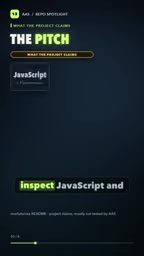
REA lets AI agents analyze software internals via MCP, but has gaps and cost barriers.
REA is an MIT-licensed open-source toolkit that connects to coding agents like Claude Code, Codex, and Cursor through MCP to support reverse analysis of JavaScript, Electron, .NET, and native binaries. Tests show it can map files and function connections in simple projects, but it misses custom logic and flags many unresolved entries, making it unfriendly to beginners. It requires a recent Node environment, and deep native binary analysis depends on external engines such as Ghidra, Hopper, or IDA, some of which are paid. Running unfamiliar apps also carries security risks, cloud models receive analysis data, and reverse-engineering capability does not equal legal authorization. REA is better suited to experienced developers who need to understand unfamiliar codebases or conduct security research.
When AI Starts Taking Software Apart for You
When you see a clever feature in an application, many people wonder: how is this actually implemented? An open-source toolkit called REA (Reverse Engineer Anything) is trying to turn that curiosity into an actionable engineering workflow. It is MIT-licensed and connects to mainstream coding agents like Claude Code, Codex, and Cursor through the MCP protocol, enabling AI agents to investigate how software works internally.
According to the video, REA can inspect JavaScript and Electron applications, websites, .NET programs, and native binaries. After collecting evidence, the AI agent explains how a given feature "appears to work." Officially claimed use cases include debugging your own software, learning from others' implementation approaches, and handling interoperability requirements.
MCP (Model Context Protocol) is an open protocol proposed by Anthropic in late 2024, intended to standardize how AI models interact with external tools and data sources. It uses a client-server architecture: the coding agent acts as the client and communicates with the MCP server via JSON-RPC, allowing it to safely invoke external capabilities such as file systems, databases, and analysis tools. REA implements an MCP server to expose reverse-engineering analysis capabilities to agents like Claude Code, Codex, and Cursor, so the AI can call REA to collect evidence and generate explanations without having that capability built in. This design decouples the tool from the agent, allowing the same set of analysis capabilities to be reused across different agents.
Official Repository and Security Warning
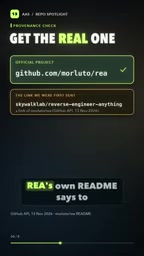
One detail is worth noting: the video author specifically emphasizes that the official project address is ludo/REA, while the link he initially received was actually a fork. REA's readme explicitly states that you should only trust the official repository, the rea.tools website, or the REA agent's NPM package.
It is not uncommon for open-source projects to be forked and redistributed, but when it comes to highly sensitive tools like reverse engineering, source credibility directly affects operational safety. For developers planning to try it, identifying the official channel is the first step.
Real-World Performance: Highlights and Clear Limitations
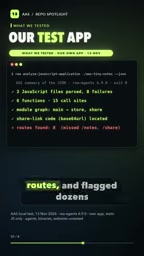
The video author tested with a TinyNotes app he wrote himself. As a result, REA found all three files and mapped out the connections between functions, including the code logic related to ShareLink. This shows that on relatively simple projects, it can indeed provide valuable analysis.
But the problems are equally obvious: it missed the author's custom routing logic and flagged a large number of entries it could not resolve. The conclusion in the video is blunt—"Beginner-friendly? Not really."
Usage Barriers and Hidden Costs
REA has runtime requirements: it needs a relatively recent version of Node and JS, and the video author mentions that the default version on his Mac was too old. This may seem like a minor issue, but it is enough to stop beginners at the first step.
Deeper analysis capabilities depend on external engines. Static JavaScript and .NET inspection requires no additional tools, but in-depth analysis of native binaries requires Ghidra, Hopper, or IDA, some of which are paid. This means REA's "free" status only covers shallow scenarios, and costs rise when you go deeper.
Ghidra, Hopper, and IDA are mainstream tools in the reverse-engineering field for analyzing binary files. Ghidra is open-sourced by the U.S. National Security Agency (NSA); it is free and powerful, offering decompilation, disassembly, and script extension capabilities. Hopper is a commercial disassembler for macOS, known for being lightweight and easy to use. IDA Pro is the industry-standard commercial reverse-engineering tool, supporting multiple architectures and advanced analysis plugins, but it is expensive. When analyzing native binaries, REA relies on these tools to perform disassembly and preliminary analysis, then hands the results to the AI for explanation. Of the three, only Ghidra is free; Hopper and IDA are both paid software, which constitutes the actual cost threshold for REA in deep binary analysis scenarios.
Risk Warning: Capability Does Not Equal Authorization
The reminder at the end of the video deserves separate attention. Running an unfamiliar application carries higher risk than merely reading its files; the AI's explanations may also be wrong; and if you use a cloud model, your analysis results will be sent to the model provider.
The most important point is the legal and ethical boundary: being able to reverse engineer anything does not mean you have permission to reverse engineer everything. For developers who want to add REA to their toolkit, it is suitable for understanding your own code and learning implementation patterns, but before handling third-party commercial software, be sure to confirm authorization and compliance.

Who It Is For
REA is more of an advanced tool for experienced developers than an entry-level learning assistant. It can aggregate clues scattered across files, functions, and call relationships and hand them to an AI agent to generate explanations, but users must judge the accuracy of those explanations themselves. For builders who frequently need to understand unfamiliar codebases, handle interoperability issues, or conduct security research, it may be a practical supplement; for newcomers just getting into reverse engineering, environment setup, toolchain dependencies, and result verification will all pose significant barriers.
Related articles

Controversial US Surveillance Law Section 702 Nears Expiration: Congress Races to Renew
FISA Section 702 surveillance authority is nearing expiration. Congress is urgently pushing reauthorization, possibly attaching it to the NDAA. This article analyzes the controversies, legislative strategy, and future outlook.

iFood Manages 15,000 Repositories with Coding Agents: An Architectural Lesson at 4 Cents per Run
How iFood scaled coding agents to 15,000 repositories with its Remote Agents Platform: REST API-driven, GPT-5.6 Luna selection, structured output acceptance, $0.04 per run, security fixes doubled.

The No-Space Vacuum: The Mystery of Geometric Origins in Quantum Gravity
The "no-space vacuum" in group field theory refers to a state with no geometric quantum excitations—not empty space, but no space. This article explains how this quantum gravity concept yields macroscopic cosmic geometry through condensed matter mechanisms, along with the theory's current status and controversies.