RepoPrompt: An Open-Source Tool for Precise Control Over AI Coding Assistant Context

RepoPrompt gives developers precise control over which code context is fed to AI coding assistants.
One of the core pain points with AI coding assistants is context getting out of hand — models decide what to read on their own, often missing critical files or introducing irrelevant noise. RepoPrompt Community Edition (free, open-source Mac app) returns context assembly to the developer, supporting auditable context packages built from manually selected files, code maps, project structure, and Git diffs. A built-in MCP server connects it to agents like Claude and Cursor, and installation takes just two Homebrew commands.
The "Guessing Game" Problem with AI Coding Assistants
Point an AI coding assistant at a large project and it tends to go hunting blindly — opening the wrong files, missing the truly critical ones, then making changes without genuinely understanding the codebase. The cost is straightforward: wasted time, heavy token consumption, and cleanup work on the back end.
The root cause is "letting the agent decide what to read." When the model assembles context on its own, you can't see what information it has, and you can't intervene in its judgment. RepoPrompt Community Edition was built specifically for this pain point — a free, open-source Mac app whose core idea is to let developers precisely choose which code snippets to hand to the AI, rather than delegating that decision entirely to the model.

How It Restructures the Context Assembly Process
RepoPrompt hands context control back to the human. It helps you assemble context across four dimensions:
- Files you manually select: Feed only the parts relevant to the current task, avoiding information overload
- Code maps: Provide a structural overview of the codebase
- Project structure: Help the agent understand the overall organization
- Git diffs: Focus on what just changed
The key advantage of this approach is auditability. Before the agent actually starts working, you can see the complete context package it's about to receive. In other words, you're no longer passively accepting results from behind a black box — you're confirming the accuracy of information at the source.
This "review before execute" workflow is fundamentally trading determinism for reliability. For scenarios where code quality requirements are high and you don't want the agent making arbitrary changes, this kind of fine-grained control is especially valuable.
Code maps are lightweight symbolic summaries of a codebase's structure — typically including class names, function signatures, module exports, and similar information defined in files, but without the implementation details. Compared to feeding complete source files directly, code maps allow the model to build a "skeletal understanding" of the entire codebase at minimal token cost — knowing which module a feature lives in and how functions relate to each other, so it can then pinpoint specific implementations precisely when needed. This layered strategy (map first, then details) is a common engineering practice for handling large projects that exceed a model's context window, and it's one of the core differentiators between RepoPrompt and simple file-paste tools.
Built-In MCP Server Bridges the Tool Ecosystem
RepoPrompt ships with a built-in MCP (Model Context Protocol) server — the standard interface that currently lets coding agents use external tools. Through it, you can connect your own agent to search the project, inspect files, and run complete sessions within the same native Mac window.

As MCP has gradually become an industry-consensus standard protocol, RepoPrompt is not an isolated, closed-off tool — it's designed to work alongside the mainstream AI coding ecosystem. Unifying search, file inspection, and session management in a single native interface also reduces the friction of switching between multiple tools.
MCP (Model Context Protocol) is an open standard proposed and open-sourced by Anthropic in late 2024, designed to address the fragmentation problem in integrating AI models with external tools and data sources. Previously, every AI application needed to develop separate adapters for capabilities like file systems, databases, and search — costly to maintain and hard to reuse. MCP uses a client-server architecture: AI applications act as clients, and tool providers implement MCP servers, with both sides communicating via a unified protocol. This design is analogous to REST API conventions in web development — a shared language makes ecosystem collaboration possible. Major AI coding tools including Claude and Cursor now support MCP, enabling standards-compliant tools like RepoPrompt to be called directly by these agents without needing separate adapters for each platform.
Installation and Getting Started
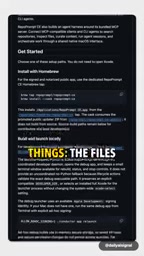
If you have Homebrew installed on your Mac, two commands from the project's GitHub page are all it takes to complete installation and get a signed app in your Applications folder. A signed app means no need to work around macOS security restrictions — it just runs.
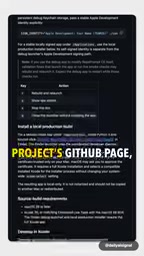
The recommended way to get started is simple: load a project, select only the files relevant to one specific task, then compare the results against your usual approach. This A/B-style experience makes it easy to feel the difference in accuracy and efficiency between "curated context" and "letting the agent roam freely."
Implications for AI Coding Workflows
RepoPrompt represents a trend worth watching: as AI coding assistants grow more capable, developers actually need finer-grained management of context feeding — not less. A more powerful model doesn't automatically produce better results just because you throw more information at it. On the contrary, precise, relevant, and auditable context often delivers more value than massive but noisy input.
As a free, open-source tool, RepoPrompt lowers the barrier to experimenting with this kind of workflow. For Mac developers who frequently use AI-assisted coding and are frustrated by agents that constantly "go off the rails," it offers a practical option for keeping control in your own hands.
Related articles

LangChain Retry Middleware Configuration: Practices and Selection Guide
Based on Reddit community discussion, this article analyzes LangChain ModelRetryMiddleware retry parameter configuration practices, covering the selection logic and alternatives for key options like max_retries, backoff_factor, and jitter.

Texas Senate Race in Trouble: Why Are Republicans Nervous?
Texas Senate race stirs Republican anxiety. Based on street interviews, this article analyzes the Democratic offensive in funding, organization, and running everywhere, and how Republicans are defending "Texas, Texas" amid the political pendulum effect.

Gemini Chat Now Generates and Edits Google Docs Directly, a New Breakthrough in Office Productivity
Google Gemini's chat interface now generates and edits PDF, Google Docs, Sheets, Slides, Markdown, TXT, and code files. Available to all users; web supports all formats, mobile only PDF for now.