Ring Enters Robotics: Launching Home Security Drones and Enterprise Patrol Robots
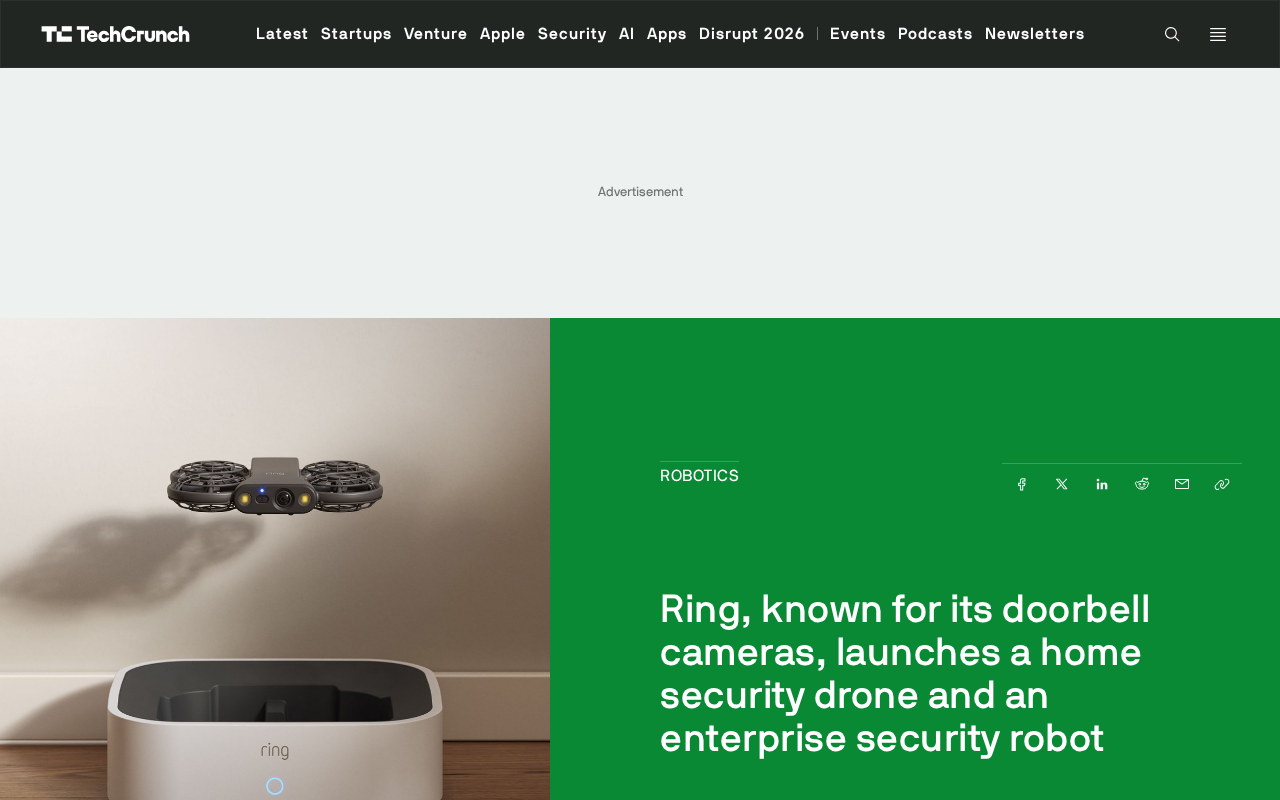
Ring launches a home security drone and enterprise patrol robot, shifting security competition toward mobile perception.
Ring has entered robotics with a home security drone and an enterprise rolling patrol robot. Both continue Ring's hardware-plus-cloud-subscription model, using mobile terminals to replace fixed cameras and solve monitoring blind spots. The home drone faces battery, obstacle avoidance, noise, and privacy challenges; the enterprise robot must meet higher reliability, compliance, and integration requirements. The move marks Ring's shift from a single doorbell category to a full security solution provider and echoes Amazon's broader robotics strategy.
Ring, which started with smart doorbells, is extending its security capabilities from the doorstep to the air and the ground. The Amazon-owned company has announced its entry into the robotics field, simultaneously launching a home security drone and a rolling patrol robot for enterprises.
From Doorbell to Robot: Ring's Product Boundary Expansion
Ring's most well-known products have been doorbell cameras and home monitoring devices, with a core logic of connecting visual information at the home entrance to the cloud so users can check outside their door anytime, anywhere. The two robot products launched this time continue the same approach—replacing fixed viewpoints with mobile cameras, extending the scope of "seeing" from fixed points to the entire space.
According to the original report, Ring has launched a home security drone and a rolling robot designed for commercial scenarios, the latter of which can be used for patrolling and protecting enterprise premises. What the two products share is that neither is a static device; both are security terminals that can actively move and cover a larger area.
This move also marks a change in Ring's role within the Amazon ecosystem: from a hardware manufacturer in a single category to a more complete security solution provider.
Home Security Drone: Putting Cameras in the Sky
The value of a home security drone lies in the freedom of viewpoint. Traditional home cameras are limited by installation location and have obvious monitoring blind spots, whereas a drone can move indoors or in the yard and fly to a designated position on demand to check the situation. For large homes or multi-story courtyards, this capability is hard for fixed cameras to replace.
However, home drones also face many practical issues in security scenarios: battery life, automatic obstacle avoidance, noise control, and the storage and transmission of user privacy data will all affect product usability. The original material did not disclose the specific specifications of this drone, so its actual performance remains to be verified after the product hits the market.
From a product positioning perspective, it is more like an extension terminal of Ring's existing security subscription service—hardware handles collection, cloud services handle storage and alerts. This is also Ring's longstanding business model.
When a home drone flies indoors, positioning and obstacle avoidance mainly rely on visual-inertial odometry (VIO) and the fusion of downward/front-facing sensors rather than GPS—there is no satellite signal indoors, and this technical route determines the upper limit of its stability in low-light and textureless-wall environments. In terms of battery life, consumer-grade indoor drones generally last on the order of 5-15 minutes, meaning security scenarios are more likely to be "on-demand takeoff inspections" rather than "long-term aerial surveillance." In addition, the U.S. Federal Aviation Administration (FAA) has clear restrictions on airspace and beyond-visual-line-of-sight operations for outdoor flight. If a home security drone involves flight outside the yard, compliance boundaries must be considered.
Ring's business model centers on low-priced hardware to build volume and monetization through subscription services. Its Ring Protect subscription provides video storage, historical playback, and smart alerts. As a new terminal, the drone naturally fits this model: if videos captured in flight need to be reviewed and retained in the cloud, they will almost inevitably be tied to a subscription. This also explains why Ring emphasizes a "mobile camera" rather than单纯的 hardware specs—the real revenue comes from ongoing service fees.
Enterprise Patrol Robot: A New Entry Point for Commercial Security
Compared with the home drone, the rolling patrol robot for enterprises points to a clearer commercial need: nighttime patrol and anomaly detection at enterprise premises. Such scenarios have traditionally relied on security personnel or fixed monitoring systems; the former has high labor costs, while the latter has coverage dead spots.
Mobile patrol robots can cruise along preset routes and complete inspection tasks with cameras and sensors. Ring's choice to enter the enterprise market at this point shows that it hopes to replicate the technology and cloud capabilities accumulated in consumer security into commercial scenarios.
It should be noted that enterprise security has far higher requirements for reliability, data compliance, and system integration than home products. Whether Ring can establish a foothold in this market depends on its subsequent channel and service capability building. The original report did not mention specific functional details or pricing information for this robot.
The rolling patrol robot is a branch of ground mobile robots (AGV/AMR). Its technology stack usually includes LiDAR or depth cameras for mapping and positioning, cruising along preset paths, and anomaly detection (such as intruders, fire smoke, and abnormal equipment noise). Commercial scenarios also require integration with existing video management systems (VMS), access control systems, and alarm platforms, and data must meet enterprise internal compliance and industry regulatory requirements. Compared with home products, this type of robot is closer to "a mobile node of the security system," and sales often follow project-based and channel cooperation models rather than pure e-commerce.
Industry Signals of Robotic Security
Ring's simultaneous launch of a home drone and an enterprise robot sends a clear signal: the focus of competition in the security industry is shifting from "the number of cameras" to "mobile perception capability." The market for fixed cameras has become saturated, and robot terminals that can move autonomously and be deployed on demand are becoming a new direction for differentiation.
This trend also echoes Amazon's overall layout in robotics. As one of its brands, Ring undertakes the task of implementing security scenarios. The two products cover both home and enterprise ends, forming an initial product matrix from consumer-grade to commercial-grade.
Of course, product launch is only the first step. Mobile security devices involve a series of practical issues such as airspace management, privacy boundaries, and battery safety. The extent to which these issues are resolved will directly determine how far Ring's expansion can go.
Frequently Asked Questions
How many robot products did Ring launch this time?
According to the original report, there are two: a home security drone and a rolling patrol robot for enterprises.
What is the main difference between these two products?
The home drone targets home security scenarios and emphasizes mobile viewpoints and monitoring coverage; the enterprise robot targets commercial premises and is used for patrolling and protecting enterprise facilities.
When will the products be available and how much will they cost?
The original material did not disclose launch timing or pricing information.
One-line Summary
Ring launches a home security drone and an enterprise patrol robot, as security competition shifts toward mobile perception.
Paragraph Summary
Ring has announced its entry into robotics, launching a home security drone and a rolling patrol robot for enterprises. The two products continue Ring's business model centered on hardware collection and cloud-based storage and alerts, replacing fixed cameras with mobile terminals to solve monitoring blind spots. The home drone faces practical challenges such as battery life, obstacle avoidance, noise, and privacy; the enterprise robot must meet higher requirements for reliability, data compliance, and system integration. The move marks Ring's shift from a single doorbell category to a complete security solution provider and also echoes Amazon's overall robotics layout. The article notes that the focus of competition in the security industry is shifting from camera count to mobile perception capability, but launch timing and pricing have not been disclosed, and issues such as airspace management and privacy boundaries will determine the effectiveness of the expansion.
Related articles
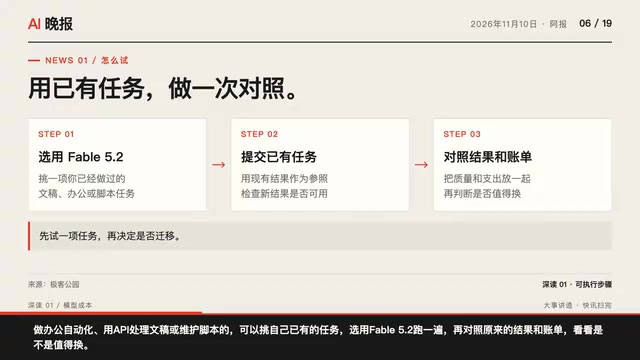
Claude Code Reportedly Leaks Secrets to GitHub, Sounding the Alarm for AI Coding Security
Claude Code reportedly exposed passwords and API keys to GitHub, per Ars Technica. We recap the incident alongside Claude Fable 5.2's 20% price cut and Meta Muse Ember, urging developers to check commit settings before granting permissions.

Getting Started with LangChain: Core Concepts of the Agent Development Framework
Starting from the three major limitations of LLMs, this article explains LangChain's positioning and value as an Agent development framework: limited knowledge, external system interaction, and state retention, along with its official documentation system and learning path.

Ring Launches $999 Autonomous Patrol Robot RoverCam
Ring launches RoverCam, an autonomous mobile security camera with a 4K periscope camera, two-way talk, and built-in siren. Priced at $999.99, it targets commercial use and is seen as a de-personified rebirth of the Astro robot.