Rocky and Mickey: What a Silver-Screen Mentorship Teaches Us About the AI Era

Using the Rocky–Mickey mentorship to argue for the irreplaceable value of experience transfer and long-termism in the AI era.
The article uses the classic dialogue between Rocky and Mickey in the *Rocky* series as a thread, mapping the boxing mentorship onto team growth and knowledge transfer in the AI industry. The author points out that Mickey's "tomato" diagnosis mirrors AI teams' lack of core methodology; the scar display symbolizes the experiential "pain" that can't be datafied; chicken-chasing training and the southpaw overhaul parallel agile iteration and bottom-layer restructuring. The article further reveals the paradox of legacy—the mentor's ultimate mission is to make the student independent, yet losing the mentor too early causes organizational capability gaps. The conclusion: algorithms can encode technology, but they cannot encode the insistence on detail, the reverence for pain, and the commitment to a promise—the AI era needs more "Mickey-style" long-termist mentors.
Rocky and Mickey: What a Silver-Screen Mentorship Teaches Us About the AI Era
In an age where AI is reshaping everything, we're used to talking about algorithms, compute, and data. But when I rewatched the relationship between Rocky Balboa and Mickey Goldmill in the Rocky series, it suddenly struck me: those old-world lessons about mentorship, growth, and legacy are exactly the scarcest anchors in the technological flood. This collection of classic dialogue released by Amazon MGM isn't just nostalgia—it's a mirror held up to the future.
From "Tomato" to "Fighter": Mickey's Blunt Diagnosis
The first time Mickey truly "sees" Rocky is when Rocky is about to be thrown out of his locker. That insult—"you're a tomato"—is essentially a precise industry diagnosis: you've got strength and guts, but you lack the "tools" to become a champion. In the AI world, this is exactly like those teams that only know how to tune hyperparameters and pile on compute—full of passion, but with no methodology for building a core moat.
Mickey doesn't hold back in pointing out that Rocky "fights like a gorilla." This isn't cruelty; it's pattern recognition built on decades of experience. Today's AI founders need that same "Mickey-style" clarity: no matter how big your model is, without a deep understanding of the business context, it's just an expensive toy. With the "tomato" metaphor, Mickey demystifies Rocky's current state—admitting mediocrity is the first step to change.
"Tomato" in boxing slang often refers to fighters who get beaten bloody and swollen, and it also carries the derogatory implication of "soft target" or "easy to crush." Mickey's use of the word isn't mere humiliation—it's a typical piece of insider "industry jargon" that precisely conveys Rocky's comprehensive shortcomings in technique, tactics, and professional attitude. In the AI context, similar jargon includes "hyperparameter jockey," "alchemist," and "demo-grade product"—all of which reveal a team's true level in a crude but blunt way. Understanding the in-group nature of such terms helps us distinguish which criticisms are emotional venting and which are precise, experience-based diagnoses.
The Value of Experience: The "Pain" That Algorithms Can't Replace

When Rocky retorts, "Where were you when I needed help ten years ago?" Mickey doesn't argue—he shows his scars: "I've got so many holes in my face, saliva squirts out of my cheeks." This is experience at its most naked. In the AI era, data can train models, but only real "pain"—the pitfalls you've stepped in, the lessons from failure, the memories of being beaten down by the market—can forge truly reliable judgment.
Mickey says, "I've got pain, and I've got experience," and Rocky fires back, "I've got that too." But Rocky's experience is scattered and unrefined. Mickey's value lies in his ability to turn pain into teachable knowledge. This is precisely the core bottleneck in AI deployment today: we have massive amounts of data, but we lack mentor figures who can convert that data into "actionable wisdom." What companies need isn't more dashboards—it's a Mickey who can say, "You're going to take a punch right here."
"Pain" in sports training and skill-acquisition research is part of what's called "embodied cognition": knowledge isn't only stored in the brain but also inscribed on the body—scars, muscle memory, conditioned reflexes. When Mickey shows his scars, he's essentially displaying a form of knowledge that can't be textualized or datafied. Current AI trends like "experience replay" and "RLHF" (reinforcement learning from human feedback) attempt to simulate experience with data, but both lack the emotional weight that comes from real costs. Mickey's "pain" is persuasive precisely because every failure corresponds to real pain and loss—a "cost signal" that algorithms cannot generate out of thin air.
Innovating Training Methods: Chasing Chickens and the "Southpaw" Overhaul

The scene where Mickey makes Rocky chase chickens is cinematic history. Rocky feels like "a Kentucky Fried idiot," but Mickey insists, "Catching chickens is the old-school way of training." Behind it is an obsession with agility and reaction speed. In AI product development, we likewise need this "chicken-chasing" approach—not grand narratives, but rapid iteration and small-step trial and error to hone core capabilities.
Even better is Mickey's demand that Rocky switch to fighting right-handed: "It'll confuse Apollo, and it'll protect your bad eye." This isn't a simple tactical adjustment—it's a disruptive reconstruction of an established pattern. In tech, this means stepping out of your comfort zone: when everyone is optimizing the left-handed style, only those willing to rebuild the underlying logic can make history. Mickey's line "There's no such thing as 'can't'" is a declaration of war on every technical bottleneck.
The "southpaw overhaul" has real prototypes in boxing history: Rocky Marciano was naturally right-handed but often fought in a southpaw stance, and Muhammad Ali also switched between orthodox and southpaw during fights to confuse opponents. Switching your dominant hand means rebuilding your footwork, power chain, and defensive angles—essentially a "bottom-layer architecture migration." In AI engineering, this is like migrating a team wholesale from the TensorFlow ecosystem to PyTorch, or shifting from cloud inference to on-device deployment—short-term efficiency inevitably drops, but in the long run you gain tactical surprise and system resilience. Mickey's assertion that "there's no such thing as 'can't'" corresponds to the prioritization in technical decisions of "first ask whether it's worth it, then ask whether it's possible."
When the Mentor Becomes a "Burden": The Paradox of Legacy

In Rocky III, Mickey says something brutal: "Presidents retire, generals retire, horses retire—you should have too." This reveals the deepest contradiction in mentorship: the mentor's ultimate mission is to make the student no longer need them. Mickey admits that Rocky has become "civilized"—he's lost his hunger. In the AI industry, this mirrors those teams that rely on early technological dividends and gradually lose their innovative edge.
But Mickey doesn't leave. He says, "I'll stay with you until you learn to take care of yourself." That commitment transcends business logic. In today's environment of chasing short-term returns, there are fewer and fewer "Mickeys" willing to walk with a team through the cycle. Perhaps what the AI era should replicate most isn't algorithms, but this long-termist model of relationships.
The line "Presidents retire, generals retire, horses retire" appears at the beginning of Rocky III, when Mickey is disheartened by Rocky's obsession with commercial activities. In the film, Rocky is subsequently defeated by club fighter Clubber Lang, and Mickey dies of a heart attack before the match—this narrative arc is precisely a concretization of the cost of "the mentor's exit." In organizational behavior, this is called the "founder's dilemma": when the mentor's tacit knowledge hasn't been institutionalized and transferred, premature "de-mentorization" leads to a break in organizational capability. The corresponding scenario common in AI teams: after the chief scientist leaves, model iteration suddenly loses its sense of direction, because the key judgment criteria were never written into documents or processes.
Conclusion: We Need More "Mickeys"
This collection of dialogue endures because it touches the core of growth: talent needs to be seen, experience needs to be passed on, and trust needs to be proven. In this era of breakneck AI progress, technology iterates faster than any generation before. But Mickey tells us that some things don't change—the insistence on detail, the reverence for pain, the commitment to a promise. These qualities are exactly what algorithms cannot encode.
When Rocky finally receives that pair of Rocky Marciano's cufflinks, what he inherits isn't just a memento but a responsibility. Today's AI practitioners likewise need to find their own "Mickey"—or become one for someone else. Because no matter how technology evolves, the human story of growth will always need that spark between mentor and student.
Related articles
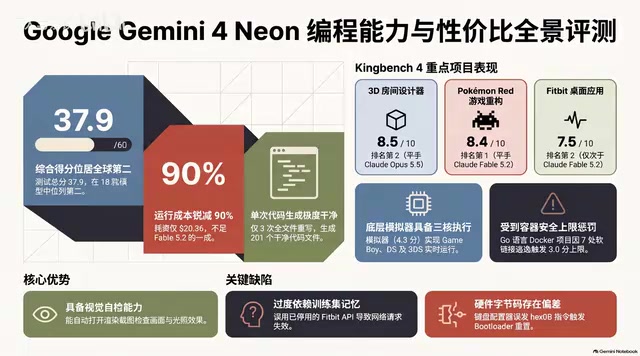
Gemini 4 Neon Hands-On: Value King or Confident Catastrophe?
Gemini 4 Neon review: 1M-token context, four thinking levels, 201 files in one KingBench4 pass at one-tenth Fable 5.2's cost—but it hallucinates fake data, leaves 7 symlink escapes, and bricks keyboards.

Google Gemini 4 Neon Hands-On: 6 3D Works That Impress and Fail
Hands-on with Google Gemini 4 Neon on a 3060 laptop: 6 3D works tested. Sunshower Fishing Harbor and mechanical keyboard impress; soft-body physics and faces fall short.
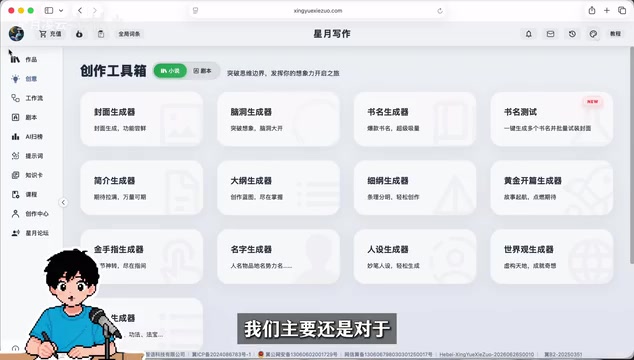
Gemini 4 Neo Web Novel Writing Test: Faint AI Flavor, Textured Dialogue
Bilibili creator's first-look review of Gemini 4 Neo for Chinese web novel writing: testing a Three Kingdoms transmigration opening with faint AI flavor, emotionally textured dialogue, and strong crisis building, plus comparison of 4A/4H/4C models and full workflow demos.