smart #2 Test Drive: A Two-Door, Two-Seat Mercedes-Designed City Car — Is It Good Enough for Daily Commuting?
The smart #2 is a 2.75-meter, two-door, two-seat EV — ideal as a household's second city car.
Designed by Mercedes-Benz and built by Geely, the smart #2 is 2,751 mm long with a wheelbase nearly equal to its length, in a two-door, two-seat layout. It has a 35 kWh battery with 410 km CLTC range and 30%-80% fast charging in just 15 minutes. The 60 kW motor accelerates from 0-50 km/h in 3.08 seconds — brisk off the line but not suited to performance driving. Features include Sennheiser audio, 256-color ambient lighting, L2 driver assistance, and a split tailgate panel supporting 120 kg. The creator says it suits users who already have a primary car and need an urban runabout; space and highway range are the main drawbacks.
smart #2 is a two-door, two-seat all-electric city car measuring just 2,751 mm in length, designed by Mercedes-Benz and manufactured by Geely. In a Bilibili creator's static and dynamic test drive, they shared honest feedback across several dimensions — space, charging, and driving feel. This hands-on review may answer one question: who exactly is it for?
Size & Design: More Compact Than Expected, but Full of Clever Touches
The smart #2 measures 2,751 mm long, 1,669 mm wide, and 1,555 mm tall, with a wheelbase nearly equal to its overall length — a proportion that gives it natural agility in the city. The exterior carries Mercedes design cues. The front tires are 185/50 R16 while the rear are 205/45 R16, with a slight difference in tread width front to back.
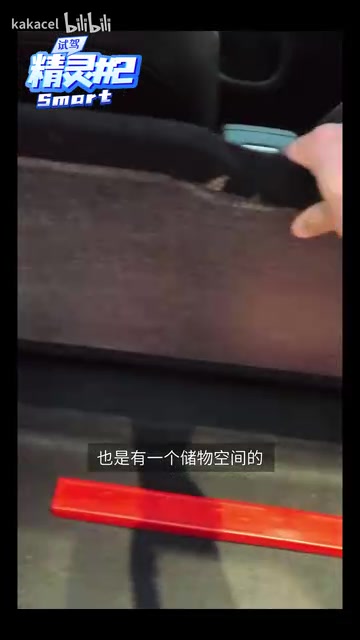
The front suspension uses a MacPherson strut setup, while the rear is multi-link. The tailgate features a split "sky-and-earth door" design that opens manually in sections; the upper panel supports up to 120 kg, and the creator even sat on it to demonstrate without issue. There's additional storage space beneath the panel, and cargo capacity can be further expanded by folding the rear seats or repositioning the cover.
Wheelbase-to-Length Ratio
The wheelbase is the distance from the center of the front axle to the center of the rear axle, typically accounting for 55%-65% of a vehicle's length. The smart #2's wheelbase is nearly equal to its overall length, meaning the four wheels are pushed as far toward the corners as possible. This "four-wheels-at-the-corners" layout is common in microcars — it maximizes cabin space while shortening front and rear overhangs, improving turning agility and parking convenience. However, it also compresses crash crumple zones, placing higher demands on body structural strength.
Front vs. Rear Tire Width Difference
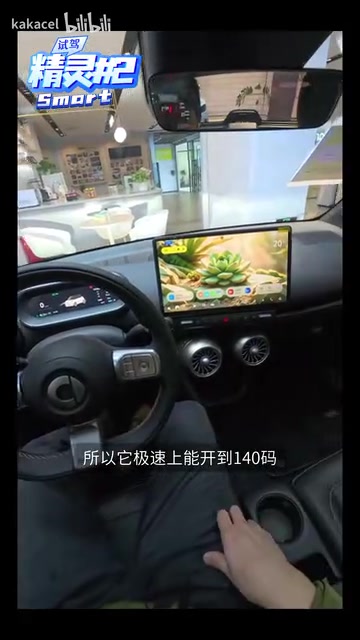
The 185/50 R16 front and 205/45 R16 rear setup is uncommon in microcars. Wider rear tires typically accommodate the greater driving force of a rear-motor layout, reducing wheelspin during acceleration while improving rear-axle stability. The difference in aspect ratios (50 vs. 45) affects ride comfort and road feel: the front's slightly taller sidewall prioritizes comfort, while the rear's thinner sidewall favors support. This combination is often found in rear-drive compact cars that emphasize driving enjoyment.
Charging & Range: 15-Minute Fast Charge, 410 km for City Commuting
The car is equipped with a 35 kWh battery pack, delivering 410 km of pure electric range. It supports fast charging, going from 30% to 80% in just 15 minutes. The charging gun is particularly lightweight, making it friendly for female users or those with less physical strength.
For daily city commuting, 410 km of range can basically cover a week's worth of trips to and from work. However, the creator also noted that highway driving consumes more energy — this car is better suited to scenarios focused on urban commuting.
30%-80% Fast Charging
Fast-charge time typically refers to charging from 30% to 80%, since this range offers the highest charging power and optimal efficiency. Completing 30%-80% in 15 minutes implies an average charging power of about 70 kW, which is relatively high for a small 35 kWh battery. In practice, actual speed is affected by charger power, battery temperature, and state of charge — power drops at both low and high SOC levels. In daily use, this kind of fast charging is better suited for topping up rather than charging to full.
Interior & Features: Sennheiser Audio, 256-Color Ambient Lighting
The interior features a two-door, two-seat layout. The version the creator tested had gold fabric upholstery, with gold seatbelts to match — quite distinctive. The window controls aren't on the doors but in the central area, which takes some getting used to.
In terms of features, the car comes with Sennheiser audio, 256-color ambient lighting, and ambient light effects around the A-pillar air vents and door handles. The seats are manually adjustable but offer cushion adjustment. The key is circular and can be worn on a lanyard as an accessory; functionally it has just three buttons — unlock, trunk release, and P (park).
Driving Experience: Brisk Off the Line, but Don't Treat It Like a Performance Car
On power, the smart #2 has a motor with a maximum output of 60 kW, accelerating from 0 to 50 km/h in 3.08 seconds and reaching a top speed of 140 km/h. In the actual test drive, the creator found acceleration brisk and city maneuvering extremely nimble — overtaking in urban traffic is no problem.
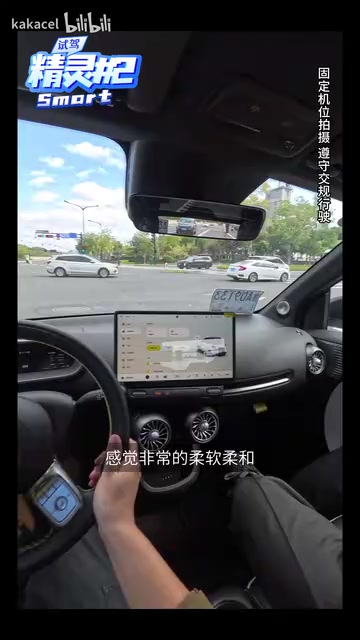
Brake feel is on the soft and gentle side, with fairly clear road feedback — you'll notice it when driving over manhole covers. As for turning radius, the creator found the steering wheel requires quite a few turns; they expected two turns to reach full lock but found it hadn't quite gotten there — which also means it's not meant to be driven like a performance car. Its positioning as a family runabout is clear.
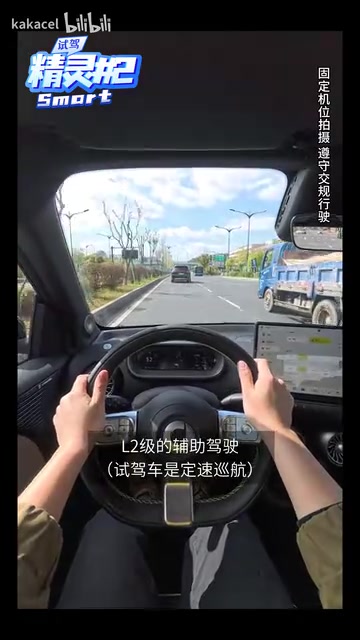
For driver assistance, the car is equipped with L2-level ADAS, supporting cruise control in elevated-road and highway scenarios. The creator activated the assistance in a tunnel, set to 80 km/h, and the car maintained the set speed — but it doesn't actively steer through curves. It also has a lane-change alert feature.
Under aggressive driving conditions, average energy consumption was 11 kWh — a reasonable figure for a car of this size.
L2-Level Driver Assistance
L2-level driver assistance means the vehicle can control both steering and speed simultaneously, but the driver must monitor at all times and be ready to take over. The smart #2 supports cruise control and lane keeping, but doesn't actively steer through curves, indicating limited lane-centering capability — closer to a combination of "adaptive cruise control + lane departure warning." The lane-change alert uses radar to monitor traffic from the side and rear, notifying the driver of lane-change risks. These features can reduce fatigue on highways and elevated roads, but shouldn't be overly relied upon.
Who It's For: A Second City Car for the Household
Overall, the smart #2's positioning is very clear: it suits users who already have a primary vehicle and need a small city runabout. Two doors, two seats, under 2.8 meters in length, 410 km of range, and 15-minute fast charging — all these traits point to urban commuting and short trips. If treated as a household's only car, space and highway range would be obvious shortcomings; but as a flexible urban supplement, its nimbleness, easy parking, and design appeal become strong selling points.
The creator reached the same conclusion at the end: this car is particularly well-suited as an urban commuter. As for whether it's worth buying, it ultimately depends on how clearly you understand your need for a "second car."
One-line Summary
smart #2 is a 2.75-meter-long, two-door, two-seat EV — ideal as a household's second city car.
Paragraph Summary
Designed by Mercedes-Benz and built by Geely, the smart #2 is 2,751 mm long with a wheelbase nearly equal to its length, in a two-door, two-seat layout. It packs a 35 kWh battery with 410 km CLTC range and 30%-80% fast charging in just 15 minutes. The 60 kW motor accelerates from 0-50 km/h in 3.08 seconds — brisk off the line but with a high steering ratio, not suited to performance driving. Features include Sennheiser audio, 256-color ambient lighting, L2 driver assistance, and a split tailgate whose panel supports 120 kg. The creator concludes it suits users who already have a primary car and need an urban runabout, with space and highway range being the main drawbacks.
Related articles
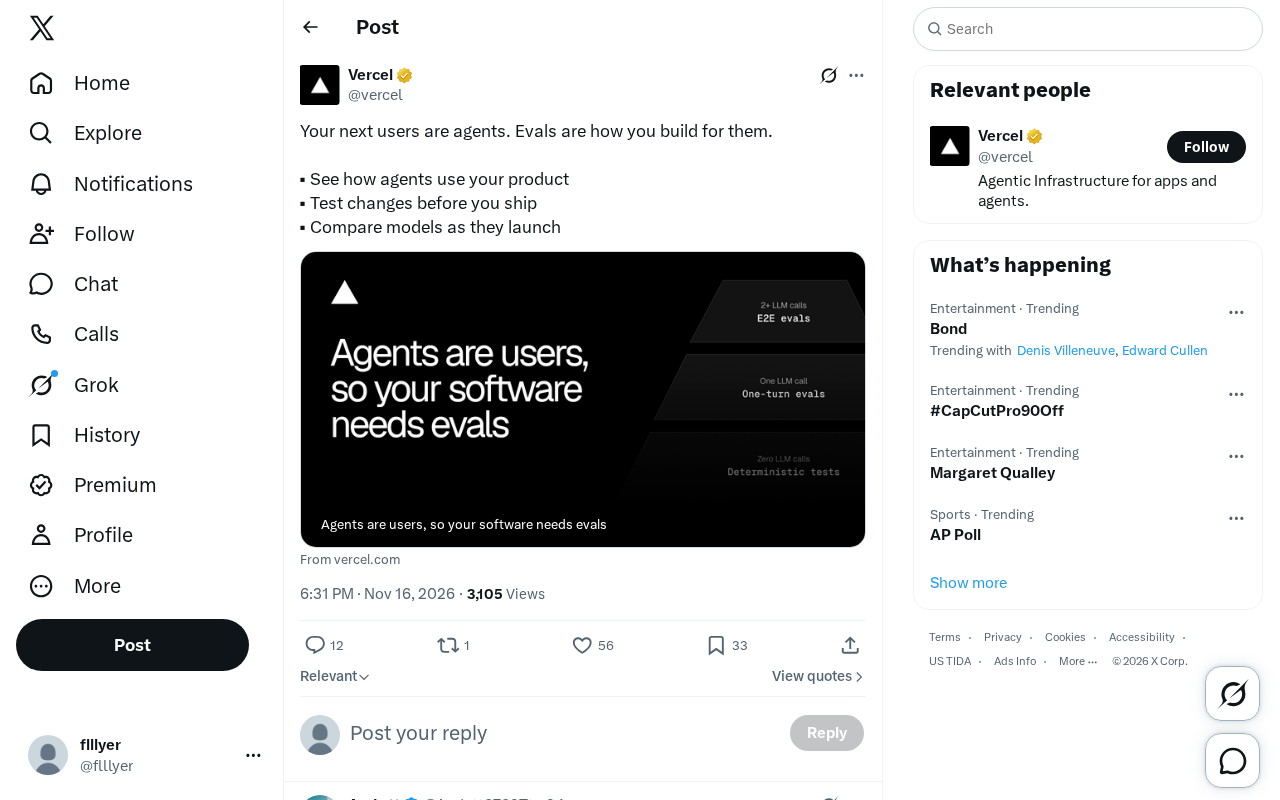
The AI Agent Era: Building a New Product Paradigm with Evals
AI Agents are becoming the next users of products. This article explains how to use Evals to observe Agent usage behavior, test changes before launch, and compare new model performance, helping product teams establish a development methodology for the Agent era.

Microsoft Global Email Outage Leads to Chlorine Leak at German Hotel, Injuring 15
A Microsoft 365 and Outlook global outage prevented a chlorine safety alert from reaching a German Phantasialand hotel, injuring 15 guests and exposing the fragility of cloud-dependent safety systems.

iPhone Duo to Support Face Unlock Using Only the Front Camera
Apple is developing front-camera-only face unlock for the iPhone Duo, now testing in the iOS 27.3 beta. We analyze the technical approach, user experience, and security trade-offs.