smart #2 Test Drive: The Two-Seater Goes Fully Electric — and the Soon-to-Be Owner Ends Up Sold
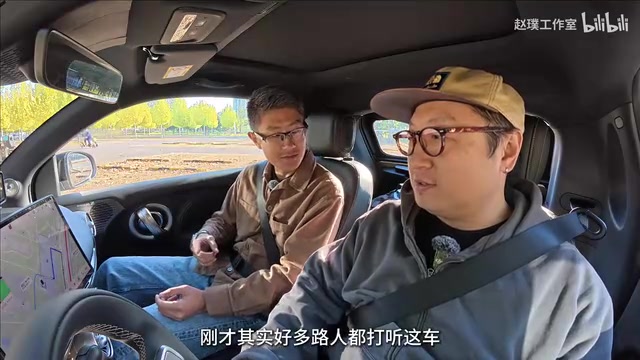
Electric smart #2 test drive: smoothness, highway stability, and space win over a soon-to-be owner.
A test drive of the electric smart #2 through real family scenarios — school runs, highway cruising, and a supermarket run. The tester and a soon-to-be owner find the EV eliminates the gas 453's shift shock, stays stable and comfortable at highway speeds, and holds more than expected, while offering L2 assistance, auto parking, 410 km range, and a five-link rear suspension at an expected price under 110,000 yuan.
The two-seater smart returns as a pure EV. Beyond nostalgia, what's left?
When the smart #2 appears before you, it's hard not to think of the classic gas-powered smart fortwo. The body dimensions and design details replicate the classic, but the powertrain is now fully electric. This test drive by a Bilibili creator was a bit special — he brought along a friend who was about to place a deposit, a big name in the sneaker community known as Brother Jing. Together they covered city commuting, highway cruising, and a supermarket run, fully simulating a family user's real-world scenarios.
From Gas to Electric: A Smooth Evolution
Brother Jing had already looked at a used gas-powered 453. His daily school run is very short, and driving a big car is simply inconvenient. When the electric #2 launched, he placed a small deposit at the store but never got a chance to test drive it. This time his friend drove the car right to him, filling in that missing experience.
The first scenario they simulated was the school run. Short city commutes happen to be exactly what this little car does best. Brother Jing noted that with the old gas 453, the engine hadn't even warmed up in winter and the AC wasn't warm either — whereas with an EV, the AC works the moment you get in, and this car even has seat heating, which is very practical for family users.
The more obvious difference is ride smoothness. The gas 453 was jokingly called a "cervical spine separator" by his friend — the semi-automatic transmission cut fuel and jerked the car with every shift. As a pure EV, the #2 accelerates in one continuous pull with no gear changes, making starts and low-speed following extremely smooth. In the tester's words, "this is a particularly obvious evolution when comparing EVs to gas cars."
The "semi-automatic transmission" in the gas smart fortwo is essentially an automated manual transmission (AMT), which adds electronically controlled clutch and shift mechanisms to a traditional manual gearbox. During shifts the clutch disengages and power is interrupted; if the control strategy isn't refined enough, it produces noticeable jolts and "jerking" — the technical origin of the "cervical spine separator" joke. EVs use a single-speed reducer with no gear changes and continuous torque output, fundamentally eliminating shift shock. The smoothness improvement is therefore a structural evolution, not a matter of tuning quality.
Is It Stable at Highway Speeds? Is There Enough Space? Answers to Two Core Concerns
The tester admitted his two biggest worries: whether the car is comfortable and stable enough at highway speeds, and how much this tiny car can actually hold.
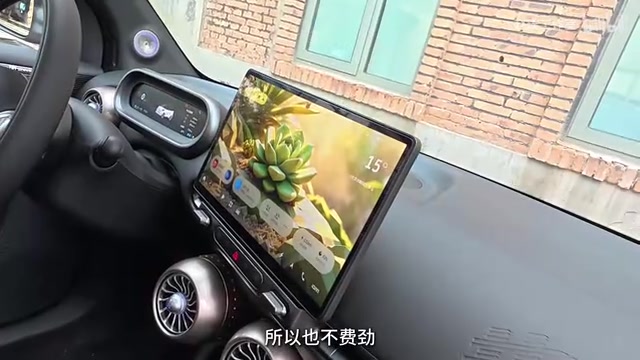
The highway stretch dispelled the first concern. Once the speed reached 80 km/h, the pedal still felt light, and the suspension tuning was soft — in stark contrast to Tesla's stiff chassis. The tester specifically mentioned that when going over speed bumps, his wife no longer complains that her back can't take it. Although the car is small, as a global model it must comply not only with Chinese regulations but also with European crash safety standards, so both highway stability and crash safety are reassuring.
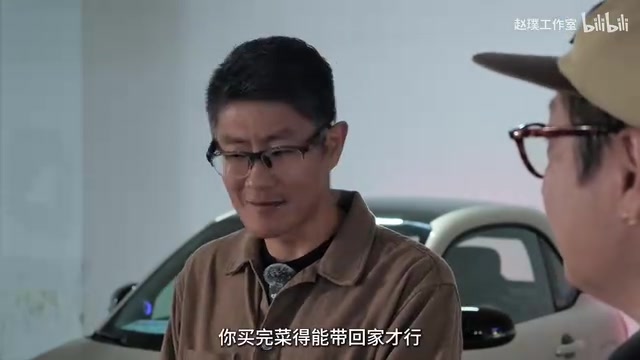
As for space, the two went straight to a Sam's Club and bought a pile of groceries for a real test. The conclusion: "We bought too little — feels like it could hold more." The combined trunk and frunk capacity is more than enough for everyday grocery runs and school pickups.
Driver Assistance and Auto Parking: Small Size, High Spec
The #2 comes with L2-level driver assistance, supporting following at a safe distance and lane keeping. Brother Jing normally only uses driver assistance on long highway trips when traffic is light; in city conditions he still feels it isn't safe enough. This usage habit actually matches many car owners, and the two core functions the #2 offers already cover the most practical long-highway scenarios.
More interesting is the auto parking assist. The tester specifically tried it in the Sam's Club underground garage — the car recognized a marked space and slowly maneuvered itself in. For such a small car, this feature is especially friendly to beginners and those who aren't great at parking.
L2-level driver assistance means the system can simultaneously and continuously control the vehicle's lateral (steering) and longitudinal (acceleration/deceleration) motion, but the driver must monitor at all times and be ready to take over. Typical functions include adaptive cruise control and lane centering. Auto parking assist relies on ultrasonic radar and cameras to identify marked spaces, with the system taking over steering, gear selection, and braking to complete the park. Note that both are assistive in nature — in complex city conditions or garages with unclear markings, the driver must stay attentive and be ready to brake at any time.
410 km Range and Five-Link Rear Suspension: The Engineering Trade-offs Behind a Small Car
The hardest part of a small EV is battery packaging. This car achieves 410 km of range while fitting a five-link independent rear suspension into a limited body. Traditional small cars, constrained by cost and space, mostly use non-independent rear structures, and a five-link is noticeably bulkier. The engineering team had to balance passenger space, storage space, handling quality, and range — in the tester's words, "honestly, it's quite an achievement that this car could be built at all."
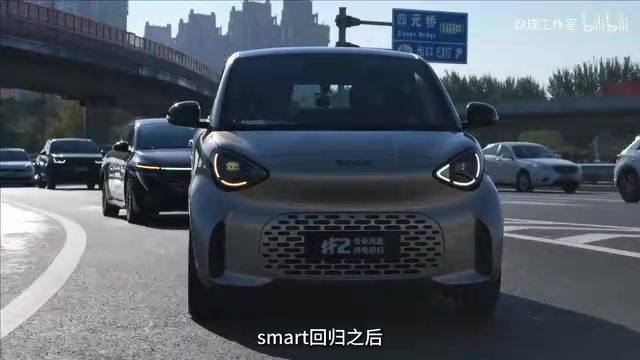
Looking at the product lineage, smart's return isn't an isolated event. Owners of the gas 451 and 453 have long hoped for an electrified version, and the #2 is exactly the response to that demand. The tester described it in antique-collecting terms — "an orderly lineage" — the brand's accumulated recognition and design language carried forward into this generation.
A five-link independent rear suspension means each rear wheel is constrained by five links, allowing separate control of wheel alignment parameters so the tires maintain a more ideal contact angle over bumps and in corners, balancing comfort and handling. Compared with non-independent suspensions such as a torsion beam, a five-link takes up more longitudinal and lateral space, squeezing rear-seat and trunk packaging in a small car while increasing part count and cost. Fitting the battery pack, rear motor, and five-link into a limited wheelbase is precisely the engineering balance challenge described in the article.
Price Expectations and Purchase Decision: The Soon-to-Be Owner Gets Sold
Brother Jing had seen the limited edition priced at just over 110,000 yuan. He figured the regular version shouldn't cost more than the limited edition, with a mental target below 110,000 — though around 110,000 would be perfectly acceptable. His reasoning was simple: finding an electric small car with the right brand, color, and size on the market is actually very hard, and the #2 is almost the only choice.
Interestingly, the test drive ended with a twist. The original plan was to help his friend make up his mind, but the tester ended up sold himself. After driving around the neighborhood and loading up a cart of groceries at the supermarket, he began seriously considering buying one for himself too.
Brother Jing, however, isn't in a hurry to order. He heard a convertible version and a Brabus version may come later, and given his personality he'll most likely go straight for the top-spec Brabus. Their final consensus: as long as you like it, price isn't the deciding factor. Talking about cars is like talking about sneakers — you chat and chat, and before you know it, you've placed an order.
One-line Summary
Test drive of the electric smart #2: smoothness, highway stability, and space dispel the soon-to-be owner's doubts.
Paragraph Summary
This article records a test drive of the electric smart #2 organized around real family-use scenarios. The tester and soon-to-be owner Brother Jing simulate the school run, highway cruising, and a supermarket run, focusing on how the EV completely eliminates the gas 453's shift shock, how stable and comfortable it is at highway speeds, and how its storage capacity exceeds expectations. The car offers L2 driver assistance and auto parking, and even with 410 km of range it uses a five-link independent rear suspension — a reflection of the engineering balance in a small EV. Brother Jing's target price is under 110,000 yuan, and he sees almost no alternative on the market; after the test drive, the tester who came to help vet the car ended up wanting one himself.
Related articles
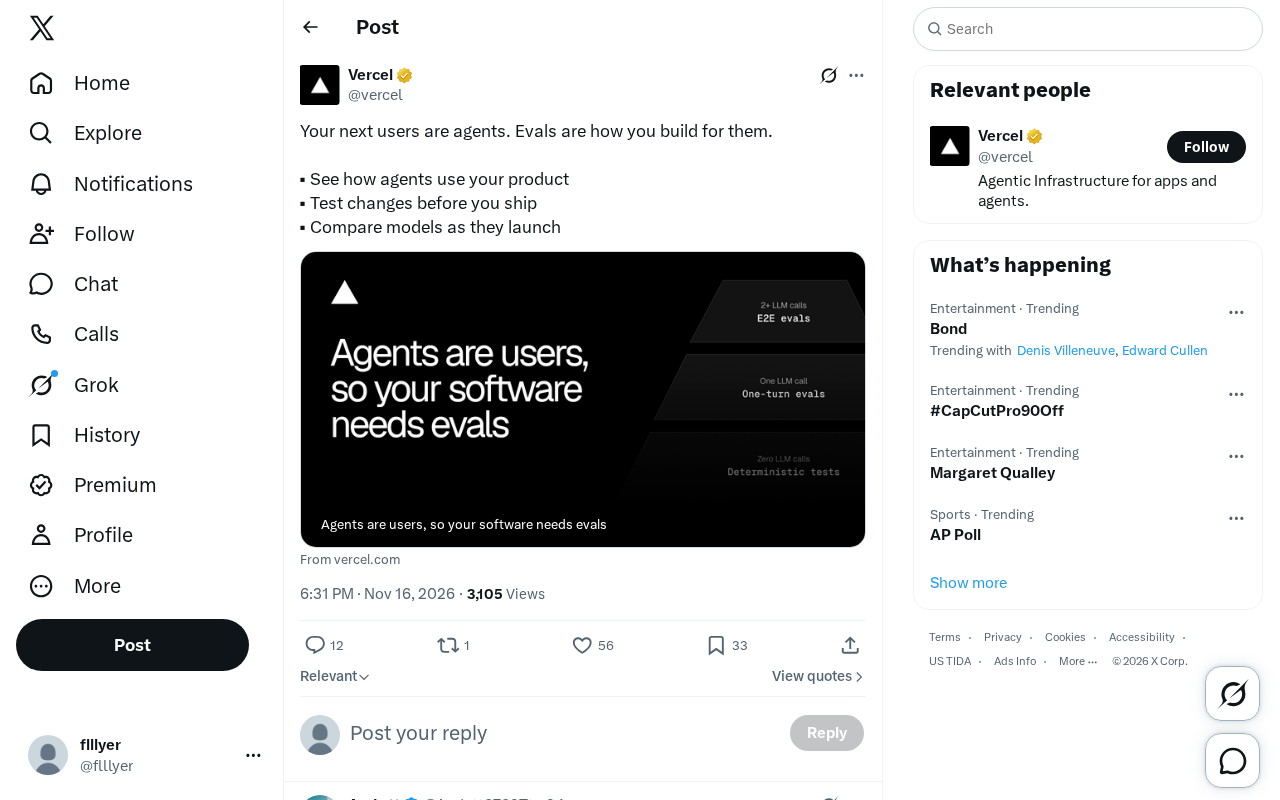
The AI Agent Era: Building a New Product Paradigm with Evals
AI Agents are becoming the next users of products. This article explains how to use Evals to observe Agent usage behavior, test changes before launch, and compare new model performance, helping product teams establish a development methodology for the Agent era.

Microsoft Global Email Outage Leads to Chlorine Leak at German Hotel, Injuring 15
A Microsoft 365 and Outlook global outage prevented a chlorine safety alert from reaching a German Phantasialand hotel, injuring 15 guests and exposing the fragility of cloud-dependent safety systems.
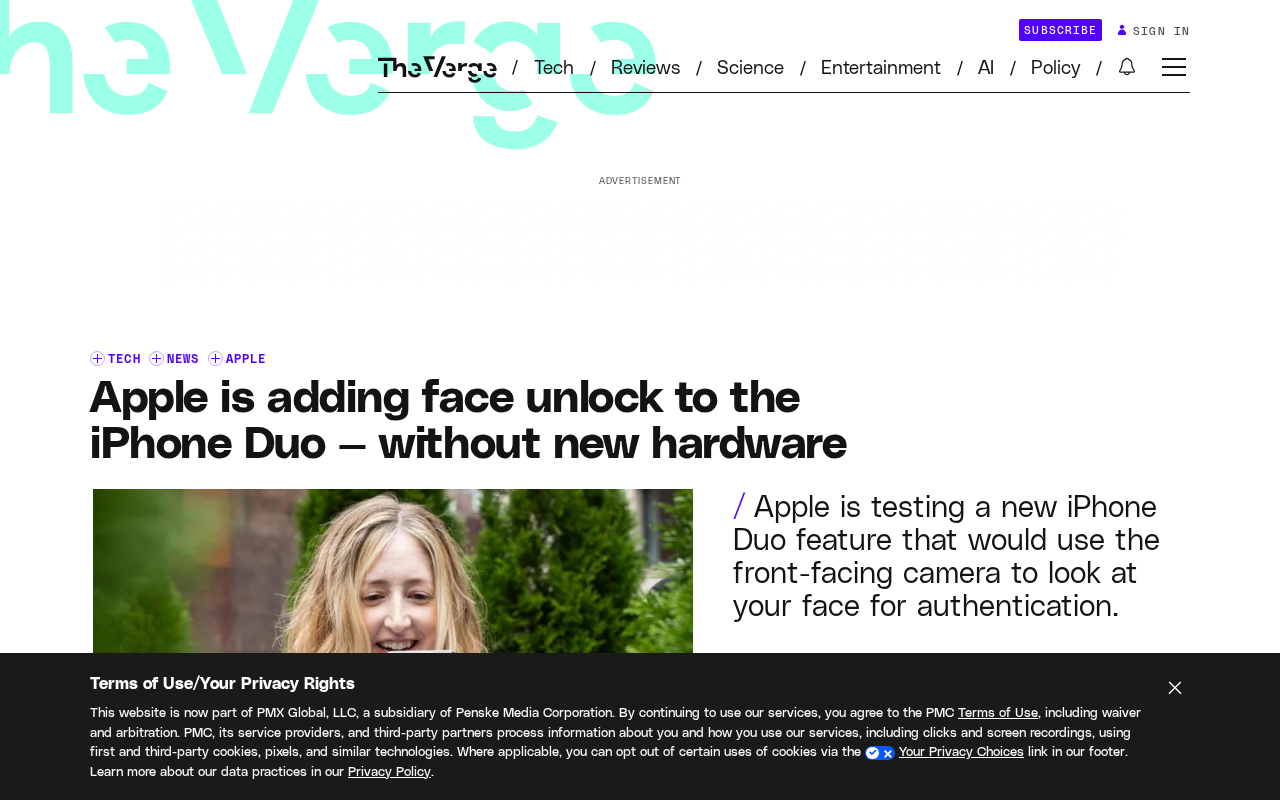
iPhone Duo to Support Face Unlock Using Only the Front Camera
Apple is developing front-camera-only face unlock for the iPhone Duo, now testing in the iOS 27.3 beta. We analyze the technical approach, user experience, and security trade-offs.