Superpowers: The AI Programming Methodology That Racked Up 310K Stars

Superpowers uses a mandatory skill workflow to make AI think clearly before coding, with 310K stars on GitHub.
Superpowers is an open-source AI programming methodology with 310K stars and 27K forks on GitHub, written in Shell and MIT-licensed. It front-loads communication and decomposition into a mandatory skill workflow: brainstorming activates before any code is written and uses restatement to let developers correct requirement deviations; writing plan breaks the solution into byte-sized tasks with file paths and verification steps; subagent-driven development dispatches a fresh agent per task for clean context; and Code Review checks output against the plan as an objective acceptance benchmark. Its core insight is making AI write more correctly rather than faster.
Title
Superpowers: The AI Programming Methodology That Racked Up 310K Stars
Meta Description
Superpowers is an open-source AI programming methodology with 310K stars. Through four skills—brainstorming, writing plans, subagent-driven development, and code review—it gets AI to align on requirements and break down tasks before writing any code, installable with a single command.
Article Content
AI writing code is nothing new; the hard part is getting AI to think clearly about what to build before it starts coding. An open-source project called Superpowers takes this to the extreme with a mandatory workflow—it has racked up over 310K stars and 27K forks on GitHub, is written in Shell, and is MIT-licensed.
What Problem Does It Actually Solve
The default approach of most AI programming tools is: you give a one-line requirement, and it spits out code directly. The result may run, but it's not what you had in mind, and rework costs are high. Superpowers's idea is to front-load "communication" and "decomposition," forcing AI to align with you before it starts working. This methodology is organized as "skills," each responsible for one stage of the process, interlocking with one another.
According to a YouTube channel's introduction, the full chain runs in order: brainstorming → writing plans → subagent-driven development → code review. Each is worth unpacking.
Step One: Brainstorming—Don't Write Code Yet
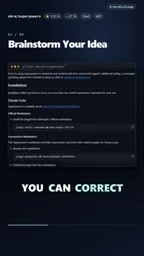
The first Superpowers skill is called brainstorming, and it activates before any code is written. It proactively asks you: what exactly are you trying to build?
The key design is "restatement": instead of listening and then diving into work, it reflects its understanding back to you, giving you a chance to correct any deviation. This seemingly simple act eliminates requirement ambiguity at the cheapest possible stage—changing a description is far cheaper than changing a pile of code.
For developers, this is like having AI act as your product manager, forcing you to make vague ideas concrete.
Step Two: Writing Plans—Breaking Down to "Byte-Sized Tasks"
Once the design is confirmed, the writing plan skill takes over, breaking the solution into tiny, granular tasks. Each task specifies the exact file path and clear verification steps.
The value of this step lies in executability. In traditional AI programming, a granularity like "help me implement the login feature" lets the model freestyle, making the result uncontrollable. But when broken down to the granularity of "which section of which file to change, and how to verify it was changed correctly," the AI's degree of freedom is narrowed and predictability greatly improves. Verification steps built into the plan also mean each task comes with its own acceptance criteria.
Step Three: Subagent-Driven Development
Once the plan is approved, subagent-driven development takes the stage: each task is dispatched to a brand-new agent for execution.

"One fresh agent per task" is an interesting choice. The context of long conversations gets dirtier and dirtier as it rolls along, with early information interfering with later judgments; but each agent faces only one small task with clear boundaries, so its context is clean and its attention focused. This is like dividing a big project among a group of workers each handling their own piece, rather than having one person carry all the work.
Working in tandem is the Code Review step—it checks each task's output against the plan rather than reviewing freely outside the plan. The plan becomes the sole acceptance benchmark, giving the review an objective basis.
Subagent refers to a subordinate agent instance derived from the main agent, possessing an independent context window. In mainstream AI agent frameworks, the main agent handles task orchestration and state maintenance, while subagents focus on executing a specific subtask and returning results. Since subagents don't share the main conversation's history, their context is "clean," which precisely avoids the context pollution and attention dilution common in long conversations. The cost is that subagents lack a global view, so they must rely on sufficiently detailed task descriptions and acceptance criteria—which is also why the previous step of "byte-sized task decomposition" becomes a necessary prerequisite. After a subagent returns, the main agent is responsible for aggregating, validating, and deciding the next action, forming an "orchestration-execution-validation" loop.
Installation: A Single Command
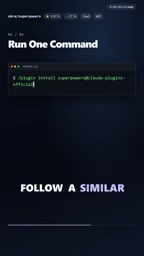
Installation depends on which agent tool you use. According to the video, Clawed Code can be installed with a single command via the official plugin marketplace, and other supported tools follow a similar path. The project's GitHub address is abra/superpowers, which also supports installation with a single plugin command.
Low-barrier installation plus the MIT license are important reasons it spread quickly in the open-source community—the numbers of 310K stars and 27K forks themselves demonstrate developers' recognition of this workflow.
The "skills" mentioned in the article can be understood as structured prompt packages that can be automatically invoked by agents: they typically contain trigger conditions, execution steps, input/output conventions, and checklists, stored as files in the project repository. Unlike ordinary prompts, skills emphasize when to activate and executing in sequence; the agent loads the corresponding skill upon recognizing the current task stage, thereby solidifying a methodology into reusable process units. The advantage of this organizational approach is that it's composable, version-manageable, and open to community contribution and review, and it's easy to adapt for different agent tools without cramming all the logic into one ultra-long system prompt.
Why This Methodology Is Worth Paying Attention To
Superpowers's core insight isn't about making AI write faster, but about making AI write more correctly. It brings practices repeatedly proven in software engineering—requirement clarification, task decomposition, code review—into the AI collaboration workflow, and solidifies them into mandatory steps in the form of skills.
For developers accustomed to "generating an entire app from one sentence," this workflow may seem verbose at first; but once you've been burned a few times by AI freestyling, you'll understand the cost-effectiveness of front-loaded alignment and fine-grained planning. The question posed at the end of the video is also quite practical: which skill would you try first? If you could only pick one, brainstorming is probably the one most worth experiencing first.
One-line Summary
Superpowers uses a mandatory skill workflow to make AI think clearly before writing code, with 310K stars on GitHub.
Paragraph Summary
Superpowers is an open-source AI programming methodology project that has racked up over 310K stars and 27K forks on GitHub, written in Shell and MIT-licensed. Addressing the rework problem caused by most AI programming tools "spitting out code from a single sentence," it front-loads communication and decomposition, solidifying them into a mandatory workflow in the form of "skills": brainstorming activates before any code is written, using restatement-based understanding to let developers correct requirement deviations; writing plan breaks the solution into byte-sized tasks annotated with file paths and verification steps; subagent-driven development dispatches a fresh agent for each task to ensure clean context; and Code Review checks output against the plan, making the plan an objective acceptance benchmark. Its core insight is to make AI write more correctly rather than faster.
Related articles

Skykea Showdown: A Hilarious Variety Show Experience of a Minecraft Airship Building Competition
Skykea Showdown is a Minecraft airship building racing variety show. This article analyzes its two-phase build + hole race format, airship mod lift physics, secret mission design, and team confrontation dynamics—ideal for game content creators.
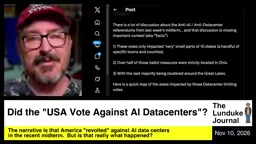
Did the US Midterms Vote No to AI Data Centers? A Map Reveals the Truth
After the US midterms, media claimed voters rejected AI data centers, but a map shows restrictive votes are concentrated in a few Ohio townships, affecting less than 1% of US towns—the national anti-AI wave is exaggerated.
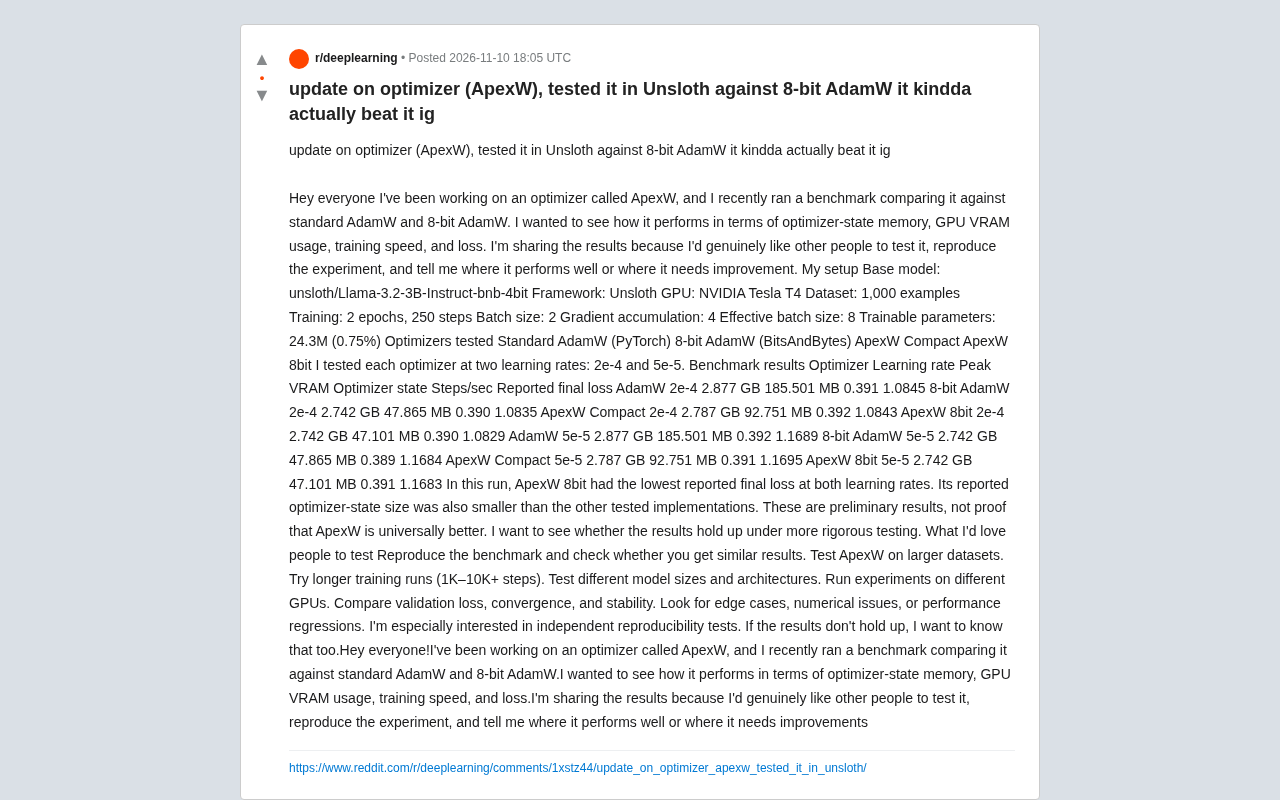
ApexW Optimizer Benchmark: Matches 8-bit AdamW in Unsloth with Lower Memory Usage
Developer shares benchmark of ApexW optimizer in Unsloth: ApexW 8bit has lower optimizer state memory (47.101 MB) and slightly better final loss than 8-bit AdamW, but similar speed. Needs independent reproduction.