Tell AI Your Intent: The Key Technique to Improve Output Quality

Explaining the reasons behind requests to AI helps it understand context and tailor output.
Based on a developer's practical experience, this article explores the importance of clarifying intent rather than merely giving instructions in AI-assisted programming and content generation. Using the example of requesting technical documentation from Claude, the developer explains that explaining "why" this information is needed enables AI to start from macro goals, filter relevant content, adjust explanation depth, and proactively supplement background. The article points out that communicating intent allows AI to tailor output according to the ultimate purpose (such as quick onboarding or in-depth debugging) and reduce irrelevant content. Effective methods for communicating intent include placing tasks within larger goals, describing expected value, and specifying output format. Finally, practical recommendations are given: explain goals before giving instructions and combine specific scenarios to limit output scope, making AI a collaborative partner that truly understands needs.
In today's world where AI-assisted programming and content generation are increasingly common, getting AI to truly understand your needs has become the core of efficient collaboration. Many users are used to giving direct instructions but overlook explaining the "why" behind them to AI. Based on a developer's practical experience, this article explores why clarifying intent in prompts can significantly improve the relevance and usefulness of AI outputs.



Why Intent Matters More Than Instructions
In a video, the developer shared his approach when requesting technical documentation from Claude. He not only asked for documentation that is interactive and visual but also clearly expressed the underlying motivation: he wants to access information as quickly and smoothly as possible. This articulation of intent allows AI to understand the task goal from a broader perspective rather than merely executing surface-level instructions.
! I do, this is something I always request.

"I do want code snippets of key components, and I want those snippets to be explained so that I can get a feel for the structure without looking directly at the codebase," he said. This kind of statement not only specifies the requirement but also reveals its purpose—quickly understanding the codebase. When AI grasps this context, it can more precisely filter information, adjust the depth of explanation, and even proactively supplement relevant background.
Prompt Engineering is the method of designing input prompts to guide large language models toward desired outputs when interacting with them. Its core lies in structuring task goals, context, constraints, and output format into the prompt. Early practices focused mostly on the clarity of instructions (such as "please write a piece of code"), but as model capabilities improved, researchers and developers found that surface-level instructions alone tend to produce generalized outputs that deviate from actual use. Intent-based Prompting further emphasizes explaining "why this output is needed," enabling the model to perform goal reasoning during generation, thereby better aligning information filtering, depth adjustment, and format selection with real-world scenarios. This concept complements In-Context Learning: the model infers task patterns from examples and background provided in the prompt, while intent descriptions provide a higher-level semantic anchor for such inference.
Context Enables AI to Tailor Output
The developer particularly emphasized that he could have simply listed requirements without explaining the reasons, but he chose to let Claude understand the "why." The benefit is that AI can tailor its output according to the ultimate goal. For example, if the goal is to quickly get started with a project, AI might prioritize showing the call relationships of core modules; if the goal is in-depth debugging, it might focus on exception handling and edge cases.
"I want Claude here to understand why I'm asking for this information, so that Claude can truly have context, know what this information will be used for, and then Claude will naturally tailor it to what we want to do," he added. This approach applies to various AI interaction scenarios: whether generating reports, writing code, or analyzing data, providing intent helps AI narrow the output scope and reduce irrelevant content.
Context Window refers to the maximum number of tokens a large language model can process in a single instance, determining how much conversation history or document content the model can "remember." In API calls, the system prompt, user messages, and model responses share this window. When users explain the motivation behind a request to Claude, these intent descriptions are encoded as part of the context into the model input, influencing attention allocation and subsequent generation. The larger the context window, the more complete the task background the model can accommodate, but not all information is equally important—clear intent statements help the model focus on key cues within a limited window. For example, when requesting technical documentation, stating "for quick onboarding" guides the model to compress redundant information and highlight core call relationships better than simply asking for "detailed documentation." Therefore, effectively utilizing the context window is not just about length but also about information density and clarity of intent signals.
How to Effectively Communicate Intent
Communicating intent is not complicated. The key is to place the task within the context of a larger goal. For example, instead of saying "give me a piece of Python code," say "I need a piece of Python code to parse log files because I want to quickly identify error trends." The latter includes the purpose (identifying error trends) and context (log files), allowing AI to choose more appropriate libraries, add comments, or provide sample data accordingly.
Additionally, clearly specifying the desired output format reinforces intent communication. The developer requested documentation that is "interactive and visual" and includes "the structure of important methods." These specific descriptions complement the intent and together outline a clear output profile.
Few-Shot Prompting is a technique that provides a small number of input-output examples in the prompt to guide model behavior. Compared to directly describing intent, examples can more intuitively demonstrate the expected output format and reasoning path. In practice, intent descriptions can be combined with few-shot examples: first clarify the task goal (such as "I need to parse logs and identify error trends"), then provide a brief input-output sample, and the model can understand both the "why" and the "how." This combined strategy is particularly suitable for scenarios with complex output formats or strong domain knowledge, significantly reducing the probability of the model misunderstanding intent. Note that examples should be concise and representative, avoiding irrelevant noise that could dilute the intent signal.
Practical Recommendations and Summary
Based on this experience, the following principles can be followed when collaborating with AI:
- Before giving instructions, explain the goal or purpose of the task.
- Describe the value you expect to gain from the output, not just the content itself.
- Combine specific scenarios (such as quick browsing or in-depth analysis) to limit the scope and format of the output.
! but I want Claude here to understand
In this way, AI is no longer a tool that passively executes commands but becomes a collaborative partner that truly understands your needs. As the developer said, this is "important" because context is the cornerstone of AI-tailored output.
This article is based on content from a YouTube video, with views from the original author.
Related articles

Medicare Spends $50,000 Treating a Heart Attack but Won't Spend $100 Preventing One: The Mismatch in Healthcare
Medicare pays ~$50,000 to treat a heart attack but won't spend $100 to prevent one. This article unpacks the MedPage Today opinion piece and Hacker News debate on why healthcare payment favors treatment over prevention and the deep causes of incentive misalignment.

Nvidia May Cosign Loan for Nscale's West Virginia AI Data Center
Nvidia is considering cosigning a loan for Nscale's West Virginia AI data center. This article analyzes the signal significance of chip vendors entering data center financing, the risk-sharing logic, and project uncertainties.
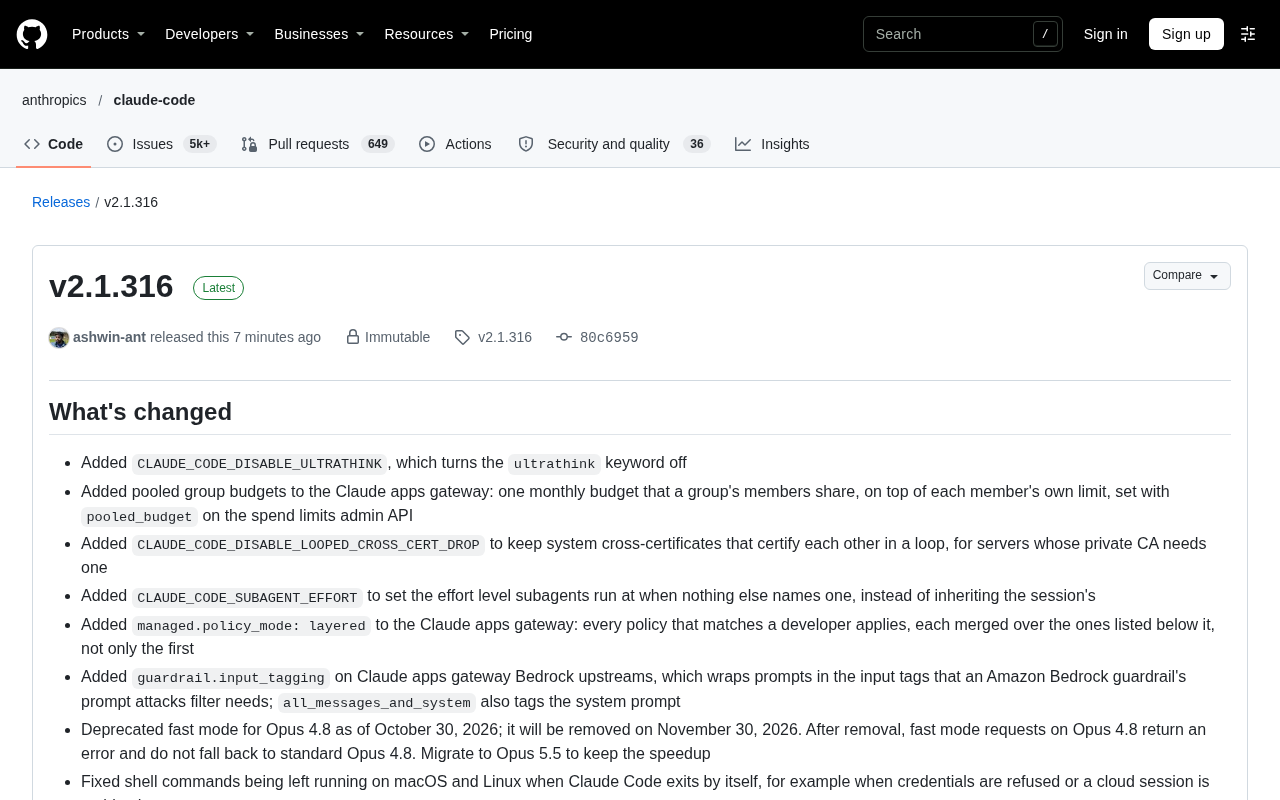
Claude Code v2.1.316 Update Analysis: Enterprise Gateway and Multiple Stability Fixes
Claude Code v2.1.316 released: new enterprise gateway pooled group budgets, layered policy mode, subagent effort control, dozens of Shell, network, and session recovery fixes, and Opus 4.8 fast mode deprecated.