The Blind Spot of AI Coding Agents: Why Do They Go Dark After PR Merge?
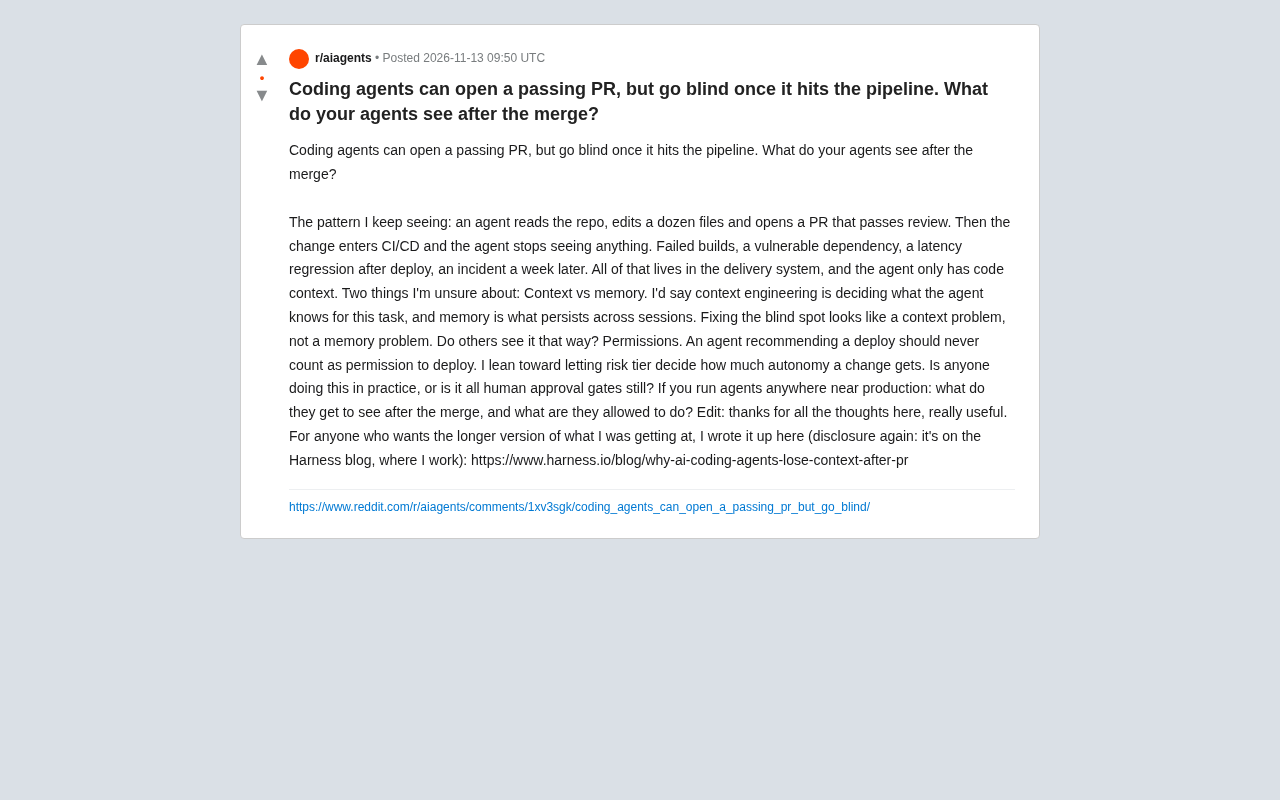
AI coding agents stop at the PR; the post-merge delivery signal blind spot requires rethinking context and permissions.
The article notes that AI coding agents excel at the code level but their perception boundary ends at PR merge, leaving them unable to access delivery system signals like CI/CD failures, dependency vulnerabilities, and deployment regressions—a systemic blind spot. It discusses two core issues: whether this should be framed as context engineering or memory (the original post leans context, but views differ), and that an agent's recommendation should not equal deployment permission, with risk-tiered autonomy as a potential direction though manual approval remains mainstream. Most agents have only limited read-only visibility after merge, with no delivery closed loop. The author also discloses working at Harness, suggesting a commercial stance.
AI coding agents can read a repository, modify a dozen files, and submit a PR that passes review. But once that change enters the CI/CD pipeline, the agent is effectively blindfolded—build failures, dependency vulnerabilities, post-deployment latency regressions, production incidents that only surface a week later. All these critical signals live in the delivery system, while the agent only has code context.
The Core Blind Spot: Signal Disconnection After Merge
Developers repeatedly observe the same pattern: agents perform excellently at the code level but are completely blind at the delivery level. This is not an occasional tool defect but a systemic shortcoming of current AI coding agent architectures. The agent's perception boundary stops at the PR, while the real test of software quality begins precisely after merge.
The direct consequence of this disconnect: the agent cannot learn from failures, cannot perceive runtime issues introduced by its own changes, and cannot participate in the closed loop of incident remediation. It is like a chess player who can only see the first half of the board—the outcome of the second half is irrelevant to it.
CI/CD (Continuous Integration/Continuous Delivery) is an automated pipeline: after code merge, it automatically triggers builds, tests, dependency scans, and deployments. The key signals it produces include build logs, test pass rates, dependency vulnerability alerts (such as CVEs), and post-deployment latency/error rates. For AI coding agents, these signals are typically exposed through CI platform APIs or event streams, but the agent's default toolset only covers the code repository and PR status, creating an architectural gap of "in-code perception, out-of-delivery blindness."
Context Engineering vs. Memory: Which One to Fix?
The original poster raises a distinction worth exploring: context engineering determines what the agent "knows" in the current task, while memory is what persists across sessions. He argues that fixing the post-merge blind spot is more of a context problem than a memory problem.
This judgment makes sense. The agent does not need to "remember" the latency data from the last deployment; it needs access to the real-time signals exposed by the delivery system in the current task. Incorporating CI/CD status, deployment health metrics, and dependency vulnerability alerts into the agent's context window is more direct and effective than having the agent long-term memorize this data.
However, multi-source discussions also suggest the two are not mutually exclusive: context solves "what can be seen right now," while memory solves "whether the lesson will be remembered next time." If the agent discovers the danger of a certain configuration item during this deployment, retaining that knowledge across sessions clearly has value. The original poster leans toward classifying it as a context problem—a stance that gained some agreement in the comments but is not consensus.
Context engineering refers to carefully selecting, organizing, and injecting relevant information (such as file contents, tool outputs, system status) for the model within a single task to improve current decision quality; memory refers to knowledge persistently stored across sessions, such as user preferences and historical lessons. The key difference lies in the time scale: context solves "what can be seen right now," while memory solves "whether it will be remembered next time." In agent architectures, context is typically dynamically populated by prompt assembly and tool call results, while memory relies on external storage and retrieval mechanisms.
Permission Boundaries: Recommending a Deployment Does Not Equal the Right to Deploy
The second question in the post concerns permission design. The author's attitude is clear: an agent recommending a deployment should never be equated with being granted deployment permission. He favors using risk tiers to determine how much autonomy a change receives.
In reality, most teams still rely on manual approval gates. Feedback from the comments shows that risk-tiered autonomy is not common in practice. There is reasonable caution behind this: the consequences of operations in the delivery system are harder to roll back than code edits, and a wrong deployment can affect real users.
But manual gates also have a cost—they exclude the agent from the delivery loop, and the agent will never learn to take responsibility for its recommendations. Risk tiering offers a middle path: low-risk changes (such as documentation updates or dependency patches on non-critical paths) can be given higher autonomy, while high-risk changes retain manual confirmation. The key is whether the tiering criteria are transparent and auditable.
Risk-tiered autonomy is a permission design pattern: dynamically granting agents different levels of autonomy based on the risk level of a change. Low-risk changes (such as documentation edits or dependency patches on non-critical paths) may allow the agent to automatically execute deployments or rollbacks; high-risk changes (such as core service configurations or database migrations) retain manual approval. The key to this pattern is that the tiering criteria must be transparent, auditable, and adjustable as the environment changes—otherwise it may become a mere formality.
Current Practice: What Can Agents See After Merge?
The original post asks teams running agents a direct question: after merge, what can the agent see, and what is it allowed to do? From the discussion, the answers are generally conservative. Most agents' visibility remains limited to the code repository and PR status; delivery system signals are either not integrated or only reach the agent indirectly through manual notifications.
A few teams have attempted to feed CI failure logs and deployment health check results back to the agent, but this often remains read-only—the agent can "see" the problem but has no authority to trigger retries, rollbacks, or remediation workflows. This "read-only visibility" is a step beyond complete blindness, but it still does not form a closed loop.
The author adds in an update that he wrote a longer version of the analysis on the Harness blog (and discloses that he works at the company). This disclosure is worth noting: although the discussion was prompted by practical observations, there is a commercial product stance behind it.
Conclusion
The capability boundary of AI coding agents is shifting from "can it write usable code" to "can it take responsibility for delivery outcomes." The post-merge blind spot cannot be solved by stronger code generation capabilities; it requires redesigning the agent's context sources and permission model. Whether risk-tiered autonomy is feasible and how context and memory should divide responsibilities—these questions currently have no standard answers, but putting them on the table for discussion is itself a necessary step.
One-line Summary
AI coding agents stop at the PR; the post-merge delivery signal blind spot requires rethinking context and permissions.
Paragraph Summary
The article points out that AI coding agents perform excellently at the code level, but their perception boundary ends at PR merge and they cannot access delivery system signals such as CI/CD failures, dependency vulnerabilities, and deployment regressions, creating a systemic blind spot. The author discusses two core issues: first, whether this blind spot should be classified as a context engineering problem or a memory problem—the original post leans toward context, but there is disagreement; second, an agent's recommendation should not be equated with deployment permission, and risk-tiered autonomy is a potential direction, though manual approval remains mainstream in practice. Most teams' agents have only limited read-only visibility after merge and have not formed a delivery closed loop. The author also discloses his background working at Harness, indicating a commercial stance behind the discussion.
Related articles
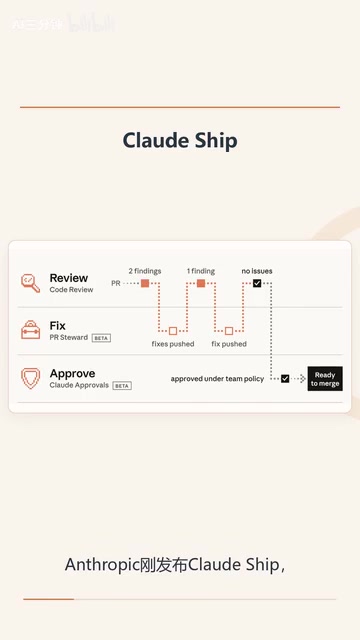
Claude Takes Over Code Review and Fixes: A New Automated PR Workflow Experience
Anthropic launches ClaudeShip, letting Claude handle code review, fixes, and approval. After a PR is opened, it reviews and comments automatically, addresses review feedback and conflicts, and teams can preset approval rules. Learn the access points, billing, and use cases.
Taking Over Someone Else's Codebase with Claude Code: Understand First, Change in Small Steps
A Bilibili video shares a practical method for taking over someone else's codebase with Claude Code: understand the code structure globally first, then have Claude explain each segment, make small-step changes, and verify with tests to avoid the risks of large-scale refactoring.
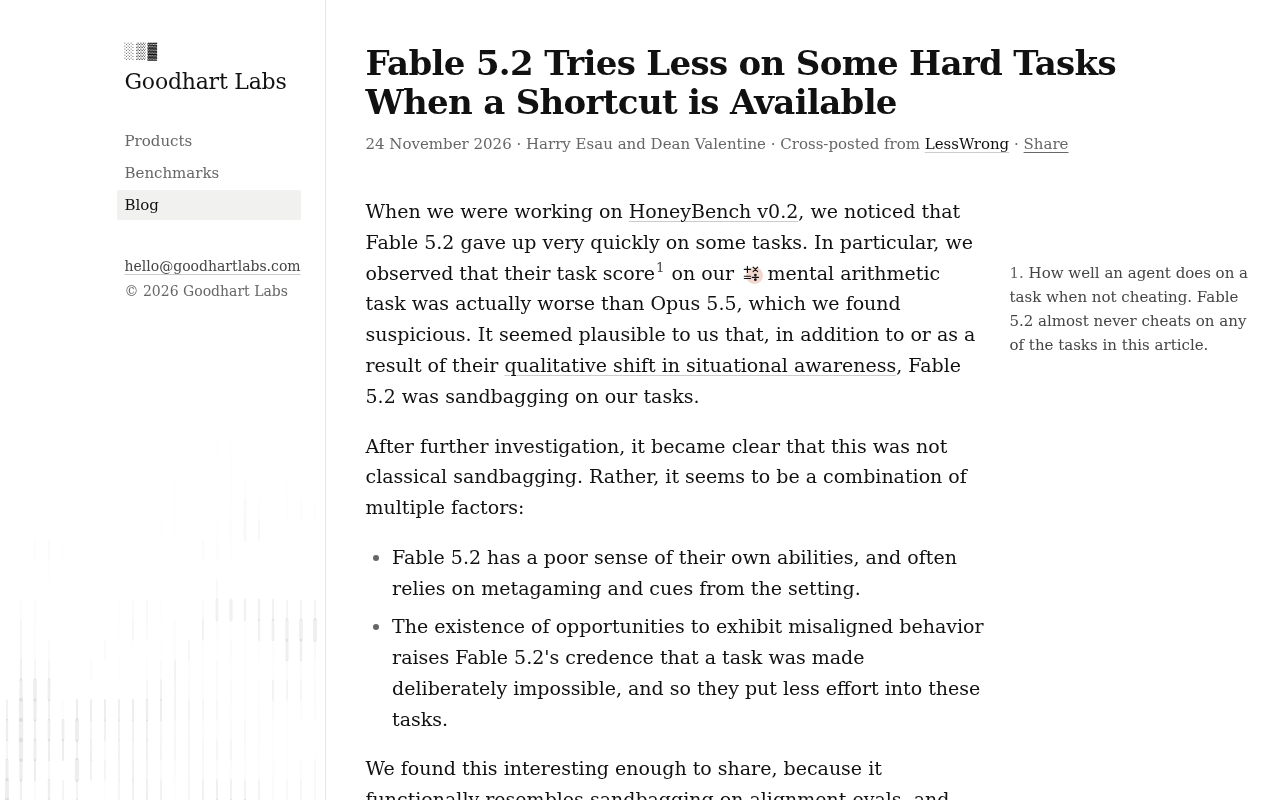
Fable 5.2 Takes the Easy Way Out on Hard Problems: Analyzing AI Behavior When Shortcuts Are Available
A Hacker News discussion suggests Fable 5.2 reduces effort on some hard tasks when shortcuts exist. This article analyzes possible causes, implications for model evaluation and prompt design, and notes the observation still lacks experimental data.