The Only In-Depth Guide on Bilibili to Harness Engineering Multi-Agent Collaboration in Practice

Harness Engineering has become an interview hot topic due to enterprise multi-agent deployment needs, focusing on security isolation and Sandbox engineering capabilities.
Starting from first-hand interview retrospective data from a Bilibili UP host, the article notes that Harness Engineering is becoming an interview hot topic for enterprise-level multi-agent roles. As the "operating system layer" of multi-agent systems, Harness provides task scheduling, context management, sandbox isolation, and observability, bridging the engineering gap from single-agent demos to enterprise collaboration. Interviewers especially focus on security isolation and Sandbox mechanisms. The article advises job seekers to run through the full collaboration chain, strengthen sandbox engineering details, and highlight engineering implementation over model tuning.
Why Harness Engineering Suddenly Became an Interview Hot Topic
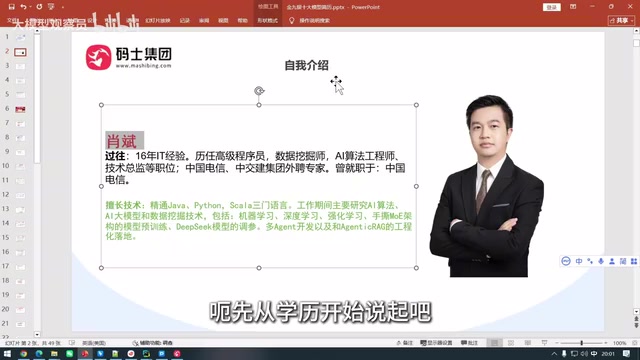
Recently, discussions about Harness Engineering have noticeably heated up on Bilibili and in various tech communities. A UP host who has long tracked interviews for large-model positions revealed during a livestream that many candidates have recently been asked about engineering-oriented topics such as security isolation and Sandbox mechanisms when interviewing for enterprise-level multi-agent collaboration roles. According to the UP host, their team has cumulatively worked with over 1,700 students since launching large-model-related courses, revised more than 1,000 resumes, and collected over 600 interview retrospective recordings. This first-hand data gives them a fairly direct sense of interviewers' questioning preferences.
This background illustrates one thing: multi-agent collaboration is no longer just a concept in papers—enterprises have started to genuinely care about whether you can run multiple agents in a controllable, isolatable, and observable engineering environment. Harness Engineering is precisely the engineering practice system built around this need.
What Problem Does Harness Engineering Actually Solve
The Engineering Gap from Single-Agent to Multi-Agent
A single-agent demo is easy to write, but once you enter enterprise-level scenarios, the problems immediately become complex: how do multiple agents divide work, how do they share context, how do they avoid interfering with each other, how do you enforce permission and security isolation, and how do you trace the input and output of every call? The core value of Harness is to provide these agents with a unified "runtime skeleton"—it handles scheduling, isolation, observability, and orchestration, letting the agents themselves focus on business logic.
You can think of it as the "operating system layer" of a multi-agent system. Without this layer, multi-agent collaboration can only remain at the stage of script stitching and struggles to support real enterprise workloads.
Multi-Agent Collaboration commonly follows several architectural patterns: hierarchical (an Orchestrator Agent breaks down tasks and dispatches them to Worker Agents), debate-based (multiple agents propose solutions to the same problem and critique each other), and pipeline-based (agents process subtasks in a fixed order). Different patterns impose different requirements on the scheduler and context manager, and interviews often ask candidates to compare their applicable scenarios and failure modes.
Breaking Down the Core Components
From an engineering perspective, Harness usually contains several key parts: the task scheduler is responsible for breaking down high-level goals into executable subtasks and dispatching them to different agents; the context manager maintains shared state and memory; the sandbox execution environment provides security isolation to prevent agents from performing unauthorized or dangerous operations; and the observability module records call chains to facilitate debugging and auditing. Only when these pieces are put together do they form a usable enterprise-level multi-agent collaboration foundation.
Sandbox isolation levels are usually divided into process-level, container-level, and virtual-machine-level. Process-level sandboxes (such as seccomp and WebAssembly runtimes) are lightweight but offer weak isolation, making them suitable for executing code with a relatively high trust level; container-level sandboxes (such as Docker and gVisor) restrict resource and file system access through namespaces and cgroups, and are currently the mainstream choice in multi-agent scenarios; virtual-machine-level sandboxes (such as Firecracker microVMs) provide the strongest isolation but incur relatively high startup overhead. Interviews often probe further: how to choose an isolation scheme based on the trust level of the code an agent executes, and how to prevent escape attacks (such as container escapes and side-channel attacks).
The Principle of Least Privilege in agent scenarios means that each agent should only receive the tool permissions and resource access scope necessary to complete its subtask. In engineering practice, this is usually implemented through fine-grained capability tokens or role-based access control (RBAC), combined with a runtime policy engine (such as Open Policy Agent) to dynamically intercept unauthorized calls.
Observability, unlike traditional monitoring, emphasizes inferring internal state from external system outputs through the three pillars of logs, metrics, and traces. In multi-agent systems, distributed tracing is particularly critical—each agent's calls need to carry a unified trace ID so that the complete cross-agent call chain can be reconstructed for debugging, auditing, and fault attribution.
Why Interviewers Zero In on Security Isolation and Sandbox
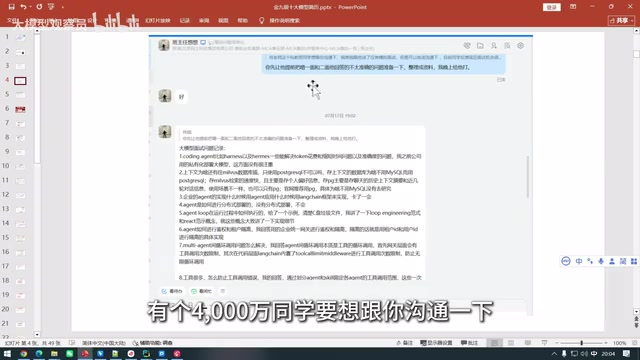
One detail mentioned in the livestream is worth pondering: some candidates reported that an HR representative at a foreign company in Shanghai explicitly said they value security isolation capabilities and hinted that Sandbox-related questions might be asked. Behind this lies the most realistic concern enterprises have when deploying multi-agent systems—agents call tools, execute code, and access external resources, and once isolation is lacking, risk amplifies along the call chain.
So when preparing for this kind of role, knowing how to call APIs is far from enough. You need to be able to explain clearly how sandbox boundaries are drawn, how permissions are minimized, and how exceptions are handled as a fallback. This is also the part of Harness Engineering tutorials that is most easily overlooked, yet most likely to be probed by interviewers.
How to Prepare Specifically for These Roles
Based on the problems exposed by interview retrospectives, the preparation directions can be summarized in a few points. First, run through the complete multi-agent collaboration chain once, and understand how scheduling, context, and isolation work together. Second, focus on filling in the engineering details of sandboxes and security isolation, and be able to explain isolation levels and failure scenarios clearly. Third, when organizing your own projects, emphasize engineering implementation rather than model tuning, because interviewers want to see whether you can keep the system running stably.

The UP host also admitted that many people across the internet are stronger than him in pure technical depth, but the volume of interview retrospective samples he has accumulated gives him a unique information advantage on "what interviewers like to ask." For job seekers, this kind of first-hand feedback is more valuable as a reference than generic tutorials.
Final Thoughts
The rise of Harness Engineering is essentially the inevitable result of multi-agent systems moving from demos to production. What enterprises need is not just people who can write prompts, but engineers who can design collaboration skeletons and safeguard security boundaries. Thoroughly understanding the underlying principles and core components, then using real interview feedback to fill gaps, is the effective preparation path for these roles.
One-line Summary
Harness Engineering has become an interview hot topic due to enterprises' multi-agent deployment needs, with a focus on security isolation and Sandbox engineering capabilities.
Paragraph Summary
Starting from first-hand interview retrospective data from a Bilibili UP host, the article points out that Harness Engineering is becoming an interview hot topic for enterprise-level multi-agent roles. As the "operating system layer" of multi-agent systems, Harness provides core capabilities such as task scheduling, context management, sandbox isolation, and observability, filling the engineering gap from single-agent demos to enterprise-level collaboration. Interviewers are especially focused on security isolation and Sandbox mechanisms, because when agents call tools and code, risk amplifies along the call chain. The article advises job seekers to run through the full multi-agent collaboration chain, focus on filling in sandbox engineering details, and highlight engineering implementation capabilities rather than model tuning in their projects. It also emphasizes that first-hand interview retrospective data is more valuable as a reference than generalized tutorials.
Related articles

Google Releases Gemini 4 Carbon: Its Strongest Model Yet, Debuting with a Cybersecurity Focus
Google releases Gemini 4 Carbon, calling it its strongest model, with a cybersecurity focus. It tops the third-party composite ranking at 59 points but leads by only one or two. This article analyzes its security test results, staged rollout, token pricing, and the divergence between self-reported and third-party tests on hallucinations.

LangChain Adds SchemagateRetriever: On-Demand Table Retrieval Cuts Text-to-SQL Prompts by 92.9%
LangChain docs add SchemagateRetriever: retrieves only the tables needed for text-to-SQL with permission filtering, cutting median prompt size by 92.9% on Spider 2.0 large schemas via offline BM25 selection with no model calls.

Multi-Step AI Agent Guardrail in Practice: Fact-Change Detection Drives False-Alarm Rate to 0%
Developer shares first version of a multi-step AI Agent guardrail: re-verifying dependency facts before irreversible actions cut false alarms from 50% to 17% across 23 scenarios, then to 0% via conservative normalization without lowering catch rate. Runs on local qwen2.5-7b.