The Verge Mother's Day Gift Guide: Practical Tech Product Recommendations

The Verge 2026 Mother's Day gift guide: tech products should be practical, easy to use, and fit daily life.
This article interprets The Verge's 2026 Mother's Day gift guide, noting that tech products are becoming gifts that combine practicality and emotional value. The guide's core logic is hands-on editorial testing, multi-price coverage, and prioritizing products that fit high-frequency life scenarios. It advises focusing on Mom's most repeated daily actions—kitchen cooking, living room entertainment, bedroom sleep aid—rather than novel features. Ease of use matters more than specs, with out-of-the-box use and long-term maintenance friendliness being key. Gifts should also echo Mom's interests, with emotional expression as the endpoint. Finally, it reminds readers to treat lists rationally, apply secondary filtering, and view the guide as a starting point for building selection ideas rather than accepting it wholesale.
A Tech Gift List for Mom
The holiday season is here, and picking the right gift for Mom is often a headache—especially when the gift needs to be both practical and emotionally meaningful. The Verge's 2026 Mother's Day gift guide was created precisely to solve this problem. The guide brings together tech products carefully selected by the editorial team, aiming to help readers find gifts that both express their care and genuinely improve Mom's daily quality of life.

Why Tech Products Are a Good Choice
Tech products have long ceased to be exclusive to young people. From smart home devices to health monitoring tools, more and more technology is becoming part of every aspect of family life. For mothers, a thoughtfully designed, easy-to-operate tech product may offer more long-term value than traditional flowers or jewelry. The guide's core idea is that a gift should not only look good but also be genuinely useful—able to truly solve small pain points in daily life.
In recent years, the silver economy and age-friendly technology have become important trends in the consumer electronics sector. According to industry observations, smart devices for middle-aged and older users are expanding from simple "health monitoring" to categories such as smart home, voice assistants, and simplified smartphones. Many manufacturers have begun introducing age-friendly designs like large fonts, large buttons, and voice interaction to lower the barrier to use. At the same time, the spread of home IoT allows products like smart speakers and smart lighting to integrate into ordinary households at low cost. This background explains why tech products are gradually becoming a popular choice for holiday gifts: they are no longer just gadgets for geeks, but have the potential to solve real problems in daily life—such as medication reminders, remote video calls, and automatic indoor temperature adjustment.
The Guide's Selection Logic
The Verge's gift guides have always been known for hands-on editorial testing and rigorous screening. This Mother's Day gift list continues that tradition, covering multiple price ranges and usage scenarios. Although the original article does not detail every item, based on The Verge's past recommendation style, it is reasonable to infer that selected products typically share the following traits: verified through actual use, competitive among同类 products, and able to adapt to different home environments. For consumers with limited budgets or tight schedules, such a list can greatly reduce decision-making costs.
How to Choose a Gift Based on Mom's Needs
Focus on High-Frequency Daily Scenarios
When choosing a gift, rather than chasing novelty, it is better to observe the actions Mom repeats most every day. Cooking tools in the kitchen, entertainment devices in the living room, and sleep-aid products in the bedroom are all high-frequency usage scenarios. A tech product that can optimize these scenarios often brings sustained happiness. The guide's recommendations follow this principle as well, prioritizing items that can integrate into daily life.
Ease of Use Matters More Than Power
For many mothers, the usability of a tech product matters far more than the numbers on a spec sheet. Complicated setup processes and obscure interfaces may leave a well-intentioned gift sitting unused. The Verge editors clearly took this into account when screening, and most recommended products perform well in terms of out-of-the-box use and long-term maintenance. This is also something consumers should pay close attention to when making a purchase.
In consumer electronics, "out-of-the-box" usually means a product can be used without complex configuration, which involves software-hardware co-design, optimized default settings, and user onboarding flows. For less tech-savvy users, too many setup steps, cumbersome account systems, and overly deep interface hierarchies are the main reasons devices end up unused. Common industry usability assessments include: time required for first-time setup, whether an additional app download is needed, whether voice or one-tap operation is supported, and whether firmware updates complete automatically. Reviews from media outlets like The Verge often give a "would I recommend this to my parents" verdict after long-term use, precisely based on these dimensions. When shopping, consumers can prioritize products that offer a clear "senior mode" or "simple mode."
Balance Emotional Expression
A gift is ultimately a carrier of emotion. If a tech product can echo Mom's interests—such as a love of photography, cooking, or health management—it is more likely to resonate. The guide's approach is to first understand the recipient's lifestyle, then find matching items on the list, rather than blindly chasing popular products.
The Long-Term Value of Gift Guides
The Verge's holiday gift guide is updated every year, and its value lies not only in immediate purchase advice but also in helping readers build a framework for thinking about gift selection. By observing the editorial team's selection logic, consumers can gradually form their own criteria: what is truly practical, and what is a need manufactured by marketing. For those who want to give good gifts beyond the holidays, this list is equally useful as a reference.
Treat Recommendation Lists Rationally
Every gift guide carries the subjective preferences of its editorial team. The Verge's recommendations lean toward products that combine technology and lifestyle, which may not suit every family. When using this list, readers would do best to apply a second round of filtering based on Mom's actual needs and usage habits, rather than accepting everything wholesale. The meaning of a gift lies in the thought, and the list is only a starting point.
The recommendation logic of media gift guides is usually based on collective testing by the editorial team, but different outlets have clearly different emphases. For example, The Verge leans toward the intersection of technology and lifestyle, Wirecutter focuses more on long-term durability and value for money, and consumer magazines may focus more on mass popularity. This difference means the same category may rank completely differently across lists. In addition, recommendation lists are often limited by review samples, publication timing, and commercial partnerships; readers should note whether a guide is labeled "independently tested by editors" or contains affiliate marketing links. A rational way to use lists is: first clarify the recipient's core needs, then cross-check multiple sources, and finally make a decision taking return and exchange policies into account.
One-line Summary
The Verge 2026 Mother's Day gift guide: tech products should be practical, easy to use, and fit daily life.
Paragraph Summary
This article interprets The Verge's 2026 Mother's Day gift guide, noting that tech products are becoming gift choices that combine practicality and emotional value. The guide's core selection logic is hands-on editorial testing, coverage of multiple price ranges, and prioritization of products that fit high-frequency life scenarios. The article suggests focusing on the actions Mom repeats most each day—such as kitchen cooking, living room entertainment, and bedroom sleep aid—rather than chasing novel features. Ease of use is emphasized as more important than powerful specs, with out-of-the-box use and long-term maintenance friendliness being key. Gifts should also echo Mom's interests, with emotional expression as the endpoint. Finally, readers are reminded to treat recommendation lists rationally, apply a second round of filtering based on actual circumstances, and view the guide as a starting point for building selection ideas rather than an answer to accept wholesale.
Related articles

Microsoft Open-Sources Token Economizer: Saving 18%-31% on AI Coding Agent Costs
Microsoft's free open-source plugin Token Economizer cuts AI coding agent costs through micro skills, tool pruning, and failure loop intervention. Tests show 18.4% to about 31% average savings with Claude Code, Codex, and more.

Running GLM-5.3 on Two DGX Stations: A vLLM Tensor Parallelism Hands-On
NVIDIA engineers show how to run the 753B-parameter GLM-5.3 locally on two DGX Stations using vLLM tensor parallelism, covering RDMA setup, launch args, NCCL checks, and performance baselines.
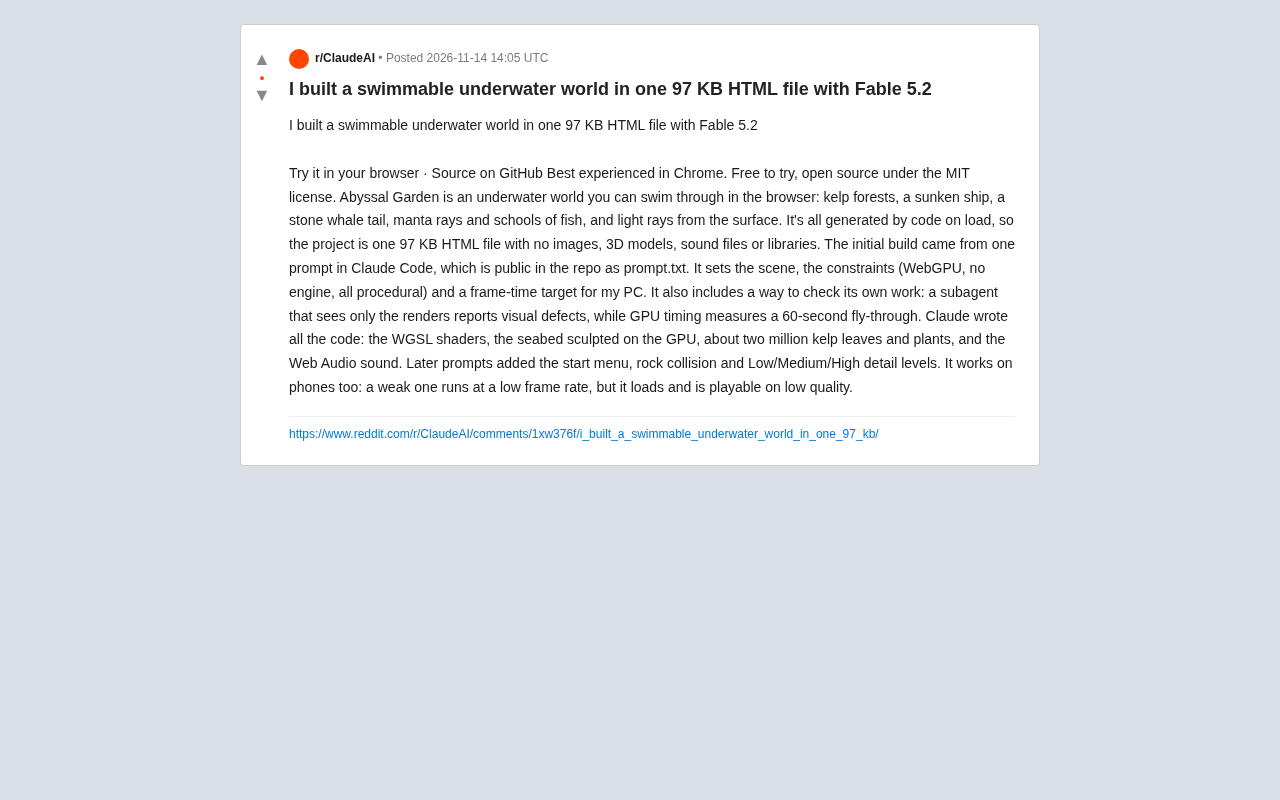
97KB Single-File HTML Underwater World: A WebGPU Experiment in AI Programming
A developer used a single prompt in Claude Code to generate a 97 KB single-file HTML underwater world, fully procedurally generated with WebGPU—kelp forests, a shipwreck, and fish, no images or model libraries, MIT-licensed, playable on mobile.