Treasure Hunting Beneath the Waves: How Sonar Technology Unlocked the Secrets of Five Legendary Shipwrecks

National Geographic drains the ocean digitally to reconstruct five centuries of shipwreck history using multi-beam sonar.
National Geographic's Drain the Oceans uses multi-beam sonar and 3D visualization to transform underwater archaeology from treasure hunting into verifiable historical reconstruction. Across five cases — the Dutch East India Company's Rooswijk, the Spanish galleon Atocha, three pirate flagships, and the warship Mercedes — the episode reveals smuggling networks, storm dynamics, and a landmark legal ruling that established historical heritage as public patrimony rather than salvage-company spoils.
The dream of finding buried treasure has captivated humanity for centuries. For hundreds of years, ships laden with silver, gold, and jewels sailed the world's oceans — only to be seized by pirates, shattered by storms, or torn apart by reefs. They sank to the bottom, taking their riches with them. National Geographic's Drain the Oceans special uses multi-beam sonar scanning and 3D visualization technology to "drain" the sea, giving audiences their first clear look at these wrecks as they actually rest on the ocean floor — and at the historical truths behind them, spanning three centuries.
This is more than a story about gold. The episode weaves five case studies into a coherent argument about the technical logic of underwater archaeology: from a Dutch East India Company merchant vessel in the North Sea, to a Spanish galleon off Florida, a British warship in the Arctic, a pirate ship in the Caribbean, and finally a shipwreck lawsuit that altered the fate of the Spanish Empire. Each case demonstrates how modern scanning technology can transform a field of scattered debris into a readable piece of history.
Multi-Beam Sonar: The Core Technology Behind "Draining" the Ocean
The technical backbone of the entire episode is multi-beam sonar scanning (MBES). The system fires acoustic pulses toward the seafloor and uses the returning echoes to map the shape and depth of the terrain, then combines that data with visualization software to generate precise 3D imagery. This approach allows archaeology teams to "see" an entire section of seafloor on-screen before anyone enters the water.
Take the Dutch merchant ship Rooswijk in the English Channel. Lead archaeologist Martijn Manders described it this way: "We did a multi-beam survey, which gives us an image of the whole seabed, and then we start putting together this puzzle." It was this data that allowed the team to zero in on Goodwin Sands — a shifting sandbar known as the "Great Ship Swallower" — which has claimed roughly 2,000 vessels over the centuries.
Once the water is stripped away in the visualization, the twisted keel of an 18th-century wreck and five scattered cannons gradually come into view. The Rooswijk set sail in 1740 carrying approximately 300,000 guilders in silver bound for the East Indies, struck a reef in a storm, and went down with 237 people aboard. What the archaeology revealed was a fascinating historical secret: the ship carried large quantities of older 17th-century coins (ducatons) mixed together with freshly minted company silver, proving that virtually everyone on board — from the captain to the lowest-ranking sailors — was engaged in silver smuggling, which the company had explicitly banned. Estimates suggest roughly 50% of the silver on board was contraband, with a total potential value of around $125 million.
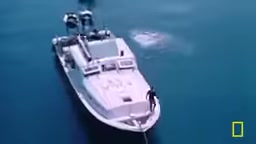
The fundamental difference between multi-beam echo sounders (MBES) and traditional single-beam sonar lies in coverage. A single-beam system can only measure the depth of one point directly below the vessel at a time, while a multi-beam system simultaneously fans out dozens or even hundreds of acoustic beams to either side, covering a swath several times the water depth in a single pass. Survey vessels make parallel runs back and forth, and the compiled data can produce seafloor maps with centimeter-level resolution. In shallow areas like the English Channel, the system can even distinguish individual timbers or scattered cannonballs. The technology was originally developed by navies for mine detection and channel surveying, before gradually opening up to scientific and archaeological use during the 1980s and 90s. Combined with differential GPS positioning and inertial navigation systems, modern multi-beam scanning can hold positional error to within tens of centimeters across areas of several square kilometers — which is precisely why archaeology teams can pinpoint wreck outlines with such accuracy in near-zero visibility environments like Goodwin Sands.
The Atocha: Sixteen Years Chasing the "Motherlode"
The Florida Keys are another legendary ship graveyard, with roughly 1,000 wrecks on record. In 1622, the Spanish galleon Nuestra Señora de Atocha sank in a hurricane carrying more than 30 tons of silver bars, 200,000 coins, and quantities of gold and emeralds.
Treasure hunter Mel Fisher led his family team on a search that lasted nearly sixteen years. Multi-beam scanning revealed a spectacular underwater landscape: the shallow Florida Keys are actually the peaks of a submerged mountain range, with the edge of the North American continental shelf dropping off 6,000 feet just beyond, and the Florida Reef Tract — the only living coral reef in North America — which was what tore open the Atocha's hull.
The "Motherlode" found in 1985 — that pile of 30 tons of silver bars — was valued at approximately $400 million at the time, and with subsequent discoveries, the full value of the wreck is now approaching $1 billion. More critically, the scanning data explained why the treasure was scattered across ten miles of seafloor: thirty days after the initial sinking, a second hurricane tore apart the bow, stern, and upper decks, dragging out a breadcrumb trail of treasure. The search team is now using a Hovering Autonomous Underwater Vehicle (HAUV) to follow that trail in search of the missing sterncastle and priceless emeralds.
Caribbean Pirates: From Henry Morgan to Blackbeard
The Caribbean is synonymous with piracy. The episode traces the "Golden Age of Piracy" through three legendary figures: Henry Morgan, William Kidd, and Blackbeard.
Archaeologist Fritz Hanselmann searched for Morgan's flagship Satisfaction, lost in 1671, at the mouth of Panama's Chagres River. Draining the water away revealed the hull of a 17th-century sailing vessel — but mule horseshoes and silk cargo marks identified it as the supply ship Encarnación instead. The real breakthrough came from eight cannons on the Lajas reef: they were mismatched in size and nationality (a mix of English and French), exactly fitting the pirate practice of using whatever was available, and one bore a marking from an English foundry whose dates aligned perfectly with Morgan's raid.
William Kidd's flagship Quedagh Merchant was identified through equally distinctive clues: the hull was built from Indian teak using a "rabbeting" joinery technique rarely seen in Europe or the Americas, confirming it was an Indian-built ship that Kidd had captured in the Indian Ocean.
The most famous case of all was Blackbeard's Queen Anne's Revenge. When remains were discovered in Beaufort Inlet, North Carolina in 1996, a sternpost bore the Roman numeral "VI" — but measurement revealed it corresponded to six pieds de roi (French feet) rather than English feet, confirming the ship was French-built. This made it the vessel Blackbeard had seized from the French privateer Le Concorde. Archaeologist Lisa Briggs concluded the probability that this was the Queen Anne's Revenge was 99%.
The Mercedes: A Lawsuit Over Who Owns History
The episode's most consequential case is the legal battle between the Spanish government and American salvage company Odyssey Marine. Odyssey discovered a field of scattered coins in the deep Atlantic (about 1,100 meters down), codenamed "Black Swan," salvaged approximately 17 tons of silver coins valued at up to $500 million, and preemptively filed an ownership claim in a Florida court.
Spain's lead attorney, James Gould, faced a fundamental challenge: he needed to prove not only that a shipwreck existed on the seafloor, but that the ship was Spanish. By obtaining GPS track data from Odyssey's vessels through the Spanish Navy, he pinpointed the location of the Mercedes, a Spanish warship sunk during the Battle of Cape St. Mary in 1804.
The decisive evidence was hiding in the details. Archaeologist Jim Delgado, working from seabed images that Odyssey had been compelled to hand over, first recognized the circular pattern of blast debris, then spotted two bronze cannons that were anachronistically old — out of step with everything else by roughly two centuries. A check of the Mercedes's cargo manifest revealed a line item for "two useless bronze cannons" (canones bronce inutiles) — and this became the overwhelming proof.

A senior judge in Tampa ultimately ruled that the Mercedes was "natural and legal heritage of Spain." The 17 tons of coins were flown back to Madrid on two Spanish Air Force Hercules transport aircraft. Two years later, Odyssey was fined $1 million for "bad faith and abuse of process." In a subsequent scientific survey, archaeologists found a fork bearing the initials of the ship's captain, Don José Goicoa, which definitively confirmed the vessel's identity.
As Delgado put it: "This is a war grave with 250 dead — Spanish sailors, marines, and the wives and children of officers." The significance of the case had long since transcended the coins themselves. It established a principle: historical heritage belongs to all citizens, not to the spoils of private salvage companies.
The Mercedes case carries far-reaching implications within the framework of international maritime law. Under the 1982 UN Convention on the Law of the Sea (UNCLOS) and the 2001 UNESCO Convention on the Protection of the Underwater Cultural Heritage, naval warships in principle permanently retain the sovereign immunity of their flag state, regardless of where they sank or how deep they lie, and are not subject to general salvage law principles such as "abandoned property" or "finder's rights." Although the United States has not ratified the UNESCO convention, the federal court in this case invoked the common law principle of sovereign immunity in its ruling — effectively confirming at the level of legal precedent that salvage companies cannot claim ownership of a warship's cargo simply by being the first to register a "discovery." The international archaeological community regards this judgment as a landmark ruling that has directly influenced subsequent salvage disputes involving Spanish and British wrecks, and prompted more countries to systematically catalogue their historical shipwreck records in preparation for potential legal claims.
How Technology Is Rewriting Underwater Archaeology
Viewed together, these five cases reveal a clear trajectory: modern scanning and visualization technology is transforming underwater archaeology from "lucky treasure hunting" into "verifiable historical reconstruction." Multi-beam sonar handles location and modeling; ROVs (remotely operated vehicles) and HAUVs handle close-range survey and recovery; and saturation diving technology allows human beings to work inside the wreck of HMS Edinburgh — 800 feet deep in the Arctic, in freezing darkness — ultimately recovering 460 gold bars, the largest single recovery of gold from the ocean floor in history, valued at approximately $240 million.
The episode returns repeatedly to a single contrast: for treasure hunters, these are "treasure ships"; for archaeologists, they are equally "treasure ships" — because the historical information they contain is the truly priceless cargo. The black-market trade revealed by smuggled silver, the storm dynamics implied by a trail of scattered treasure, the ship identity confirmed by bronze cannons — none of this can be replaced by the monetary value of the gold alone.
From the English Channel to the Arctic Circle, from the Caribbean to the deep Atlantic, the water is drained away again and again, revealing not just wealth, but chapter after chapter of human history buried by time and brought back to light.
Saturation diving, another key technology mentioned in the episode, is specifically designed to overcome the physiological limits of deep-water, long-duration operations. Conventional divers are restricted by decompression time and can only work for very brief periods below 100 meters. Saturation diving instead keeps divers living for extended periods — typically several weeks — inside pressurized habitat chambers at the same pressure as their working depth, eliminating the decompression waiting time between dives. During operations, divers transfer from the pressurized living quarters aboard the surface ship into a diving bell, which delivers them directly to the work site; they return to the pressurized habitat to rest afterward. Only a single slow decompression is required at the end of the entire saturation cycle. The Edinburgh lay approximately 250 meters down in the Barents Sea, in near-freezing water with minimal visibility — it was saturation diving that made weeks of precise recovery work possible. The technology was first commercialized for underwater maintenance work on North Sea oil and gas fields, and underwater archaeology has become one of its most important extended applications.
Related articles

Building an AI Agent with Claude Code from Scratch: From Workspace to Cloud Autonomy
No coding required: build an AI Agent in four steps with the Claude Code desktop app—from workspace setup and Agent Designer to Skills, Memory, and cloud autonomy.

No Python Required: How Cursor AI Coding Is Reshaping Automated Testing and Test Development
Test engineers can do automated testing without learning Python? This article examines how Cursor and other AI coding tools empower functional testing, automation scripts, test platform development, and performance tuning, compares the cost and access restrictions of mainstream domestic and foreign tools, and offers capability transformation advice for testers.

Nearly 5,000 Affected! AI Coding Plugin Found with Backdoor, Officials Urgently Remove It
Claude Code's VS Code extension version 2.1.313 was maliciously tampered with, implanting a backdoor for remote login and persistent control, potentially affecting up to 5,000 users. Officials have removed the malicious version; this article details the attack method and cleanup steps.