UK Government Urges Citizens to Stockpile Food and Prepare for Power Outages in First Such Call Since the Cold War

UK government launches Be Ready campaign, advising households to stockpile three days of supplies against Russian retaliatory attacks and infrastructure disruption risks.
The UK government's "Be Ready" official campaign advises every household to stockpile at least three days of basic survival supplies—including batteries, canned beans, flashlights, and drinking water—to prepare for hostile state attacks, cyberwarfare, and major infrastructure collapse. The move is seen as a direct response to possible Russian retaliation against European countries supporting Ukraine, marking the UK's first such nationwide preparedness call since the Cold War. The communication strategy emphasizes guiding public expectations in advance to reduce social panic during early internet or power outages. The three-day stockpile window covers the chaotic early phase of infrastructure disruption, reflecting minimum household resilience-building rather than long-term survivalist hoarding. The warning brings cyberwarfare and infrastructure attacks into the mainstream UK national security narrative.
The UK government has recently launched an official campaign called "Be Ready," advising every household to stockpile at least three days' worth of basic survival supplies—including batteries, canned beans, flashlights, and drinking water—to prepare for a possible national emergency. This warning is widely interpreted as a direct response to the possibility of retaliatory attacks by Russia against European countries supporting Ukraine, and it marks the first time since the end of the Cold War that the UK government has issued such a nationwide preparedness call.
What the Official Campaign Says
According to an analysis video circulating on YouTube, the UK Defence Secretary publicly urged citizens to "get ready," but did not claim that tactical intelligence indicates the threat will arrive tomorrow. The commentator in the video pointed out that the core logic behind the government's move is: rather than waiting for a cyberattack to cripple the internet for days, or a power outage to trigger social panic, it is better to advise citizens now to stockpile supplies so they can ride out sudden disruptions smoothly.

The "Be Ready" campaign explicitly targets three scenarios: attacks by hostile states, cyberwarfare, and major infrastructure collapse. The government recommends that every household stockpile at least three days' worth of essentials. The video commentator bluntly called this "crazy" and emphasized that no such nationwide call has been seen since the Cold War.
Why Now
The video analysis suggests that the risk is shifting from "theoretically possible" to "realistically possible." The commentator stated that the risk of the current situation spiraling out of control is rising, and the government has chosen to guide public expectations in advance before panic occurs, rather than reacting passively after an attack takes place.

This "lead time" approach to public communication is essentially a form of risk management: by putting the worst-case scenario on the table through official channels, it reduces societal vulnerability during sudden events. Three days' worth of supplies may not seem like much, but it is enough to cover the chaotic window in the early stages of an internet or power outage.
Cyberwarfare and attacks on critical infrastructure are key concepts for understanding the context of this warning. Cyberwarfare refers to state or non-state actors using digital means to attack an adversary's information systems, with targets including power grid dispatch systems, communication networks, financial clearing systems, and other critical infrastructure. Such attacks are characterized by high stealth, difficulty of attribution, and the potential to cause large-scale service disruptions in a short period. In recent years, Russia has been repeatedly accused of launching cyberattacks against Ukraine and European countries—for example, attacks on Ukraine's power grid in 2015 and 2016 caused massive blackouts. The UK's National Cyber Security Centre (NCSC) has classified such threats as one of the highest-level risks. The government's recommendation for households to stockpile supplies is based on the hypothetical scenario in which a cyberattack could cause internet or power outages lasting several days.
The Logic Behind Three Days of Supplies
Three days is a critical time window. The video explains that if the internet or power supply is disrupted for several days, social order could be tested, and advance stockpiling can help families "get through" these initial problems.

Specific recommendations include batteries, beans, flashlights, and water. What these items have in common is that they can be used without relying on the power supply and can sustain basic survival needs. From an emergency management perspective, this is a minimum level of resilience-building, not long-term survivalist hoarding.
"Resilience-building" in emergency management refers to advance preparation so that social systems can maintain basic functions and recover quickly when hit by shocks. Household-level resilience-building typically includes stockpiling three days to two weeks of drinking water, food, medicine, and backup power. Three days is the internationally accepted minimum recommendation, because most sudden disruptions can be partially restored by emergency services within 72 hours. The UK's recommended supply list deliberately avoids dependence on electricity and emphasizes that basic survival can be maintained "without plugging in." This is fundamentally different from the stockpiling strategies of long-term survivalists—the latter often pursue self-sufficiency for months or even years, while the government's recommendation focuses on covering the initial chaotic window and preventing panic buying and social disorder.
What This Means
The UK government's move sends multiple signals. First, the official risk assessment that Russia may target European countries supporting Ukraine for retaliation is becoming more concrete. Second, cyberwarfare and infrastructure attacks have been incorporated into the mainstream narrative of UK national security—no longer merely a hypothesis within intelligence circles.

For ordinary citizens, the practical significance of this warning lies in psychological expectation management: the government is no longer avoiding discussion of the "worst-case scenario" but is proactively incorporating emergency preparedness into public policy. For the technology and security sectors, this is also a reminder—the resilience of critical infrastructure ultimately comes down to the emergency preparedness of every household. The video commentator's description of this shift as "crazy" precisely illustrates that the normalcy of the post-Cold War era is being redefined.
One-line Summary
UK government launches the Be Ready campaign, advising households to stockpile three days of supplies to prepare for retaliatory attacks from Russia and the risk of infrastructure disruptions.
Paragraph Summary
The UK government's "Be Ready" official campaign advises every household to stockpile at least three days of basic survival supplies—including batteries, canned beans, flashlights, and drinking water—to prepare for attacks by hostile states, cyberwarfare, and major infrastructure collapse. The move is interpreted as a direct response to the possibility of Russia retaliating against European countries supporting Ukraine, and it is the first such nationwide preparedness call since the end of the Cold War. The government's communication strategy emphasizes guiding public expectations in advance to reduce social panic during the early stages of internet or power outages. The three-day stockpile window is intended to cover the chaotic period at the onset of infrastructure disruptions, reflecting a minimum level of household resilience-building rather than long-term survivalist hoarding. The warning brings cyberwarfare and infrastructure attacks into the mainstream narrative of UK national security.
Related articles
 Tech Frontiers
Edge AI on Microcontrollers: When Is It Actually Worth Deploying?
Drawing on Reddit discussions and Arm case studies, this article analyzes the real-world use cases for edge AI on microcontrollers: when each device needs independent inference, when a gateway or cloud is more reasonable, and the costs and boundaries of specialized hardware.
 Tech Frontiers
Pushing the Limits of Extreme Sudoku on a 16GB GPU: Insights from Depth and Flow Matching
A researcher trained a 16.54M-parameter model on a 16GB GPU to solve extreme Sudoku, finding effective depth breaks the 60% plateau and flow matching with improved sampling pushes accuracy past 99% with ~50× lower layer-evaluation budget.
 Tech Frontiers
AI Agent Approval Workflows: Why Human Confirmations Always Get Mindlessly Clicked
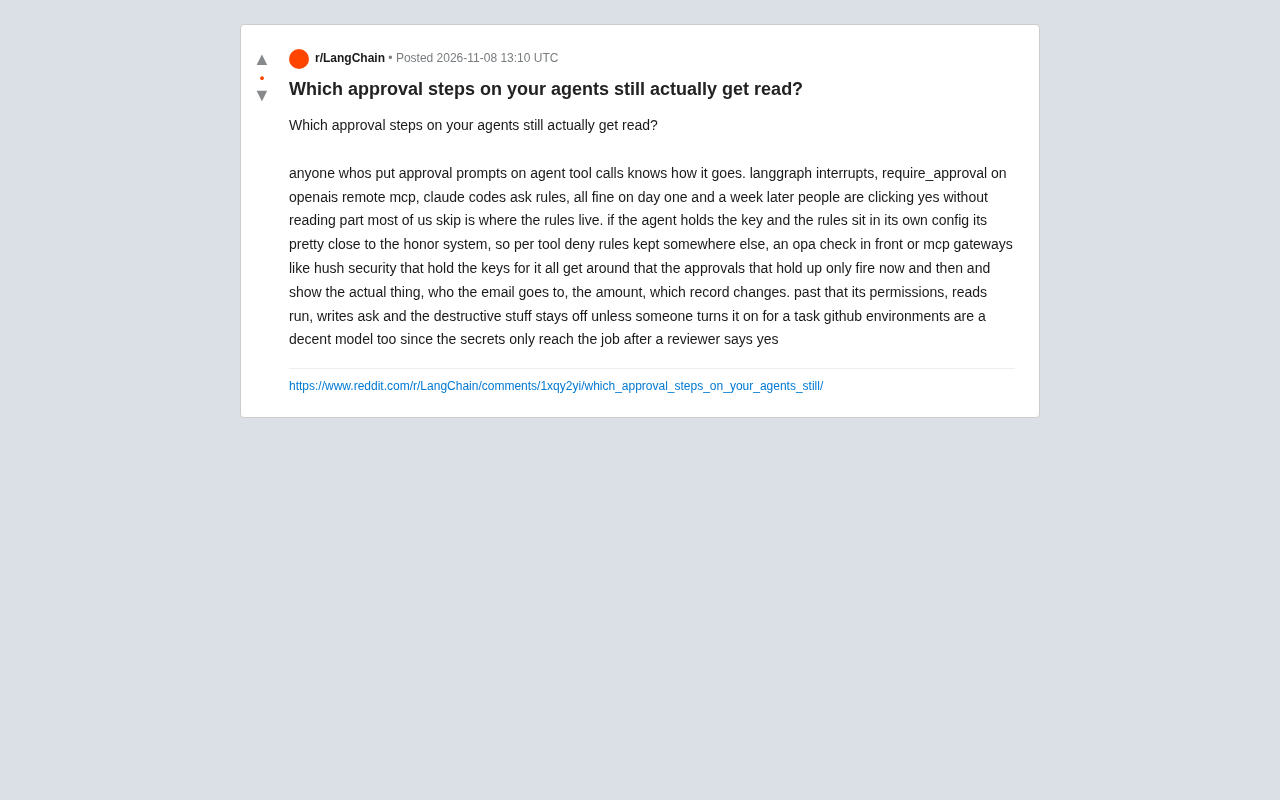
Why do AI agent approval workflows always get mindlessly clicked? A Reddit discussion shows that separating rules from keys, low-frequency high-risk approvals, and GitHub Environments-style gates are the keys to effective approvals.