Undercover Infiltration of U.S. Militia Leadership: Inside an Intelligence Operation

Informant infiltrated top U.S. militia leadership, but original material has only a headline; details uncertain.
An RSS report disclosed that an informant successfully infiltrated the highest levels of a U.S. militia organization, sparking discussion on Hacker News, but the original material contains only a headline and comment link—no report body. The article outlines the significance based on public context: militias are loosely organized and draw law enforcement attention; high-level infiltration can reach command and communication structures and has early-warning value, but informant exposure risk is high, and infiltration often sparks debates over privacy and civil liberties. Due to missing details, the operation's timing, executing agency, informant identity, and target organization cannot be confirmed. The author recommends readers consult the original text and HN discussion for cross-judgment and lists key points.
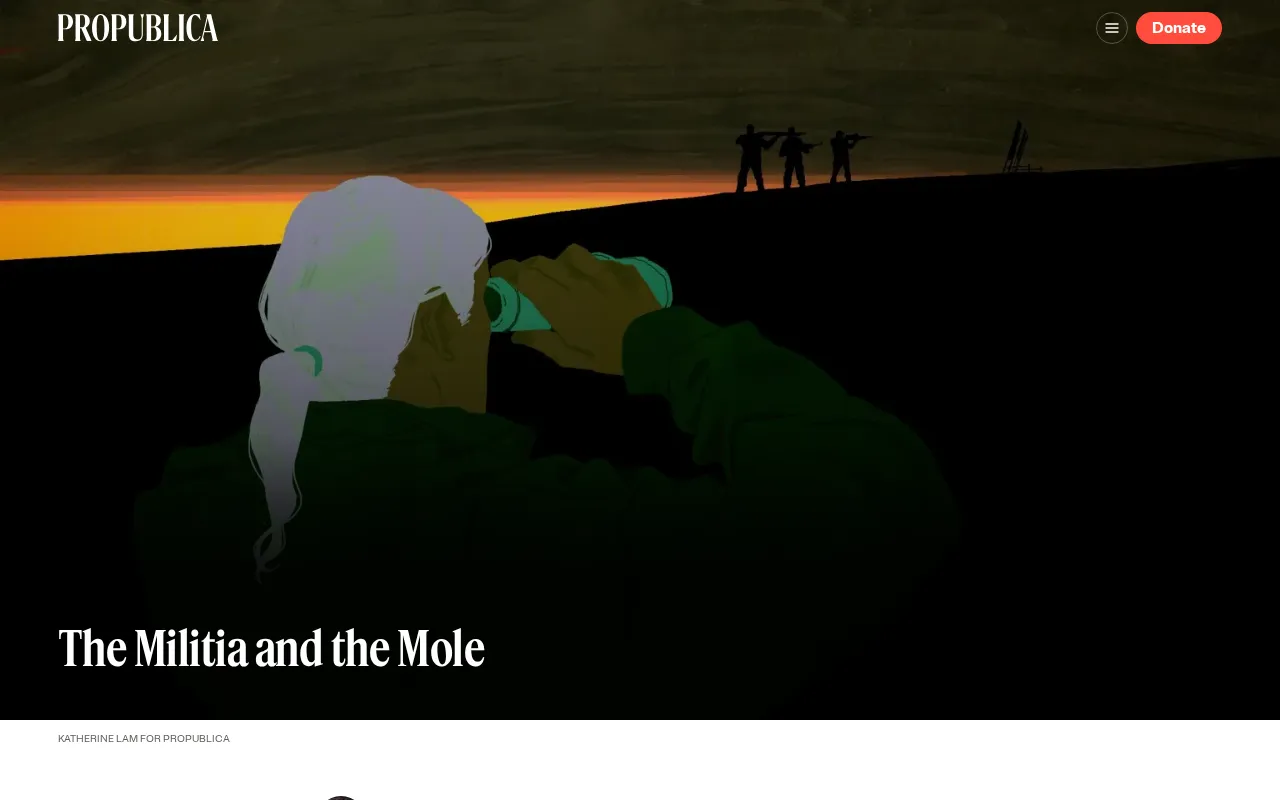
A report from RSS has disclosed a little-known intelligence operation: an informant successfully infiltrated the upper ranks of a U.S. militia organization. The news sparked discussion on Hacker News, but the original material provides only a headline and a link to comments—no body text of the report. Below is a brief analysis of the significance of this event based on publicly available context.
Event Overview: Undercover in the Militia's Inner Circle
The headline gets straight to the point—a "mole" penetrated the highest levels of a U.S. militia organization. Militias in the United States are loosely organized local armed groups that have long drawn the attention of law enforcement. An informant's ability to reach the decision-making layer means intelligence collection touched the organization's command and communication structures, rather than remaining at peripheral activities.
Because the original material does not include the report body, the specific timing, executing agency, informant identity, and infiltration target cannot be confirmed. HN comment discussions are likewise absent from the material, so this article does not speculate on details.
"Mole" is a general term in the intelligence community referring to a secret informant who has long been embedded inside a target organization, passing information to an external intelligence agency or law enforcement. Unlike a whistleblower who cooperates temporarily, a mole typically undergoes identity cover and long-term cultivation, enabling access to the organization's core decision-making and communication networks. In the U.S. domestic intelligence context, agencies such as the Federal Bureau of Investigation (FBI) often recruit such individuals through informant programs, with legal basis primarily from internal Department of Justice guidelines rather than statutory law—hence long-standing controversy over operational boundaries and oversight mechanisms. Once exposed, a mole not only faces personal danger but the evidence they obtain may also be challenged in court on procedural grounds.
Why Intelligence Infiltration of Militias Deserves Attention
U.S. militia organizations are numerous, loosely organized, and composed of complex memberships, making monitoring difficult. Law enforcement agencies have historically relied on informant networks to obtain internal information. If an informant did indeed reach the upper ranks, their value lies in early awareness of organizational movements, identification of key figures, and early warning of potential violence.
The sensitivity of such operations also lies in this: once an informant's identity is exposed, they face direct personal safety risks; at the same time, infiltration itself often sparks debate over privacy and civil liberties.
U.S. militia organizations are not a single entity but a category of local groups that style themselves as "citizen militias," typically defending themselves by invoking the Second Amendment. Their organizational form is mostly loose networks lacking unified command and formal membership systems, with members often operating under self-appointed titles such as "commander" or "colonel." This decentralized structure makes external monitoring extremely difficult: information is dispersed through offline gatherings and encrypted communications, and the activities of a single group are hard to piece into a complete picture. Historically, law enforcement intensified infiltration of the militia movement after the 1995 Oklahoma City bombing, but has also faced "entrapment" controversies due to provocative conduct by informants. The value of high-level infiltration lies precisely in penetrating this loose network to obtain the intentions and communication chains of the command layer.
Information Gaps in the Material and Reading Recommendations
Currently the only available content is the report headline. To understand the full context of the operation—including which organization was involved, who led it, and subsequent judicial developments—one needs to read the original text. For readers concerned with intelligence and domestic extremism issues, it is recommended to consult the full report from that RSS source directly and cross-reference with multiple perspectives in the HN discussion.
Hacker News (HN) is a technology and startup community operated by the venture capital firm Y Combinator, known for its high-quality comment discussions. HN discussions typically focus on technical details, legal ethics, and systemic impact rather than simply reposting news. In this case, the presence of an HN comment link means the community may have debated the legality of the intelligence operation, informant risks, or law enforcement oversight, but the original material does not include these contents. Readers seeking multi-angle judgments can search for the discussion thread on HN themselves, taking care to distinguish factual statements from speculative opinions.
One-line Summary
An informant infiltrated the upper ranks of a U.S. militia organization, but the original material contains only a headline and details remain uncertain.
Paragraph Summary
An RSS report disclosed that an informant successfully infiltrated the highest levels of a U.S. militia organization, sparking discussion on Hacker News, but the original material contains only a headline and a comment link—no report body. The article outlines the significance based on public context: militias are loosely organized and draw law enforcement attention; high-level infiltration can reach command and communication structures and has early-warning value, but informant exposure risk is high, and infiltration often sparks debates over privacy and civil liberties. Due to missing details, the operation's timing, executing agency, informant identity, and target organization cannot be confirmed. The author recommends readers consult the original text and HN discussion for cross-judgment and lists key points.
Related articles

LLM Application Development: A High-Paying Career Guide for Ordinary People
LLM application development offers fresh graduates up to 35K/month, with SP offers reaching 600K. This article explains the core skills, how to break in, and how ordinary people can seize AI opportunities through learning by doing.

Say Goodbye to AI Influencer Faces: A Complete Guide to Creating Visual Assets for AI Comic Dramas from Scratch
Bilibili creator shares a full workflow for zero-basics AI comic drama visual assets: use Doubao Work skills with script-first, visual references, and real-person texture to escape AI influencer faces, then lock character and scene consistency with asset sheet layouts, weapon detail images, scene nine-grids, and cinematic color palettes.

The AI Production Pipeline Behind Great Videos: From Research to Agent Validation
AI video production isn't just a model race. This article breaks down a transferable four-step pipeline: researching professional workflows, organizing a skill checklist, configuring agents, and experimental validation—and explains how general-purpose LLMs like DeepSeek can replace paid tools to run the entire process.