vLLM v0.34.0rc0: Gemma and StableLM Migrated to Transformers Backend

vLLM v0.34.0rc0 migrates Gemma and StableLM to the Transformers backend to unify the model loading path.
vLLM has released the v0.34.0rc0 candidate version, with the core change being the migration of the Gemma and StableLM model families to the Transformers backend, under merge request #66393, submitted by developer hmellor with a GitHub verified signature. The analysis suggests this is a "reduce forks, unify entry points" refactoring aimed at returning model definition and weight loading responsibilities to the upstream library, reducing multi-model maintenance costs and bringing model behavior closer to the Transformers reference implementation. It also cautions that the migration may bring short-term regression risks in quantization configurations or custom operator paths. Before upgrading, users should focus on validating weight loading compatibility, output value consistency, and memory/throughput performance; rc0 is suitable for compatibility testing rather than direct production use.
The Architecture Shift Behind a Release
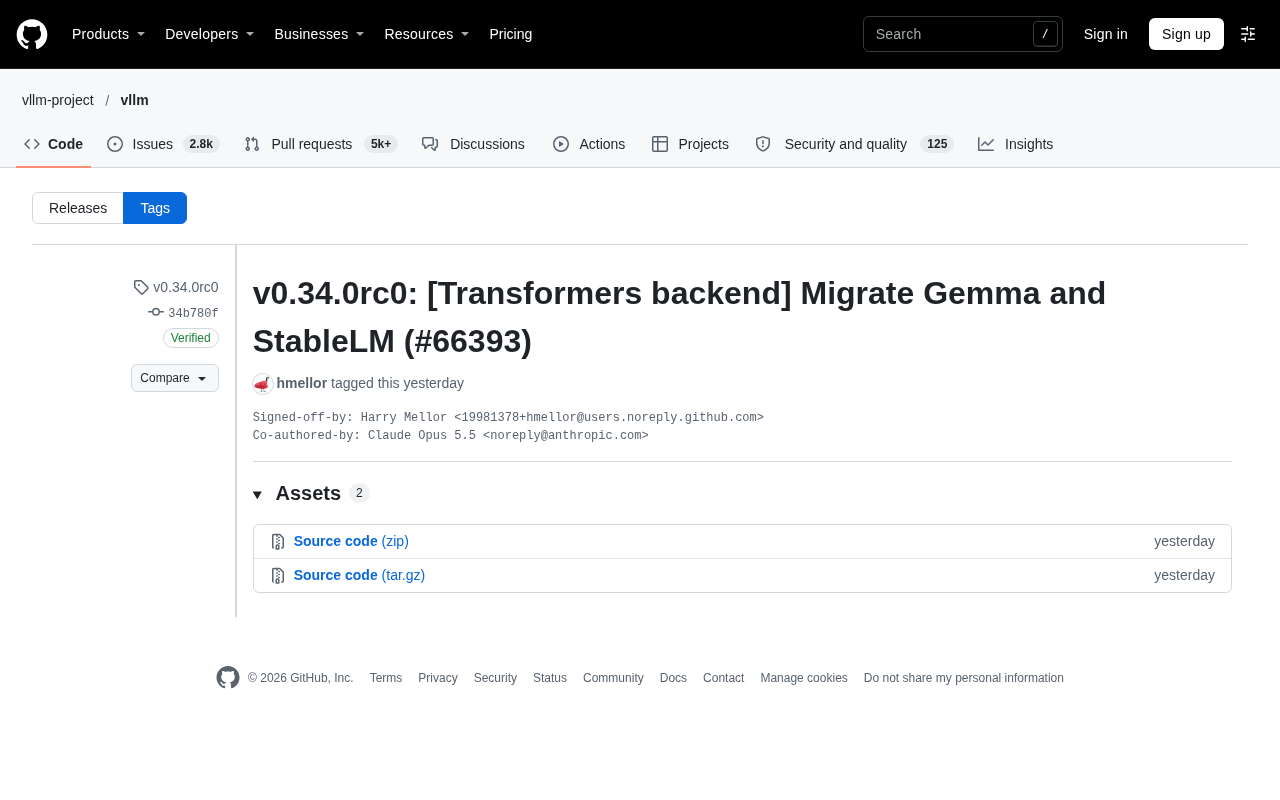
vLLM has released the v0.34.0rc0 pre-release version, with the core of this update being a backend migration: moving the Gemma and StableLM model families to the Transformers backend. This change was submitted by developer hmellor, with the merge request number #66393 explicitly recorded in the commit message, and the commit has been verified with a GitHub signature.
From an engineering perspective, this type of migration typically means switching model implementations from a dedicated code path to a unified backend framework—a classic "reduce forks, unify entry points" style of refactoring. For users focused on vLLM deployment practices, the rc0 in the version number indicates this is a release candidate, suitable for early compatibility validation rather than direct production use.
The Significance of the Migration: Why Unify to the Transformers Backend
An Inevitable Choice to Reduce Maintenance Costs
When an inference framework supports dozens of model families, maintaining a separate set of loading and execution logic for each model causes the codebase to expand rapidly, and any underlying change requires repeated validation across multiple model implementations. Migrating Gemma and StableLM to the Transformers backend essentially returns the responsibility of model definition and weight loading to the upstream library, leaving vLLM to focus only on core capabilities such as inference scheduling and memory management.
This approach has precedent in open-source inference frameworks. While forked implementations can achieve extreme optimization on specific models, over the long term they lengthen the onboarding cycle for new models and raise the barrier to understanding for community contributors.
Consistency Issues in Model Behavior
Different backends may have subtle differences in handling weight mapping, data type conversion, and attention implementation details. After migrating to a unified backend, the behavior of Gemma and StableLM is closer to the upstream Transformers reference implementation, which is a positive change for users who need to validate output comparability.
However, the migration may also bring short-term regression risks—for example, certain quantization configurations or custom operator paths may not yet be covered under the new backend. The existence of the rc0 version is precisely to collect this kind of feedback.
The Transformers backend refers to directly reusing the model definitions, weight mappings, and configuration parsing logic from the Hugging Face Transformers library, rather than writing separate implementations for each model inside vLLM. Transformers has become the de facto standard format for model weights and configurations, with the vast majority of open-source models providing companion files such as config.json and model.safetensors upon release. By hooking into this layer, vLLM can automatically inherit upstream support for new model structures, RoPE configurations, data types, and other details—thereby decoupling "what the model looks like" from "how to infer efficiently." The cost is the need to adapt between vLLM's attention implementation and Transformers' module abstractions; certain fused operators or quantization schemes not covered upstream may be temporarily missing.
Version Information and Commit Details
The tag for this commit is v0.34.0rc0, with a commit hash of 34b780f, tagged by hmellor on November 8. The commit carries a GitHub verified signature with GPG key ID B5690EEEBB952194, indicating the code source is traceable.
The title of merge request #66393 directly states the scope: migration of Gemma and StableLM under the Transformers backend. The commit message also includes a Co-authored-by field, indicating collaborative participation.
Judging from the release cadence, rc0 typically means there will be several more candidates or patches before the official release. Users concerned about behavior changes of Gemma and StableLM on vLLM can conduct compatibility testing on this version and keep an eye on the changelog for the subsequent official release.
rc0 is short for release candidate, indicating the first candidate release version. In semantic versioning practice, 0.34.0rc0 precedes the official 0.34.0 release; its API and behavior are largely frozen but may still be adjusted due to regression reports. Compared with alpha and beta, the rc stage typically accepts only bug fixes rather than new features, making it suitable as a starting point for compatibility validation. The number in rc0 increments when multiple candidates appear (e.g., rc1, rc2), with each iteration corresponding to a repackaging of a batch of fixed issues. Production environments should generally wait for the official release without the rc suffix, or at least confirm that the model paths they depend on have passed testing in the candidate version.
Practical Impact on Users
For teams already using Gemma or StableLM in production, three scenarios need to be validated before upgrading: first, whether configuration incompatibilities arise when loading existing weights; second, whether inference output values remain consistent with the previous version; and third, whether memory usage and throughput performance shift noticeably. Migrating to the Transformers backend does not necessarily mean performance degradation, but backend switching typically changes operator selection, so actual performance should be judged by benchmark testing.
For users newly adopting these two model families, the direct benefit of a unified backend is that configuration is closer to other Transformers models, reducing the cost of looking up model-specific parameters.
Performance shifts from backend switching mainly come from changes in operator selection and kernel scheduling. The old dedicated implementations may have hand-written fused operators for the specific structures of Gemma or StableLM (such as fused RMSNorm and rotary position encoding), whereas the Transformers backend takes a general path, and whether fusion is enabled depends on whether vLLM's adaptation layer recognizes the corresponding patterns. In addition, the KV Cache layout, batch scheduling strategy, and the way quantization kernels (such as FP8, AWQ) are hooked in may also vary by backend. Therefore, post-migration throughput and memory performance cannot be simply extrapolated; A/B benchmark testing with representative request distributions is needed, focusing on three metrics: first-token latency, decode throughput, and peak memory usage.
Editorial View
This migration by vLLM is a signal that the inference framework is maturing: once model coverage is broad enough, maintaining a unified backend is more valuable than maintaining a large number of customized implementations. For the community, what really needs to be observed is the density of regression issues after the migration, and whether subsequent versions will bring more model families into the same backend. Gemma and StableLM are just the beginning of this step.
One-line Summary
vLLM v0.34.0rc0 migrates Gemma and StableLM to the Transformers backend to unify the model loading path.
Paragraph Summary
vLLM has released the v0.34.0rc0 candidate version, with the core change being the migration of the Gemma and StableLM model families to the Transformers backend, under merge request #66393, submitted by developer hmellor with a GitHub verified signature. The article's analysis suggests that this migration is a "reduce forks, unify entry points" style of refactoring, aimed at returning model definition and weight loading responsibilities to the upstream library, reducing multi-model maintenance costs, and bringing model behavior closer to the Transformers reference implementation. It also cautions that the migration may bring short-term regression risks in quantization configurations or custom operator paths. For users, before upgrading, they should focus on validating weight loading compatibility, output value consistency, and memory/throughput performance; rc0 is suitable for compatibility testing rather than direct production use.
Related articles
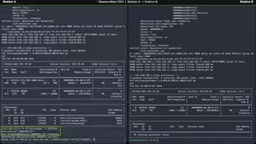
Running GLM-5.3 on Two DGX Stations: A vLLM Tensor Parallelism Hands-On
NVIDIA engineers show how to run the 753B-parameter GLM-5.3 locally on two DGX Stations using vLLM tensor parallelism, covering RDMA setup, launch args, NCCL checks, and performance baselines.
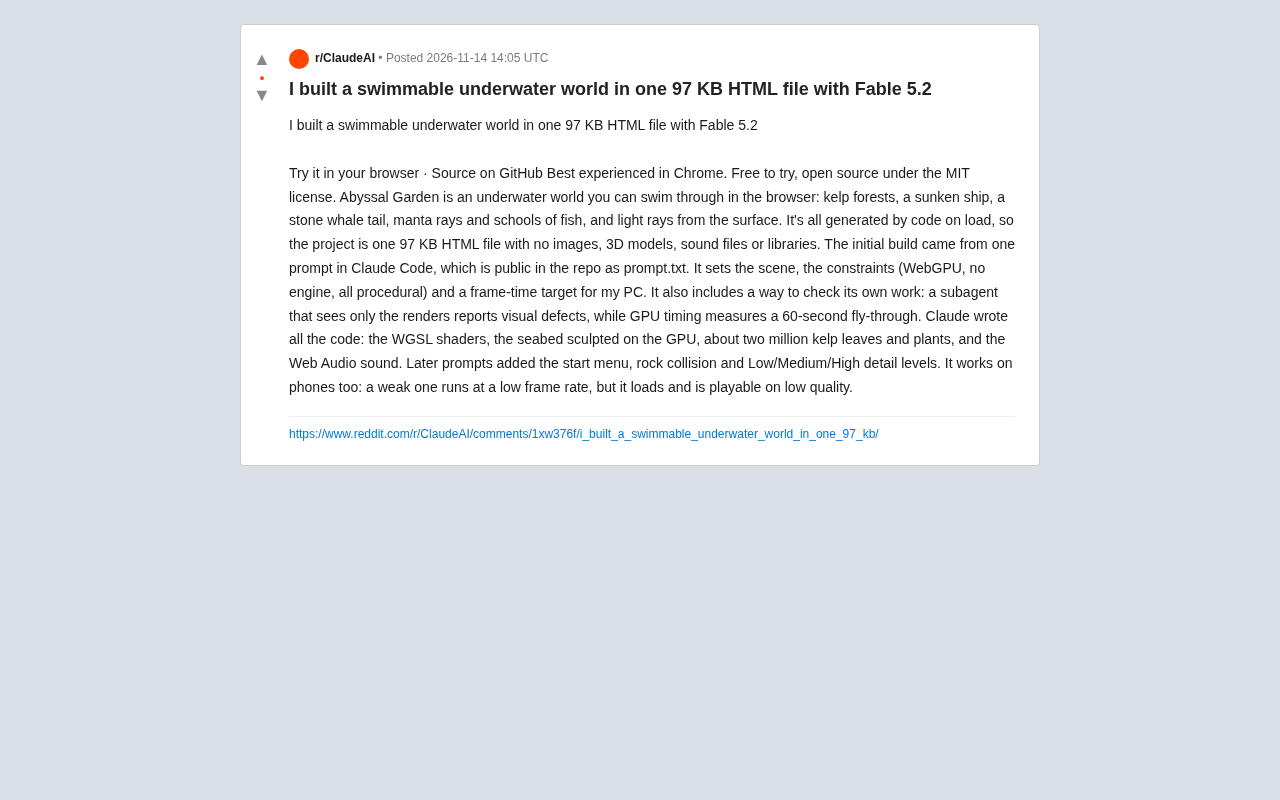
97KB Single-File HTML Underwater World: A WebGPU Experiment in AI Programming
A developer used a single prompt in Claude Code to generate a 97 KB single-file HTML underwater world, fully procedurally generated with WebGPU—kelp forests, a shipwreck, and fish, no images or model libraries, MIT-licensed, playable on mobile.
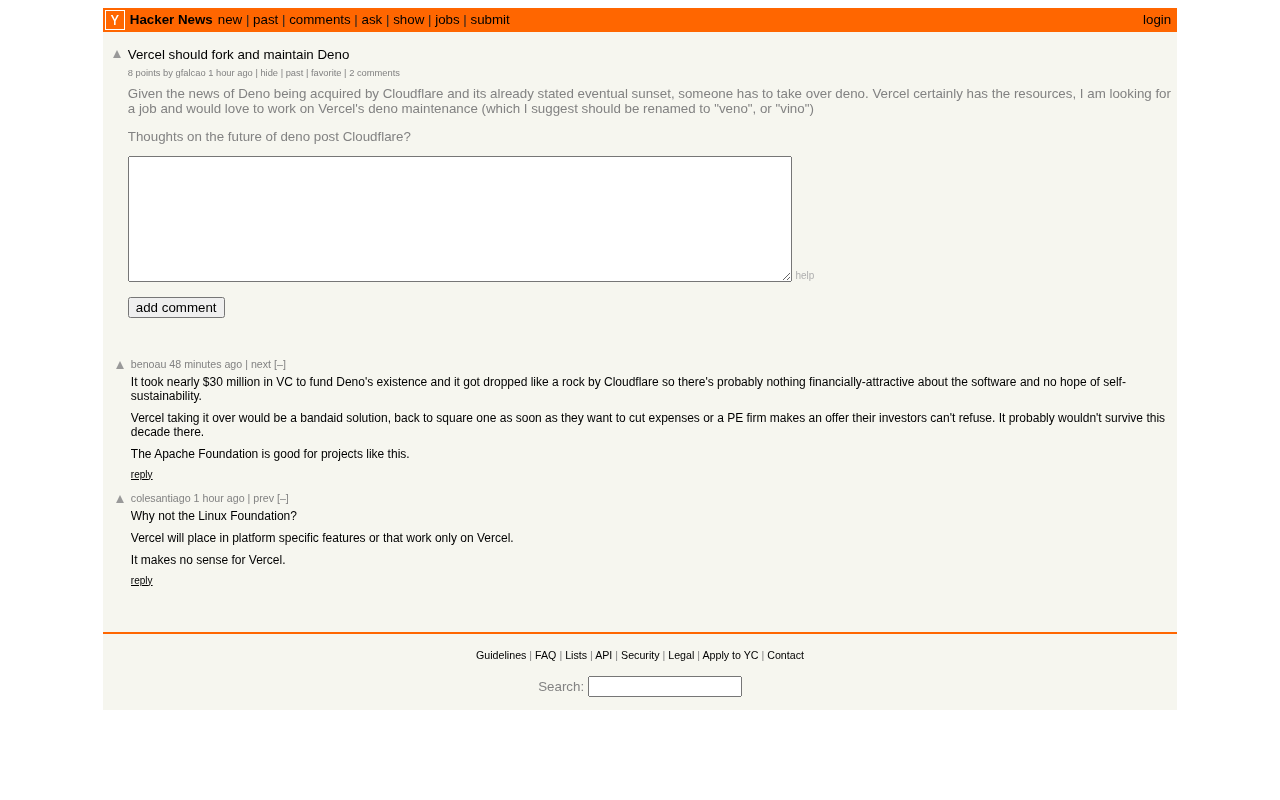
Should Vercel Fork and Maintain Deno? Developer Community Debates
Hacker News debates whether Vercel should fork and maintain Deno. This article analyzes the runtime ecosystem competition behind the claim, the commercialization dilemma of open-source projects, and the practical impact of forking on developers.