We Tested 100+ Claude GitHub Repos — These 6 Are Worth Installing

After testing 100+ Claude repos, 6 tools made the cut — plus warnings about the ones to avoid.
Drawing on one creator's experience testing over 100 Claude-related GitHub repos, the article sets a pragmatic filter: tools must dramatically speed things up, replace paid subscriptions, or directly deliver client-ready output. It breaks down six by use case: Hyperframes (natural-language MP4 video generation), Google Workspace CLI (command-line access to office suites), Apify MCP (scraping sites Claude can't reach), Scrollcraft (custom scroll-experience websites), Humanizer (removing AI writing tells), and Agent Skills (spec files to fight context rot in long sessions), plus Playwright testing and Claude Security scanning before launch. It also cites JetBrains' tests showing token-saving repos are generally overhyped, and advises beginners to install one at a time — monetizing through what you build around the tools, not the repos themselves.
Why Most Claude Repos Aren't Worth Installing
There are already over 100,000 repos built for Claude on GitHub, but most are a waste of time. After trying more than 100 repos in real projects, a YouTube creator narrowed it down to a handful of tools he genuinely can't work without. His criteria were pragmatic: each one either dramatically speeds things up, replaces a paid subscription, or directly produces deliverables you can hand to clients.
That filtering logic alone is worth borrowing. An explosion in repo count doesn't equal a productivity boost — what's actually valuable are the tools that slot into specific workflows and solve specific pain points. Below, we break down 6 of them by use case, along with the creator's warnings about the repos that fall short.
Content Production: Hyperframes Turns Video Editing Into a Single Sentence
Hyperframes comes from HeyGen. Tell Claude what you want in natural language, and it builds the video with HTML and animation, rendering a real MP4 file locally. Subtitles, motion graphics, title cards, product promos — all of it. The creator layers his own custom skills on top to produce YouTube intros, Instagram Reels, course videos, and ads, so editing is no longer the team bottleneck.
Compared to Remotion, which also does programmatic video, he explicitly says he has a higher success rate with Hyperframes. The key advantage is that it's open source with no per-render fees — completely free. It works commercially too: a gym that needs 20 short subtitled videos a month is exactly the kind of monthly content package you can sell, no traditional editing experience required.

Office Automation: Google Workspace CLI Opens Up the Account Ecosystem
The Google connector built into Claude Desktop only works inside the desktop app, and its coverage is limited. Google Workspace CLI is a command-line tool, so Claude Code, Codex, or any agent you build yourself can call it to work with Drive, Gmail, Calendar, Docs, Sheets, and Slides, with clean CLI-formatted output.
It ships with 40+ skills, so Claude knows how to use it out of the box. Setup takes a few minutes because logging in requires a Google Cloud project, but Claude can walk you through it step by step. For the vast majority of small businesses running on Google, work like weekly reports, invoices, and follow-up emails can be automated quickly.
Data Scraping: Apify MCP Fills In the Data Claude Can't Reach
Sites like Instagram and Reddit block scraping or rely on JavaScript to load, so when Claude tries to access them directly it often gets a blank page. Apify's MCP server connects Claude to thousands of ready-made scrapers covering Instagram, TikTok, Amazon, and many other sites.
In practice it's straightforward: ask Claude to find bakery Instagram accounts in Chicago, get their follower counts, download their videos, and filter out the ones without a website in their bio. A few minutes later you have a spreadsheet. The connector is open source, the scrapers run on Apify's cloud, and you pay per scraper used; the free plan includes $5 of credit per month. There's also an open-source alternative, Firecrawl, but he finds Apify smoother to work with.
MCP (Model Context Protocol) is an open protocol Anthropic launched at the end of 2024 to let Claude and other large models connect to external tools and data sources. It uses a client-server architecture: Claude acts as the client and calls the tools, resources, and prompts exposed by MCP servers through standardized JSON-RPC messages. Think of it as a plug-and-play "peripheral interface" for models — developers no longer need to write custom integration code for every service. MCP servers from Apify, Firecrawl, and others essentially package their scraping capabilities as a tool list Claude can discover and call as needed during a conversation. The ecosystem value of MCP lies in standardizing how connections work — a single Claude client can mount dozens of MCP servers from different sources at once, with the client handling context management so irrelevant tools don't all get stuffed into the prompt.
Site Quality: Scrollcraft Makes Scrolling Feel Unique
This one is the creator's own repo. Ask Claude to generate an immersive, Apple-style scroll-driven site and you'll usually get a generic page with a few odd text fades. Scrollcraft gives Claude a real scroll engine, plus design rules distilled from a lot of site building, with a built-in inspector that screenshots the scroll and verifies positions so Claude can correct itself before you say a word.
His automation community site, personal site, and event sites are all built on this repo. It understands taste, hierarchy, spacing, typography, and color. In the AI era, basic landing pages have been commoditized, but brands will still pay design fees for a custom scroll experience — that's where the value lies.
De-AI-ing Copy: Humanizer Based on Wikipedia Editors' Detection Guide
Humanizer stops Claude's writing from sounding like AI slop. It's built on the guide Wikipedia editors use to spot AI-generated text, so it knows all the tells that scream AI: the "not A but B" construction, triads of parallel phrases, grandiose promotional words. Paste in your website copy or cold email and have it humanized with this repo — keeping the meaning while cutting what makes people scroll past or lose trust.
Copy that reads like a human wrote it clearly sells better.
Engineering Reliability: Agent Skills Keeps Long Sessions From Falling Apart
Long sessions get compacted, early details get summarized away, and context rot sets in — an hour or two into a build and Claude seems to have amnesia. Addy Osmani's Agent Skills moves the plan out of the chat and into files: run slash spec to write a real specification, slash plan to break it into small tasks, and slash build to execute and verify item by item. Even if the session goes off the rails, you can start a new one and pick up where you left off.
The spec also probes edge cases you hadn't considered — double bookings, refunds, customers across time zones — which you can hand to the client for confirmation, keeping both sides aligned throughout. The creator notes that compared to superpowers, Addy's approach is easier for beginners; Matt Pocock's skills are also strong, especially for people who want to build like developers.

Context rot refers to the phenomenon where model performance degrades as context grows in long conversations. Although large models' context windows can reach hundreds of thousands of tokens, effective attention gets diluted as irrelevant information accumulates, and early key details are easily lost after summarization, causing the model to "forget" constraints, repeat mistakes, or drift from the spec. The engineering response is to externalize state: store specifications, task lists, and progress records in files so the model re-reads them at the start of each session, rather than relying on the conversation history itself to carry all state. Addy Osmani's spec/plan/build three-step method puts this into practice — the spec file becomes the single source of truth, sessions can be restarted at any time without losing progress, moving long-task reliability from "is the context window big enough" to "is state management clear."
Two Gates Before Launch: Testing and Security
Playwright CLI comes from Microsoft. It opens a real browser, clicks through the app like a customer would, and writes tests you can run repeatedly. As a command-line tool rather than an MCP, it doesn't dump entire page contents into Claude's context, so it uses fewer tokens and runs faster.
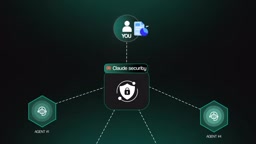
Claude Security is Anthropic's security plugin: it dispatches one set of agents to scan the code for vulnerabilities, then another set to try to disprove each other's findings, and finally produces a plain-English report and writes and executes patches directly. Clients don't care about test coverage — they care whether the booking form works and whether customer data can leak, so these two steps belong in every project's workflow.
Playwright is Microsoft's open-source browser automation framework, supporting Chromium, Firefox, and WebKit. It can drive real browsers programmatically to click, fill out forms, take screenshots, and verify page state with assertions. It's commonly used for end-to-end testing: simulating real user paths to confirm critical flows work. The article emphasizes using it as a CLI rather than an MCP server because MCP tends to inject entire page contents returned by tools into context, whereas a CLI returns only concise stdout — letting Claude execute more test steps on the same token budget. Multi-agent mutual verification is a security review pattern: one set of agents looks for vulnerabilities while another tries to disprove the former's findings, reducing false positives through adversarial review and ultimately producing executable patches.
The Overrated Token-Saving Repos
The creator specifically mentions JetBrains' testing of three token-saving repos on real coding tasks: Caveman claimed 65% savings but actually cut output tokens by only about 8.5%; RTK saved basically nothing and made tasks more expensive in low-effort mode; only Ponytail actually saved money, at about 10% per task — half of what it claims.
Two repos he previously recommended, ClaudeMem and ContextMode, are now worth holding off on: the former uploads usage data by default, and the latter has an unfixed bug that drains your quota. To see where tokens go, use CodeBurn to check spending and flag waste — things like MCP servers that load on every message but are never actually used.
Where Should Beginners Start?
Don't install every repo today — once something breaks, you'll have a hard time figuring out which repo caused it. Pick the one that solves your most painful current problem. If you're unsure, start with Google CLI, Apify, or Scrollcraft; Humanizer is also simple enough to be a good first pick.
As for monetization: nobody pays for a free GitHub repo — everyone will just install it. What you sell is the thing you build around it that solves a client's problem: pull a list of businesses with no website, build one based on a sample page, clean up the copy, and send over the link.
Related articles
 Tech Frontiers
Edge AI on Microcontrollers: When Is It Actually Worth Deploying?
Drawing on Reddit discussions and Arm case studies, this article analyzes the real-world use cases for edge AI on microcontrollers: when each device needs independent inference, when a gateway or cloud is more reasonable, and the costs and boundaries of specialized hardware.
 Tech Frontiers
Pushing the Limits of Extreme Sudoku on a 16GB GPU: Insights from Depth and Flow Matching
A researcher trained a 16.54M-parameter model on a 16GB GPU to solve extreme Sudoku, finding effective depth breaks the 60% plateau and flow matching with improved sampling pushes accuracy past 99% with ~50× lower layer-evaluation budget.
 Tech Frontiers
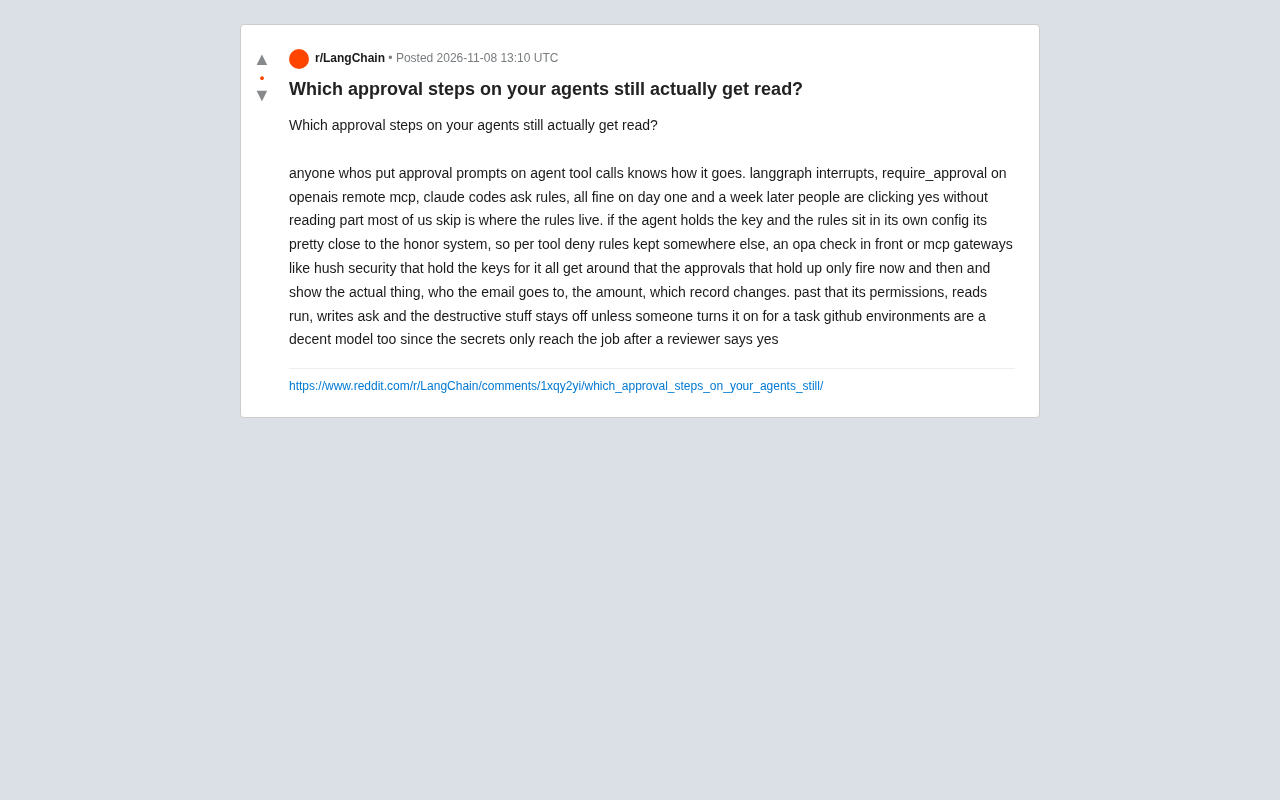
AI Agent Approval Workflows: Why Human Confirmations Always Get Mindlessly Clicked
Why do AI agent approval workflows always get mindlessly clicked? A Reddit discussion shows that separating rules from keys, low-frequency high-risk approvals, and GitHub Environments-style gates are the keys to effective approvals.