What Tools Exist for Exploring the "Soul" of Large Language Models?

A Hacker News thread highlights interpretability tools for exploring LLM internal states and the ecosystem's current state.
The article discusses a Hacker News thread on "tools for exploring the souls of large language models," noting that LLM decision-making is opaque and that developers and researchers need interpretability tools to observe internal states. It outlines three main tool directions—attention visualization, probing and feature analysis, and behavioral testing and adversarial probing—and analyzes challenges such as model adaptation difficulties and the need to interpret interpretability results themselves. It concludes that the field remains niche but demand is real, recommending beginners start with attention visualization and maintain critical thinking.
Large language models are like black boxes—we can see their inputs and outputs, but it's hard to understand their internal "thoughts." A discussion thread recently appeared on Hacker News titled "Tools for exploring the souls of large language models," drawing community attention to model interpretability tools.
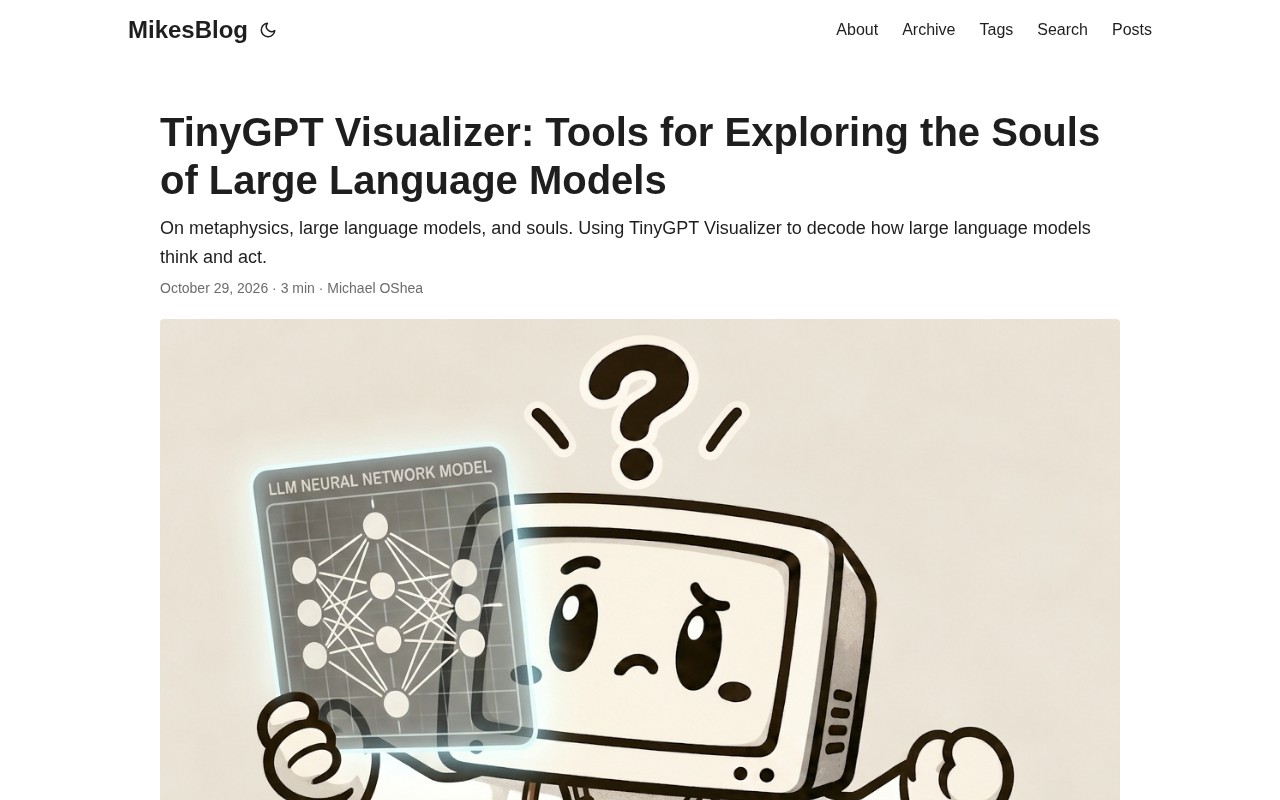
Why We Need to "Explore the Model's Soul"
Large language models are becoming increasingly capable, but their decision-making processes remain opaque. Developers want to know why a model generates a particular answer, researchers want to understand whether some kind of "worldview" has formed inside the model, and ordinary users are curious whether the model truly "understands" what it's saying. This exploration of the model's internal state is vividly compared to exploring the model's "soul."
Interpretability tools exist precisely to answer these questions. They help developers observe the model's attention distribution, neuron activation patterns, and behavioral changes under different inputs. For building reliable AI applications, these tools are not only instruments of academic research but also practical aids for debugging and optimizing models.
Tool Directions in Community Discussion
Although the post itself only provides a title and a small amount of discussion, based on community interest we can infer that such tools typically cover several directions:
Attention Visualization
The attention mechanism is the core of the Transformer architecture. By visualizing the weight distributions across different layers and attention heads, developers can intuitively see which parts of the input the model "attends to" when generating each word. Such tools are well-suited for checking whether the model is ignoring key information or over-relying on certain irrelevant fragments.
The Transformer architecture is a neural network structure proposed in 2017 by Vaswani et al. in the paper "Attention Is All You Need." It completely abandons recurrence and convolution, relying solely on the self-attention mechanism to model dependencies between any two positions in a sequence. Its core components include multi-head self-attention layers, feed-forward network layers, residual connections, and layer normalization. Mainstream large language models such as GPT, BERT, and Llama are all built on variants of the Transformer. Understanding the basic structure of the Transformer is a prerequisite for reading attention visualizations: models typically stack dozens of layers, each containing multiple attention heads, and each head generates a set of weight distributions for the input sequence. Visualization tools are precisely what reduce these high-dimensional tensors to a form presented to human observers.
Probing and Feature Analysis
A probe is a lightweight method that trains a simple classifier on the model's hidden layers to determine whether a specific concept (such as sentiment, factuality, or grammatical role) is encoded inside the model. Feature analysis further attempts to identify the neurons or directions responsible for specific behaviors. Such tools are closer to the goal of "understanding the model's soul," because they seek to reveal the structure of the model's internal representations.
Probing originates from computational neuroscience and representation learning research. Its basic idea is: if a concept (such as part of speech, sentiment polarity, or factual truth) is linearly or nonlinearly encoded in the vector representation of a model's hidden layer, then training a simple classifier (such as logistic regression) on that layer's output should achieve high classification accuracy. The higher the accuracy of the probe classifier, the more easily that concept can be "read out" from inside the model. The value of probing lies in providing a quantifiable means of evaluating internal representations, but it is also controversial: high probe accuracy does not necessarily mean the model actually uses that information during inference, so researchers often combine it with causal interventions (such as activation replacement) for further verification.
Behavioral Testing and Adversarial Probing
Beyond internal observation, there is another category of tools that tests the model's behavioral boundaries through carefully designed inputs. For example, adversarial examples probe the model's robustness, or systematic prompt variants observe the consistency of model outputs. These tools do not directly open the black box, but they can infer the model's internal tendencies from external behavior.
Adversarial examples were first discovered in the field of computer vision, referring to small perturbations to inputs that are nearly imperceptible to humans but can cause the model to produce incorrect outputs. In the large language model context, adversarial probing manifests as synonymous rewriting of prompts, inserting irrelevant characters, adjusting word order, or adding misleading context, then observing whether the model's output changes unexpectedly. Such tests can reveal the model's oversensitivity to surface form or unstable understanding of semantics. Systematic prompt variant testing draws on the idea of differential testing in software testing: fixing the semantics while varying the phrasing, comparing output consistency, and thereby inferring the robustness of the model's internal tendencies.
Current State and Challenges of the Tool Ecosystem
At present, interpretability tools for large language models are still in a stage of rapid evolution. Many experimental projects have emerged in the open-source community, but mature, easy-to-use, and broadly covering tools remain limited. One major challenge is that different model architectures vary greatly, and tools often need to be adapted for specific models. Another challenge is that interpretability results themselves also need interpretation—high attention weights do not necessarily imply causality.
Judging from the level of activity in the Hacker News discussion, developers' demand for such tools is real. But the post only has 10 upvotes and 4 comments, which also shows that this topic remains niche among the broader developer community. As model sizes continue to grow and AI applications demand higher reliability, tools for exploring the model's "soul" may move from research labs into everyday development workflows.
For developers who want to get started, it is recommended to begin with attention visualization tools and gradually move deeper into probing and feature analysis. At the same time, maintain critical thinking about tool outputs and avoid treating visualization results directly as the complete truth of the model's "thought process."
One-line Summary
A Hacker News discussion thread focuses on interpretability tools for exploring the internal states of large language models and the current state of the ecosystem.
Paragraph Summary
The article centers on a Hacker News discussion thread about "tools for exploring the souls of large language models," noting that the decision-making processes of large language models are opaque and that developers and researchers need interpretability tools to observe the model's internal state. The article outlines three main tool directions: attention visualization, probing and feature analysis, and behavioral testing and adversarial probing, and analyzes the challenges facing the current tool ecosystem, including the difficulty of model adaptation and the fact that interpretability results themselves need interpretation. Finally, it points out that this field remains niche but that demand genuinely exists, and recommends that beginners start with attention visualization while maintaining critical thinking.
Related articles

AI Could Overthrow Governments in Six Months? ARC Head Issues His Starkest Warning Yet
ARC head Paul Christiano warns AI capable of overthrowing governments may arrive in 6-12 months, with ~one-third odds of superintelligence within a year. He urges frontier labs to pause algorithmic efficiency gains and fix safety first, and reveals how the Hugging Face incident foreshadowed AI taking over evaluation.

How Do Spies Infiltrate Nvidia? A CIA Agent Reveals a Honeypot Operation
A former CIA agent reveals in a YouTube interview that intelligence agencies ran a honeypot seduction operation against Nvidia CEO Jensen Huang, exposing the hidden spy risks facing tech executives.

How NVIDIA Cosmos Helps Delivery Robots Rehearse Unexpected Situations in Advance
NVIDIA Cosmos World Foundation Model expands a small amount of real input into large-scale synthetic scenarios, enabling delivery robots to train for unexpected situations in simulation in advance. Cocoa Robotics uses it to cover unexpected events and combines Isaac Sim and Isaac Lab to evaluate perception, prediction, and path planning.