WhatsApp's New Chief: Making the App Easier to Use and AI More Powerful

WhatsApp's new chief sets the tone: return to usability, with AI reminding rather than doing the work.
WhatsApp's new head, Kunal Shah, outlined his product vision for the first time since taking office, listing "making the app easier to use" and "injecting stronger capabilities into built-in AI" as two core directions. On AI positioning, he explicitly stated that AI will remind users about appointments rather than directly completing bookings for them, reflecting a pragmatic trade-off different from the "all-powerful agent" approach. The article analyzes that emphasizing usability is a reflection on the complexity of WhatsApp's experience after continuous feature additions, while reminder-type AI has manageable requirements for contextual understanding and is expected to be deployed quickly in high-frequency scenarios. For the industry, this provides a reference model of "going deep in reminders and assistance" for the AI-ification of communication apps; for users and businesses, interface adjustments and AI reminders will be the first perceptible changes.
New Leadership, Two Key Focus Areas for WhatsApp
WhatsApp's new head, Kunal Shah, outlined his product vision publicly for the first time since taking the role. According to him, WhatsApp's next core directions are twofold: first, making the app itself easier to use; second, injecting more "chops" into its built-in AI capabilities—meaning stronger features and smarter performance.
This statement continues WhatsApp's evolution in recent years from a pure instant messaging tool to a multi-functional platform, but places greater emphasis on a "return to usability," suggesting that after continuous feature additions, the product team is re-examining the simplicity of the user experience.
Kunal Shah is a well-known Indian serial entrepreneur, best known as the founder of Freecharge, India's credit card cashback platform, and later the wealth management app Cred. He has deep experience in consumer internet product design and India-localized user experience. Around 2024, Meta made management adjustments to its WhatsApp business line, appointing Kunal Shah as head of WhatsApp, succeeding Will Cathcart, who had long led the product. This personnel change was interpreted by observers as Meta hoping to leverage his understanding of user habits in emerging markets to further advance WhatsApp's monetization, payments, and AI features.
AI's Role in WhatsApp: Reminding, Not Booking
Kunal Shah gave a specific and interesting description of AI's positioning in WhatsApp: AI will remind people about appointments rather than directly completing bookings for them.
This statement highlights WhatsApp's thinking on the boundaries of AI capabilities. Many AI assistants today pursue "executing tasks on behalf of users," covering everything from ordering food to booking tickets. But WhatsApp seems to prefer having AI play the role of a "proactive reminder"—prompting users at the right moment about what they should do, rather than doing it for them. This approach is consistent with WhatsApp's essence as a communication tool: it is closest to users' daily conversations and most likely to naturally trigger reminders within the conversation flow.
From a technical implementation perspective, reminder features have relatively manageable requirements for AI's contextual understanding, yet can deliver real value in high-frequency scenarios. For WhatsApp, with its massive user base, such lightweight AI features may penetrate far faster than complex task-execution AI.
The positioning difference between "AI agent" and "AI assistant" is the key background for understanding WhatsApp's statement. A task-execution AI agent refers to AI that can not only understand user intent but also call external services to complete end-to-end operations such as booking tickets and placing orders. Typical examples include the "operate the phone on your behalf" capabilities launched by some vendors. Such solutions have high technical barriers, involving complex issues like cross-app permissions, payment authorization, and liability for errors. By contrast, "reminder-type AI" only needs to identify contextual elements such as time, location, and people within the conversation flow and push notifications at the right moment—a shorter technical implementation path with lower compliance risks. WhatsApp's choice of the latter is essentially a pragmatic trade-off between capability boundaries and speed of deployment.
Why Usability Is Back on the Agenda
"Making the app easier to use" sounds like an obvious goal, but for a product like WhatsApp, there are practical considerations behind it. As WhatsApp continuously adds features like Channels, Communities, payments, and business messaging, the app's interface and interaction complexity has also increased. The new head listing usability as a priority means the product team may be assessing which features add cognitive burden and how to make operation paths shorter and more intuitive without sacrificing functionality.
This direction does not conflict with the introduction of AI capabilities. If AI can understand user intent and proactively provide reminders or suggestions, users won't need to navigate through layers of menus to find features—usability and intelligence can reinforce each other.
WhatsApp's recently added features mainly include: Channels (content distribution similar to broadcast channels), Communities (grouping multiple groups under a community structure), WhatsApp Pay (payments in some markets), Business Messaging (enterprise messaging and customer service API), and Status updates. Each additional entry point occupies bottom navigation or settings levels, raising the onboarding cost for new users and making it harder for existing users to find commonly used features. The industry often uses the term "feature creep" to describe this phenomenon: products keep adding features to cover more scenarios, ultimately sacrificing the simplicity of core paths. Therefore, "usability first" doesn't mean stopping adding features, but rather emphasizing consolidating new capabilities into the main conversation entry point, using AI triggers to replace menu navigation.
Potential Impact on the Industry and Users
WhatsApp's pragmatic positioning of AI may provide a reference model for the AI-ification of communication apps: not all AI needs to be an "all-powerful agent"; going deep in specific scenarios with reminders and assistance can equally build user dependence.
For ordinary users, the most perceptible changes in the short term are likely adjustments to the app interface and interactions, along with the gradual rollout of AI reminder features. For business users who rely on WhatsApp for their operations, if AI reminders can effectively reduce appointment no-show rates, they have direct commercial value.
Kunal Shah's statements are still at a directional stage, and specific feature forms and rollout timelines await further disclosure. But the combination of "usability first, pragmatic AI" has already set the tone for WhatsApp's next phase of product evolution.
One-line Summary
WhatsApp's new chief sets the tone: return to usability, with AI reminding rather than doing the work.
Paragraph Summary
WhatsApp's new head, Kunal Shah, outlined his product vision for the first time since taking office, listing "making the app easier to use" and "injecting stronger capabilities into built-in AI" as two core directions. On AI positioning, he explicitly stated that AI will remind users about appointments rather than directly completing bookings for them, reflecting a pragmatic trade-off different from the "all-powerful agent" approach. The article analyzes that emphasizing usability is a reflection on the complexity of WhatsApp's experience after continuous feature additions, while reminder-type AI has manageable requirements for contextual understanding and is expected to be deployed quickly in high-frequency scenarios. For the industry, this provides a reference model of "going deep in reminders and assistance" for the AI-ification of communication apps; for users and businesses, interface adjustments and AI reminders will be the first perceptible changes.
Related articles
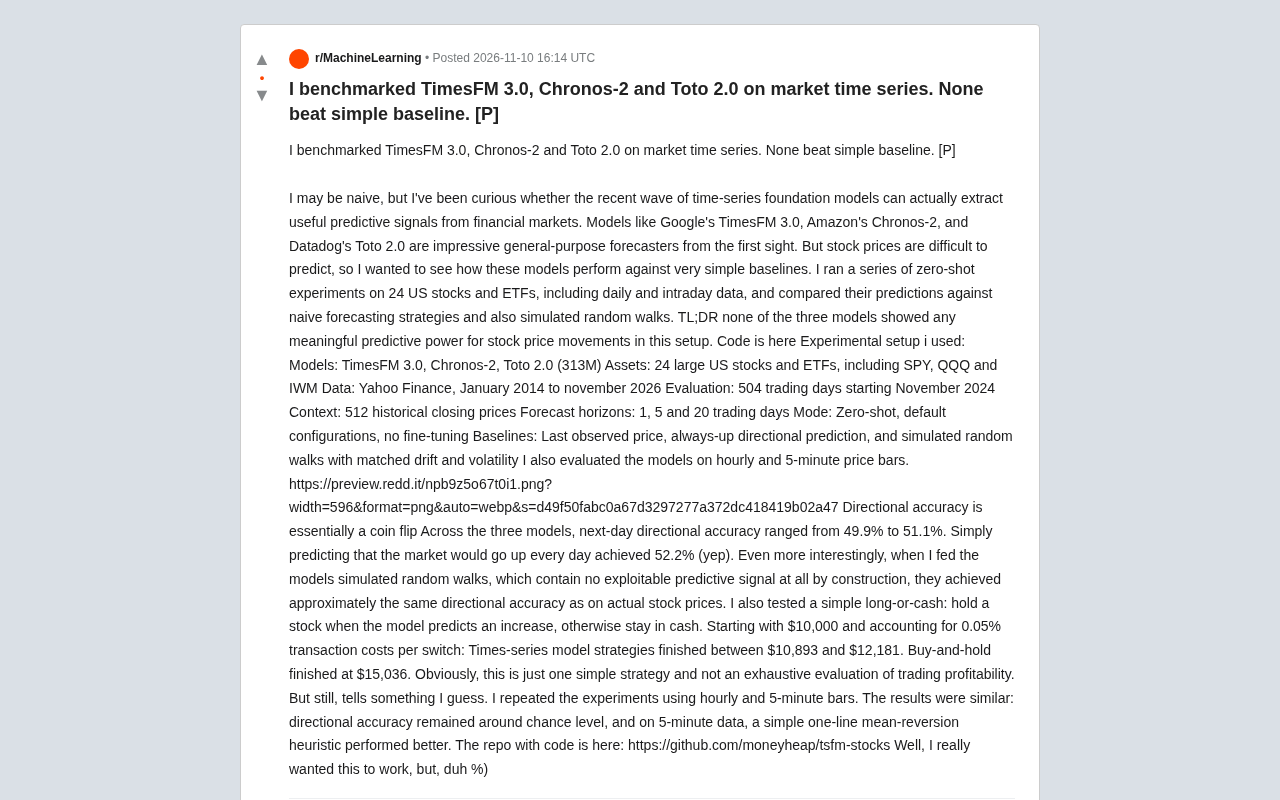
Putting TimesFM 3.0, Chronos-2, and Toto 2.0 to the Test: Time-Series LLMs Can't Beat Simple Baselines
A developer's zero-shot benchmark of TimesFM 3.0, Chronos-2 and Toto 2.0 on 24 U.S. stocks and ETFs: directional accuracy of just 49.9%-51.1%, and simulated trading underperformed buy-and-hold. Time-series foundation models show no edge over simple baselines on financial data.
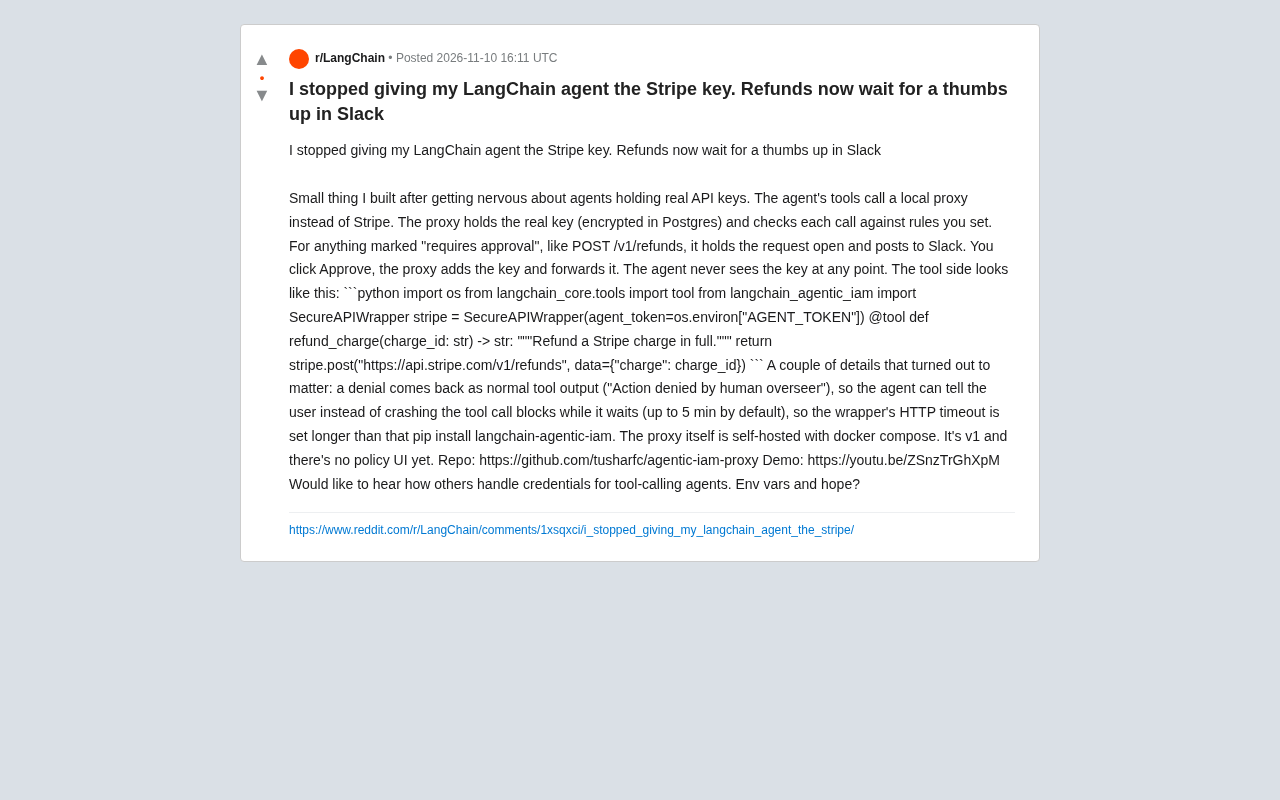
LangChain Agents No Longer Hold Stripe Keys: Refunds Require Slack Approval
A developer shares a credential management approach for LangChain agents: agents don't hold Stripe keys, and sensitive operations like refunds are forwarded through a local proxy and only executed after human approval in Slack, with code examples and engineering details.
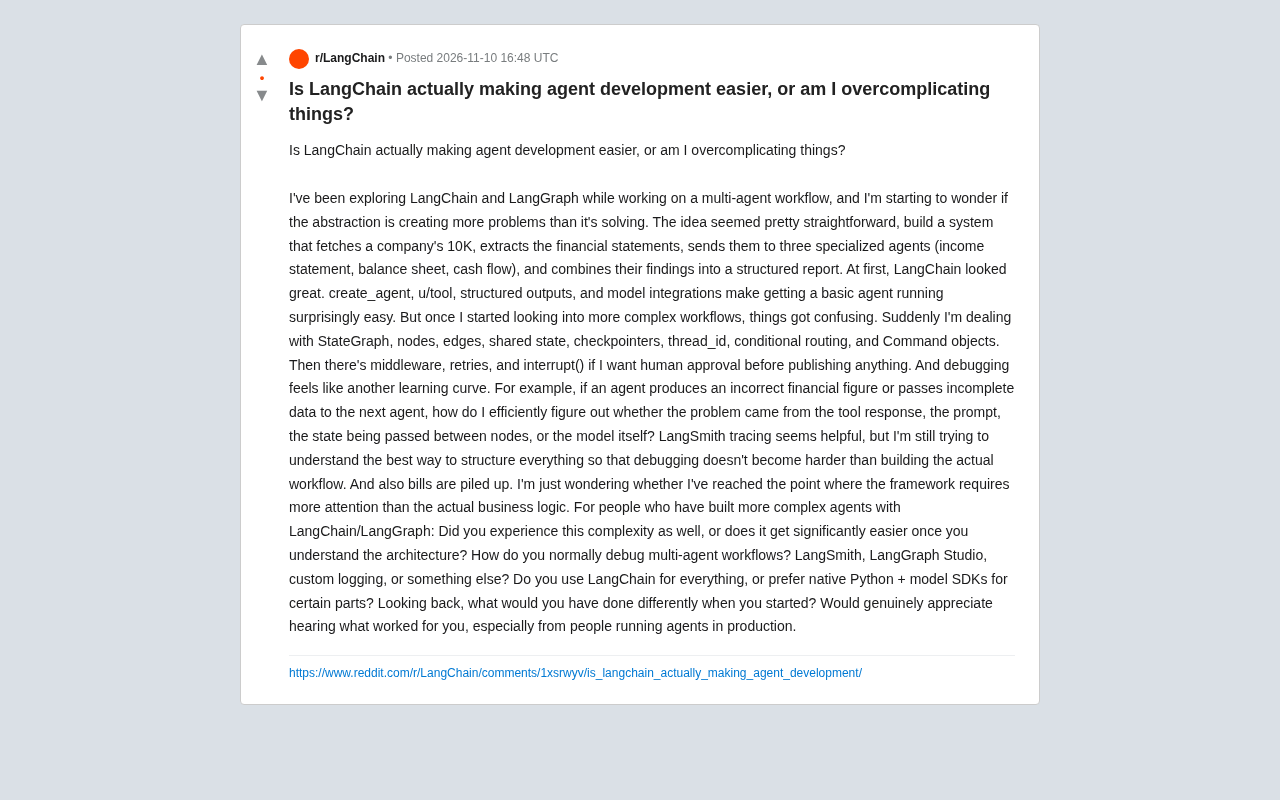
Does LangChain Really Make Agent Development Easier? A Developer Reflects on the Cost of Abstraction
A Reddit developer reflects on the abstraction cost of LangChain and LangGraph in multi-agent workflows: easy to start, but StateGraph, state management, debugging, and cost control add new complexity. The discussion covers debugging methods, whether to mix native Python + model SDKs, and production trade-offs.