WHOOP Humans: Rebuilding Social Networking with Real Health Data
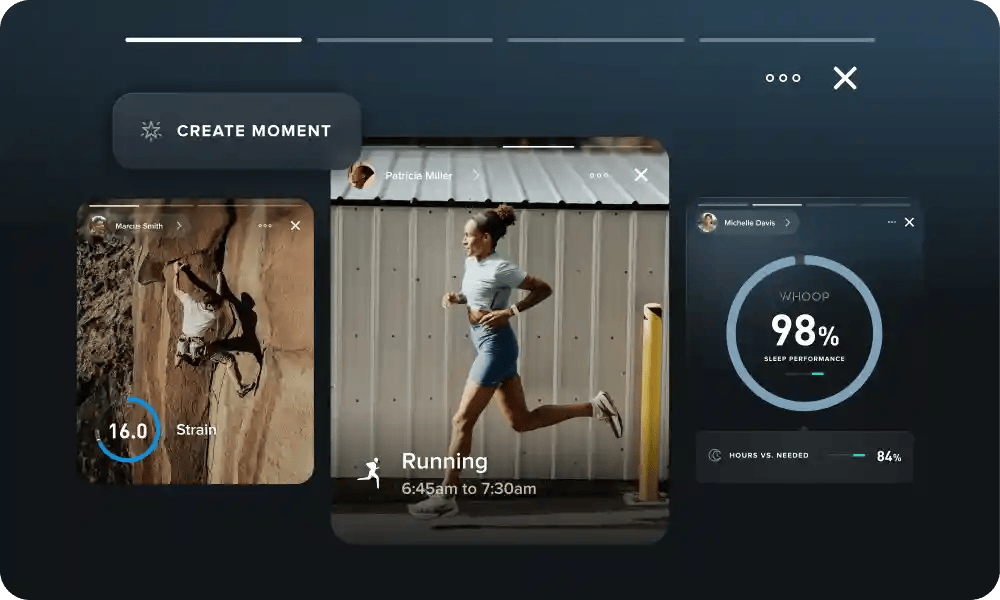
WHOOP Humans builds a social network on real health data, balancing sharing and boundaries with fine-grained privacy controls.
WHOOP launches WHOOP Humans, a social product built on real health data like sleep, recovery, strain, and activity instead of gym selfies or running screenshots. Users follow friends and family and see only the metrics they choose to share, shifting the focus from showing off life to sharing progress. Fine-grained privacy controls let users authorize sharing by dimension rather than defaulting to public, contrasting with traditional social platforms. Users can also record meaningful health moments with photos, notes, and data. The product got 78 upvotes on Product Hunt and ranked 13th that day, showing the health data social niche has drawn attention but isn't yet mainstream. The article sees this as health tech extending from personal tools to social ecosystems, with success hinging on balancing sharing fun with privacy boundaries and data value with comparative pressure.
Health sharing on traditional social platforms often stays superficial—a gym selfie, a screenshot of a running route, scattered information that's hard to verify. WHOOP's newly launched WHOOP Humans aims to change that: it builds a social network on real health and performance data, letting users interact around metrics like sleep, recovery, strain, and activity.
From Data Tracking to Social Connection
WHOOP has long been known for its professional athletic recovery tracking devices, with core metrics including sleep quality, recovery status, and strain (training load). The launch of WHOOP Humans signals that WHOOP is no longer content to be a passive data logging tool—it wants to make data flow and become a medium for connecting people.
In WHOOP Humans, users can follow friends and family and view the sleep, recovery, strain, and activity data they choose to share. This design shifts the focus of social interaction from "showing off life" to "sharing progress"—what you see isn't a carefully curated photo, but a person's real recovery curve or training load.
Strain (training load) is one of the most misunderstood metrics in the WHOOP system. It doesn't simply count steps or calories; it's the total cardiovascular stress calculated from heart rate data, typically ranging from 0–21. WHOOP uses heart rate zone weighting: the longer you stay in high-intensity zones, the faster strain accumulates, so a 30-minute high-intensity interval session may produce a higher strain value than a two-hour leisurely walk. Corresponding to this is Recovery, which combines resting heart rate, heart rate variability (HRV), respiratory rate, and sleep performance to produce a 0–100% recovery score, used to determine whether the day calls for high-intensity training or active rest. These two metrics form a dynamic balance: strain represents "expenditure," recovery represents "balance," and understanding this is key to grasping why users share not a single number but a complete narrative about their body's state.
Privacy Control Is Core to the Design
The sensitivity of health data is an obvious fact. WHOOP Humans responds by offering fine-grained privacy controls. Users can selectively share specific dimensions of data rather than having all health metrics public by default. This design philosophy stands in stark contrast to traditional social networks: the latter often operate on a "public by default" product logic, while WHOOP Humans returns control to the user.
From a product positioning standpoint, this privacy-first strategy both respects the special nature of health data and is key to building user trust. After all, not many people want colleagues or casual acquaintances to see fluctuations in their sleep quality.
In most jurisdictions, health data falls under the category of sensitive personal information. Under the EU's GDPR, for example, health-related data is a special category of data requiring stricter legal bases for processing; while the US HIPAA mainly governs medical institutions and insurers, consumer health apps also face FTC regulatory scrutiny over data misuse. This means health social products, when designing sharing mechanisms, cannot simply copy the "public by default + retroactive withdrawal" model of photo social networks. Instead, they need to adopt the principles of Privacy by Default and purpose limitation: minimize exposure by default, authorize by dimension, and allow withdrawal at any time. WHOOP Humans' fine-grained sharing controls are precisely a response to this compliance reality, and explain why it puts control in users' hands upfront rather than relying on platform moderation afterward.
Recording Meaningful Moments with Data
Beyond routine data sharing, WHOOP Humans also allows users to capture meaningful moments with photos, notes, and the data behind them. This means a morning run, a race, or a recovery day can all be fully recorded and shared—with not just visual impressions but objective data as support.
This "data + narrative" combination upgrades social sharing from fragmented displays to more complete personal health stories. For users focused on their own performance, this way of recording has long-term value in itself.
Differences from Traditional Social Platforms
WHOOP Humans explicitly distinguishes itself from traditional social feeds. Its connection logic isn't based on content consumption or algorithmic recommendation, but on real-world shared experiences—you and a friend training together, tracking recovery together, or simply wanting to cheer each other on.
On Product Hunt, WHOOP Humans received 78 upvotes and 4 comments, ranking 13th for the day. This data suggests that the health data social niche has attracted some attention, but is still a ways from broad mainstream acceptance.
The Imaginative Space of Health Social
The emergence of WHOOP Humans reflects a new trend in health tech products: moving from personal tools to social ecosystems. Once hardware devices have accumulated enough users and data, social features become a natural extension for boosting user stickiness and product differentiation.
But this path isn't easy. Socializing health data requires balancing the fun of sharing with the boundaries of privacy, and making data genuinely create social value rather than becoming new comparative pressure. Whether WHOOP Humans can find the balance between these two will determine whether it's a niche accessory or a new social paradigm.
One-line Summary
WHOOP Humans builds a social network on real health data, balancing sharing and boundaries with fine-grained privacy controls.
Paragraph Summary
WHOOP has launched WHOOP Humans, a social product that builds a social network on real health data such as sleep, recovery, strain, and activity, rather than traditional gym selfies or running screenshots. Users can follow friends and family and view the health metrics they choose to share, shifting the social focus from "showing off life" to "sharing progress." The product offers fine-grained privacy controls, letting users authorize sharing by dimension rather than making all health data public by default—a stark contrast to the "public by default" logic of traditional social platforms. Additionally, users can record meaningful health moments with a combination of photos, notes, and data. The product received 78 upvotes on Product Hunt and ranked 13th for the day, indicating that the health data social direction has attracted attention but has yet to go mainstream. The article argues this reflects the trend of health tech extending from personal tools to social ecosystems, and its success will depend on finding a balance between the fun of sharing and privacy boundaries, and between data value and comparative pressure.
Related articles

Van Hollen on Holding Trump Accountable: Hearings and Building the Evidentiary Record
Senator Chris Van Hollen on holding the Trump administration accountable: focused hearings to expose corruption and wrongdoing, plus building an evidentiary record now to preserve space for future criminal charges.

Generating SVG and 3D Models with the Codex Plugin: A Hands-On Guide for Developers with Zero Art Background
Codex's SVG & 3D Design plugin lets developers with zero art background generate vector graphics and 3D models via code—editable, Blender-ready, with best practices built in.

Why Recursive Self-Improvement Holds Up: Responding to Six Major Objections One by One
Dwarkesh Patel responds point by point to six major objections about recursive self-improvement and superintelligence by 2030: whether verifiable proxy metrics exist, the human-link threshold for RSI, whether the math explosion can be analogized to AI research, the experimental compute bottleneck, reward hacking and the motivation for power-seeking, and whether METR acceleration rates can be extrapolated.