Why Moctezuma Was Abandoned by His Own People: The Mystery Behind Two Emperors' Downfall

Moctezuma collapsed psychologically and became a puppet; Atahualpa misjudged Pizarro and paid with his life.
Drawing on historian Si Sheppard's analysis, this article examines how Spanish conquistadors exploited the distinct vulnerabilities of Aztec Emperor Moctezuma and Inca Emperor Atahualpa. Moctezuma's tragedy was psychological: a lifelong autocrat who had never been subjugated, he suffered a complete mental breakdown upon capture and became Cortés's willing puppet — only to be killed by his own people for his betrayal. Atahualpa, clear-headed and still strategizing, made a cognitive error: he mistook the faithless adventurer Pizarro for a sovereign who played by honorable rules, and his famous ransom of a room filled with gold bought him not freedom, but execution by garrote. Together, these two failures — inner collapse and fatal enemy misreading — illuminate why two great empires fell so swiftly to so few.
Cooperation After Capture — A Historical Puzzle
The Spanish conquest of the Aztec and Inca empires presents a phenomenon that historians still find puzzling: after Cortés captured Aztec Emperor Moctezuma and Pizarro captured Inca Emperor Atahualpa, why did these two rulers — who arguably should have fought to the death — choose instead to cooperate with their captors?
Historian Si Sheppard offers a psychologically nuanced interpretation. According to historical records, Moctezuma was a highly autocratic ruler who concentrated all power within the noble class, spending his entire life issuing commands and never being commanded.
Moctezuma's Psychological Collapse
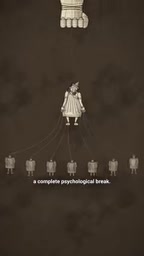
Sheppard theorizes that it was precisely this lifetime of total control that led to Moctezuma's complete psychological breakdown upon capture. Perhaps for the very first time in his life, being directed by someone else — being told what to do — simply shattered his inner world.
Once in Cortés's hands, Moctezuma appeared to do a complete 180, becoming something of a willing puppet. He constantly tried to fulfill Cortés's demands while simultaneously seeking ways to make these arrangements beneficial to his own people — yet he never dared to challenge Cortés's authority or upset the situation.
This attempt to play both sides ultimately left him with neither. It was not Cortés who eliminated Moctezuma, but his own people — because they saw clearly that their emperor had betrayed them, and so he had to be removed. This is the historical tragedy the title refers to: a supreme ruler killed at the hands of his own subjects.
This psychological collapse has parallels in modern trauma research. Highly authoritarian leaders often tie their sense of identity closely to "being in control" — once that control is stripped away, their very identity disintegrates. Psychologists refer to this as an extreme form of "learned helplessness": when someone has never experienced subjugation and is suddenly thrust into a position of complete passivity, their coping mechanisms may bypass resistance entirely and leap straight into compliance or even appeasement. Moctezuma's subsequent attempts to mediate between Cortés and his own nobility were an outward expression of this psychological state — he was no longer capable of rebuilding his sense of self and could only serve as a buffer between two forces, ultimately trusted by neither.
Atahualpa's Fatal Miscalculation
Inca Emperor Atahualpa was an entirely different type. According to Spanish accounts, he carried himself with great dignity, was clearly intelligent, and knew how to adapt to circumstances.

Sheppard argues that Atahualpa never truly gave up after his capture — he was quietly maintaining contact with his forces, waiting for the right moment to fully mobilize and strike back. His mind remained sharp throughout.
The problem lay in that famous deal. Atahualpa looked around his prison cell and proposed exchanging a room filled with gold and silver for his freedom — he promised to fill the room to a certain height, and Pizarro pledged to release him once the ransom was delivered.

When a King Bargains with a Pirate
Atahualpa may have genuinely believed Pizarro was a man of his word. He applied his own understanding of political logic to his adversary — in his world, kings simply did not treat other kings this way.
But Pizarro was no man of honor. After receiving every last piece of wealth he desired, he had Atahualpa executed by garrote.

Sheppard cuts to the heart of it: Atahualpa's fatal error was misreading Pizarro as a peer who played by the same rules. He thought he was negotiating with a fellow sovereign; in reality, he was dealing with an opportunistic adventurer who recognized no contract and respected no code. The downfall of both emperors traces back to distinct causes — one to a collapse of internal trust, the other to a fundamental misreading of the enemy's true nature.
The garrote was a Spanish execution device that killed by tightening a metal collar or cord around the neck. For Atahualpa, this method of death carried an additional layer of symbolic humiliation — in Inca culture, the integrity of the body after death was of paramount importance, and cremation or bodily destruction meant the complete annihilation of one's afterlife. Pizarro initially threatened death by burning; it was only after Atahualpa accepted baptism that he was "mercifully" granted the garrote instead. This detail further illustrates how Pizarro controlled the narrative throughout the entire process, using Atahualpa's own cultural fears to manipulate him at every turn, rather than honoring any genuine negotiated agreement.
What History Teaches Us
The value of this analysis lies not in retelling a conquest story that needs no retelling, but in illuminating two fundamentally different paths to failure. Moctezuma's tragedy was psychological — the inner collapse of an absolute ruler stripped of his sense of control. Atahualpa's tragedy was cognitive — applying his own value system to predict the behavior of an adversary who operated by entirely different rules.
When one party acts according to honor and agreed-upon rules while the other recognizes only self-interest and force, the former is almost certain to lose. This may be one of the deeper reasons why two great empires crumbled so rapidly before a handful of Spanish conquistadors.
Game theory offers a concept that maps closely onto this dynamic: when participants hold fundamentally different understandings of the "rules of the game," rational decisions made according to one's own ruleset can lead to the worst possible outcomes. Atahualpa operated according to a political logic grounded in reciprocity and sovereign honor — a logic that worked perfectly well in the world he ruled. But Pizarro was never inside that framework to begin with. His goal was maximum gain in a single encounter; he had no incentive to maintain the kind of reputation that repeated interactions would require. The fundamental incompatibility of these two logics meant that the more "rationally" Atahualpa played by his own rules, the more deeply he fell into the trap Pizarro had set.
Related articles

AI Comic Drama with WorkBuddy from Scratch: A Step-by-Step Skill Pack Installation Guide
Learn how to create AI comic dramas with WorkBuddy from scratch. This guide covers installation, Skill pack import and invocation, plus a script generation demo with manual revision tips to get you through the first step from script to storyboard.

WorkBuddy Agent Runs the Entire GEO Database Mining Pipeline with a Single Prompt
WorkBuddy agent automates GEO database mining: from data search and curation to batch correction, differential analysis, co-expression networks, feature gene screening, and immune infiltration—a single prompt generates a complete bioinformatics report, greatly lowering the barrier to bioinformatics analysis.

PC Memory Wasted? Hacker News Debates Centralized Data Centers
Hacker News users argue that personal computer memory is wasted and should be centralized in data centers, sparking debate on centralized vs. distributed computing resource allocation. This article analyzes the logic behind the claim, the costs of centralization, and new tensions in memory resource allocation in the AI era.