Why Pi Agent Doesn't Compete on Features: A Minimalist Kernel and Extensible Design Explained
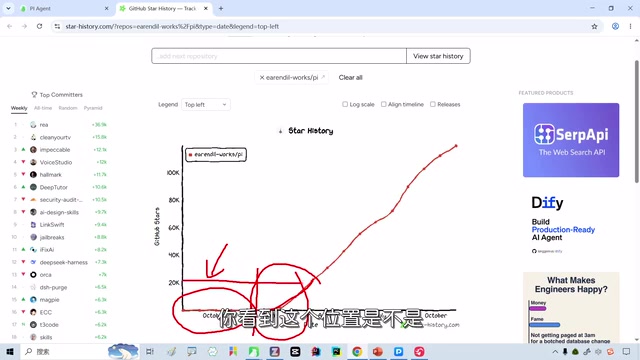
Pi Agent rises against the trend with a minimalist kernel plus plugin-based extension, returning control over complexity to developers.
Using Pi Agent's continuously accelerating GitHub star growth as an entry point, the article analyzes its counterintuitive rise: in a market dominated by feature-integrated tools like Claude Code, Codex, and Cursor, Pi Agent chooses a minimalist kernel path, keeping only basic capabilities such as calling models, reading and writing files, and executing commands, while extending everything else on demand via MCP, Skills, and custom plugins. This design avoids context bloat and slower responses, freeing developers from preset product rules to autonomously control the Agent's behavior and workflows. The article also notes the costs: weaker out-of-the-box capabilities and the need for some integration skill. Project memory can be persisted across sessions through extension mechanisms. The conclusion is that beyond the feature race, there is real demand for a lightweight, controllable, and extensible kernel.
In today's hyper-competitive landscape of AI coding tools, a counterintuitive phenomenon is unfolding: an Agent project with "fewer" features—Pi Agent—is attracting sustained and rapidly growing attention from the developer community. According to the GitHub Star History chart shown by a Bilibili creator in a video, Pi Agent's star growth exhibits distinct phased surges, from slow early accumulation to continuous acceleration later on, and it has now entered a fast-rising channel. This growth is not a one-off "viral" event but the embodiment of a long-term trend.
Why Are Fewer Features Actually Drawing More Attention?
Current AI coding tools on the market, such as Claude Code, Codex, and Cursor, generally follow a path of feature integration. They come with a large set of built-in capabilities: tool calling, MCP, Skills, task planning, context management, sandboxing, and more. These features are genuinely useful, but they come with a direct consequence: contexts grow longer, requests slow down, and the whole thing becomes "heavy."
For many developers, day-to-day needs are actually lightweight—calling an LLM, reading files, modifying code, executing commands. They need a sufficiently simple and reliable Agent kernel, not a bloated all-in-one suite. Pi Agent hits exactly this pain point: it chooses a design path opposite to mainstream competitors, providing a minimalist yet stable core while extending everything else on demand through a plugin mechanism.
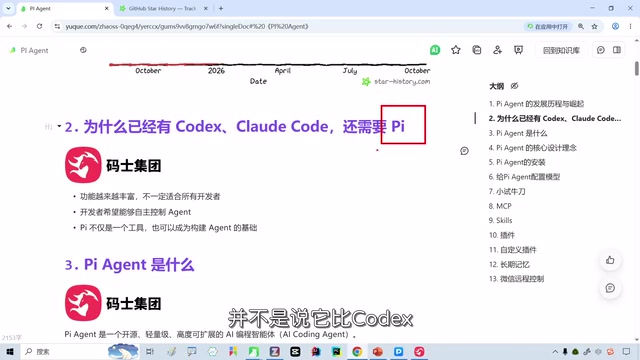
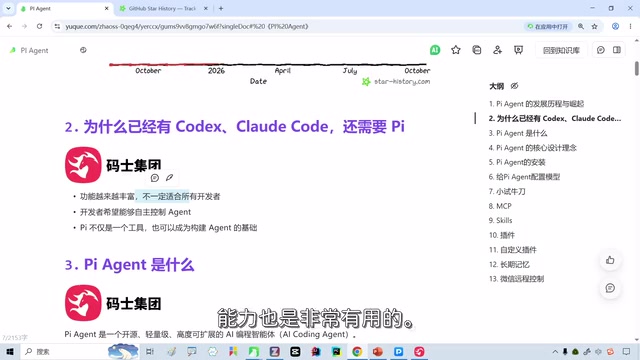
According to the analysis in the video, Pi Agent draws attention not because it has more features than Codex or Claude Code, but precisely the opposite—because it "has more things, but has fewer things than they do." This seemingly contradictory statement points to a difference in design philosophy: feature richness is not necessarily right for every developer.
Developer Autonomy: From "Constrained by Rules" to "Extending On Demand"
A hidden cost of using mature AI coding tools is that developers must follow the product's preset rules and extension methods. Tools like Codex are mature, but their interaction patterns and extension mechanisms are fixed, making it hard for developers to step outside the framework to customize tools or workflows.
Pi Agent emphasizes developers' autonomy over the Agent. Developers can extend plugins themselves, customize tools, and even write commands to handle specific events or workflows without relying on the product's preset capabilities. This openness means Pi Agent is not just a tool but can also serve as a foundation platform for building Agents.
The "minimalist design" mentioned in the video embodies this philosophy: keep the core simple, avoid building everything in, and instead add custom functionality through mechanisms like plugins. Minimalism does not mean weak functionality; it means moving complexity out of the core into external, extensible capabilities.
Concrete Paths to Extensibility: MCP, Skills, and Custom Plugins
Although the video does not elaborate on implementation details, the extension mechanisms it discusses reveal the paths along which Pi Agent's capabilities can grow:
- MCP (Model Context Protocol): As a standard protocol for connecting external tools and data, MCP allows the Agent to access external capabilities when needed, without building every integration into the core.
- Skills: The skills mechanism lets developers load domain-specific capability modules on demand, preventing the core from bloating.
- Custom plugins and tools: Developers can write their own plugins or tools to directly control the Agent's behavior and implement personalized workflows.
This layered design allows Pi Agent to retain a lightweight kernel while possessing the potential to handle complex scenarios. Developers can progressively stack capabilities according to project needs instead of carrying all features from the start.
MCP (Model Context Protocol) was proposed and open-sourced by Anthropic in late 2024, aiming to provide a unified connection standard between AI applications and external data sources and tools, often compared to "the USB-C port of the AI world." Before MCP, every AI tool connecting to a database, code repository, or third-party API required separately written adapter code, making integrations fragmented and hard to reuse. MCP uses a client–server architecture: the Agent acts as the client and communicates with MCP servers through three standardized primitives—Resources, Tools, and Prompts—while the server encapsulates the access logic for a specific system. For a minimalist kernel like Pi Agent, MCP's value lies in externalizing integration: the core only needs to implement a protocol client, and developers decide at runtime what to connect and how much, avoiding hard-coding a large number of connectors into the kernel.
Skills are a form of capability packaging that has become popular in recent years in Agent products such as Claude Code. They are typically organized as a file directory plus documentation, containing a natural-language description, trigger conditions, and optional scripts or resource files. Unlike traditional function calling, a Skill is closer to an "operating manual for the model to read": the model judges from the task context whether to load a Skill and then follows its steps. The advantage of this mechanism is on-demand loading—Skills that are not triggered do not occupy the context window, so a large amount of domain capability can be accumulated without adding resident overhead. For minimalist kernel design, Skills offer a low-cost granularity of capability extension: developers do not need to modify the Agent's source code; they simply add a Skill directory to grant it a new skill, which also makes it easy to share and version-manage across teams.
Project Memory: Letting the Agent Remember Context for Next Time
The video title mentions "keeping project memory for next time," which points to the importance of long-term memory for Agents. Under a minimalist kernel design, memory management can likewise be implemented through external extension mechanisms. Developers can use plugins or custom tools to persist project-related context, enabling the Agent to maintain an understanding of project state across multiple sessions.
This capability is especially critical for multi-step, long-cycle development tasks. Traditionally, context window limits make it hard for Agents to retain memory across sessions, but with an extensible architecture, developers can design their own memory storage and retrieval schemes without being constrained by core functionality.
An Agent's long-term memory is usually divided into several layers: short-term memory is the conversation and tool outputs within the current context window; long-term memory requires external storage to persist across sessions, with common implementations including writing project conventions into structured files (such as project instruction files like AGENTS.md or CLAUDE.md), using a vector database for semantic retrieval, or maintaining a knowledge entry list that can be added to, deleted from, or modified. The physical limits of the context window make it impossible to stuff all history into the prompt, so practical systems often adopt a "retrieval-augmented" strategy: at the start of a session, relevant memory fragments are recalled, and after the task ends, new conclusions are written back to storage. Pi Agent delegating memory management to the extension layer means developers can choose the storage medium, retrieval strategy, and write timing themselves, at the cost of having to handle engineering issues such as memory conflicts, expiration, and privacy boundaries.
Trade-offs and Boundaries of the Minimalist Kernel
Pi Agent's design path is not without costs. A minimalist kernel means fewer out-of-the-box features, and developers need a certain level of integration and extension capability to unlock its full potential. For teams seeking "plug and play," this may not be the optimal choice; but for advanced developers who need deep customization and want to control the Agent's behavior, this architecture offers greater flexibility and lower long-term maintenance costs.
Judging from the star growth trend, more and more developers are endorsing this trade-off. As competition among AI coding tools intensifies and products become more homogeneous, Pi Agent offers a different possibility: not chasing the length of a feature list, but pursuing the reliability of the core and the freedom of extension.
Conclusion
Pi Agent's rise reveals a neglected need: beyond the AI Agent feature race, there is a real market for a lightweight, controllable, and extensible kernel. Through a minimalist core plus plugin-based extension design, it returns control over complexity to developers. MCP, Skills, and custom plugins form the paths for capability extension, while the persistence of project memory makes the Agent more practical in long-term tasks. For developers who want deep control over the Agent's behavior, Pi Agent represents a design paradigm worth paying attention to.
Related articles
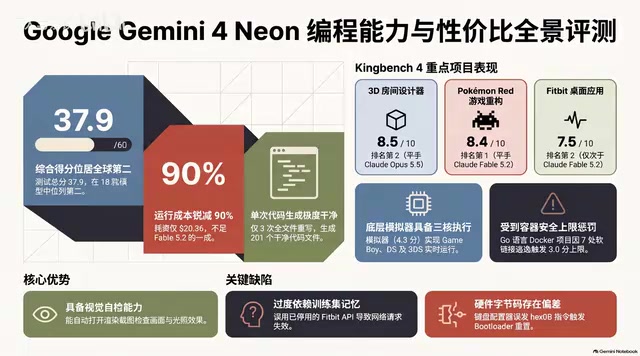
Gemini 4 Neon Hands-On: Value King or Confident Catastrophe?
Gemini 4 Neon review: 1M-token context, four thinking levels, 201 files in one KingBench4 pass at one-tenth Fable 5.2's cost—but it hallucinates fake data, leaves 7 symlink escapes, and bricks keyboards.

Google Gemini 4 Neon Hands-On: 6 3D Works That Impress and Fail
Hands-on with Google Gemini 4 Neon on a 3060 laptop: 6 3D works tested. Sunshower Fishing Harbor and mechanical keyboard impress; soft-body physics and faces fall short.
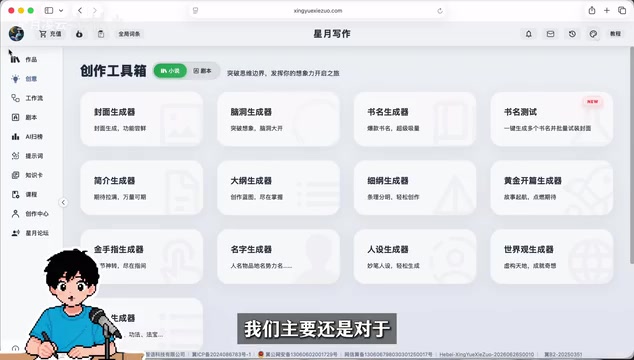
Gemini 4 Neo Web Novel Writing Test: Faint AI Flavor, Textured Dialogue
Bilibili creator's first-look review of Gemini 4 Neo for Chinese web novel writing: testing a Three Kingdoms transmigration opening with faint AI flavor, emotionally textured dialogue, and strong crisis building, plus comparison of 4A/4H/4C models and full workflow demos.