Research
62 articles
New Species Discovered in New York's C…
New Species Discovered in New York's Central Park? Inside the Urban Insect Hunting Project
Scientists set up insect traps in NYC's Central Park and Prospect Park to discover unknown species. With 90% of Earth's species still unnamed, urban biodiversity research is becoming a new trend in ecology.
The Full Story of the Higgs Boson Disc…
The Full Story of the Higgs Boson Discovery: An Insider's Account of the 'God Particle'
A Fermilab physicist's insider account of the Higgs boson discovery: the transatlantic race with CERN, behind-the-scenes details of the 2012 announcement, 14 years of verification, and the true origin of the 'God Particle' name.
 Research
SciMDR: How a 7B Small Model Rivals GPT-5 in Scientific Reasoning
Yale and other institutions introduce SciMDR, a two-stage data synthesis pipeline enabling a 7B model to match GPT-5 level performance in scientific literature comprehension.
 Research
Deep Dive into Claude Code's Open-Source Architecture: The Design Philosophy Behind 510,000 Lines of Code
Deep analysis of Claude Code's open-source architecture: dual-loop design, 7-step tool pipeline, 4-layer token compression, memory systems, and multi-agent collaboration patterns.
 Research
MementoGUI: A Multimodal Memory Management Framework for Solving Long-Horizon GUI Agent Amnesia
MementoGUI is a plugin-style multimodal memory management framework that solves GUI agent forgetting in long-horizon tasks through dual time-scale memory and four memory control operators, boosting long-task completion without fine-tuning.
 Research
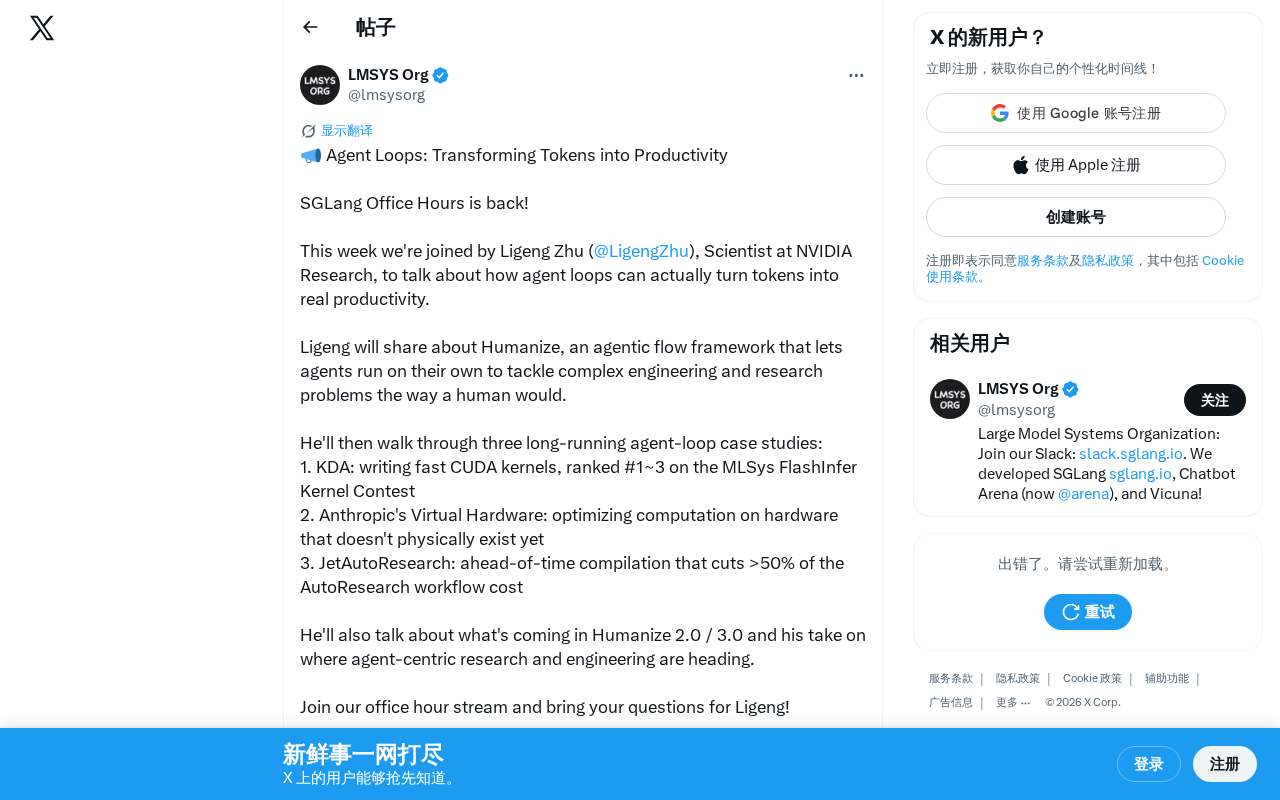
Agent Loops in Practice: Transforming Token Output into Productivity from CUDA Kernels to Automated Research
Deep dive into how the Humanize framework transforms LLM tokens into engineering productivity via Agent Loops. Covers KDA winning CUDA kernel contests, virtual hardware optimization, and 50% research cost reduction.
 Research
MixupMP: How Data Augmentation Fixes the Uncertainty Quantification Flaws of Deep Ensembles
Deep dive into AISTATS 2024 paper MixupMP: revealing Deep Ensembles' fundamental UQ flaws and fixing them via Mixup augmentation and Martingale Posterior framework for better calibration and OOD detection.
 Research
AI Gaming Showdown: O3 Pro Demonstrates Stunning Planning Capabilities
Researchers tested major AI models with Tetris, Super Mario, and Sokoban. O3 Pro showed unprecedented planning ability, becoming the only model to clear all levels. Game testing reveals AI's evolution from pattern matching to strategic thinking.
 Research
Optimize Anything: One API to Unify Optimization of Code, Prompts, and Agent Architectures
UC Berkeley and Stanford propose Optimize Anything, a universal text optimization framework that unifies optimization of CUDA kernels, agent architectures, and prompts through one declarative API.
 Research
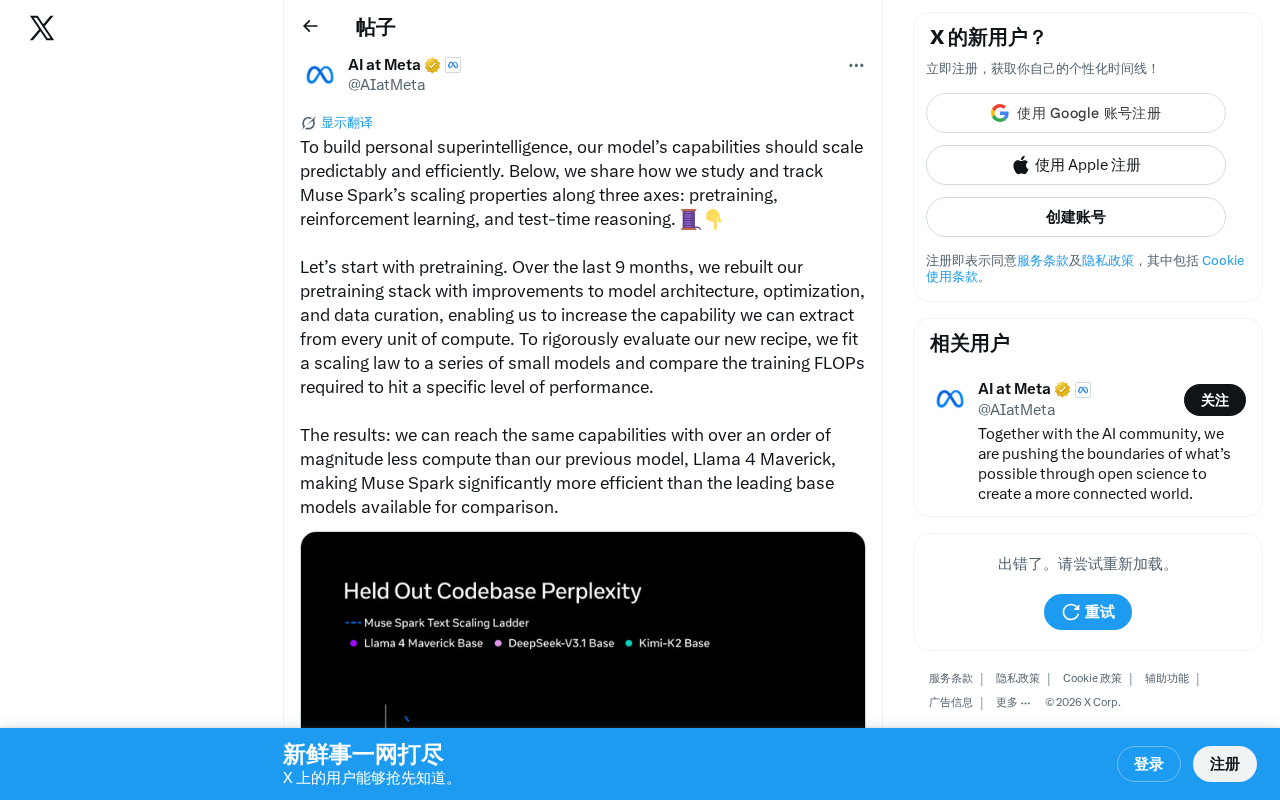
Meta Muse Spark Technical Deep Dive: How Three-Dimensional Scaling Achieves 10x Compute Reduction
Meta reveals Muse Spark technical details: three-dimensional scaling across pre-training, RL, and test-time inference achieves over 10x compute reduction versus Llama 4 Maverick.
 Research
How GitHub Is Building a General-Purpose Accessibility AI Agent: Lessons Learned and Technical Challenges
GitHub is building a general-purpose accessibility AI Agent to automatically detect and fix software accessibility issues. Explore the technical challenges, human-AI collaboration, and industry impact.
 Research
110K PRs Tested: Which of 5 AI Coding Agents Is Most Reliable?
Empirical study of 110K open-source PRs comparing 5 AI coding agents (GitHub Copilot, Claude Code, Devin) on merge rates, code survival, and long-term maintainability—revealing AI code's 50% one-year survival rate.
 Research
Inside Cursor Composer 2 Training: A Complete Breakdown of Its Distributed Reinforcement Learning Architecture
Deep dive into how Cursor trained Composer 2 on Fireworks: async pipeline architecture, MoE numerical precision challenges, Router Replay, and global distributed GPU coordination.
 Research
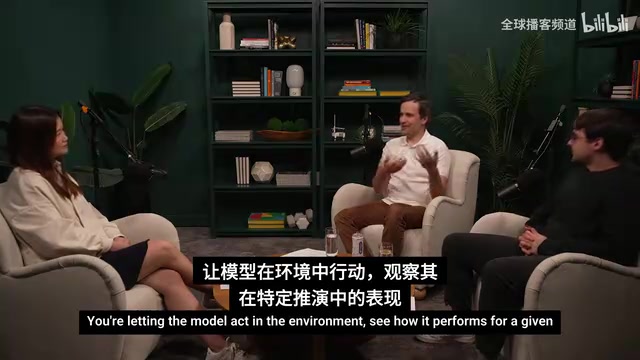
Technical Breakdown of Cursor Composer 2's Distributed RL Training
Deep dive into how Cursor trained Composer 2 via distributed RL, covering async pipelines, MoE numerical alignment, global weight sync, and more.
 Research
Go 1.25 Experimental Garbage Collector Green Tea Explained
Go 1.25 introduces experimental garbage collector Green Tea, exploring GC architecture changes. Learn its design, how to enable it, and potential performance gains for high-concurrency and memory-intensive apps.
 Research
Stack Allocation: How Escape Analysis Replaces Heap with Stack for Memory Optimization
Deep dive into stack allocation memory optimization: escape analysis principles, compiler implementation, and real-world performance impact through reducing heap allocations and GC pressure.
 Research
Go 1.26 Type Construction Simplification and Enhanced Recursive Type Cycle Detection Explained
Deep dive into Go 1.26's two key type system improvements: simplified generic type construction and enhanced recursive type cycle detection for safer, more efficient complex type definitions.
 Research
The Adventure Gene DRD4-7R: Why Are Americans More Risk-Taking Than Europeans?
Research shows the DRD4-7R gene variant (wanderlust gene) frequency correlates with migration distance. Americans carry more adventure genes than Europeans, explained by immigrant self-selection.
 Research
Google Co-Scientist Helps Discover Genetic Factors That Reverse Cellular Aging
Google's AI tool Co-Scientist helps biologists discover novel genetic factors that reverse human cellular aging, pioneering a new paradigm combining AI-driven hypothesis generation with wet lab validation.
 Research
Calico Teams Up with Google Co-Scientist: How AI Is Cracking the Challenges of Aging Research
Google's Calico Life Sciences uses AI tool Co-Scientist to integrate cross-disciplinary literature and generate new aging research hypotheses, accelerating scientific discovery.