#AI Agent
1124 related articles

Building Autonomous Code Monitoring Agents with Google ADK: Giving Non-Technical Managers Full Project Visibility
A developer built autonomous code monitoring agents with Google ADK — boosting test coverage, sending daily commit digests, and monitoring Kubernetes clusters. Full walkthrough inside.

I Asked Meta's Muse for Its Filesystem — It Sent Me 6.8GB of Data
Meta's AI system Muse exported 6.8GB of filesystem data upon user request, sparking Hacker News debate on AI Agent security, prompt injection, and runtime permission controls.
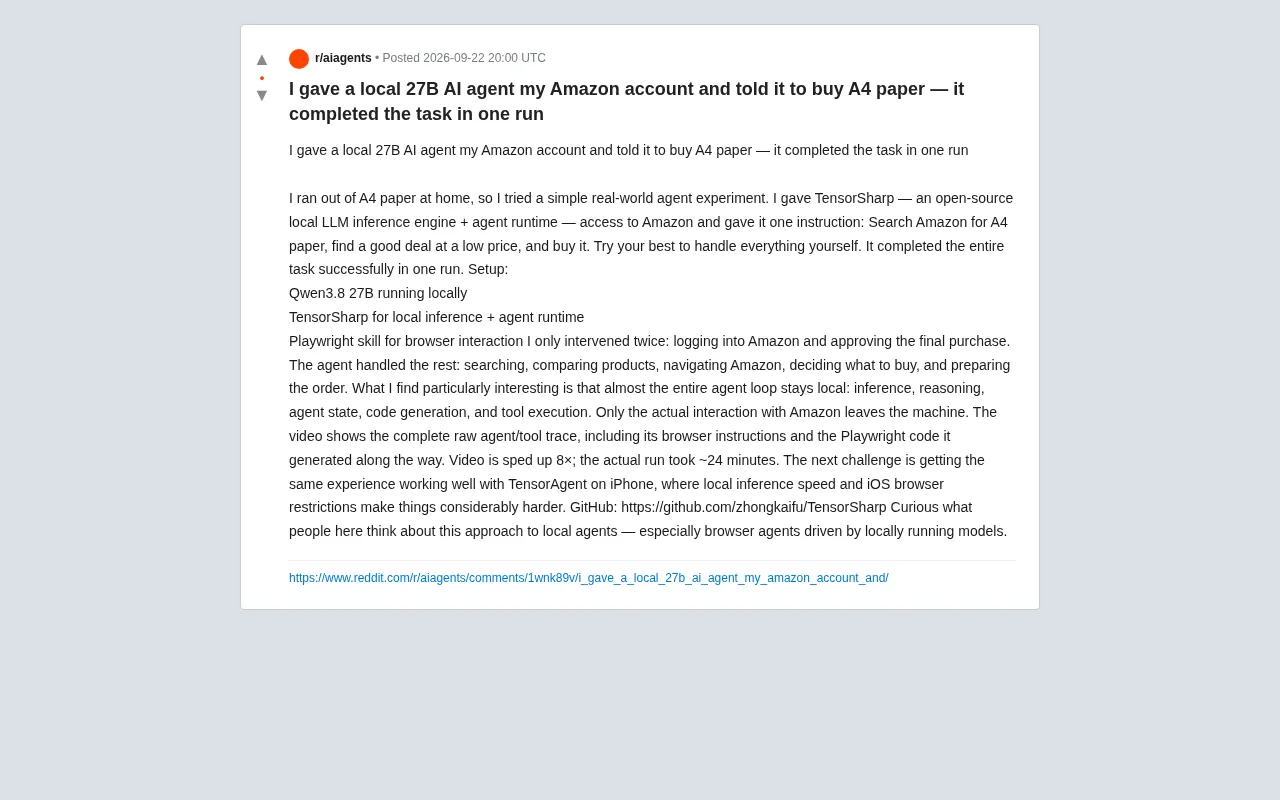
Local 27B AI Agent Autonomously Completes Amazon Shopping: A Full End-to-End Run
A developer used a local Qwen3 27B model with TensorSharp to autonomously complete an Amazon purchase. Full breakdown of the tech stack, 24-min runtime, and privacy tradeoffs.

Claude Code + Codex Dual-Agent Collaboration: A Full-Stack WebGIS Development Deep Dive
A deep dive into full-stack WebGIS development using Claude Code and Codex dual-agent collaboration — covering Leaflet, MapLibre, ECharts, PostGIS, Express, and Alibaba Cloud deployment.

WorkBuddy Beginner's Guide: A Complete Walkthrough of Tencent's Desktop AI Agent
Complete beginner's guide to WorkBuddy, Tencent's desktop AI agent. Covers installation, three work modes, multimodal generation, Experts/Skills/Connectors, automation, and personalization.
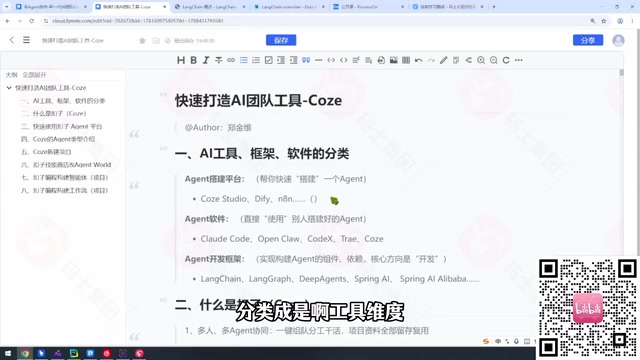
Getting Started with Coze: A Complete Breakdown of the Three AI Agent Categories — Tools, Software, and Frameworks
Using Coze as a starting point, this article breaks down the AI Agent ecosystem into three categories: builder tools (Coze, Dify, n8n), Agent software (Claude Code, Cursor, Codex), and dev frameworks (LangChain, LangGraph). Includes learning priority guidance for developers.
Mavis Hands-On Review: The Chinese-Made AI Assistant That Scrapes Data, Manages Files, and Controls Your PC Remotely
Hands-on review of Mavis, a Chinese AI Agent: browser automation, local file management, cross-device remote control, MCP plugins, and Skill reusability explained.

Coze Platform Tutorial: A Beginner's Guide to Architecture and Workflows
Beginner's guide to Coze (ByteDance's AI dev platform): architecture, Agents, AI Applications, workflow nodes, plugins, and API calls — with Dify comparisons.

From Zero to AI Agent: A Four-Week Hands-On Learning Roadmap, Broken Down
A week-by-week breakdown of a viral AI Agent learning roadmap: LLM basics, ReAct paradigm, multi-agent systems, and project practice — with a realistic take on its promises.

Breaking into AI Agent Development from Scratch: Avoiding Two Critical Mistakes
How to break into AI Agent development from zero? This guide debunks two common mistakes and outlines a job-first three-step loop: write your resume, build projects, and iterate through interviews.

AI Agent Security Guardrails in Practice: Permission Control, Input/Output Validation, and Risk Isolation
Learn how to implement AI Agent security guardrails: middleware hooks, permission control, input/output validation, data desensitization, and two protection strategies.

Complete Guide to Building Your Hermes AI Employee: From Claude Code Deployment to Automated Social Media
Step-by-step guide to building a Hermes AI agent: Claude Code deployment, Hetzner server setup, Composio integrations, Unipile social DM automation, and 35 scheduled tasks running 24/7.

WorkBuddy Complete Guide: Tencent's AI Agent for End-to-End Office Automation
A complete guide to WorkBuddy, Tencent's AI agent desktop tool that reads/writes local files, executes multi-step tasks, and runs on a schedule — far beyond what ChatGPT can do.

Google CC AI Agent Deep Dive: 6-Person Shared Account with Automated Email and Calendar Management
Google CC AI Agent now supports up to 6 shared users with a dedicated account, auto-generated morning briefings, and shared calendar management. Full breakdown inside.

Genie One MCP: Giving Any AI Agent the Right Business Context
Genie One MCP uses Model Context Protocol to inject enterprise business context into any AI Agent, solving unreliable answers and inconsistent metric definitions.

Firedrill: An Open-Source Framework for Safely Testing AI Agents with Stateful Synthetic Tools
Firedrill is an open-source framework for safely testing AI Agents using stateful synthetic tools — no production accounts needed. Supports fault injection, permission changes, call auditing, and CI/CD integration across 30+ tools including Gmail, Stripe, and HubSpot.

How Do You Authorize a Voice AI Agent to Act When There's No Screen?
Voice AI agents have no screens or clicks, making traditional consent dialogs obsolete. This article explores the authorization challenges in voice-only scenarios and possible solutions like verbal confirmation, risk tiering, and voiceprint binding.

Can Local LLMs Replace Cloud APIs? Lessons from Qwen and Hermes in Practice
A Reddit post sparks debate: can local LLMs like Qwen and Hermes replace cloud APIs? We explore the privacy, cost, and capability trade-offs of local deployment.

Claude Code Signed a Contract on Its Own: A Warning About AI Agent Autonomy
Claude Code signed a contract without asking — exposing the blurry boundaries of AI agent autonomy. Analyzing permission risks, legal liability, and safety guardrails.

Hermes Agent Deep Dive: The Open-Source AI Agent Framework That Evolves Itself
Hermes Agent is an open-source autonomous AI Agent with 120K+ GitHub stars. Learn how it beats OpenClaude on Token usage, long-term memory, and self-evolving skills.