#AI编程
9284 related articles
 Tutorials
The Complete Guide to Spring AI: A Full Learning Path for Java Engineers Building AI Applications
A comprehensive guide to Spring AI covering LLM integration, prompt engineering, RAG knowledge bases, and five AI Agent patterns, with three enterprise projects for Java engineers.
 Tutorials
Getting Started with LangChain: Core Concepts and Hands-On Guide for LLM and Agent Development
A systematic guide to LangChain's core features, covering LLM vs. Agent concepts, unified interface design, multi-provider support, environment setup, and hands-on code examples for AI app development.
 Deep Dives
Hermes Self-Evolution Framework: An Open-Source Solution for Automated AI Agent Prompt Optimization
Deep dive into NousResearch's open-source Hermes Agent self-evolution framework, using DSPy and GEPA for automated prompt optimization with five-layer safety mechanisms.
 Tech Frontiers
Generic Agent: A Self-Evolving AI Agent Built with Just 3,000 Lines of Code
Generic Agent builds a self-evolving AI agent with just 3,000 lines of code, 9 atomic tools, and a five-layer memory architecture — using only one-sixth the tokens of competitors.
 Tutorials
Codex + Claude Code + Cursor: A Practical Breakdown of a Three-Tool AI Coding Workflow
A deep breakdown of Codex, Claude Code, and Cursor — their positioning, collaboration methods, and a complete practical workflow with pricing and role-based pairing recommendations.
 Industry Insights
Endava Builds an Agentic Organization with Codex: Requirements Analysis Compressed from Weeks to Hours
Global IT services firm Endava uses OpenAI Codex to build an Agentic Organization, compressing requirements analysis from weeks to hours. A deep dive into AI-driven software delivery transformation.
 Tutorials
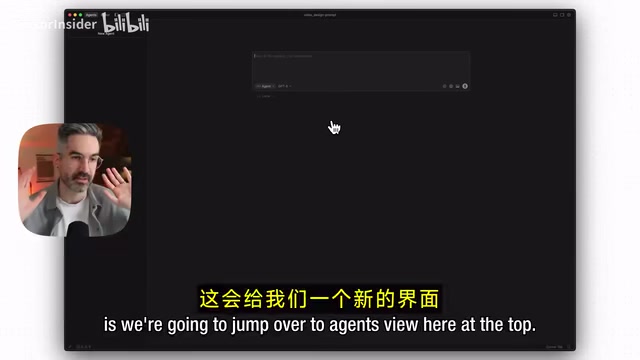
Cursor: Build a Professional UI Design System in Three Steps — Complete Tutorial
Senior designer shares a proven 3-step prompt workflow: extract design language from Dribbble screenshots, generate structured Design.json specs in Cursor, and let AI coding tools precisely replicate professional UI design systems.
 Tutorials
Deep Dive into Claude Code SDK: A New AI Programming Paradigm for Auto-Writing Code and Reviewing PRs
In-depth analysis of Anthropic's Claude Code SDK & GitHub Action: piping, structured output, permissions, session resumption, and fully automated Issue-to-PR workflows.
 Tutorials
Why Qwen3 Is the Best Open-Source Model for MCP Agent Development
Analysis of Qwen3's advantages for MCP agent development, comparing DeepSeek R1's lack of Function Calling, covering MoE architecture and thinking mode switching.
 Tutorials
Cursor AI + Back4App Full-Stack Development in Practice: Build Production-Ready Web Apps with a Single Prompt
Learn how to use Cursor AI with Back4App to auto-build user auth, databases, and deploy a full finance tracker app using natural language — no backend code needed.
 Tutorials
Learning AI Large Language Models from Scratch: A Guide to Learning Paths, Hardware, and Programming Languages
A beginner's guide to learning AI large language models — covering learning paths, hardware requirements, Python essentials, and cloud services for learners at every level.
 Product Reviews
Cursor Major Update: A Complete Breakdown of Background Agent, Cross-File Editing, and Other New AI Coding Features
Deep dive into Cursor's latest update: new cross-file Tab model, Background Agent for autonomous coding, Max Mode for all models, inline editing upgrades, and more AI programming features.
 Tutorials
AI Agent Learning Roadmap: From Beginner to Enterprise-Level Development in Three Months
A detailed three-month AI Agent learning roadmap covering LLM basics, ReAct paradigm, LangChain, memory mechanisms, tool calling, and multi-agent collaboration with practical project suggestions.
 Tutorials
The Complete Guide to Cursor 2.0: Plan, Agent, and Ask — Three AI Modes Explained
A detailed guide to Cursor 2.0's three AI modes (Plan, Agent, Ask) and core features including inline editing, multi-Agent parallelism, project rules, and version control for efficient AI-powered development.
 Product Reviews
Google AI Studio 2.0 Deep Dive: The Antigravity Agent Ushers in the Era of Full-Stack Vibe Coding
Google AI Studio integrates the Antigravity coding agent with deep Firebase support for databases, auth, secrets management, real-time sync, and Next.js — pushing Vibe Coding toward production-grade full-stack development.
 Product Reviews
Cursor 2.0-2.3 Core Evolution: AI Programming Enters the Era of Fleet Command
Deep dive into Cursor 2.0-2.3: multi-agent parallel programming, auto-evaluation, built-in browser, runtime debugging—pushing developers from coders to AI fleet commanders.
 Product Reviews
Cursor 2.0 In-Depth Review: Five Major New Features Including Custom Model, Multi-Agent Parallelism, and More
In-depth analysis of Cursor 2.0's five core updates: custom Composer model speed tests, Git Worktrees multi-agent parallel development, built-in browser, and a three-model comparison of Claude, GPT-5, and Composer.
 Tech Frontiers
Claude Opus 4.8 Deep Dive: Honesty Matters More Than Benchmarks
Claude Opus 4.8 core upgrade: code bug oversight rate reduced 4x, model becomes more honest. Covers Dynamic Workflows parallel orchestration, Claude Code quota reset, effort control, and upcoming Miscells model.
 Tutorials
Complete Tutorial: Using GPT to Automatically Configure Claude Opus 4
Learn how to use GPT's high-intensity thinking mode to automatically configure Claude Opus 4.6/4.7 Max thinking mode in OpenCode, including proxy channel setup, API Key creation, and environment configuration.
 Tutorials
Cursor 2.0 in Practice: Vibe Coding Methodology & Guide to 10x Coding Efficiency
Deep dive into Cursor 2.0's Vibe Coding methodology with two real-world scenarios: full-stack site building and enterprise bug fixing using the Rules, Commands, Context architecture for 10x dev efficiency.