#AI编程
9228 related articles
 Product Reviews
G-Rec: An Open-Source Agent Framework Built for Gemini CLI
G-Rec is an open-source agent framework built on Gemini 2.5 Pro with Windows/Chinese path support, persona systems, and skills extension, offering a free alternative to Claude Code.
 Product Reviews
Google AI Studio Build 2.0 Deep Dive: A Comprehensive Breakdown of Five Core Upgrades
Deep dive into Google AI Studio Build 2.0's major upgrade: Anti-Gravity agent, Firebase integration, full-stack support, server-side generation, and multi-framework options transforming this free AI coding platform.
 Tutorials
Agent Skills Decision Trees: Enabling Autonomous Decision-Making for AI Coding Assistants
Learn how to embed decision tree logic in Agent Skills to give AI coding assistants like Antigravity and Claude Code autonomous decision-making. Includes a Code Review Router case study with complexity scoring and failover.
 Tutorials
Complete Guide to Connecting Claude Code with DeepSeek-V4
Complete guide on connecting DeepSeek-V4 to Claude Code, covering Node.js installation, environment variable configuration, model mapping, and real-world coding tests for a near-premium AI programming experience with open-source models.
 Tutorials
Frontend Engineers Leveling Up to AI Agents: LangGraph.js Architecture Design & Practical Guide
How can frontend engineers advance into AI Agent development? This guide covers LangGraph.js core architecture (state, nodes, edges), LangChain comparison, and workflow agent design with practical examples.
 Tech Frontiers
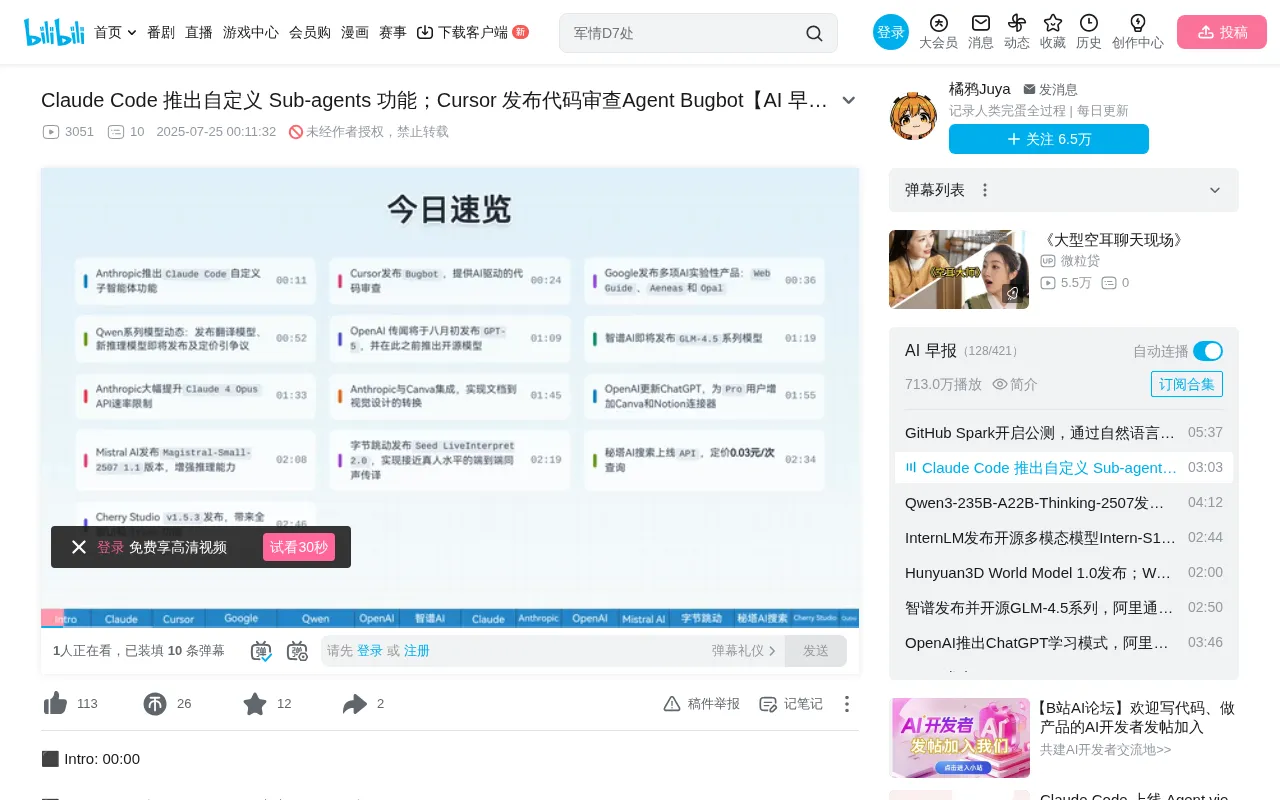
Claude Code Sub-Agents and Cursor BugBot Launch: AI Programming Tools Get Major Upgrades
Anthropic adds custom sub-agents to Claude Code, Cursor launches code review Agent BugBot, Qwen releases 92-language translation model, and Google unveils three experimental AI products.
 Tutorials
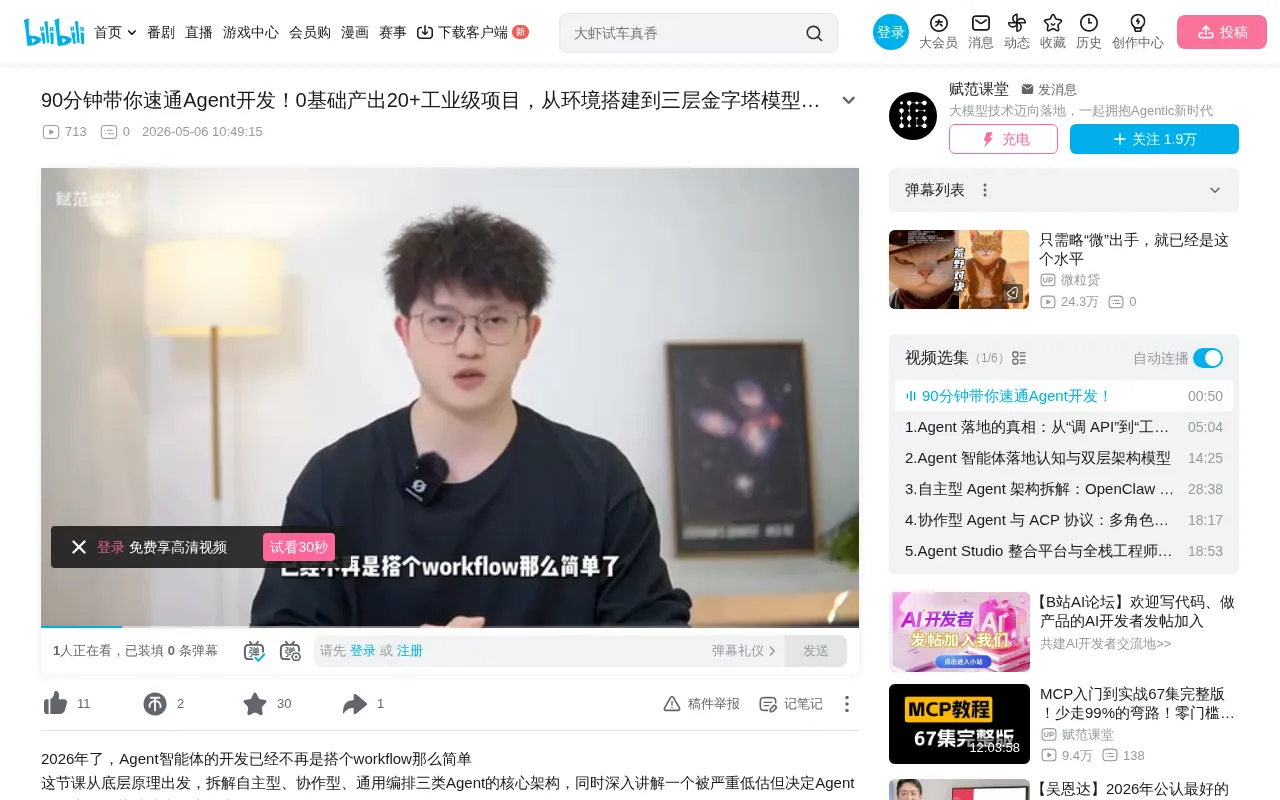
The Three-Layer Pyramid Model for Agent Development: From Beginner to Industrial-Grade Deployment
Deep dive into the Three-Layer Pyramid Model for Agent development, covering autonomous agents, collaborative multi-agent systems, and universal orchestration agents with a complete learning path from beginner to industrial-grade deployment.
 Tutorials
Getting Started with AI Full-Stack Development: A Knowledge Framework from Machine Learning to Large Language Models
A systematic guide to the relationships between AI, machine learning, deep learning, and large language models, helping developers build a clear knowledge framework and find an efficient learning path.
 Tutorials
Enterprise Multi-Agent Development: Low-Code Platforms vs. Hand-Written Code — An In-Depth Comparison
In-depth comparison of two enterprise multi-agent development approaches: low-code platforms like Dify vs. hand-written code with LangGraph. Covers efficiency, flexibility, security, and prompt injection defense strategies.
 Tutorials
LangChain Core Concepts Explained: A Complete Guide to Components, Chains, and Agents
Deep dive into LangChain's three core concepts—Components, Chains, and Agents. Learn how this open-source framework connects LLMs to the external world and helps developers build enterprise AI apps.
 Tutorials
RAG Technology Full-Stack Analysis: Core Principles, Enterprise Implementation & Learning Path
Deep analysis of RAG technology's core principles, three key values, enterprise implementation cases, common pitfalls, and a systematic learning roadmap covering vector databases, retrieval optimization, and Knowledge Graph fusion.
 Product Reviews
Kimi K2.6 In-Depth Review: A Complete Breakdown of Its Coding and Agent Capabilities
In-depth review of Kimi K2.6's coding, Agent collaboration, and visual development capabilities. #1 open-source on SWE-Bench Pro, 300 parallel sub-agents, API priced at 1/3 of competitors.
 Tutorials
Huawei Hermes Agent Manual Explained: Five-Layer Memory Architecture and Multi-Agent Collaboration in Practice
Deep dive into Huawei's 100-page Hermes Agent manual: five-layer memory architecture solving AI amnesia, self-evolution loops for continuous optimization, and multi-agent collaboration engineering.
 Tech Frontiers
Kimi K2.5 Fully Open-Sourced: Deep Dive into 1T Parameter MoE Architecture + Agent Cluster Capabilities
Deep dive into Moonshot AI's fully open-sourced Kimi K2.5: 1T parameter MoE architecture, Vision-to-Code capabilities, and 100-Agent parallel cluster system topping open-source benchmarks.
 Tutorials
Getting Started with LLM Application Development from Scratch: A Complete Guide to Learning Paths and Career Directions
A complete beginner's guide to LLM application development: learn the three key directions (API calling, RAG, Agent), master frameworks like LangChain, and follow a step-by-step learning path to become an AI application developer.
 Tutorials
Learning LLM Application Development from Scratch: A Complete Roadmap from RAG to Agent
How to start LLM application development from scratch? A complete roadmap covering Python basics, RAG knowledge bases, and Agent development with LangChain.
 Product Reviews
Silicon Valley Engineer Quits Big Tech to Build an AI Companion Robot: Bringing Machines to Life with a Theater Director's Mindset
Ex-NVIDIA GTC award winner Sparky: an AI researcher quit big tech and used 10+ years of theater experience to design an AI personality system with dynamic interests, long-term memory, and proactive social skills.
 Tutorials
Deep Agents: Enterprise-Grade Agent Engineering and Deep Research Implementation Guide
Learn how the Deep Agents framework solves enterprise AI Agent challenges like tool sprawl and context pollution, with a complete Deep Research implementation guide covering task decomposition, multi-source integration, and structured report generation.
 Tutorials
GStack Tutorial: 23 Commands That Give One Person an Entire AI Development Team
Deep dive into GStack, the open-source toolkit by YC President Gary Tan. 23 slash commands turn Claude Code into a full AI dev team covering product decisions to deployment.
 Product Reviews
Local Deployment of Qwen 3.6 27B on 4×3080Ti: Real-World Coding Test with OpenCode
Real-world test of Qwen 3.6 27B FP8 deployed on 4×3080Ti 16GB modded GPUs with OpenCode for system tool development. Covers hardware setup, inference speed, context management, and productivity gains.