#AI编程
9457 related articles

Vercel CLI Adds feedback Command: Report Bugs Directly from the Terminal, Usable by AI Coding Agents Too
Vercel CLI adds the vercel feedback command, letting developers submit bugs, friction reports, and feature requests directly from the terminal, with -f structured fields for AI coding agents to report task context.

Vercel Releases @ai-sdk/tool-web-fetch: Web Fetching Tool for AI Apps Lands
Vercel releases @ai-sdk/tool-web-fetch 1.0.0, the AI SDK ecosystem's first official web fetching toolkit. This article covers the initial release, its significance for AI app tool calling chains, and compliance and stability boundaries developers should note when integrating.
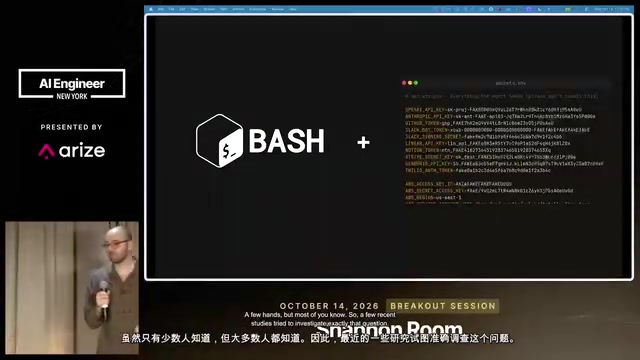
Is the Agent Harness Dead? Cursor's Early Engineer Breaks Down the Real Architecture of AI Coding Agents
Cursor early engineer Jediah breaks down the real architecture of the agent harness: why "the harness is dead" is only half right, how the data flywheel lets the harness obsolete itself, and how Grokbot, software factories, and primitive design open new frontiers for agents.

Python Visitor Pattern and Better Alternatives Explained
A deep dive into Python's visitor pattern and four alternatives: method pattern, pattern matching, dictionary mapping, and functools.singledispatch. Choose the best decoupling design by change frequency.

357 Days of Deep Experience: Why Omarchy Made Me Stop Distro-Hopping
A 357-day deep dive into Omarchy: 59-second install, out-of-the-box audio and GPU support, the Quattro QuickShell rewrite migration pains, and why Arch users should try it.

Cursor Can Now Control Your Computer: AI Agents Can Drive Desktop Apps for Testing
Cursor adds desktop control: AI agents can drive desktop apps like the iOS Simulator to test their own features. We analyze the impact on dev workflows, possible technical approaches, and reliability concerns.

Vibecoding a Custom Inference Engine: High Hopes, Harsh Reality
A Reddit developer shares the real experience of vibecoding a custom inference engine: running GGUF Q4 models in the browser with WebGL2 and GLSL, only to fall into tokenizer debugging hell. This article analyzes the engineering challenges of browser-side LLM inference and why cloning llama.cpp is the more rational choice.

Vercel Connect Provides Managed Scoped API Keys for Stripe
Vercel Connect adds a Managed API Key mode that creates scoped Stripe API keys per AI Agent or task, hosted by Vercel with rotation that needs no redeploy, while MCP and bring-your-own-key modes remain.
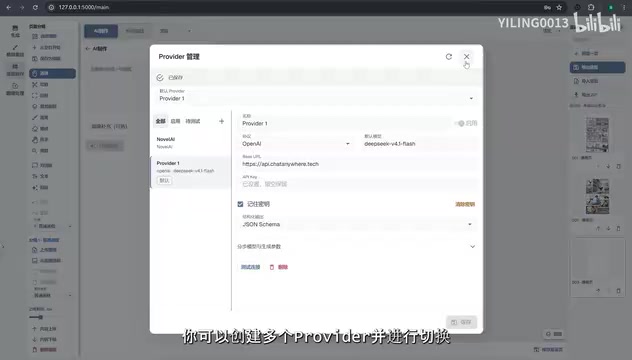
DeepSeek-Orchestrated Storyboard Comic Tool: Custom iProvider and Storyboard Cropping in Practice
Online comic orchestration tool adds custom iProvider for multi-model switching and storyboard cropping. A Bilibili demo breaks down the full DeepSeek-orchestrated workflow from creative input to generation, exploring the balance of efficiency and control in AI comic creation.
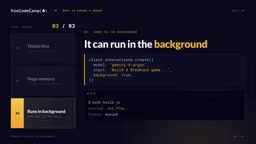
Hands-On with the Gemini 4 Argon API: Thinking Levels and Background Mode Explained
A Free Code Camp crash course on the Gemini 4 Argon API: from getting a key and sending your first request to controlling reasoning costs with thinking levels, enabling multi-turn chat with previous_interaction_id, and generating a Breakout game in background mode—plus a Google engineer's take on the model's capabilities.
Reverse Engineering + AI Agents: The T…
Reverse Engineering + AI Agents: The Technical Truth Behind Cloning Adobe Apps in Weeks
A developer used AI Coding Agents for reverse engineering to build 7 open-source Adobe alternatives in weeks. We explore how it works, the MCP Server that hit 100K stars in 6 days, and the real technical and legal limits.

LLM App Getting Worse With Every Change? Build an Effective Evaluation System in Three Steps
How do you know if your LLM app is getting better or worse? A Reddit-based guide to test sets, automated regression evaluation, LLM-as-judge scoring, and structured agent tracing.
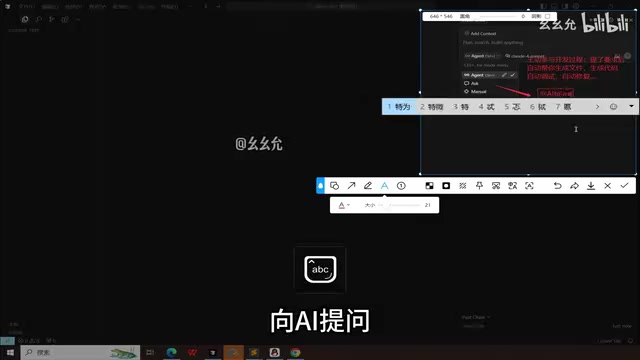
Cursor AI Programming in Practice: Build a Student Management System from Scratch in 30 Minutes
A Bilibili creator demonstrates Cursor AI programming: generating a student management system in 30 minutes with natural language. Details on Agent mode, Claude selection, prompt techniques, and thresholds.
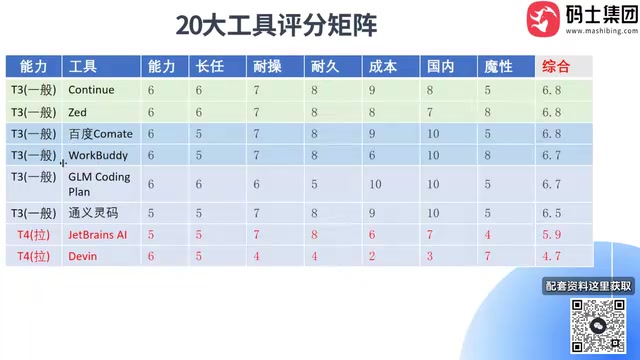
Top 20 AI Coding Tools Ranking: From Rock-Solid to Lackluster, a Scored Matrix
Bilibili creator releases top 20 AI coding tools ranking, tiered T0–T4 from rock-solid to lackluster, with Claude Code and Codex tied at T0. This article details the scoring dimensions (capability, reliability, robustness, durability, cost, domestic availability) and tool performances to help developers choose the right AI coding assistant.

Vibe Coding Systematic Tutorial: Master AI-Assisted Programming from Zero
A three-month Vibe Coding tutorial from a Bilibili creator covering Codex, ClaudeCode, and Cursor, from core logic to commercial project practice for beginners.

Teaching AI Coding Assistants to Be Lazy: The Seven-Step Ladder to Halving Your Code
Open-source trending project teaches AI coding assistants to first ask whether to write: a seven-step ladder cuts code by 53%, time by 41%, cost by 26%, while validation, error handling, security, and accessibility are never simplified. Includes installation limits and chart comparison.

Codex Plans, Claude Codes: 3.6K-Star Open-Source Project Enables Multi-AI Collaborative Development
Bilibili creator tests open-source CCB (Claude Codex Bridge): Codex plans and reviews while Claude Code writes code. 3.6K stars, supports Gemini, Kimi, Qwen, Cursor.

AI Agent Burns Through Thousands of Dollars Overnight? Three Lines of Defense to Prevent Runaway Costs
AI Agents running autonomously can burn thousands of dollars overnight in infinite loops. This article explains three safety defenses—Reflection Loop, Human-in-the-Loop, and Guardrail—to help developers build controllable, recoverable Agent systems that prevent budget overruns and prompt injection attacks.
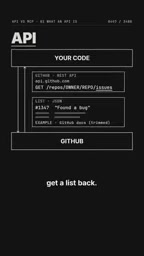
API and MCP Are Not Rivals: Understanding Their Relationship in One Minute
Are API and MCP rivals? This one-minute explainer clarifies their relationship: APIs handle data requests between programs, while MCP gives AI apps a unified tool-calling standard—and MCP servers still call APIs internally. They coexist in layers; neither replaces the other.

AI Agents and MCP in Practice: Master Autonomous Agent Architecture in 6 Minutes
From the four core structures of AI Agents to the MCP protocol, Tool Calling, vector memory, multi-agent collaboration, and security, this covers seven key steps of autonomous agent development, plus practical FastMCP deployment tips.