#GEO
26 related articles

Notra: The GEO Tool That Helps Your Brand Stand Out in AI Search
Notra is a GEO tool that simulates buyer questions to ChatGPT, Claude, and Gemini to check brand visibility in AI search and provide optimization tips, helping marketers boost exposure in the generative AI era.

Knowledge Triples: Anchoring Your Brand in the LLM Vector Space
Explains the vector collision problem in AI search and how engineering knowledge triples anchor brands deterministically in LLM vector and graph space via syntax structuring, Wikidata-linked Schema, and cross-encoder validation.

The Rendering Blind Spot of Vibe Coding: AI Search Can't See Your App
Vibe coding tools default to client-rendered SPAs, so ChatGPT, Perplexity, and other AI crawlers can't read your content. This article analyzes the cause of this rendering blind spot, provides a two-line curl self-check, and offers three fixes: static generation, SSR, and prerendering.
llms.txt Log Analysis: Who's Actually Reading It?
Analyzing real request sources for llms.txt via Nginx access logs, using grep/awk to identify GPTBot, ClaudeBot and other crawlers, and clarifying what logs can and cannot prove for GEO practice.
GEO Technical Readiness Checklist: Get Your Website Indexed by AI Search and LLMs
GEO (Generative Engine Optimization) is changing how websites are discovered by AI search agents and LLM crawlers. This article outlines five technical readiness checks: AI crawler access verification, initial HTML response inspection, JSON-LD structured data validation, llms.txt configuration, and readiness quantification measurement, helping content and engineering teams meet the technical threshold of the GEO era.
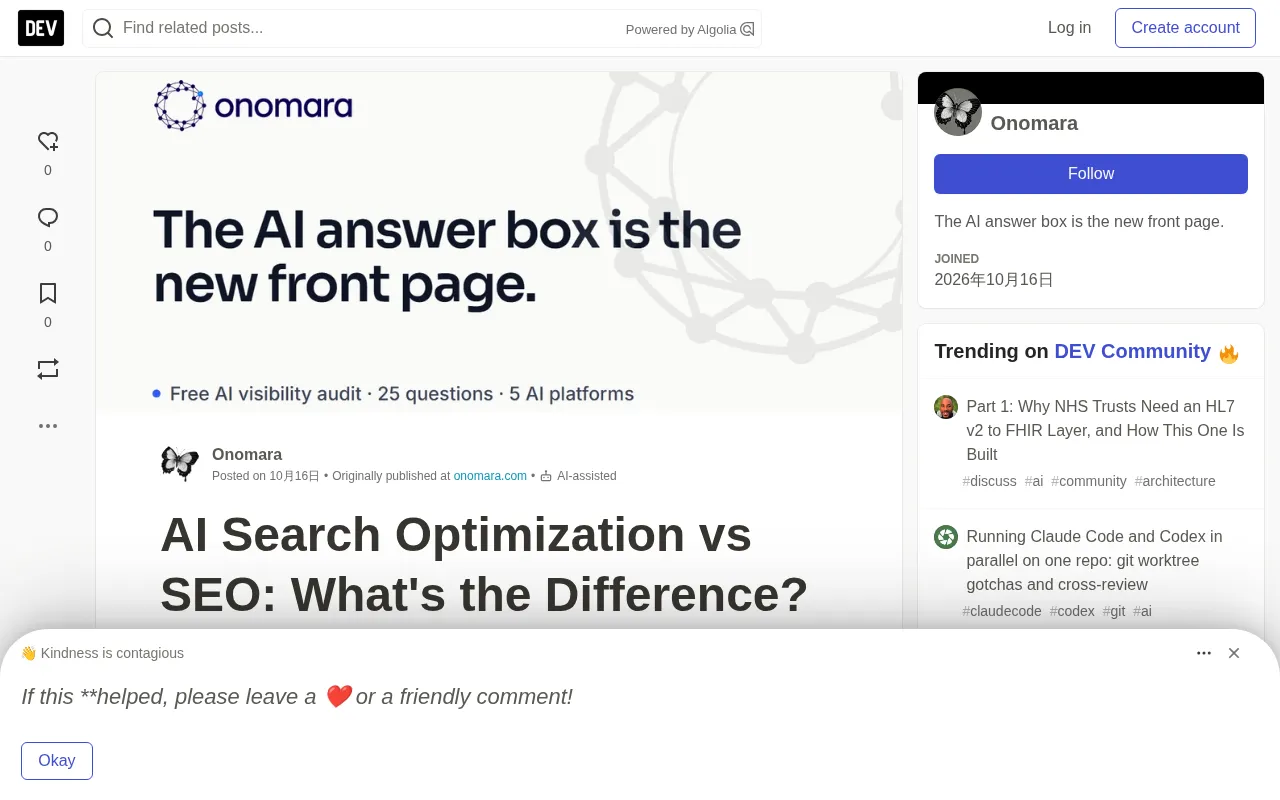
What's the Difference Between AI Search Optimization and SEO? A Complete Guide to GEO and AEO
SEO ranks websites on Google; AI search optimization gets businesses recommended by ChatGPT and Gemini. Compare GEO vs SEO, their overlap, measurement, and what local businesses should do first.
Naver Blog Gets 128 Google Results but Zero AI Citations — The robots.txt Truth
Trina Inc. designed 120 queries around Korean dental care, collected 2,435 AI citations, and found Naver Blog had 128 Google results but zero AI citations — the root cause is robots.txt blocking retrieval crawlers, with blocked sites converting search to citations at only one-fifth the rate of open sites.
What Is Prompt Fan-out? How AI Search Query Fan-out Works
Prompt Fan-out is how AI search engines break one question into multiple sub-queries, retrieve each, and merge the answers. Learn how it works, how it shapes brand AI visibility, and how to use it to pick tracking prompts, measure share of voice, and optimize content.
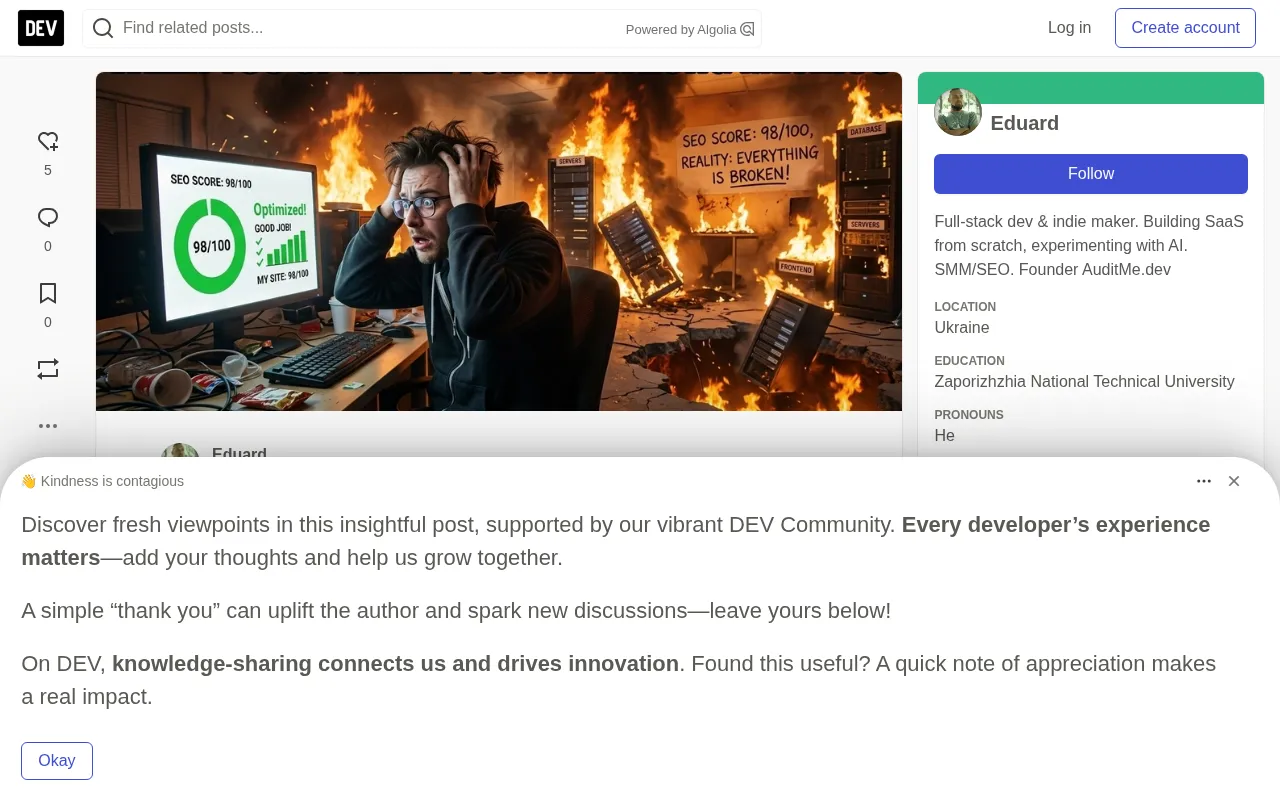
The SEO Score Trap: How to Prove Search Visibility in the Age of AI Answers
An SEO score isn't real visibility. This evidence-first guide breaks down technical SEO, GEO, and AEO, covering canonicals, crawler controls, and measuring AI citations without confusing correlation with causation.
AI Visibility: The New Battleground for B2B Customer Acquisition
51% of B2B buyers now use AI chatbots for purchasing research, making AI visibility the new battleground for customer acquisition. This article breaks down four typical AI misjudgments about B2B companies, a quantifiable baseline measurement method, and five core levers for earning AI recommendations.
llms.txt Practical Guide: How to Create It and What to Realistically Expect
llms.txt practical guide: what it is, why there's no evidence it boosts AI citations, how to create it in 10 minutes, and the GEO levers worth prioritizing instead.

Making Web Pages Survive RAG Chunking: Writing Strategies for AI Citations
RAG systems evaluate content by passage, not page. Learn to simulate chunking, detect weak passages, and win AI citations with self-contained answers, query-style headings, and JSON-LD.
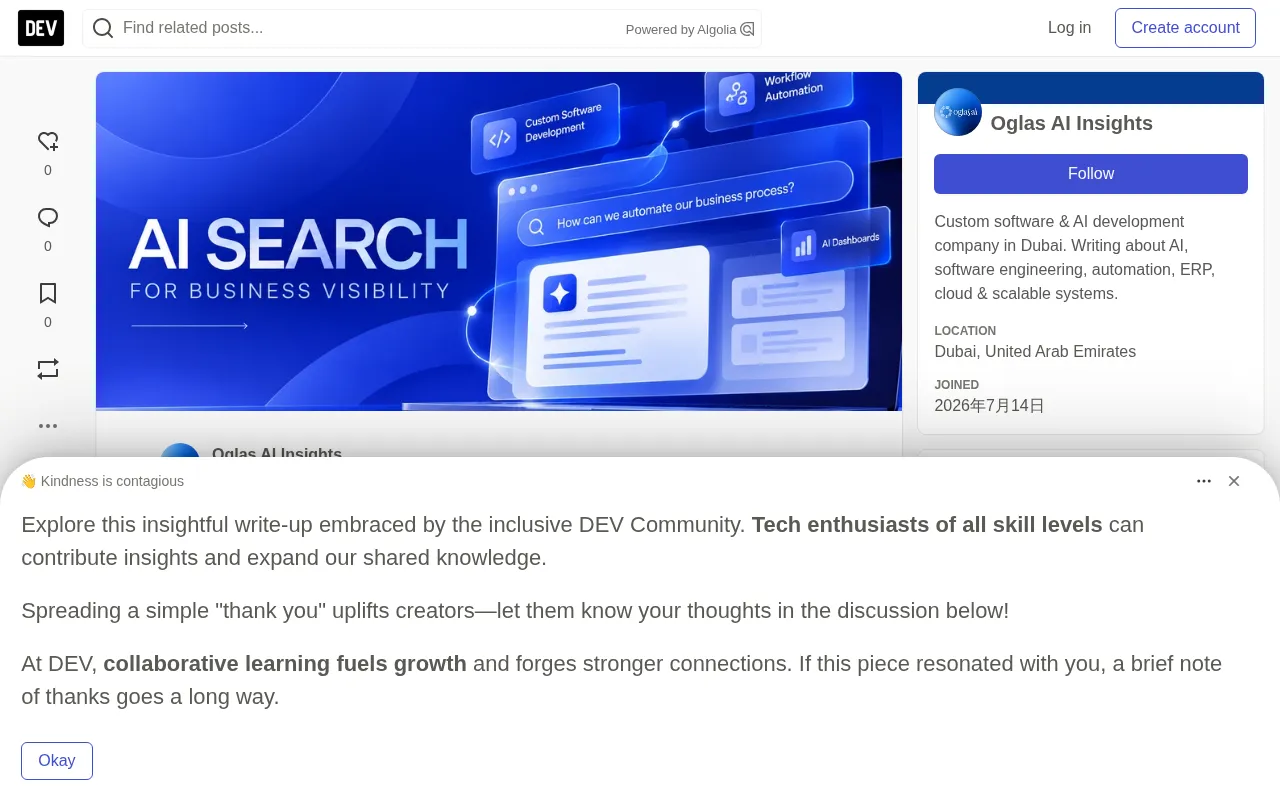
AI Search Optimization in Practice: Making AI Engines Understand Your Business Expertise
A practical AI search optimization guide for developers: how page structure, structured data, and content strategy help custom software, workflow automation, and AI dashboard services get cited and visible in AI-generated answers.

New Brand Invisible in AI Search? Three First Steps for GEO
New brand getting zero mentions in ChatGPT, Gemini, and other AI search? The GenScore team shares three core GEO starting points: refining your website's brand entity info, publishing an llms.txt file, and acquiring your first verifiable external mentions—plus why this can't be rushed.

GEO Tools Explained: Get Your Content Cited by AI Answer Engines
GEO tools audit and improve how content gets cited by AI answer engines. This guide covers the five-task GEO toolchain, citation patterns, a 20-minute audit, and the citation share vs. conversion trade-off.
How to Choose the Best Generative Engine Optimization Platform: A Full Breakdown of Answer Engine Citation Mechanics
A deep dive into GEO platform selection: how answer engines choose citation sources, a comparison of mainstream GEO tools, a real case of winning a first citation in three weeks, and why to measure share of citations rather than mentions.

Best AI Visibility Tools: A Complete Loop from Audit to Citation
Compare AI visibility tools like Otterly.AI, AthenaHQ, BrightEdge, and Peec AI. Break down GEO audits, answer engine citation tracking, and content refresh loops, with case studies and FAQs.

Answer Engine Optimization Software: The New SEO Tool for the AI Citation Era
Answer engine optimization software monitors how AI assistants cite your brand across ChatGPT, Perplexity, and more — boosting citation odds via structured data and llms.txt.
llms.txt Best Practices: Give AI Agents a Map They Won't Get Lost In
llms.txt is a site map for AI agents—it won't boost rankings but saves retrieval requests. This guide covers file structure, six key traits, absolute URLs, short descriptions, a five-step maintenance loop, and its boundaries with robots.txt and structured data.
How to Report AI Visibility to Your Board: Four Metrics That Actually Work
EntityRise founder proposes four AI visibility metrics that withstand board scrutiny: recommendation rate, description accuracy, citation presence, and before/after delta — plus reporting practices to reject.