Analysis of the Kiro, Cursor & Windsurf 3-in-1 Unlimited Refill Tool: Risks and Alternatives

Analyzing the 3-in-1 AI coding tool refill hack: technical principles, risks, and compliant alternatives
A tool has appeared on Bilibili claiming to offer unlimited usage for Kiro, Cursor, and Windsurf by bypassing limits through account rotation, machine ID modification, and API proxying. This article analyzes the current state of all three tools, highlights risks including account bans, code leakage, and legal liability, and recommends compliant alternatives such as official paid plans, self-hosted API environments, or strategic multi-tool rotation.
Overview
Recently, a tool has appeared on Bilibili (B站) claiming to support "unlimited refills" for three major AI coding tools—Kiro, Cursor, and Windsurf—supposedly bypassing their usage limits for unrestricted access. It specifically mentions Kiro's support for the Claude 4.5 model and Cursor's Auto mode. This article provides a technical analysis of this phenomenon, along with a risk assessment and compliance recommendations.
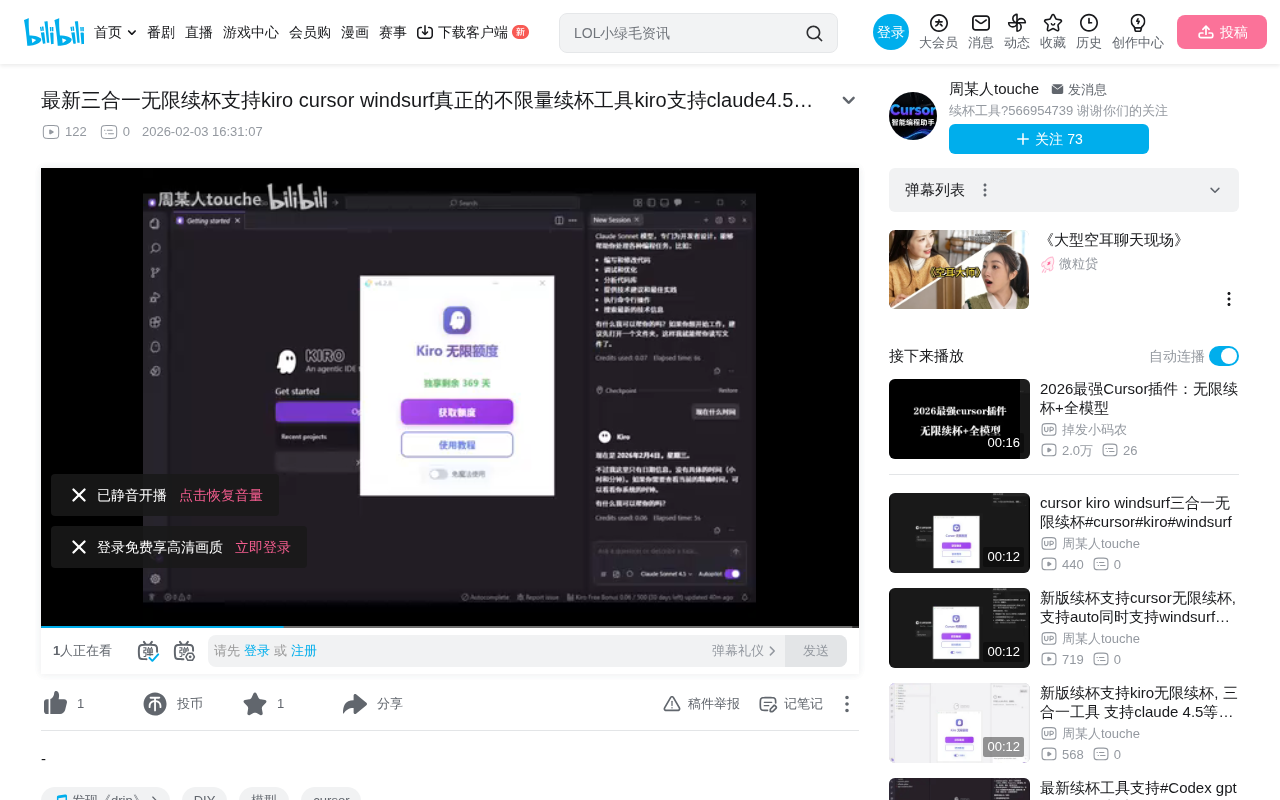
Current State of the Three AI Coding Tools
Kiro: AWS's New AI Coding Contender
Kiro is an AI coding IDE launched by Amazon AWS, powered by Claude models. Unlike traditional AI coding assistants, Kiro adopts a unique "Spec-driven development" philosophy—developers first describe requirements in natural language, and Kiro automatically generates detailed technical specification documents (including requirements docs, design docs, and task lists), then generates code based on these specifications. This approach effectively reduces the "hallucination" problem in AI-generated code, making outputs more controllable and predictable.
Kiro is built on the open-source version of VS Code, providing excellent compatibility with the existing VS Code plugin ecosystem. Currently, Kiro supports the Claude 4.5 model, Anthropic's latest flagship model. Compared to its predecessor, Claude 4.5 shows significant improvements in code generation accuracy, long-context understanding, and multi-file collaborative editing—particularly excelling at refactoring tasks in large codebases. Kiro's free tier is relatively limited (approximately 50 premium model calls per month), which is the primary reason users seek "refill" solutions.
Cursor: The Benchmark Product in AI Coding
Cursor, developed by Anysphere, is one of the most popular AI coding tools today, also built as a deep fork of VS Code. Unlike simple plugin integrations, Cursor modifies the editor core to achieve deep fusion of AI capabilities with the editing experience. Its core features include: Tab smart completion (predicting the next edit operation based on context), Cmd+K inline editing (generating or modifying code directly at the cursor position), and Composer multi-file editing mode (coordinated modifications across files).
Cursor's Auto mode is its latest model scheduling strategy, where the system automatically selects the most suitable model based on the current task's complexity—simple code completions may use lightweight models for faster response times, while complex architectural design or bug fixes invoke advanced models like Claude Sonnet 4 or GPT-4o. This intelligent scheduling dramatically improves coding efficiency while optimizing token consumption. However, after Cursor's free tier is exhausted, the Pro version costs $20/month, and advanced model calls (such as Claude Sonnet 4) are still capped at 500 times/month. The Ultra plan increases this to 2,000 times but costs $200/month.
Windsurf: Codeium's AI IDE
Windsurf was originally launched by Codeium, evolving from their code completion plugin into a standalone AI IDE. Windsurf's core technical highlight is its "Cascade" streaming agent architecture—it can autonomously plan tasks, search codebases, execute terminal commands, and modify multiple files like a human developer, forming a complete workflow loop. This deep agent capability makes it excel at automated development tasks.
Notably, in early 2025, OpenAI announced the acquisition of Windsurf (Codeium) for approximately $3 billion, signaling that competition in the AI coding tool space has reached a fever pitch. After the acquisition is complete, Windsurf's technology may be deeply integrated with OpenAI's model capabilities. During the current transition period, Windsurf also faces usage quota limitations—free users quickly hit call limits under intensive use scenarios, especially when using Cascade agent mode, where a single task can consume a large number of tokens.
Technical Analysis of "Unlimited Refill" Tools
Common Implementation Methods
These refill tools typically achieve so-called "unlimited use" through the following approaches:
-
Account Rotation: Automatically switching between multiple free accounts to circumvent per-account limits. This usually requires batch-registering email accounts and switching authentication tokens locally via automated scripts. Some tools even use temporary email services (like Guerrilla Mail) to achieve fully automated registration flows.
-
Machine ID Modification: Modifying device identifiers to reset trial periods. AI coding tools typically collect device fingerprints to identify user devices, which may include: hardware UUID, MAC address, hard drive serial number, motherboard information, etc. Refill tools forge these identifiers by hooking system APIs or modifying registry/configuration files, making the server believe a "new device" is requesting a trial. Some tools also modify the telemetry ID in the IDE's local storage directory (such as Cursor's
~/.cursordirectory). -
API Proxy: Using third-party API keys to replace official quotas. This approach is essentially a Man-in-the-Middle Proxy (MITM Proxy) that intercepts API requests from the IDE to official servers and redirects them to third-party LLM APIs (such as through shared API key pools or reverse-engineered enterprise keys). Some implementations launch a local proxy server and modify the IDE's network configuration to route requests through it.
Risk Warnings
It's crucial to note that using such tools carries multiple risks:
-
Account Security Risk: May result in permanent banning of your primary account. Tools like Cursor have deployed increasingly strict anti-abuse detection systems, including abnormal login pattern recognition and device fingerprint correlation analysis. Once violations are detected, not only will the current account be banned, but associated payment information and devices may also be blacklisted.
-
Code Leakage Risk: Third-party tools may upload user code to unknown servers. Since refill tools need to intercept and forward API requests, all code context sent to the AI (including project file contents, directory structures, etc.) passes through third-party servers. For code involving trade secrets or sensitive business logic, this is extremely dangerous.
-
Legal Compliance Risk: Violating terms of service may result in legal liability. Under relevant cybersecurity regulations and each tool's Terms of Service, circumventing technical protection measures may constitute breach of contract or even illegal activity.
-
Stability Issues: May become ineffective at any time due to official detection mechanism updates. These tools and official detection systems are engaged in a continuous "cat and mouse game"—every IDE update may render the tool ineffective, causing frequent interruptions to users' workflows.
Recommended Compliant Alternatives
For developers who genuinely have heavy AI coding needs, consider the following compliant approaches:
-
Subscribe to Official Paid Plans: Cursor Pro ($20/month), Kiro's paid tier, etc., for stable and reliable service. For team users, the Cursor Business plan ($40/month/person) also offers a privacy mode ensuring code isn't used for model training.
-
Self-Host with APIs: Purchase API credits through platforms like OpenRouter and pair them with open-source editors. OpenRouter is a unified AI model API gateway that aggregates APIs from multiple providers including OpenAI, Anthropic, and Google. Developers only need one account to call different models on demand, paying by actual token usage and avoiding subscription waste. Combined with tools like Continue.dev (an open-source AI coding plugin supporting VS Code and JetBrains) or Cline (an open-source AI agent plugin), you can build a fully self-controlled AI coding environment, often at lower cost than subscribing to multiple tools.
-
Reasonable Multi-Tool Rotation: Maximize efficiency by utilizing free tiers from multiple tools within compliant boundaries. For example, use GitHub Copilot's free tier for daily lightweight coding, Kiro's free quota for complex tasks, and Cursor's free quota for code review, creating a complementary workflow.
-
Watch for Competitive Price Drops: The AI coding tool market is fiercely competitive, and prices are expected to continue declining. With OpenAI's acquisition of Windsurf, Google launching Gemini Code Assist, and the rapid decrease in model inference costs (Claude Sonnet's pricing has dropped over 80% within a year), AI coding tool pricing is undergoing structural changes. Patience may be the most economical choice.
Conclusion
The emergence of 3-in-1 refill tools reflects the tension between developers' strong demand for AI coding tools and current pricing. As Kiro adds Claude 4.5 support and Cursor rolls out Auto mode, the value of these tools is genuinely increasing. However, developers are advised to prioritize compliance and security while pursuing efficiency—choose official paid plans or compliant self-hosted API approaches to avoid penny-wise, pound-foolish outcomes.
From an industry trend perspective, AI coding tools are rapidly evolving from "assisted completion" to "autonomous agents," with future competition shifting from model capabilities to workflow integration and developer experience. In this rapidly changing market, choosing a sustainable usage approach is far more important than short-term free access.
Related articles
 Tutorials
Cursor + Codex Dual-IDE Collaboration: A Practical Methodology for Open-Source Project Customization
A complete methodology for open-source project customization based on real-world experience, detailing the Cursor+Codex dual-IDE workflow, seven-stage process, MVP validation, and AI source code reading techniques.
 Tutorials
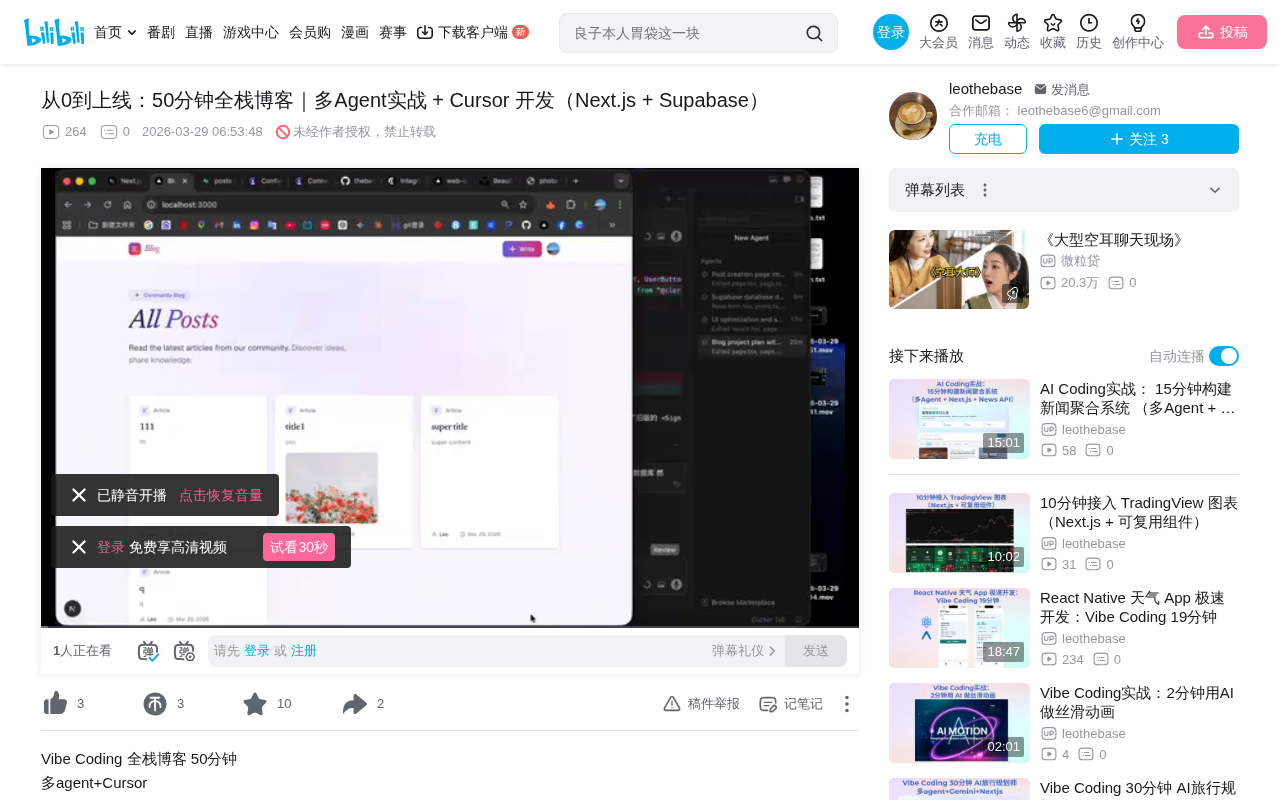
Cursor Multi-Agent in Practice: Building a Full-Stack Next.js Blog in 50 Minutes
Build a full-stack blog in 50 minutes using Cursor IDE's multi-Agent mode with Next.js, Clerk auth, and Supabase. Learn the 4-phase AI Agent workflow and key integration pitfalls.
 Tutorials
Building an AI Software Factory from Scratch: A Cursor Engineer's Hands-On Experience with Multi-Agent Collaboration
Cursor engineer Eric shares practical insights on building an AI software factory: automation levels, guardrail design, parallel Agent management, and scaling to 1000+ Agents for 24/7 development.