Chaos in the AI Training Industry: A Deep Dive into Clickbait and the Instructor Shortage Crisis
Exposing clickbait tactics and instructor shortages plaguing China's AI training industry.
Through a real case of a Bilibili video titled "Harness Engineering Deep Analysis" that actually contains an instructor's self-introduction, this article exposes systemic problems in China's AI training industry — including rampant clickbait, severe instructor shortages, over-reliance on single instructors, and algorithm-driven content mismatch. It offers practical advice for learners to evaluate training quality.
When Clickbait Meets AI Training: An Industry Phenomenon Worth Examining
Search for "Harness Engineering Deep Analysis" on Bilibili (China's leading video platform), and you might click on a video with an extremely professional-sounding title — one that claims to explain the underlying logic, core components, and practical case studies of Agent Harness. However, once you open it, you'll discover that the actual content has almost nothing to do with the title. This isn't an isolated case — it's a typical example of the rampant clickbait problem plaguing the current AI training industry.
First, let's clarify the technical concepts mentioned in the title. Harness Engineering (also commonly referred to as Agent Harness) is an important conceptual framework in AI Agent development. It primarily refers to building controllable, testable, and evaluable runtime environments and toolchains for AI agents. In large language model application development, Harness typically refers to a testing and orchestration framework used to manage an Agent's inputs/outputs, tool invocations, memory management, and multi-step reasoning workflows. With the explosive growth of the AI Agent concept in 2024-2025, Harness Engineering has become a hot keyword in tech communities and job markets — which explains why training institutions use it as a traffic-driving term in video titles. It precisely targets the search intent of a large number of AI practitioners and learners.
The Video's Actual Content: A Career Self-Introduction from an AI Training Instructor
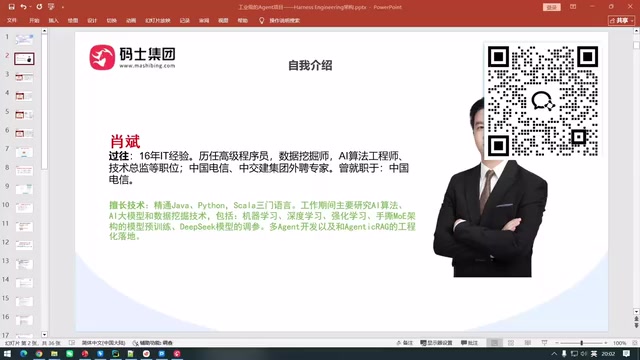
The actual content of this video is a personal introduction and live-stream interaction from an AI training instructor named Xiao Bin. According to his self-introduction, he was born in 1982, started programming after completing his master's degree in 2008, and previously worked at ZTE and Huawei — spending approximately two and a half years at Huawei from 2009 to late 2011.
He candidly admits that he entered the AI field relatively late, starting around 2019. During the livestream, he emphasized that he "doesn't brag or package himself" — he won't fabricate a PhD degree or major tech company background. This kind of honesty is genuinely rare in the AI training industry. Currently, many training instructors in the market deliberately obscure or exaggerate their technical backgrounds, packaging brief internships at major companies as "core team member" experience, or describing their use of LLM APIs as "participating in large model training." In such an industry atmosphere, Xiao Bin's straightforwardness is actually commendable.
Behind the Scenes: How AI LLM Training Institutions Operate
From the instructor's description, we can glimpse some typical operational characteristics of current AI large model training institutions. Since ChatGPT's release in late 2022, China's AI training market has experienced explosive growth. According to estimates from multiple industry research firms, China's AI-related vocational training market exceeded 10 billion RMB in 2024. Market participants range from traditional IT training giants (such as Danei and Qianfeng) to numerous small and medium-sized emerging institutions, with extremely fierce competition. In this environment, video platforms like Bilibili and Douyin have become the primary battlegrounds for customer acquisition, with SEO optimization and title keyword strategies becoming core operational tactics.
Severe Imbalance Between Course Volume and Instructor Concentration
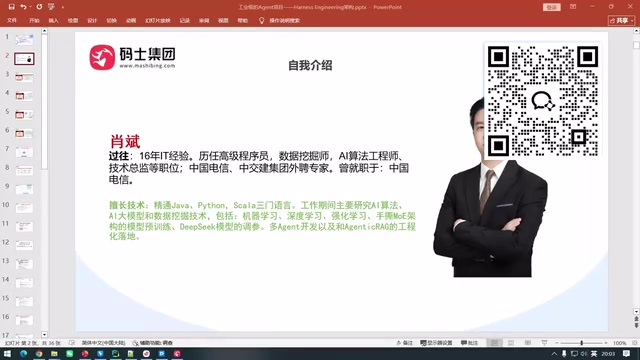
According to Xiao Bin, over 60% of the AI large model courses at his institution, "Ma Shi Education," are taught by him alone. The institution's AI large model curriculum went online in 2024 and has been operating for about two years.
This phenomenon of highly concentrated instructor resources is not an isolated case — it's a structural problem in the AI large model training field. The scarcity of qualified AI LLM instructors is a global challenge: engineers with genuine hands-on experience in large model training, fine-tuning, RAG system development, and Agent development typically command annual salaries of 500,000 to 2,000,000 RMB at companies — far exceeding what training institutions can offer. This makes it difficult for training institutions to recruit sufficient qualified instructors. The phenomenon of one person handling over 60% of courses fundamentally reflects the severe imbalance in AI talent supply and demand — too few people who can teach, too many people who want to learn.
Career Guidance Heavily Dependent on a Single Instructor
Even more noteworthy is his claim that before May 1, 2026, virtually 99.99% of student career guidance and interview coaching was completed by him alone. Based on the call records he displayed, he averaged more than 5 coaching calls per day. It wasn't until May that he began delegating some of this work to other instructors.
This "one person carrying most of the weight" model is not uncommon among small and medium-sized training institutions, but it exposes the deeper problem of weak instructor resources in the AI training industry. From the student's perspective, this model carries obvious risks: if the core instructor leaves or becomes overwhelmed, the entire curriculum and career services could face a cliff-like decline. At the same time, an instructor handling numerous coaching calls daily can hardly guarantee that each student receives sufficiently in-depth and personalized guidance.
Analyzing the Clickbait Dilemma in AI Training
Traffic Anxiety Leading to Severe Content Mismatch
The biggest problem with this video is that the title reads "Harness Engineering Deep Analysis and Best Practices," while the actual content is an instructor's personal introduction and institutional promotion. This severe mismatch between title and content reflects the traffic anxiety driven by fierce competition in the AI training space.
To understand the root cause of this phenomenon, one needs to understand video platform recommendation mechanisms. Recommendation algorithms on platforms like Bilibili heavily rely on metrics such as click-through rate (CTR) and completion rate. Including popular technical keywords in titles can significantly boost search rankings and recommendation weight. This objectively incentivizes content creators to use titles that don't fully match their actual content. While this algorithm-driven title optimization strategy is prevalent across the entire content ecosystem, it's particularly harmful in technical education — learners typically search with specific knowledge needs, such as wanting to understand how to build Agent testing frameworks or how to design Harness evaluation pipelines. Title misdirection directly wastes their precious learning time and erodes their trust in the platform's technical content.
When hot keywords like "Agent," "Harness," and "underlying logic" are used as traffic-driving tools rather than genuine educational content, the credibility of the entire AI training industry suffers. Over time, truly valuable technical content may actually get buried by algorithms for having "insufficiently attractive titles," creating a vicious cycle where bad content drives out good.
How Learners Can Evaluate AI Training Course Quality
Facing a mixed-quality AI training market, learners need to master the following evaluation techniques:
- Check content before making judgments: Don't be misled by technical terminology in titles. Quickly browse whether the video content matches the title. You can scrub through the progress bar for a quick preview, or check the comments section to see if other viewers have pointed out content-title mismatches.
- Be wary of excessive marketing: When a "technical tutorial" devotes significant time to institutional promotion, stay alert. Quality technical educational content typically centers on knowledge delivery, with institutional information only briefly mentioned at the beginning or end.
- Verify technical content through multiple channels: For technical concepts like Harness Engineering, refer to official documentation, GitHub repositories, and primary sources from English-language communities. For example, official documentation from mainstream Agent frameworks like LangChain, LlamaIndex, and CrewAI all contain detailed explanations of testing and evaluation frameworks — these are the most authoritative learning resources.
- Focus on teaching substance rather than packaging: An instructor's honesty is commendable, but teaching quality ultimately depends on the course content itself. Evaluate comprehensively by auditing trial courses, reviewing genuine student feedback (being careful to distinguish fake reviews), and assessing the technical depth of the curriculum outline.
- Benchmark against free resource quality: Before paying for enrollment, understand what free resources can offer. Platforms like Coursera, fast.ai, and official Hugging Face courses currently provide abundant high-quality free AI learning resources. If a paid course's content depth and practical applicability can't clearly surpass these free resources, its value proposition is questionable.
Final Thoughts: The AI Training Industry Needs to Return to Content Fundamentals
This article is not meant to deny this instructor's capabilities or the training institution's value. Instructor Xiao Bin's honest attitude and extensive career coaching work are genuinely commendable. However, the practice of severe title-content mismatch, regardless of the reason, does not help build learner trust.
In today's era of rapid AI technology iteration, truly valuable training content never needs clickbait to generate traffic. From GPT-4 to Claude 3.5, from single large models to multi-Agent collaborative systems, the technological frontier undergoes significant changes every few months. In this context, a training institution's core competitive advantage should be keeping pace with technological evolution and providing high-quality, hands-on educational content — not gaming title keywords. I hope the AI training industry can return to focusing on content itself, allowing technical education to truly serve learners' growth.
Related articles

Five Common Claude Code Mistakes — How Many Are You Making?
Five common Claude Code mistakes developers make: copy-pasting code, skipping CLAUDE.md, inefficient prompting, ignoring docs, and poor context management — with fixes.
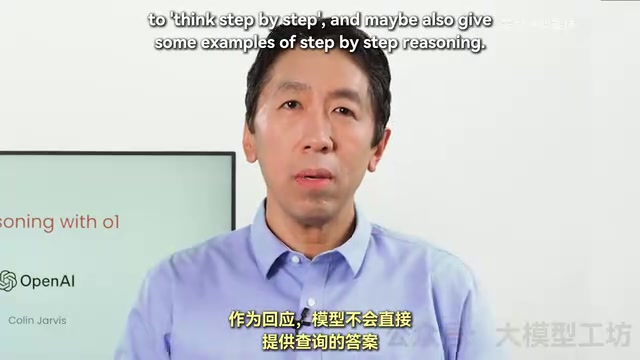
Andrew Ng's New Course Explained: A Practical Guide to Using OpenAI's O1 Reasoning Model
Deep dive into Andrew Ng and OpenAI's Reasoning with O1 course covering test-time scaling, new prompting paradigms, multi-model orchestration, and practical applications for developers.

Learning AI After College Entrance Exams: A Complete Path from Zero to Freelancing
How to efficiently learn AI skills during summer break after exams? A complete path from mastering prompts and hands-on projects to freelancing on platforms.