Learning AI After College Entrance Exams: A Complete Path from Zero to Freelancing
A practical guide for students to learn AI tools and start freelancing in one summer break.
This article breaks down a complete learning path for students to pick up AI skills during summer break — from mastering prompt engineering with tools like ChatGPT and Midjourney, to building a portfolio through hands-on projects, to landing freelance gigs on various platforms. It offers realistic income expectations, platform comparisons, and emphasizes that long-term AI literacy matters far more than short-term earnings.
Introduction: Summer Break Is the Golden Window for Learning AI
The summer after college entrance exams is often the longest stretch of free time in a student's life. Rather than taking on low-barrier physical labor jobs, why not invest this time in learning a skill with real long-term value? A recent Bilibili video on "Getting Started with AI Skills After College Entrance Exams" sparked considerable discussion. Its core argument: Using one summer to master the basics of AI tools can not only help you achieve financial independence during college but also build a differentiated advantage for your future career.
Is this approach viable? Let's break down the methodology and offer some more pragmatic advice.
Mastering AI Prompts: The Core Skill for Using AI Tools
Why Prompt Writing Is Lesson One
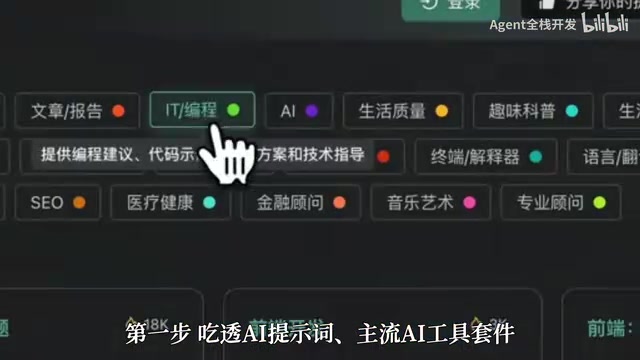
The video calls AI prompts "the master key of the AI era" — and that's not an exaggeration. Whether you're using ChatGPT, Claude, Midjourney, or any other AI tool, the quality of your prompts directly determines the quality of the output. With the same tool, someone who knows how to write good prompts can be several times more productive than someone who doesn't.
Prompt Engineering is so important because of how large language models fundamentally work. Tools like ChatGPT and Claude are built on the Transformer architecture, essentially performing "next token prediction" — inferring the most likely continuation based on your input text. This means the more precise and structured your input, the better the model can "understand" your intent and deliver high-quality output. The industry has developed several mature prompt frameworks, such as CRISPE (Capacity/role, Request, Insight/background, Style, Purpose, Extra constraints) and CO-STAR (Context, Objective, Style, Tone, Audience, Response format). Mastering these frameworks is essentially learning how to communicate efficiently with probabilistic models.
For complete beginners, here are the key areas to start with:
- Text-based AI tools: ChatGPT, Claude, Kimi, etc. — learn prompt techniques like role assignment, task decomposition, and format constraints
- Image-based AI tools: Midjourney, Stable Diffusion, DALL-E, etc. — learn style descriptions, composition instructions, and negative prompts. It's worth noting that while Midjourney and Stable Diffusion are both AI image generation tools, they differ significantly in accessibility and use cases. Midjourney is a closed-source cloud service accessed through Discord, known for its artistic style and aesthetic quality, ideal for quick image generation. Stable Diffusion is an open-source model that can be deployed locally, supporting advanced features like LoRA fine-tuning and ControlNet for precise control — offering extreme flexibility but a steeper learning curve. For beginners, Midjourney is easier to pick up, while Stable Diffusion is better suited for deeper exploration once you have some technical foundation.
- Video/editing AI tools: CapCut AI features, Runway, Pika, etc. — understand the basics of AI-assisted editing workflows
- Data analysis: Use ChatGPT's Code Interpreter for data processing and visualization. Code Interpreter (now renamed Advanced Data Analysis) provides a built-in Python sandbox environment within the chat interface. Users can upload CSV, Excel, and other data files, and the AI automatically writes Python code for data cleaning, statistical analysis, and chart generation. This dramatically lowers the barrier to data analysis — work that previously required knowledge of Python libraries like pandas and matplotlib can now be accomplished by describing your needs in natural language. For college students, whether it's processing social survey data or creating statistical charts for a thesis, this is an incredibly practical skill.
Avoid Biting Off More Than You Can Chew
Don't try to learn everything at once. Start by choosing one text-based tool and one image-based tool to study in depth. A common mistake is bookmarking dozens of AI tool collections and never actually mastering any of them. Deep proficiency with one or two tools is far more valuable than superficial familiarity with ten.
Build Your Portfolio Through Hands-On Projects
Three AI Project Directions Suitable for Beginners
The video recommended several beginner-friendly AI projects. Let's analyze each for feasibility:
1. AI Short Video Production
The lowest-barrier entry point. Use AI to generate scripts, voiceovers, and visual assets, then combine them with editing tools into short videos. Great for practice, but be aware that AI-generated video content is currently highly homogenized — standing out requires injecting your own creativity and aesthetic sense.
2. Commercial Posters and Visual Design
Use Midjourney or Stable Diffusion to generate base assets for commercial posters, then use Photoshop or Canva for layout and text. This direction has real market demand, but keep in mind: AI-generated images often require manual refinement — relying purely on AI output rarely meets commercial delivery standards.
Specifically, AI-generated images face several core challenges in commercial settings: First, there are detail imperfections — AI-generated hands, text, and symmetrical structures frequently show distortions that need manual fixing in Photoshop. Second, there are copyright compliance issues — different AI tools have varying commercial licensing terms. Midjourney paid users have commercial rights, but the copyright status of Stable Diffusion-generated images remains legally ambiguous. Third, there's the brand consistency challenge — clients typically have strict brand colors, font specifications, and VI systems, and AI-generated assets need secondary processing in professional design software to meet delivery standards. Therefore, AI is better suited as a "material generator" rather than a "finished product creator" in commercial design.
3. AI Copywriting Services
This is currently the most mature track in AI freelancing. There's massive demand for Xiaohongshu (RED) copy, WeChat Official Account articles, product descriptions, SEO content, and more. The key is learning to use AI to boost efficiency while ensuring content originality and relevance.
Core Principle: Start with Simple Projects
Don't aim for big contracts right away. Start with simple, small tasks — like writing a product description or designing an event poster. After completing each project, organize it into your portfolio — this is your "resume" for future freelancing.
Choosing Freelance Platforms: A Practical Guide to Monetization
Comparing Major Freelance Channels
The video mentioned platforms like Zhubajie, Yipin Weike, and social media platforms for freelancing. Let's analyze them objectively:
| Platform Type | Advantages | Disadvantages |
|---|---|---|
| Zhubajie / Yipin Weike | Clear requirements, platform guarantees | Fierce competition, aggressive price undercutting |
| Xianyu / Taobao | High traffic, large user base | Requires store management, has a learning curve |
| Social media platforms | Can build a personal brand | Requires consistent content output early on |
| Communities / WeChat Moments | High trust, good conversion rates | Limited reach |
Pragmatic advice: As a beginner, start by listing a few AI services on Xianyu (such as AI avatar creation or copy polishing). Use low prices to quickly accumulate reviews and experience. Simultaneously, share your AI learning journey and work on platforms like Xiaohongshu to gradually build personal influence.
Income Expectations: Stay Realistic
The video's mention of "earning over 10,000 yuan per month" needs to be viewed rationally. For a beginner who just started learning over the summer, consistently landing small orders worth a few hundred yuan in the first month is already a solid start. The income ceiling for AI freelancing does exist, but it takes time to build skills and reputation. Don't let claims like "earning 2,700 yuan per day" cloud your judgment.
Since 2024, the AI freelancing market has rapidly evolved from a blue ocean to a red ocean. Early on, services like AI avatars and AI portraits commanded premium prices due to novelty, with individual orders reaching tens or even hundreds of yuan. But as tools became widespread and practitioners flooded in, homogenized competition drove prices down sharply — some AI avatar services have dropped to just a few yuan per image. Directions that still offer decent profit margins include: enterprise-level AI workflow customization (such as helping SMEs build AI customer service or AI content production pipelines), vertical-domain AI content services (such as real estate copywriting or medical education content), and AI training and consulting services. The common thread among these is the need to combine industry knowledge with AI skills — tool operation alone is no longer a competitive moat.
Long-Term Value: AI Literacy Is the Real Competitive Advantage
Setting aside short-term monetization, mastering AI tools before starting college has long-term value far exceeding whatever money you earn over the summer:
- Academic efficiency boost: Use AI to assist with literature searches, data analysis, and PPT creation — doubling your study efficiency
- Employment competitiveness: More and more job postings require "proficiency with AI tools" — this is becoming a baseline skill
- Upgraded thinking: Learning to collaborate with AI is essentially training your ability to decompose problems and think structurally
McKinsey's 2024 report noted that approximately 70% of companies globally have adopted generative AI in at least one business function, while LinkedIn data shows that job postings mentioning AI skills have nearly tripled in the past year. This trend means AI literacy is shifting from a "nice-to-have" to a "must-have," similar to Office software skills a decade ago. Notably, what companies truly need isn't someone who "can chat with ChatGPT," but someone who can embed AI tools into specific workflows to improve business efficiency — such as using AI to assist market research, accelerate product prototyping, or optimize customer service processes. This compound ability of "AI + domain expertise" is the scarcest talent profile in the future job market.
Conclusion: Start Now — Action Beats Perfection
The core logic of this video is sound — rather than doing low-value physical labor, invest your time in learning high-leverage skills. But the execution needs to be more pragmatic than what the video describes:
- Don't expect to "leapfrog ahead" in one summer, but you can build a solid foundation
- Master one or two tools first before thinking about monetization
- Freelance income is the icing on the cake — the long-term value of AI literacy is the real return
- Be wary of paid "AI tutorial courses" designed to extract money — free, high-quality tutorials on Bilibili and YouTube are more than enough to get started
You have two months of summer break — enough to go from zero to basic proficiency with AI tools. What matters isn't how many tutorials you watch, but how many projects you actually complete. Open an AI tool right now and start by writing your first prompt.
Related articles
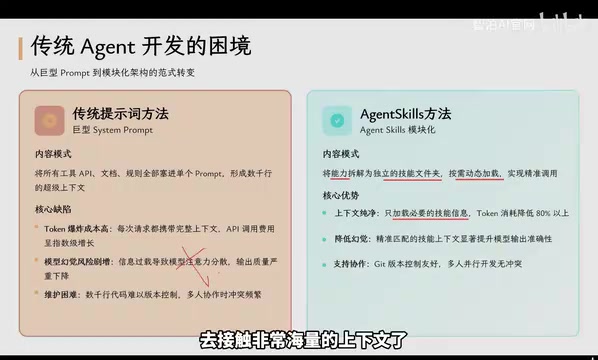
Agent Skills: Folders as Skills — Making AI Produce Precise, Template-Based Output
Agent Skills splits AI capabilities into independent skill folders with on-demand loading and progressive disclosure, cutting token costs by 80% and reducing hallucinations for template-based output.
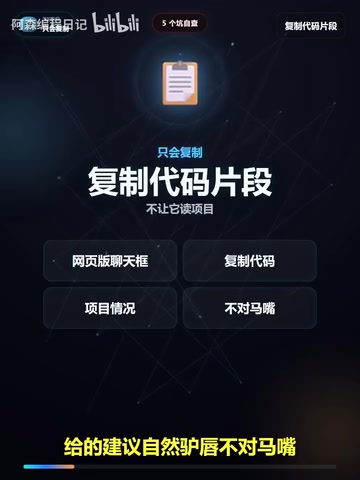
Five Common Claude Code Mistakes — How Many Are You Making?
Five common Claude Code mistakes developers make: copy-pasting code, skipping CLAUDE.md, inefficient prompting, ignoring docs, and poor context management — with fixes.
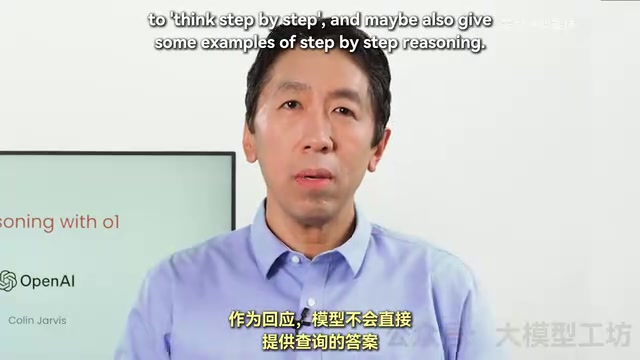
Andrew Ng's New Course Explained: A Practical Guide to Using OpenAI's O1 Reasoning Model
Deep dive into Andrew Ng and OpenAI's Reasoning with O1 course covering test-time scaling, new prompting paradigms, multi-model orchestration, and practical applications for developers.