Claude Code Practical Guide: Deep Dive into 7 Core Modules with Learning Path
A comprehensive breakdown of Claude Code's 7 core modules from project integration to workflow automation.
This article provides a deep analysis of Claude Code's seven core modules based on a comprehensive crash course: project integration, agent construction, multi-agent collaboration, agent view, skills system, plugin architecture, and workflow automation. It also covers the emerging Claude Architect certification trend and offers practical learning recommendations for developers looking to master this AI development platform.
Introduction
With the rapid evolution of AI programming tools, Anthropic's Claude Code is becoming an indispensable asset in developers' daily workflows. Unlike simple code generation tools, Claude Code provides a complete development ecosystem—from project integration to agent construction—covering every aspect of modern development workflows.
Recently, Bilibili creator Krishnayak published a 2-hour Claude Code crash course that systematically covers 7 core modules. This article distills the key capabilities and practical takeaways from that course.
Claude Code's Positioning: More Than a Code Generator
Many developers still think of AI programming tools as "input a prompt, get code back." But Claude Code's positioning goes far beyond that. As the course author emphasizes, this isn't a beginner tutorial covering basic commands—it's a deep exploration of how to integrate Claude Code into real-world development workflows around actual project scenarios.
Anthropic, the company behind Claude Code, was founded in 2021 by former OpenAI Research VP Dario Amodei and his sister Daniela Amodei. Anthropic centers its work on "AI safety," and its Claude model series employs a unique Constitutional AI training method that constrains model behavior through a set of explicit principles, making code generation more reliable and controllable. In the current competitive landscape of AI programming tools—where GitHub Copilot, Cursor, Windsurf, and others each have their focus—Claude Code differentiates itself by not merely embedding into an IDE to provide completion suggestions. Instead, it operates as a terminal-native tool that can directly manipulate the file system, execute commands, and manage Git version control, essentially functioning more like an AI development partner with autonomous action capabilities.
The course's core philosophy is clear: Learning the tool itself isn't the goal—boosting actual productivity is what matters. Whether you're working on web development, data processing, or automation scripting, Claude Code can add value across different types of tasks.
Deep Dive into Claude Code's Seven Core Modules
Module 1: Project Integration
The course begins with how to integrate Claude Code into existing projects. This is both the most fundamental and most important step. Project integration isn't simply installing a plugin—it requires understanding how Claude Code collaborates with your codebase, version control system, and development environment.
From a technical implementation perspective, Claude Code's project integration involves several key concepts. First is Context Window management—Claude's model has a context window of up to 200K tokens, meaning it can "read" a large number of code files at once. However, intelligently selecting which files to include in the context is critical to integration quality. Claude Code dynamically builds the most relevant context by analyzing project structure, import dependencies, and file modification history. Second is the CLAUDE.md file mechanism—a project configuration file unique to Claude Code where developers can define the project's tech stack, coding standards, architectural conventions, and other information. It's essentially giving the AI a "project brief" so it follows the team's established norms when generating code. Additionally, Claude Code supports deep Git integration, understanding branch strategies, commit history, and the semantic meaning of code changes.
A well-designed integration strategy enables the AI tool to truly understand your project context, resulting in more precise code suggestions and problem diagnosis.
Module 2: Agent Construction
Agents are one of the most innovative concepts in the Claude Code ecosystem. The course provides detailed coverage of how to build custom agents that can autonomously complete specific development tasks.
In the AI field, an Agent refers to an autonomous system capable of perceiving its environment, making decisions, and taking actions. Unlike traditional "Q&A-style" AI interactions, agents possess a plan-execute-feedback closed-loop capability. Claude Code's agent architecture draws from the academic ReAct (Reasoning + Acting) framework: the model first reasons about and decomposes the task, then invokes available tools (such as file read/write, terminal command execution, network requests, etc.) to perform specific operations, and then reasons about the next step based on execution results. This "think-act-observe" cycle enables agents to handle complex tasks requiring multiple steps. For example, a code review agent might first read the changed files in a PR, then run the test suite, analyze test results, and finally generate structured review comments—all without human intervention.
Unlike traditional script automation, Claude Code agents possess the ability to understand context, make judgments, and self-correct, allowing them to handle more complex and ambiguous task requirements. When an agent encounters an error while executing code, it can analyze the error message, infer the cause, and attempt a fix—a self-correction capability that traditional automation scripts completely lack.
Module 3: Agent Teams and Multi-Agent Collaboration
A single agent's capabilities are limited, so the course goes further to explain how to build agent teams. Multiple agents each handle their own responsibilities and collaborate through inter-communication to complete complex tasks.
Multi-Agent Collaboration is a cutting-edge direction in current AI engineering. The core challenges lie in task decomposition, role assignment, and communication coordination. In Claude Code's implementation, multi-agent architectures typically adopt an "Orchestrator-Worker" pattern: one primary agent understands the overall task, formulates an execution plan, and assigns subtasks, while multiple worker agents each focus on execution within specific domains. For example, in a full-stack application development scenario, there might be a frontend agent, backend agent, database agent, and testing agent, all coordinating through structured message-passing mechanisms. The advantage of this architecture isn't just parallel processing for efficiency—each agent can maintain independent context and specialized knowledge, avoiding the performance degradation that occurs when a single agent's context becomes overloaded. From a system design perspective, this mirrors the philosophy of microservices architecture—improving scalability and maintainability through separation of concerns and loose coupling.
This parallel agent architecture essentially decomposes large tasks into multiple subtasks processed in parallel by different agents, with results aggregated at the end. This pattern is particularly efficient for scenarios like large-scale code refactoring and multi-module testing.
Module 4: Agent View
Agent View provides a visual way to monitor and manage agent runtime states. Developers can clearly see each agent's execution progress, communication logs, and output results, facilitating debugging and workflow optimization.
In complex multi-agent systems, observability is key to ensuring reliable system operation. Agent View essentially provides AI workflows with capabilities similar to APM (Application Performance Monitoring) tools in traditional software development. Developers can not only see what each agent "did" but also trace "why it did it"—including reasoning chains, tool call sequences, token consumption, and execution duration. When multi-agent collaboration encounters issues (such as infinite loops, task conflicts, or inconsistent outputs), the communication logs and state snapshots provided by Agent View help developers quickly pinpoint root causes—essential for building production-grade AI workflows.
Module 5: Claude Skills System (Cloud Skills)
The Cloud Skills mentioned in the course are an important component of the Claude Code ecosystem. The skills system allows developers to define domain-specific capability modules for Claude Code, making it perform more professionally in specific scenarios.
The skills system's design philosophy stems from a core insight: while general-purpose large language models have broad knowledge, their performance in specific professional domains often falls short of purpose-optimized systems. Cloud Skills inject domain expert knowledge into Claude Code through Prompt Engineering and tool composition. For example, a "React Performance Optimization" skill might contain deep knowledge of React's rendering mechanism, diagnostic methods for common performance bottlenecks, and a set of verified optimization strategy templates. Developers can encode their team's accumulated best practices as skill modules, enabling Claude Code to follow team-specific technical standards and architectural preferences when handling related tasks. This mechanism essentially layers a customizable professional knowledge layer on top of the model's general capabilities, achieving a combination of "general intelligence + domain expertise."
Module 6: Claude Code Plugin System
The plugin mechanism dramatically extends Claude Code's capability boundaries. The course covers how to create and use Claude plugins to integrate third-party tools, APIs, and data sources into workflows. Through plugins, developers can seamlessly connect Claude Code with databases, CI/CD tools, project management platforms, and more.
From a technical architecture perspective, Claude Code's plugin system is closely related to Anthropic's MCP (Model Context Protocol). MCP is an open standard protocol designed to provide AI models with a unified way to access external tools and data sources—its design inspiration is similar to how REST APIs standardized inter-service communication in web development. Through MCP, plugin developers only need to expose tool functionality descriptions and invocation interfaces according to the standard protocol, and Claude Code can automatically understand when and how to call these tools. This means developers can unify Jira task management, GitHub PR operations, PostgreSQL data queries, Slack message notifications, and other capabilities into Claude Code's workflow. The plugin system's openness means Claude Code's capability boundaries are no longer limited to Anthropic's own development but can continuously expand through the entire developer community's contributions.
Module 7: Workflow Automation
The final core module focuses on creating and automating common workflows. It combines the agents, plugins, and skills learned previously to build end-to-end automated development processes. This is the culminating section of the entire course, showcasing Claude Code's full potential as an AI development platform.
The value of workflow automation lies in transforming repetitive development activities into reproducible automated processes. In practice, this might include: automatically triggering AI code review after code commits, auto-generating initial code scaffolding from requirements documents, periodically scanning codebases for security vulnerabilities and generating fix suggestions, automated test case generation and regression testing, and more. Compared to traditional CI/CD pipelines, Claude Code-based workflow automation possesses semantic understanding capability—it can not only execute predefined rules but also make intelligent judgments based on specific situations. For example, in code review scenarios, traditional static analysis tools can only check syntax and known patterns, while Claude Code agents can understand the business logic intent of code and discover deeper design issues.
A Trend Worth Watching: Claude Architect Certification
The course specifically mentions a noteworthy development—the emergence of Claude Architect certification. This signals that Anthropic is building a professional certification system around Claude Code, similar to AWS certifications or Azure certifications in the cloud computing space.
Technical certification systems have a long history and clear value proposition in the IT industry. AWS launched its certification program in 2013, and it has since become an important credential for cloud computing professionals to demonstrate expertise, with over a million certified individuals worldwide. Similarly, Kubernetes' CKA/CKAD certifications have established industry standards in the cloud-native space. Anthropic's introduction of Claude Architect certification sends several important signals: First, Claude Code's functional complexity has reached a level requiring systematic study—it's no longer a simple tool you can use just by reading the docs. Second, market demand for Claude Code professionals is forming, and enterprises need a standardized way to evaluate candidates' capabilities. Third, Anthropic is building a "certified developer community" model similar to the Salesforce ecosystem, binding developers through certification systems to create an ecosystem moat. For individual developers, obtaining certification while AI programming tools are still in their early stages could yield first-mover advantages far exceeding the learning cost of the certification itself.
This signal indicates that Claude Code isn't merely a development assistance tool—Anthropic is building it into a complete developer ecosystem. For developers looking to establish professional advantages in the AI programming space, mastering this tool system early would be a wise choice.
Entry Barrier and Learning Recommendations
The course's entry barrier isn't high. The author explicitly states: You only need basic Python knowledge to get started. This is a friendly starting point for most developers.
It's worth noting that while the entry barrier is low, truly unlocking Claude Code's full potential requires developers to gradually build understanding of the following concepts: Prompt Engineering—how to precisely express requirements and constraints to AI; Context Management—how to provide the most valuable information within a limited token budget; AI Output Verification—how to establish effective mechanisms to validate the correctness and security of AI-generated code. These "meta-skills" aren't about using any specific tool—they're core competencies every developer needs to cultivate in the era of AI-assisted development.
Here are several learning recommendations for Claude Code:
- Understand concepts before hands-on practice: Don't rush to write code—first clarify the relationships between agents, plugins, and workflows
- Start with a single agent: Master building individual agents before attempting multi-agent collaboration
- Integrate with real projects: Try integrating Claude Code into projects you're actively developing—this is far more effective than doing isolated exercises
- Follow official documentation updates: Claude Code's features iterate rapidly, so stay current with official updates
- Understand underlying principles: Learning the basic working mechanisms of large language models (such as tokenization, attention mechanisms, temperature parameters, etc.) helps you better understand AI tools' capability boundaries and limitations
Conclusion
Claude Code is evolving from a code assistance tool into a complete AI development platform. From project integration to agent teams, from plugin systems to workflow automation, it offers a systematic AI-enhanced development solution. With the rollout of the Claude Architect certification system, the professionalization of this ecosystem will continue to deepen.
From a broader perspective, Claude Code represents a fundamental shift in the software development paradigm—from "humans writing code" to "humans and AI collaborating on code" to "humans defining intent, AI autonomously implementing." This evolution won't happen overnight, but the direction is clear. Mastering tools like Claude Code is essentially preparing for this new paradigm.
For developers, now is the optimal time to learn and master Claude Code. Whether you're an individual developer or a team technical lead, understanding and applying these core modules will significantly boost your development efficiency and engineering quality.
Related articles

Claude Code Chinese Tutorial: A 100-Page Systematic Learning Guide on Feishu Docs
A detailed look at the Claude Code Chinese learning resource on Feishu Docs, covering AI agent learning, memory systems, and task decomposition with a systematic path from beginner to advanced.
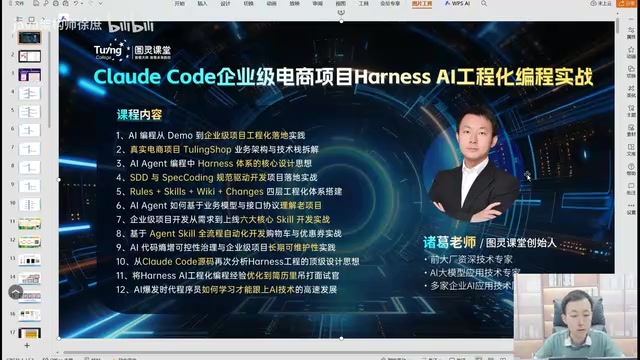
Claude Code Enterprise E-commerce in Practice: A Methodology for Taking AI Programming from Demo to Industrial-Grade
A deep dive into engineering methodology for enterprise e-commerce development with Claude Code and Harness AI, covering architecture, code quality, and CI/CD practices.
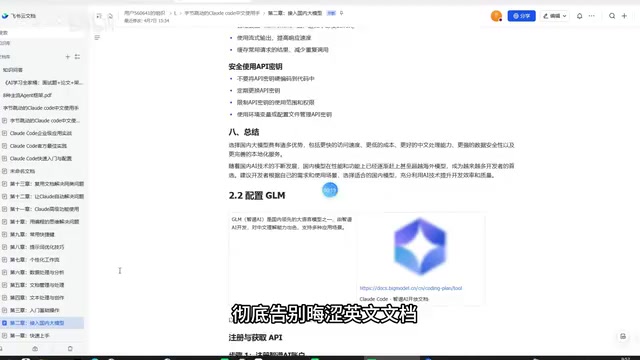
Claude Code Chinese Tutorial: A Complete Guide from Installation to Real-World Applications
A detailed Chinese practical guide for Claude Code covering installation, domestic model integration, code development, copywriting, data analysis, and more to help you master this AI programming tool.