Claude Code Skills Encapsulation: Making AI Testing Tools Truly Efficient and Reusable
Claude Code Skills Encapsulation: Maki…
Encapsulate Claude Code Agent Skills to build reusable, on-demand AI testing capabilities.
This article explains how to encapsulate Claude Code Agent Skills to solve the pain point of repeatedly copying and pasting prompts during AI-assisted test case design. It covers the concept of Agent Skills, their analogy to code encapsulation, practical encapsulation principles, and the core advantage of on-demand loading over writing everything into claude.md.
Why Skills Encapsulation Is Needed
When using Claude Code for software test case design, many people can already run through the complete workflow: converting requirement documents to Markdown, designing test cases, and generating Excel files. However, a core pain point persists—every execution requires extensive copying and pasting of prompts.
According to analysis by Bilibili content creator Teacher Beifan during a live course, using Claude Code for testing work currently faces three main problems:
- Tedious operations: Every step requires copying and pasting lengthy prompts, and the more complex the business logic, the longer the prompts become
- Error-prone: Characters or entire lines may be missed during copying, requiring additional verification steps to prevent omissions
- No on-demand loading: While prompts can be written into the
claude.mdfile to avoid copying, all content gets loaded at once, lacking flexibility
This is like writing code without any encapsulation, putting all logic in a single function—it works, but maintenance costs are extremely high.
What Are Agent Skills
Concept Definition
The full name of a Skill is Agent Skills. In essence, it's about encapsulating validated methods, steps, workflows, and knowledge into a "skill" for the AI Agent.
They're called "skills" because they possess two key characteristics:
- Reusable: Encapsulate once, call multiple times, extremely convenient to use
- Detail hiding: Users don't need to worry about the verbose prompt details inside—just trigger it
Analogy with Code Encapsulation
Developers are no strangers to the concept of "encapsulation." Whether it's function encapsulation or object-oriented encapsulation, the core idea is wrapping complex logic into simple interfaces. Skills encapsulation follows the same design philosophy:
- Maintainability: Modifying internal logic doesn't affect external calls
- Reusability: The same skill can be reused across different projects
- Convenience: Lowers the barrier to use and improves work efficiency
From Workflow to Skills: The Practical Path of Encapsulation
Reviewing Validated Workflows
Before performing Skills encapsulation, you need to confirm which workflows have been successfully validated. Taking test case design as an example, the complete workflow includes:
- Document preprocessing: Converting requirement documents in Word, PDF, Excel, PPT, and other formats into unified Markdown format
- Content quality check: Splitting document content and assessing quality
- Test case design: AI generates test cases based on processed requirement documents (core step)
- Case review: Automated review of generated test cases
- File output: Exporting final test cases to Excel files (key deliverable)
- Rule accumulation: Writing universal rules into the
claude.mdfile
Each step corresponds to specific prompts and execution logic—these are the raw materials for encapsulation.
Core Principles of Encapsulation
When encapsulating the above workflow into Skills, several principles should be followed:
- Solidify validated methods: Only encapsulate workflows that have been verified as effective, not experimental attempts
- On-demand loading: Unlike the full loading of
claude.md, Skills can be selectively invoked based on the current task - Focus on inputs and outputs: After encapsulation, users only need to care about "what to provide" and "what to get back," without understanding the intermediate process
On-Demand Loading: The Core Advantage of Skills
"On-demand loading" is the biggest differentiating advantage of Skills compared to writing everything directly into claude.md. In actual testing work, different stages require different capabilities:
- Requirements analysis phase: Only invoke document processing-related Skills
- Case design phase: Only invoke test design-related Skills
- Output phase: Only invoke file generation-related Skills
This mechanism avoids wasting the context window and reduces interference from irrelevant information on AI reasoning, thereby improving the quality and efficiency of each interaction.
Implications for the Testing Industry
Applying Claude Code's Skills encapsulation to software testing represents a new work paradigm: not simply having AI write test cases for you, but building a reusable AI testing capability system.
The value of this approach lies in:
- Team collaboration: Encapsulated Skills can be shared within teams, unifying testing standards
- Knowledge preservation: Excellent testing methodologies are solidified into executable skills that won't be lost due to personnel turnover
- Efficiency multiplication: Shifting from "figuring out how to write prompts every time" to "directly invoking the corresponding skill" dramatically reduces execution time
For test engineers, mastering Skills encapsulation is not just about learning how to use a tool—it's a crucial step toward understanding how to truly integrate AI Agents into daily workflows.
Related articles

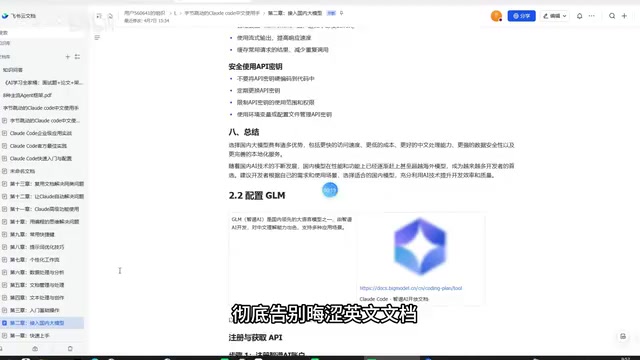
Claude Code Chinese Tutorial: A 100-Page Systematic Learning Guide on Feishu Docs
A detailed look at the Claude Code Chinese learning resource on Feishu Docs, covering AI agent learning, memory systems, and task decomposition with a systematic path from beginner to advanced.

Claude Code Enterprise E-commerce in Practice: A Methodology for Taking AI Programming from Demo to Industrial-Grade
A deep dive into engineering methodology for enterprise e-commerce development with Claude Code and Harness AI, covering architecture, code quality, and CI/CD practices.
Claude Code Chinese Tutorial: A Complete Guide from Installation to Real-World Applications
A detailed Chinese practical guide for Claude Code covering installation, domestic model integration, code development, copywriting, data analysis, and more to help you master this AI programming tool.