Coze Skill Packs Fully Explained: From Concept to Hands-On Creation Guide
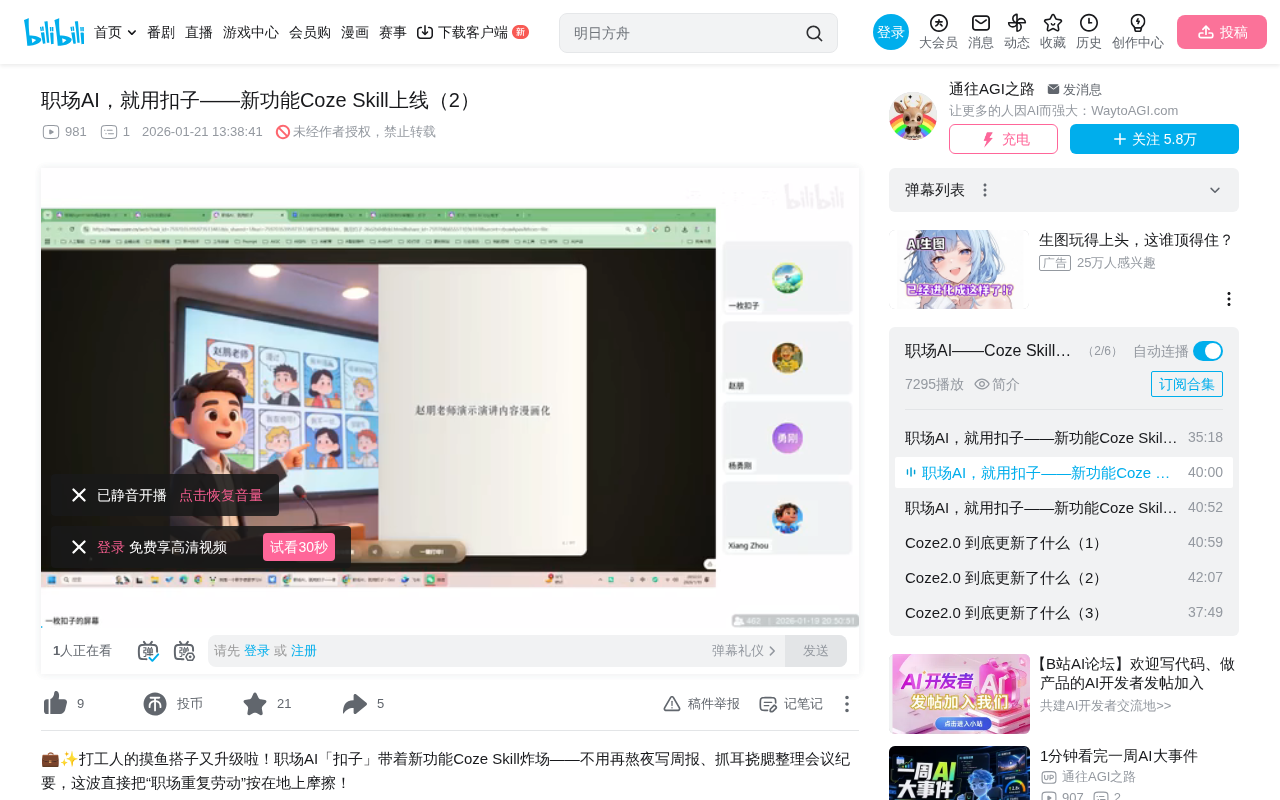
Coze launches Skill feature, packaging work SOPs into reusable, commercializable AI skill packs.
Coze has officially launched its Skill feature, following Anthropic's Skills concept. Its core innovation is "progressive disclosure"—feeding information to AI in layers to solve context overload in traditional conversations. Skills consist of main documents, reference files, scripts, and assets, supporting both conversational creation and meta-SOP generation methods. Practical cases cover presentation comic generation and contract review scenarios, demonstrating the paradigm shift from "conversational" to "task-oriented" AI, making professional expertise packageable, reusable, and commercializable.
What Is Coze Skill? From Concept to Real-World Implementation
Coze recently launched its Skill feature, making it the first domestic platform to quickly follow up on the "Skills" concept proposed by Anthropic in October of last year. Compared to traditional Workflows, the core idea behind Skill is to package work SOPs into reusable, deliverable skill packs that even non-technical users can pick up and use immediately.
Anthropic and the Origin of the Skills Concept
Anthropic is an AI safety company founded in 2021 by siblings Dario Amodei and Daniela Amodei, former OpenAI research vice presidents. Their flagship product, Claude, is one of the most powerful large language models available today. In October 2024, Anthropic published a technical blog post about "Skills," proposing an entirely new paradigm for organizing AI tasks. The core idea: rather than having users write complex prompts from scratch every time, frequently used workflows should be encapsulated as structured "skill files," allowing AI to complete tasks like executing standard operating procedures. This concept quickly gained traction in the AI application development community and is seen as an important milestone in the evolution from "prompt engineering" to "task engineering."
Anthropic's original post included an elegant analogy: Skills are like an employee handbook given to new hires—employees simply follow the handbook to know what to do at each stage. This analogy precisely captures the essence of Skills—a structured task guidance system.
Progressive Disclosure: The Core Design Philosophy of Skill
Why Is Traditional Conversational AI Inefficient?
The most critical innovation in Skill is "Progressive Disclosure." This represents a paradigm shift—the biggest problem with our previous AI conversations was context management. The traditional approach dumps massive amounts of context into the AI all at once, but due to the model's limited token window, AI often fails to read key information.
Progressive Disclosure was originally a classic design principle from the Human-Computer Interaction (HCI) field, proposed by IBM researcher John M. Carroll in the 1980s. Its core idea: don't present all information and features to users at once; instead, gradually reveal relevant content based on the user's current task stage. This principle is widely applied in software interface design—installation wizards with step-by-step guidance, hierarchical menus in phone settings, etc. Migrating this concept to AI prompt engineering means no longer stuffing all instructions and reference materials into the context window at once. Instead, the AI dynamically loads required information at different execution stages, achieving more precise task execution within a limited token budget.
Skill's solution: feed information to the AI in layers, progressively. It's like looking up a word in a dictionary—you don't read the entire dictionary cover to cover. You first check the table of contents, then locate by radical, and finally look at the specific definition and example sentences. The AI only reads the information needed for the current execution stage, dramatically improving task completion quality.
Understanding Token Window Technical Limitations
Tokens are the basic units through which large language models process text. One Chinese character typically corresponds to 1-2 tokens, while one English word corresponds to approximately 1-1.5 tokens. Every model has a fixed Context Window limit—for example, GPT-4 Turbo has 128K tokens, Claude 3.5 has 200K tokens, and Doubao models have similar limits. Although windows are getting larger, research shows models exhibit a "Lost in the Middle" phenomenon—when input text is too long, the model's attention to information in the middle section drops significantly, causing key instructions to be ignored. Additionally, longer inputs mean higher inference costs and slower response times. Therefore, even if it's technically possible to stuff in large amounts of text, layered information management remains a key strategy for improving task quality.
Skill's Standard File Structure
A complete Skill contains the following core components:
- Skill.md: The main document, defining the skill's functionality, core workflow, output standards, resource references, and notes
- Reference folder: Stores templates, rules, and other reference documents
- Script folder: Stores Python scripts for implementing complex logic
- Assets folder: Stores static resources like logos, images, etc.
This structure makes Skills "hot-swappable" like LEGO blocks—you can simultaneously load a summarization skill, a comic-drawing skill, and an audio-generation skill, combining them freely as needed.
Practical Case 1: Presentation Comic Generator
Presenter Zhao Peng demonstrated a "Presentation Comic" Skill that converts online and offline presentation speeches into humorous comics and highlight summaries with one click. The entire usage process is extremely simple:
- Upload a transcript of the presentation recording
- Upload a photo of the speaker
- Type "generate content"
The AI automatically completes the following steps: parse the transcript → clean the content → extract key points and a one-sentence thesis → set character appearance based on the photo → generate an eight-panel comic storyboard → output a 2,500-word highlight summary → generate vertical eight-panel comic images.
The entire process requires users to do only two things: upload the document and upload the photo. The final deliverables are two outputs: a highlight summary and a set of comics. This packaged delivery format can absolutely be sold as a commercial product.
Practical Case 2: Contract Review Skill
Finance professional "Wenti Bing" shared a surprising case. When creating a contract review Skill, the prompt was merely the words "contract review assistant," yet Coze's large model automatically generated a complete review framework:
- Project content, Party A and Party B information extraction
- Core clause content analysis
- High-risk/medium-risk/low-risk clause flagging
- Revision suggestions and overall commentary
This demonstrates that the large model has already accumulated substantial professional knowledge about contract review during its pre-training phase. What users need to do is inject their own company's and industry's unique experience into the Reference on top of this foundation, making it a truly personalized proprietary tool.
Model Capabilities Already Exceed Expectations
The presenter candidly admitted: "It seems more professional than me; it seems to think more than I do." This isn't simple output generation—the large model demonstrated a complete analytical process and professional judgment. Coze's built-in Doubao model has already approached the level of Claude and Gemini in practical effectiveness.
Two Methods to Create a Skill from Scratch
Method 1: Conversational Creation
Click "Create Skill" in Coze and describe your requirements in natural language. The AI will:
- Restate your requirements and ask questions
- Update the plan based on feedback
- Automatically create the directory structure and core documents
- Package and deploy
A practical tip: add "Understand my feedback, ask questions if you have any, otherwise proceed" in your second reply to help the AI advance more efficiently.
Method 2: Generate Skills Using a "Meta-SOP"
A more advanced approach is to first write a "Meta-SOP"—an "SOP for generating SOPs." Through approximately six rounds of Q&A, clarify elements like task identification, success criteria, characteristic workflows, and module information, then have the AI automatically generate according to Skill's layered structure.
Anthropic officially provides a Skill called "Skill Creator," specifically designed for creating other Skills. This "using tools to build tools" approach dramatically lowers the creation barrier.
Layered SOP Design Philosophy
A well-designed Skill typically divides the SOP into three layers:
- Layer 1 (<500 tokens): Task definition, success criteria, input requirements, core workflow overview
- Layer 2: Standard execution workflow, including specific steps and requirements for each stage
- Layer 3: Reference materials, including templates, rules, examples, and other in-depth references
This layered design is perfectly aligned with the progressive disclosure principle: the AI first reads Layer 1 to understand the big picture, loads Layer 2's detailed instructions only when executing specific steps, and calls upon Layer 3 materials only when templates or rules are needed. The information volume at each layer is controlled within the range the model can efficiently process, avoiding quality degradation caused by information overload.
Coze Platform's Unique Advantages
Built-in Complete Development Environment
Coze's Code space is essentially an Integrated Development Environment (IDE) with built-in:
- Python runtime environment (sandbox mode, reinstalls dependencies on each run)
- Database integration
- Web search (according to presenter feedback, search quality surpasses financial data sources like YFinance)
- Automatic MD to HTML/PDF conversion
- MCP tool integration
About the Sandbox Runtime Environment
A Sandbox is a computer security mechanism that runs programs in an isolated environment, preventing them from accessing the host system's files, network, and other resources. Coze's Python sandbox mode means each code execution occurs in a fresh, isolated container that is destroyed after execution completes. This design has two core advantages: first, security—even if user-written code contains vulnerabilities or malicious behavior, it cannot affect other platform users or the underlying system; second, consistency—each run starts from a clean state, avoiding dependency conflicts and environment pollution issues. The downside is that dependencies must be reinstalled on each run, adding a small amount of startup time.
About MCP Tool Integration
MCP (Model Context Protocol) is a standardized protocol open-sourced by Anthropic in November 2024, designed to solve the connection problem between AI models and external tools and data sources. Before MCP, every AI application that needed to connect to external services (such as database queries, API calls, file operations, etc.) required separately developed adapters, resulting in massive duplication of effort. MCP provides a unified "USB-C port" style standard, allowing any MCP-compatible tool to be plug-and-play callable by AI. Coze's MCP integration means users can directly use thousands of existing MCP servers in the community, including GitHub operations, Slack messaging, database queries, and more, greatly expanding Skill's capability boundaries.
This means 90% of the work can be completed in the visual interface without any programming background.
Skill Export and Reuse Support
Created Skills can be exported, downloaded, and deployed to the Skill Store for others to use. Unpublished Skills are limited to personal account use; publishing requires official review.
Skill Store Ecosystem and Business Logic
The Skill Store concept is similar to the Apple App Store or Salesforce AppExchange model—the platform provides infrastructure and distribution channels, while developers (or in this context, "skill creators") provide specific solutions, and users acquire them on demand. The business value of this model: for the platform, a rich skill ecosystem enhances user stickiness and platform moats; for creators, professional knowledge can be productized for ongoing revenue; for users, verified professional solutions can be obtained at low cost. Early adopters typically receive platform traffic support and first-mover category advantages, which is why the presenter emphasized "early-stage dividends."
Important Considerations When Using Coze Skill
- Data Privacy: Always perform data desensitization when uploading sensitive documents like contracts
- Human-AI Collaboration: Don't rely 100% on AI, but don't write everything manually either—the key is knowing the general steps of your business and having the judgment to evaluate outputs
- Continuous Iteration: First use generalized capabilities for rapid generation, then inject industry experience and personalized requirements
- Early-Stage Dividends: The Skill feature just launched—now is the best time to claim your position in the Skill Store ecosystem
Conclusion: The Paradigm Shift from Conversation to Task
Coze Skill represents a paradigm shift in AI tools from "conversational" to "task-oriented." Its core value lies in packaging personal professional experience and workflows into reusable, deliverable, and commercializable skill packs. For professionals, this is not just an efficiency tool but a new way of delivering value—your experience and methodology can finally operate independently of you.
The deeper significance of this shift: in the past, professional knowledge could only be transferred through training, consulting, or employment relationships. Now, it can be encoded as structured Skill files and replicated and distributed infinitely at extremely low marginal cost. This doesn't just change how individuals work—it may reshape the underlying logic of the knowledge economy, shifting from "selling time" to "selling systems."
Related articles
 Tutorials
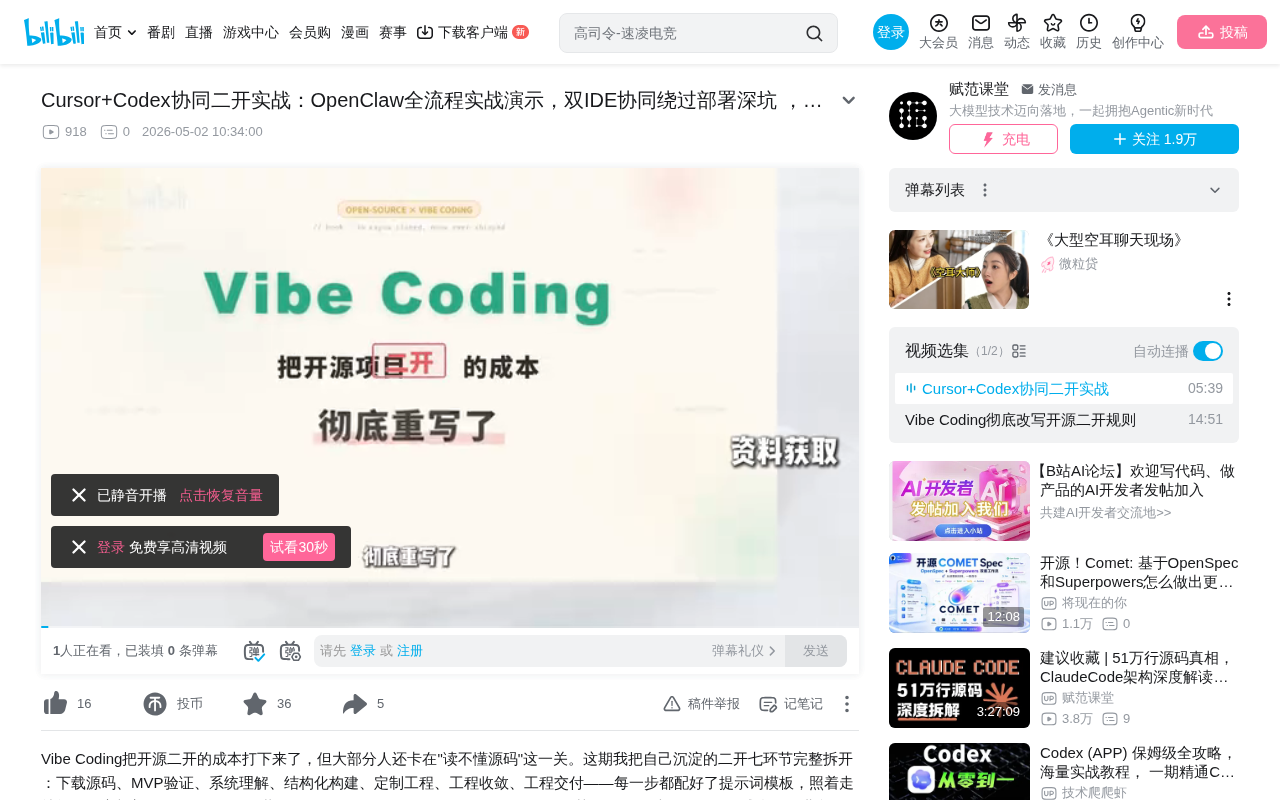
Cursor + Codex Dual-IDE Collaboration: A Practical Methodology for Open-Source Project Customization
A complete methodology for open-source project customization based on real-world experience, detailing the Cursor+Codex dual-IDE workflow, seven-stage process, MVP validation, and AI source code reading techniques.
 Tutorials
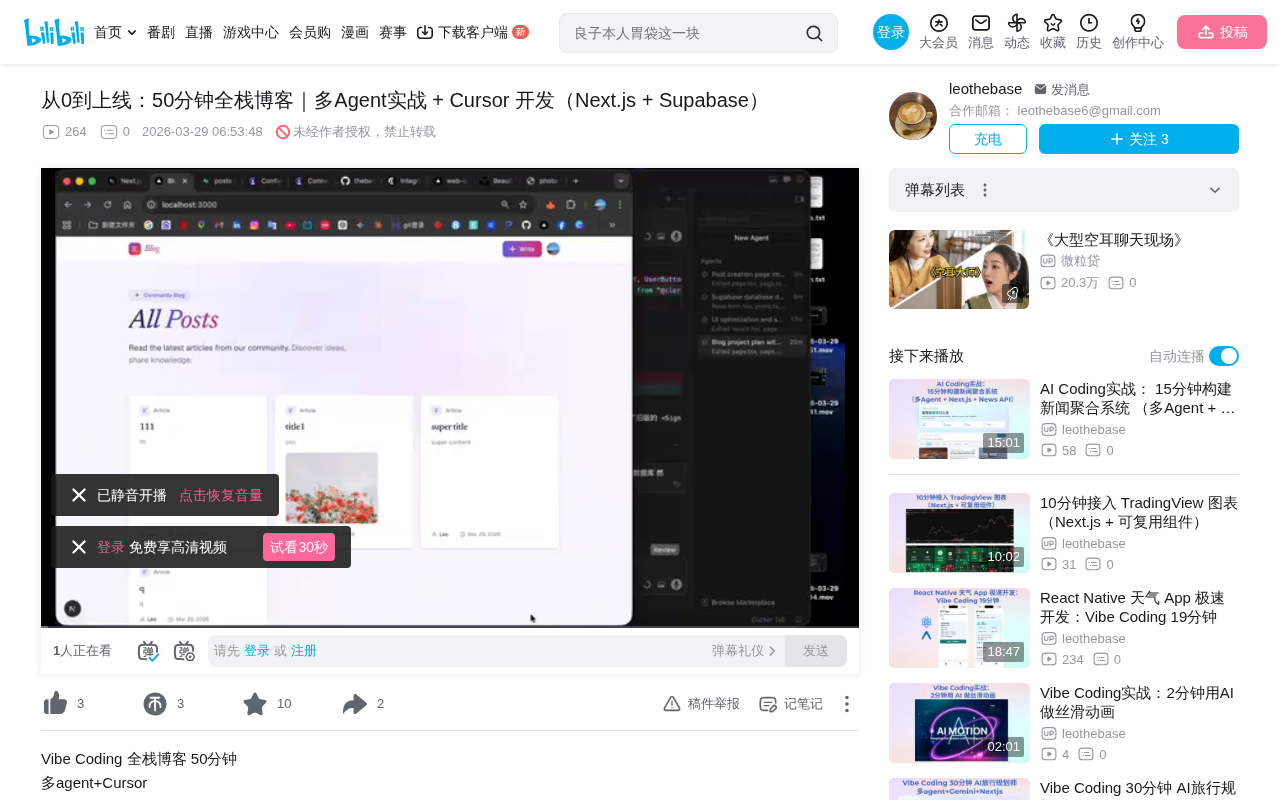
Cursor Multi-Agent in Practice: Building a Full-Stack Next.js Blog in 50 Minutes
Build a full-stack blog in 50 minutes using Cursor IDE's multi-Agent mode with Next.js, Clerk auth, and Supabase. Learn the 4-phase AI Agent workflow and key integration pitfalls.
 Tutorials
Building an AI Software Factory from Scratch: A Cursor Engineer's Hands-On Experience with Multi-Agent Collaboration
Cursor engineer Eric shares practical insights on building an AI software factory: automation levels, guardrail design, parallel Agent management, and scaling to 1000+ Agents for 24/7 development.