Firebase May Update: Comprehensive Upgrades to AI Agent Integration and Security Enhancements
Firebase May Update: Comprehensive Upg…
Firebase May update focuses on AI agent integration, security hardening, and hybrid inference capabilities.
At Google I/O, Firebase released major updates: deep AI agent integration with Anti-Gravity and Android Studio enabling one-click Firebase component setup; Firebase AI Logic adding Google Maps Grounding to reduce hallucinations and supporting hybrid AI inference with on-device models; security enhancements including Template-Only mode to prevent prompt injection and App Check replay attack protection; plus Crashlytics for Web coming soon for end-to-end observability.
Google I/O brought a series of major Firebase updates spanning AI agent integration, security enhancements, hybrid AI inference, and more. This article systematically reviews the core changes from Firebase's May release notes to help developers quickly grasp the latest capabilities.
Dual-Platform AI Agent Integration: Firebase × Anti-Gravity × Android Studio
Firebase's most eye-catching update this time is its deep integration with two major platforms. Before diving into these updates, it's worth understanding the concept of AI Agents — autonomous AI systems capable of planning and executing multi-step tasks, distinct from traditional single-turn conversational models. In the development tools space, AI agents can understand developer intent and automatically complete a series of operations including code generation, configuration setup, and dependency installation.
First, Firebase has achieved one-click integration with Google Anti-Gravity. Anti-Gravity is Google's AI-powered development platform, similar to Cursor or Replit Agent, allowing developers to build complete applications through natural language descriptions. Its new onboarding flow supports one-click installation of all necessary Firebase components, enabling developers to build applications using Firebase's powerful features directly within Anti-Gravity. This means you can have your favorite AI agent platform learn how to leverage Firebase to build outstanding applications.
Second, Firebase's integration with Android Studio is equally exciting. Android developers can now use Agent mode in Android Studio, gaining Firebase agent skills without any additional setup. The AI agent can automatically set up Firestore and Firebase Authentication, generate Firestore code, and write security rules directly.

Even more noteworthy is that Firebase's Agent Skills have expanded to mobile platforms, now supporting Android, iOS, and Flutter. Agent Skills are structured context and toolsets that Firebase provides to AI agents, enabling them to accurately understand Firebase's APIs, best practices, and configuration patterns to generate more reliable integration code. Developers can provide specialized context information to coding agents for integrating and building Firebase applications with higher accuracy.
Enhanced Vibe Coding Experience in Google AI Studio
Firebase's "Vibe Coding" experience in Google AI Studio has received three important improvements. Vibe Coding is a concept proposed by Andrej Karpathy in early 2025, referring to a development approach where developers describe requirements in natural language and let AI handle most of the coding work — developers play more of a "director" role, describing the desired effects and vibe rather than writing code line by line.
One-Click Deploy to Cloud Run: Developers can now deploy applications to Cloud Run with a single click — Google Cloud's serverless container platform that supports auto-scaling and pay-per-use billing, allowing developers to deploy applications without managing underlying infrastructure. Under the Google Cloud Starter Tier, the first two Firebase-enabled apps don't require adding a payment method. This significantly lowers the barrier to starting new projects.
Natural Language Connection to Google Workspace Data: Through Firebase Authentication-driven Google Sign-In flows, developers can use natural language to connect applications to Google Workspace data, building custom applications for specific needs.
Export to Anti-Gravity: Firebase applications built in Google AI Studio can now be exported to Anti-Gravity with one click, including application source code and related Firebase configurations, making it convenient for developers to continue development in their local environment.
Firebase AI Logic: Google Maps Grounding and Hybrid AI Inference
Firebase AI Logic has received several substantial updates. The most prominent is the new Google Maps Grounding support. Grounding is a key technique in the large language model space, referring to anchoring model outputs to verifiable external data sources rather than relying solely on parametric knowledge learned during training. Ungrounded models are prone to "hallucinations" — generating information that seems plausible but is actually incorrect. With Google Maps Grounding, developers can connect Gemini models to Google Maps Platform's real-time database to build location-aware features for their applications.

Google Maps Grounding delivers three core advantages:
- Reduced model hallucinations: Based on Google's database of over 250 million real places and businesses, this variant of Retrieval-Augmented Generation (RAG) ensures the model answers geography-related questions based on real data rather than "guessing" from memory
- Real-time data responses: Can answer real-time questions such as current business hours, since data comes from continuously updated Google Maps data sources
- Enhanced user trust: Integrates interactive map components, photos, and Street View visual context, allowing users to visually verify information accuracy
On the hybrid AI front, Firebase AI Logic now allows developers to specify models when using on-device inference in Android applications. Hybrid AI Inference refers to an architectural pattern that simultaneously leverages both cloud and on-device AI capabilities within the same application — cloud inference provides powerful model capabilities but depends on network connectivity, while on-device inference offers low latency, offline availability, and privacy protection advantages. Currently supported on-device models include the Gemini Nano 4 preview based on Gemma 4. Gemma is Google's open-source lightweight model series, and Gemini Nano is a small model optimized specifically for mobile devices that can run efficiently on phone chipsets. Developers can dynamically choose whether to execute inference in the cloud or on-device based on task complexity, network conditions, and privacy requirements.
Additionally, developers can now specify output image aspect ratio and resolution through image config settings — a highly requested community feature.
Regarding model support, Firebase AI Logic now supports all the latest models in the Gemini 3 series, including Gemini 3.5 Flash. The official recommendation is to use Remote Config to control model names, allowing model updates directly in the Firebase console without publishing a new app version — this server-side configuration pattern is particularly important for rapidly iterating AI applications, since model versions update frequently and publishing a new version for each update would severely slow down iteration speed.
Comprehensive Security Reinforcement
Firebase has introduced two important security updates that directly address the most severe security challenges facing current AI applications:
Template-Only Mode: This is a new security mode that forces Firebase AI Logic to only execute prompts securely stored on the server side, ignoring arbitrary prompts from client applications. Its design philosophy is similar to how SQL parameterized queries prevent SQL injection — Prompt Injection is one of the most serious security threats facing AI applications today, where attackers override or bypass system prompts through carefully crafted inputs, causing models to perform unintended operations. In traditional architectures, clients can freely construct complete prompts sent to models, and attackers can obtain prompts through reverse engineering or inject malicious instructions.
Template-Only Mode provides triple protection — protecting intellectual property (prompts are not exposed on-device), preventing prompt injection attacks (clients can only fill specific variable slots, fundamentally eliminating the possibility of tampering with prompt structure), and supporting prompt and model configuration updates in the console without publishing new versions.

App Check Replay Attack Protection: App Check is Firebase's application verification service that generates tokens through device-level attestation (such as Android's Play Integrity and iOS's App Attest) to verify request origins, ensuring backend API requests come from legitimate app instances rather than forged clients. This update prevents replay attacks through One-Time Tokens — an attack method where attackers intercept a valid authentication token and repeatedly use it to make requests. One-time tokens ensure each App Check token can only be used once, becoming invalid immediately after use, preventing malicious actors from calling the Gemini API multiple times to consume quota. This is particularly important for per-call-billed AI APIs; without replay protection, attackers could use a single legitimate token to call the API unlimited times, leading to quota exhaustion and cost spikes.
Infrastructure Templates and Web Crashlytics Preview

Following last month's announcement of Firebase integration with Application Design Center, Google has now launched a brand new "Firebase Full-Stack App Foundation Template" available in the Google App Templates catalog. The template includes Firestore with security rules, Firebase Authentication, and Firebase AI Logic — a fully configured Firebase tech stack in just a few clicks. This templated approach significantly reduces boilerplate code and configuration work during project initialization, letting developers focus on business logic rather than infrastructure setup.
The final noteworthy update is that Crashlytics for Web is coming soon. Crashlytics is Firebase's real-time crash reporting tool that has long supported only mobile platforms (Android and iOS), while the web application error monitoring ecosystem has been relatively fragmented, with developers typically relying on third-party services like Sentry or Bugsnag. This Web support will be built on Google Cloud Observability (formerly Stackdriver), meaning developers can correlate frontend JavaScript errors, backend service logs, and infrastructure metrics in a unified interface, achieving true end-to-end observability. This is especially valuable for full-stack applications using Firebase Hosting + Cloud Functions, since a user-visible error could originate from client-side rendering, API calls, or server-side logic at any point. Developers will be able to perform advanced end-to-end debugging between client and server while leveraging all the advanced capabilities provided by Google Cloud Observability. Private preview registration is now open.
Summary and Developer Action Items
The core themes of this Firebase update are "AI-native" and "security-first." For developers, the following priorities are recommended: experience the enhanced Agent Skills capabilities on mobile platforms as soon as possible; evaluate the security hardening value of Template-Only Mode for existing AI features; if you're currently using Imagine models for image generation, migrate to new models before June 24, 2026. Firebase is evolving from a backend services platform into core infrastructure for AI application development — a trend that all mobile and web developers should closely follow.
Related articles
 Tech Frontiers
GitHub Agent HQ Launch: AI Coding Tools Enter the Era of Platform Competition
GitHub Universe unveils Agent HQ platform for unified coding agent management, Copilot upgrades with multi-model support. OpenAI completes restructuring, Anthropic tests new model, NVIDIA open-sources AI models.
 Tech Frontiers
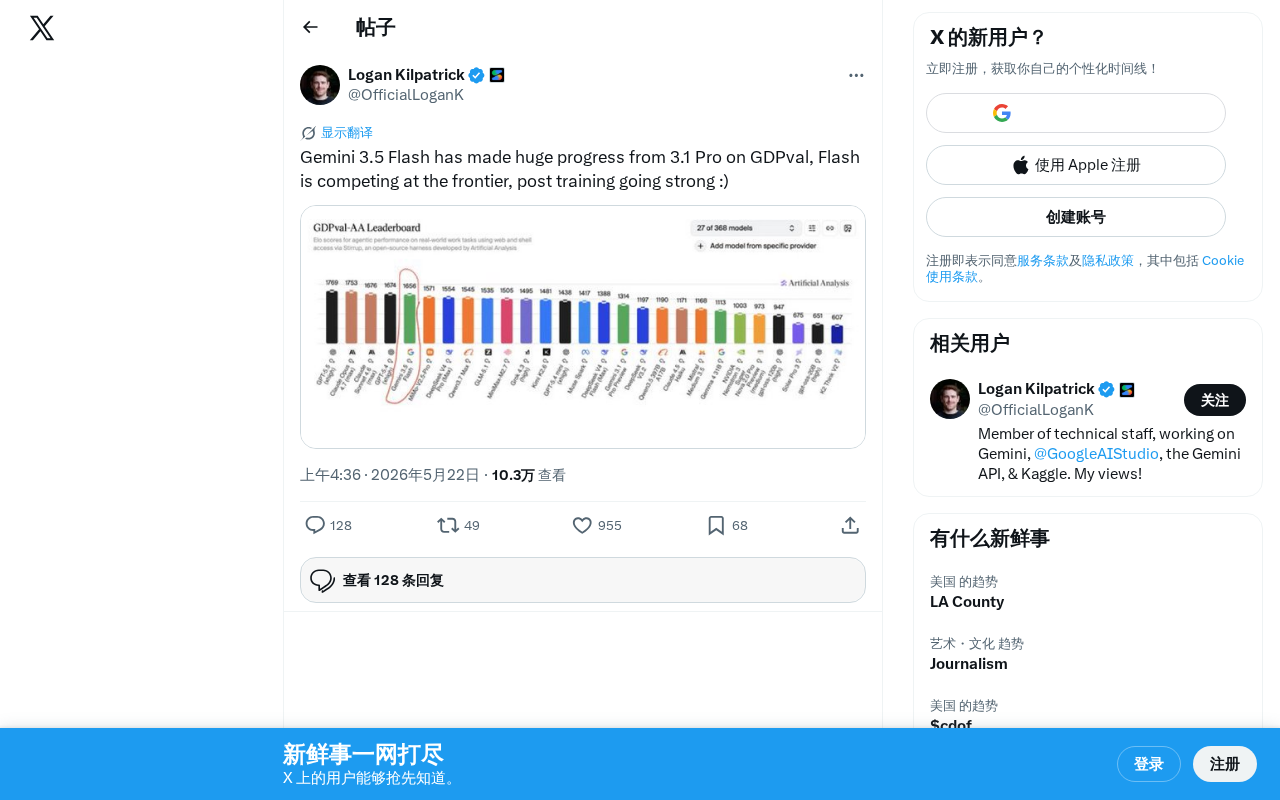
Gemini 3.5 Flash Achieves a Massive Leap on the GDPval Benchmark
Google Gemini 3.5 Flash surpasses Gemini 3.1 Pro on the GDPval benchmark. The lightweight Flash model leverages post-training techniques to approach frontier-level performance, redefining the balance between quality and cost.
 Tech Frontiers
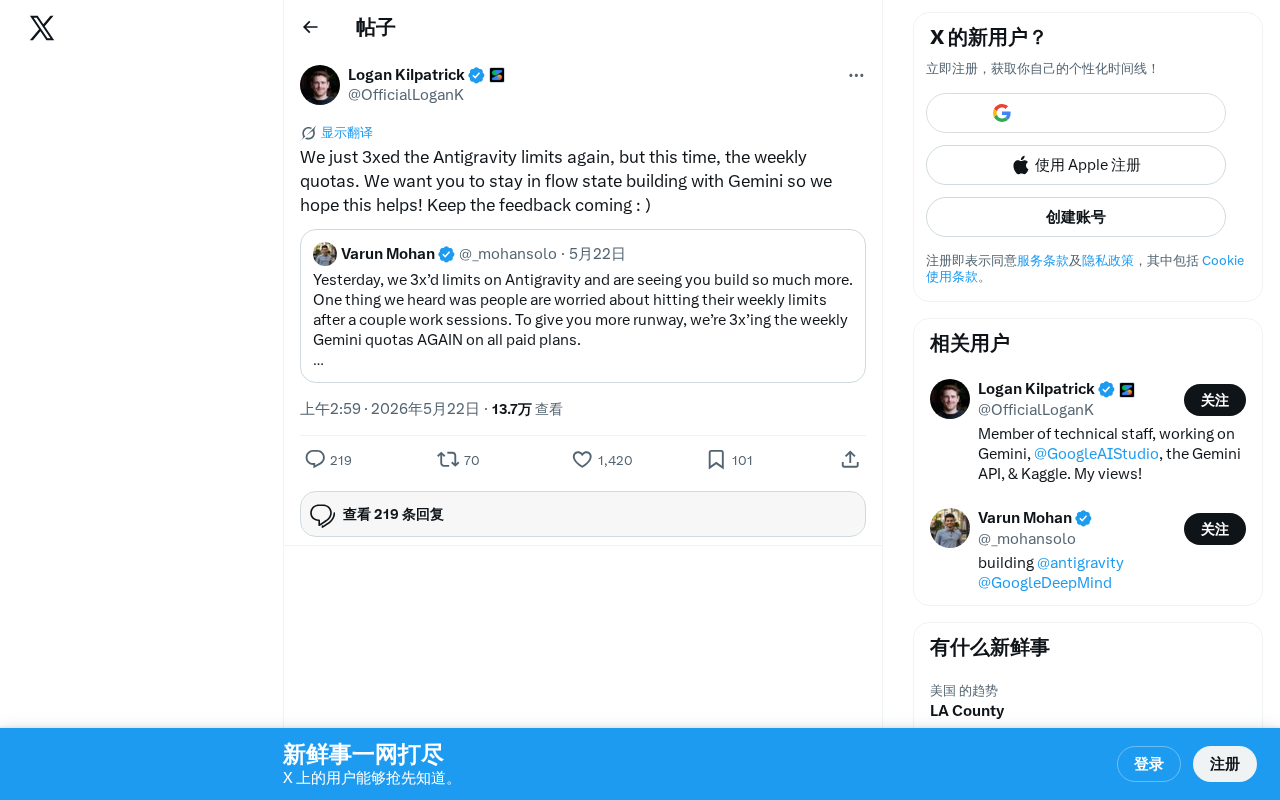
Google Gemini Antigravity Weekly Quota Tripled — AI Coding Without Limits
Google Gemini triples Antigravity weekly quotas following a prior daily quota boost. Analyzing the impact on developers and its strategic significance in AI coding.