GPT 5.5 Instant Deep Dive: How It Tackles AI Hallucinations for Trustworthy Real-World Deployment

GPT 5.5 Instant marks AI's critical shift from "usable" to "trustworthy" by dramatically reducing hallucinations.
OpenAI has made GPT 5.5 Instant the new default model for ChatGPT, with its core breakthrough being a dramatic reduction in hallucination rates while maintaining low-latency responses. The model is positioned to relentlessly pursue certainty, targeting high-stakes fields like law, healthcare, and finance. Through a defensive-offensive strategy, OpenAI is redefining industry competition around reliability rather than parameter scale, marking AI's official transition from "usable" to "trustworthy."
The Real Turning Point in the AI Race
If you still think the AI race is about who generates smoother text or prettier images, you may have already missed the core shift in this revolution. OpenAI recently made GPT 5.5 Instant the new default model for ChatGPT, and this is far more than a routine version update — it takes direct aim at the most critical weakness of large language models over the years: the hallucination problem.
So-called "hallucinations" refer to instances where large language models generate content that contradicts facts, fabricates information, or contains logical inconsistencies — all delivered with a tone of high confidence. The root cause lies in how LLMs work: they are fundamentally probabilistic prediction systems that generate text by predicting the next most likely token, rather than retrieving facts from structured knowledge bases. When training data contains noise, when the model has insufficient coverage of rare knowledge, or when reasoning chains become too long, the probability of hallucinations increases significantly. The industry has previously relied on techniques such as Retrieval-Augmented Generation (RAG), Reinforcement Learning from Human Feedback (RLHF), and factual consistency verification layers to mitigate this issue, but complete elimination remains an open challenge.
In fields like healthcare, law, and finance — where the margin for error approaches zero — AI is evolving from "making small talk" to "making decisions." The significance of this leap far exceeds that of simply scaling up parameter counts.
GPT 5.5 Instant's Core Breakthrough: Achieving Both Low Latency and High Accuracy
Dramatic Improvement in Hallucination Rates
According to information disclosed by TechChange, The Word, and other media outlets, GPT 5.5 Instant's biggest breakthrough lies in its significant improvement in factual accuracy. Compared to its predecessors, it has dramatically reduced the probability of "confidently spouting nonsense" when handling complex logical reasoning in sensitive domains.
What does this mean? It means that when generating code, drafting legal documents, or providing medical advice, users no longer need to spend enormous amounts of time verifying every single data point. This change may seem minor, but it fundamentally transforms the trust foundation of human-AI collaboration.
It's worth noting that the current mainstream engineering approach to mitigating hallucinations — Retrieval-Augmented Generation (RAG) — anchors facts by retrieving relevant documents from external knowledge bases before generation, but it has its own limitations, including inconsistent retrieval quality and limited context windows. GPT 5.5 Instant's breakthrough may indicate that OpenAI has made advances in internal knowledge representation and fact verification mechanisms that go beyond pure RAG solutions, achieving stronger factual anchoring at the model architecture level.
Speed and Precision Are No Longer at Odds
In the past, reducing hallucinations typically came with a significant drop in inference speed — models needed more computational steps to verify the reliability of their own outputs. But OpenAI has explicitly stated that GPT 5.5 Instant achieves a sharp reduction in hallucinated content while maintaining extremely low response latency.
To understand the technical difficulty of this breakthrough: traditionally, methods for improving output reliability include Chain-of-Thought reasoning, Self-Consistency checks, and multi-sample voting, all of which require additional computational steps that directly increase response time. For example, OpenAI's previously released o1 series of reasoning models improved accuracy through an internal "thinking" process, but at the cost of significantly longer wait times — sometimes requiring tens of seconds to complete a single response. GPT 5.5 Instant's ability to reduce hallucinations without sacrificing speed likely involves deep optimizations at the model architecture level, such as more efficient attention mechanisms, knowledge distillation during inference, or stronger factual anchoring capabilities embedded during the pre-training phase.
This "fast and accurate" combination represents an important technical milestone. It signals that general-purpose large models have officially earned their entry ticket into specialized vertical domains — transforming from "a chatbot that occasionally makes mistakes" into "a trustworthy digital copilot."
The AI Competitive Landscape: From Parameter Wars to Real-World Deployment
Differentiated Positioning: Relentless Pursuit of Certainty
The competitive landscape of the AI industry is undergoing a fundamental shift — from competing on parameter scale to competing on real-world deployment capabilities. Compared to models that emphasize creative generation, GPT 5.5 Instant's differentiated positioning is crystal clear: it doesn't chase unbounded imagination; it relentlessly pursues certainty.
Analyzing its strengths and weaknesses:
- Core strength: Strict adherence to facts gives it exceptional cost-effectiveness and reliability in enterprise applications
- Potential weakness: Whether an overemphasis on accuracy sacrifices some creative divergence capability remains to be seen
OpenAI's Defensive-Offensive Strategy
Facing aggressive ecosystem plays from competitors like Google's Gemini, Microsoft's Copilot, and Elon Musk's xAI Grok, OpenAI has chosen to build its moat by reducing hallucinations. This is a classic "defensive offense" strategy — if competitors want a piece of the pie in professional domains, they must first solve the same trust crisis, or they'll struggle to challenge the new benchmark OpenAI has set.
From a business competition theory perspective, a "defensive offense" means proactively setting industry standards to raise the barrier to entry for competitors. By establishing "low hallucination rate" as the core selling point of its default model, OpenAI is essentially redefining the market's evaluation criteria. When enterprise customers begin using hallucination rate as a key metric for procuring AI services, competitors that haven't achieved breakthroughs on this dimension — regardless of their advantages in creative generation, multimodal capabilities, or pricing — will face a trust deficit. This is similar to how AWS built competitive barriers in the early cloud computing market through high-availability SLA (Service Level Agreement) commitments.
In other words, OpenAI is using "trustworthiness" to redefine the competitive dimension of the industry, rather than continuing to burn resources in the parameter arms race.
Real-World Use Cases: Who Benefits First?
The improvement in hallucination rates directly opens the door to multiple high-value application scenarios:
An Efficiency Revolution in Legal Services
GPT 5.5 Instant can instantly parse complex contract clauses and precisely identify potential legal risks without requiring manual word-by-word verification. For law firms and corporate legal departments, this means an order-of-magnitude improvement in review efficiency. Previously, the biggest pain point for legal AI tools was precisely the hallucination problem — models might cite non-existent case law or fabricate legal provisions, which is a fatal and unacceptable flaw in legal practice.
A Leap in Medical Assistance Accuracy
As a physician's assistant, it can generate diagnostic support reports based on the latest medical literature while dramatically reducing the risk of citing incorrect references. In healthcare — a field where "close enough" can mean the difference between life and death — improved accuracy has direct life-saving value. Notably, medical AI falls under the "high-risk" category in regulatory frameworks across countries, subject to the strictest compliance requirements for output accuracy.
Decision Support for Financial Analysis
For financial analysts, it can rapidly integrate multiple data sources to generate trend forecasts with data bias controlled within an extremely narrow range. This elevates AI from a "reference tool" to a "decision support system." In finance, a single incorrect data citation can lead to investment decision deviations worth millions of dollars, so reducing hallucination rates translates directly into quantifiable economic value.
Interestingly, the target user base has rapidly expanded from tech enthusiasts and developers to all professionals who handle high-information-density work. This broadening of the user base is itself the best proof of AI technology's growing maturity.
Industry Direction: From Wild Growth to Steady Deployment
Proactively Embracing AI Compliance Trends
OpenAI's proactive reduction of hallucination rates is effectively aligning with the increasingly stringent global AI compliance trend. Whether it's the EU's AI Act or the AI safety standards being advanced by various countries, all impose explicit requirements on the reliability of model outputs.
Specifically, the EU AI Act officially took effect in 2024 as the world's first comprehensive legal framework regulating AI. The act classifies AI systems by risk level: unacceptable-risk applications are outright banned, while high-risk applications (such as medical diagnosis, judicial assistance, and financial credit assessment) must meet strict transparency, accuracy, and human oversight requirements. In the United States, the White House's AI Executive Order requires frontier models to undergo safety evaluations before release; China has also issued regulations on generative AI management, requiring truthfulness and accuracy in content generation. The common thread across these regulations is clear: the reliability of AI outputs is no longer optional — it's a hard compliance threshold.
Reportedly, related safety testing programs already cover models from Google, Microsoft, and xAI, among others, to ensure safety compliance before deployment. This indicates that the industry's compass has shifted from "wild growth" to "steady deployment."
The Core Logic of Future AI Competition
Future AI competition will revolve around one central question: Who can serve the real economy more safely and reliably? Models that cannot effectively solve the hallucination problem will gradually be marginalized in serious business scenarios. This isn't alarmism — it's the inevitable result of market selection. Enterprise customers are willing to pay a premium for "trustworthy," but they will never pay for "interesting but unreliable."
From a value chain perspective, this trend will also spawn a new ecosystem around AI reliability: including third-party hallucination rate evaluation agencies, AI output auditing tools, and industry-specific fact verification middleware. The maturation of this supporting infrastructure will further accelerate AI's transformation from an experimental tool to production-grade infrastructure.
Conclusion: The Critical Leap from "Usable" to "Trustworthy"
The arrival of GPT 5.5 Instant marks AI's official crossing of the critical threshold from "usable" to "trustworthy." This is not just a victory on the technical front — it represents a rebuilding of trust mechanisms across the entire industry.
From a broader perspective, this update sends a clear signal: The next decade of AI doesn't belong to the smartest models — it belongs to the most reliable ones. Only when the hallucination problem is progressively solved can AI truly move from the laboratory into operating rooms, courtrooms, and trading floors, becoming a reliable partner in human professional decision-making.
Of course, we should also maintain a rational perspective — there is still a gap between "dramatic improvement" and "complete elimination" of hallucinations, and real-world performance still needs validation through more independent testing. But without question, the direction of this step is correct, and it's exactly what the entire industry needs most.
Key Takeaways
- GPT 5.5 Instant becomes ChatGPT's new default model, with its core breakthrough being a dramatic reduction in hallucination rates while maintaining low-latency responses
- The model's positioning shifts from creative generation to a "relentless pursuit of certainty," targeting professional fields with near-zero error tolerance such as law, healthcare, and finance
- OpenAI builds its moat by reducing hallucinations, employing a "defensive offense" strategy to redefine the competitive dimension of the industry
- The AI industry's direction shifts from wild growth to steady deployment, with compliance and reliability becoming the core of future competition
- The target user base expands from tech enthusiasts and developers to all professionals handling high-information-density work, marking AI's transition from "usable" to "trustworthy"
Related articles
 Tech Frontiers
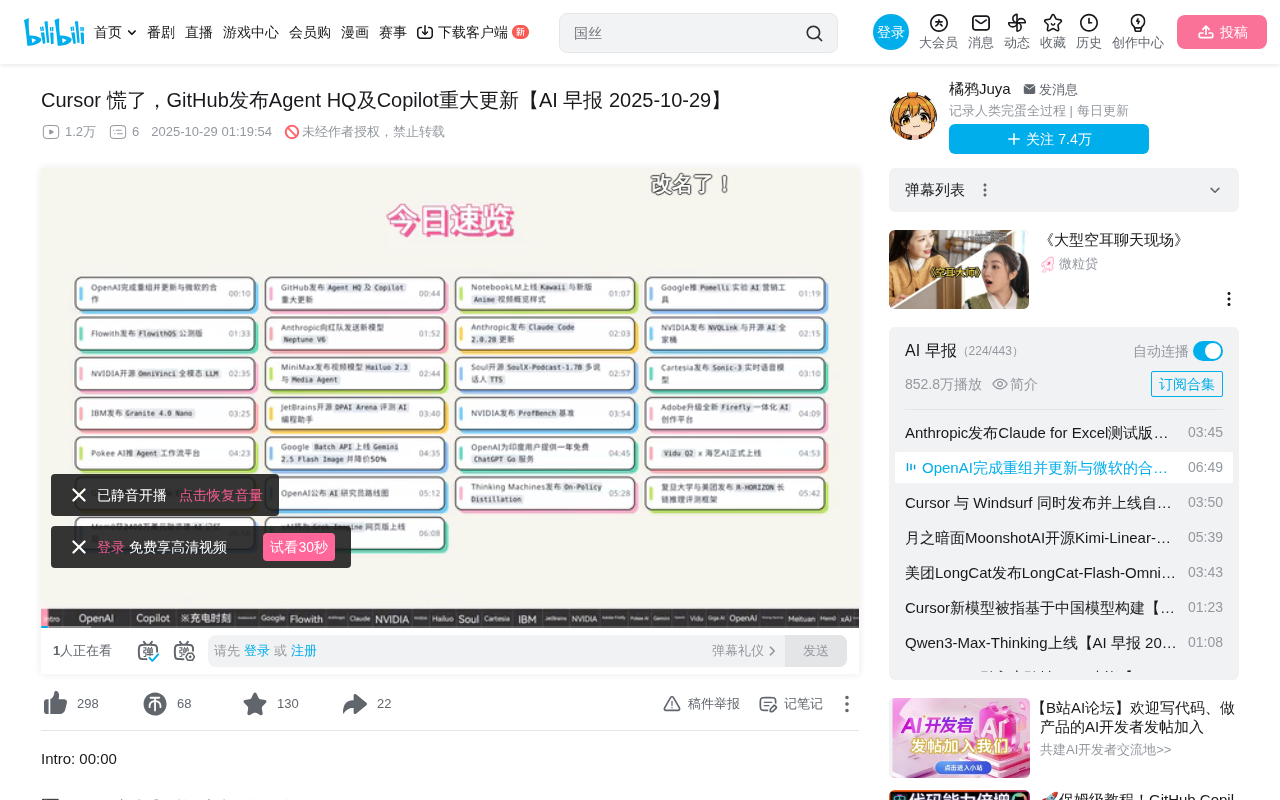
GitHub Agent HQ Launch: AI Coding Tools Enter the Era of Platform Competition
GitHub Universe unveils Agent HQ platform for unified coding agent management, Copilot upgrades with multi-model support. OpenAI completes restructuring, Anthropic tests new model, NVIDIA open-sources AI models.
 Tech Frontiers
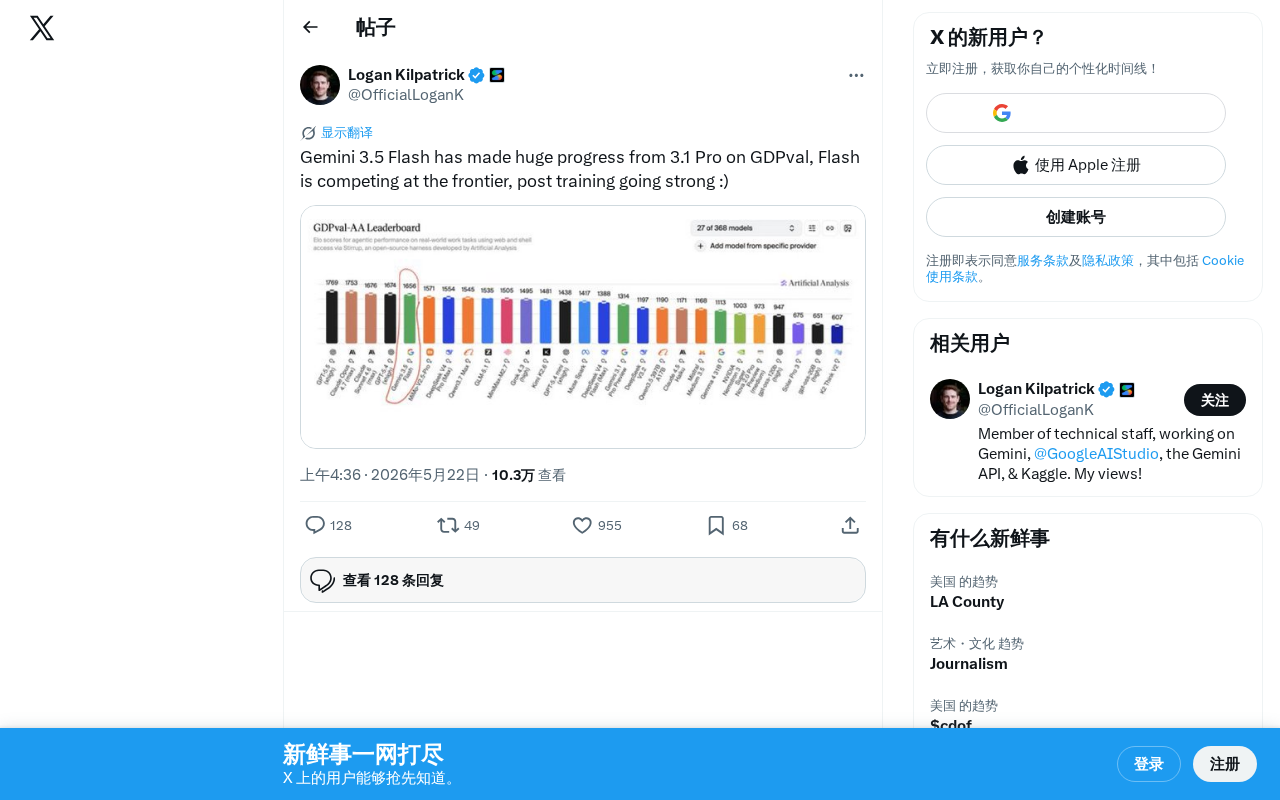
Gemini 3.5 Flash Achieves a Massive Leap on the GDPval Benchmark
Google Gemini 3.5 Flash surpasses Gemini 3.1 Pro on the GDPval benchmark. The lightweight Flash model leverages post-training techniques to approach frontier-level performance, redefining the balance between quality and cost.
 Tech Frontiers
Google Gemini Antigravity Weekly Quota Tripled — AI Coding Without Limits
Google Gemini triples Antigravity weekly quotas following a prior daily quota boost. Analyzing the impact on developers and its strategic significance in AI coding.