June AI Showdown: Mythos, Sonnet 4.8, and GPT-5.6 All Revealed
June AI Showdown: Mythos, Sonnet 4.8, …
June 2025 AI race intensifies as major players simultaneously unveil flagship models and ignite price wars.
June 2025 is shaping up to be one of the densest release months in AI history. Anthropic's flagship Mythos 1 Preview has appeared in backend systems approaching public deployment, while Claude Sonnet/Opus 4.8 model slugs were discovered on Google Vertex AI with major visual and coding improvements. OpenAI follows closely with GPT-5.6, enhancing multi-step reasoning and agentic workflows. DeepSeek V4 Pro announces a permanent 75% discount, launching a price war at less than one-tenth of competitors' pricing and reshaping the industry's competitive landscape.
The 2025 AI race is heating up at an unprecedented pace. Over just one weekend, blockbuster news surfaced one after another—Anthropic's flagship model Mythos, the Claude Sonnet/Opus 4.8 series, OpenAI's GPT-5.6, and DeepSeek V4 Pro's permanent price cut. June is shaping up to be one of the most packed release months in AI history.
Anthropic Mythos 1 Preview: Flagship Model on the Horizon
Anthropic's heavily teased flagship model Mythos has appeared in backend systems under the name "Cloud Mythos 1 Preview." Users discovered the model briefly surfacing and then disappearing across multiple Anthropic applications including Cloud Code and Cloud Security, while backend code also revealed multiple Mythos-related reference strings including "Mentos."
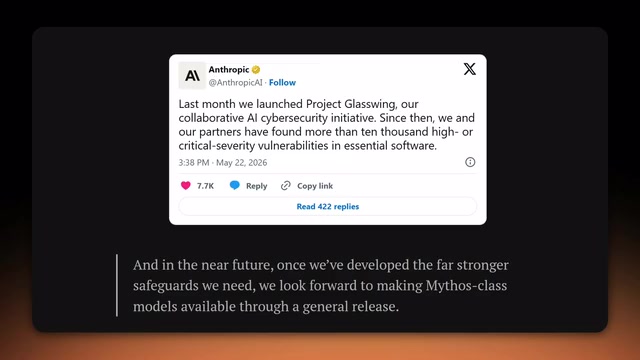
One notable detail: Anthropic previously hinted that certain internal Mythos variants might be restricted to specific products, test groups, enterprise security tools, or future agent infrastructure rather than being offered as a standard API. However, based on the latest developments, Anthropic's stance appears to be subtly shifting. The latest update from their Project Glasswing explicitly states: "Due to strong safety guardrails being put in place, Mythos-level models may soon be released to the public."
An even more critical signal is that Mythos has started appearing in Google Cloud and AWS Bug Bounty Programs. Bug bounty programs are mechanisms where tech companies invite external security researchers to test for system vulnerabilities in exchange for rewards. When an AI model is included in the scope of such programs, it means the model is being treated as part of "production-grade infrastructure"—only systems that are about to handle or are already handling real user traffic warrant large-scale external security audits. For Mythos, this signal means it's no longer just a research model confined to the lab, but is undergoing the final security checkpoint before public deployment. This indicates that broader infrastructure testing is already underway behind the scenes. While we can't definitively say Mythos will launch immediately, these signs are typical precursors of a model approaching the deployment stage. A conservative estimate suggests some distilled version of Mythos could be released within the next few months, no later than October.
Claude Sonnet 4.8 and Opus 4.8: Skip-Level Upgrades Draw Attention
Model slugs for Sonnet 4.8 and Opus 4.8 were recently discovered on Google Vertex AI—typically a clear signal that model releases are imminent. Model slugs are strings used by AI providers in APIs and cloud platform infrastructure to uniquely identify specific model versions (e.g., claude-sonnet-4-8-20250615). Cloud platforms need to register model metadata in advance to configure routing, rate limiting, and billing rules, so these kinds of "leaks" often appear weeks before official announcements and have become an important signal source for the AI community to track release cadences. The release window could be mid-to-late June, or even earlier. Reportedly, some Anthropic partners are already conducting internal evaluations.
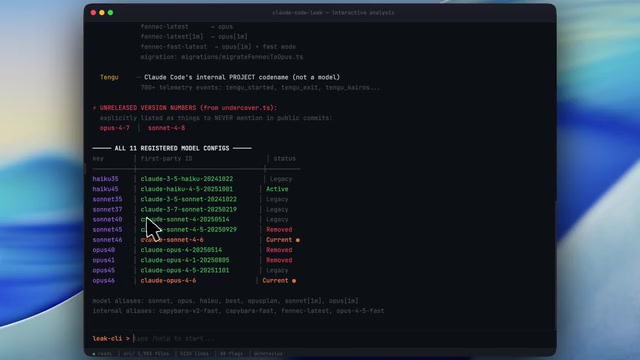
An interesting detail: as early as March 31, Anthropic accidentally leaked a 500,000-line internal debug source map file through Cloud Code's NPM API. In that leaked file, references to Sonnet 4.8 were already present, hidden within an unreleased keyword filtering system—strongly suggesting that Anthropic may have skipped Sonnet 4.7 entirely.
Based on currently circulating information, Sonnet 4.8 is expected to inherit several major upgrades introduced with Opus 4.7:
- Visual understanding: Recognition accuracy for UI prototypes, screenshots, and complex architecture diagrams expected to exceed 98%
- Coding performance: Significantly improved first-pass code generation quality with more precise instruction following
- Reasoning capability: New "X-High" reasoning tier providing stronger reasoning without substantially increasing generation time
However, there's a notable trade-off: the updated tokenizer may consume approximately 30% more tokens for the same prompts. The tokenizer is the core component that converts raw text into discrete units (tokens) that models can process. Different tokenizer versions split the same text at different granularities—newer tokenizers sometimes adopt finer-grained splitting strategies to support more languages or special characters, resulting in more tokens consumed for identical inputs. For enterprise users with monthly call volumes reaching billions of tokens, a 30% token increase means actual cost increases could far exceed changes in per-unit model pricing—a critical technical decision that needs separate evaluation in large-scale production deployments.
GPT-5.6: OpenAI's Rapid Iteration
GPT-5.5 was only released in late April, yet OpenAI is already hard at work preparing GPT-5.6. OpenAI researchers recently revealed that GPT-5.6 has been used internally for mathematical research breakthroughs and has become the daily workhorse model for debugging and technical workflows.
During the deployment testing phase, internal test labels such as "iris alpha," "ember alpha," and "beacon alpha" were discovered, suggesting multiple GPT-5.6 variants are being evaluated simultaneously. Based on leaked information, GPT-5.6 focuses on strengthening the following areas:
- Significantly enhanced multi-step reasoning
- Improved agentic workflow performance
- Substantially better frontend code generation quality
Agentic workflows refer to AI models no longer merely responding to single Q&A exchanges, but acting as autonomous "agents" that execute multi-step tasks—capable of calling external tools, browsing the web, executing code, managing files, and dynamically adjusting action plans based on intermediate results. These applications demand far more from models than traditional conversational scenarios: they require precise instruction-following ability (to avoid drifting from objectives during long task chains), robust error recovery mechanisms, and efficient utilization of context windows. Both GPT-5.6 and Sonnet 4.8 list agentic workflows as a key focus area, reflecting the industry's core trend of transitioning from "smarter chatbots" to "digital workers capable of independently completing complex tasks."
Current leaks point to two separate version releases: GPT-5.6 Standard and GPT-5.6 Pro. Based on early testing experiences, GPT-5.6's performance even surpasses Gemini 3.5 Pro, which is also expected to launch next month. This means June will simultaneously see Sonnet/Opus 4.8, Gemini 3.5 Pro, and GPT-5.6—an unprecedented AI model showdown.
DeepSeek V4 Pro Permanent Price Cut: A Nuclear Option in the Price War
DeepSeek has officially confirmed that the 75% discount previously offered for V4 Pro will become permanent pricing. Here's the specific price comparison:
| Model | Input Price (per million tokens) | Output Price (per million tokens) |
|---|---|---|
| DeepSeek V4 Pro | $0.43 | $0.87 |
| GPT-5.5 | $5.00 | $30.00 |
| Claude Opus 4.7 | $5.00 | $25.00 |
The numbers speak for themselves: DeepSeek V4 Pro's input price is less than one-tenth of GPT-5.5 and Opus 4.7, while its output price is less than one-thirtieth. Understanding these figures requires familiarity with the "input token + output token" dual-track pricing model commonly adopted by mainstream LLMs. Output tokens are typically 2-6x more expensive than input tokens because the generation process requires token-by-token autoregressive inference, with computational density far exceeding the parallel encoding stage of inputs. DeepSeek V4 Pro's input/output price ratio is approximately 1:2, far lower than GPT-5.5's 1:6, making its cost advantage particularly significant for output-intensive scenarios (such as code generation and long-form document writing). Behind this pricing capability lies DeepSeek's efficiency advantage achieved through Mixture of Experts (MoE) architecture and lower compute costs—MoE architecture activates only a subset of "expert" sub-networks per inference, dramatically reducing per-inference computation while maintaining the model's knowledge capacity.
On core workloads like coding and reasoning, DeepSeek V4 Pro still competes in the same tier as these top-tier models. The implications for the broader AI market are profound. For developers building large-scale agent systems and AI applications, token costs accumulate rapidly, and DeepSeek's pricing strategy directly transmits cost pressure to all frontier labs. While DeepSeek may not be the optimal choice for every scenario, as a daily tool for handling large volumes of repetitive technical tasks, its cost-effectiveness is already unmatched.
Industry Landscape: Accelerating Competition and Maintaining Perspective
Beyond model releases, Anthropic is also actively advancing the ecosystem of its Co-work collaboration platform, launching a referral program with weekly free trials and bundling integration tools like Excel, PowerPoint, Chrome, and Cloud Code into the product experience. This signals that Anthropic is positioning Co-work as a broader productivity ecosystem rather than merely an AI chat application.

As AI technology advances rapidly, public discourse around AI is also intensifying. Recently, there have even been protests targeting AI data centers. Discussions about energy consumption, regulation, and employment impact are certainly worth having, but viewing AI as an inherent threat ignores the positive impact this technology is already generating—accelerating scientific research, improving accessibility, and helping small creators and businesses compete with large corporations.
The June AI battlefield is fully set. Whether it's Anthropic's Mythos and 4.8 series, OpenAI's GPT-5.6, or DeepSeek's pricing offensive, every move is redefining the competitive landscape of this industry. For developers and users alike, this is undoubtedly an era full of opportunity—stronger models, lower costs, and richer choices are all arriving simultaneously.
Key Takeaways
- Anthropic's flagship model Mythos 1 Preview has appeared in backend systems, with Project Glasswing hinting at an imminent public release
- Claude Sonnet 4.8 and Opus 4.8 model slugs discovered on Google Vertex AI, expected to launch mid-to-late June with major improvements in visual understanding and coding
- GPT-5.6 is undergoing intensive internal testing with multiple variants being evaluated simultaneously, focusing on multi-step reasoning and agentic workflows
- DeepSeek V4 Pro announces permanent 75% discount, with input pricing at just $0.43/million tokens—far below GPT-5.5 and Opus 4.7
- June is set to become the densest AI model release month ever, with a three-way battle between Sonnet/Opus 4.8, GPT-5.6, and Gemini 3.5 Pro
Related articles
 Tech Frontiers
GitHub Agent HQ Launch: AI Coding Tools Enter the Era of Platform Competition
GitHub Universe unveils Agent HQ platform for unified coding agent management, Copilot upgrades with multi-model support. OpenAI completes restructuring, Anthropic tests new model, NVIDIA open-sources AI models.
 Tech Frontiers
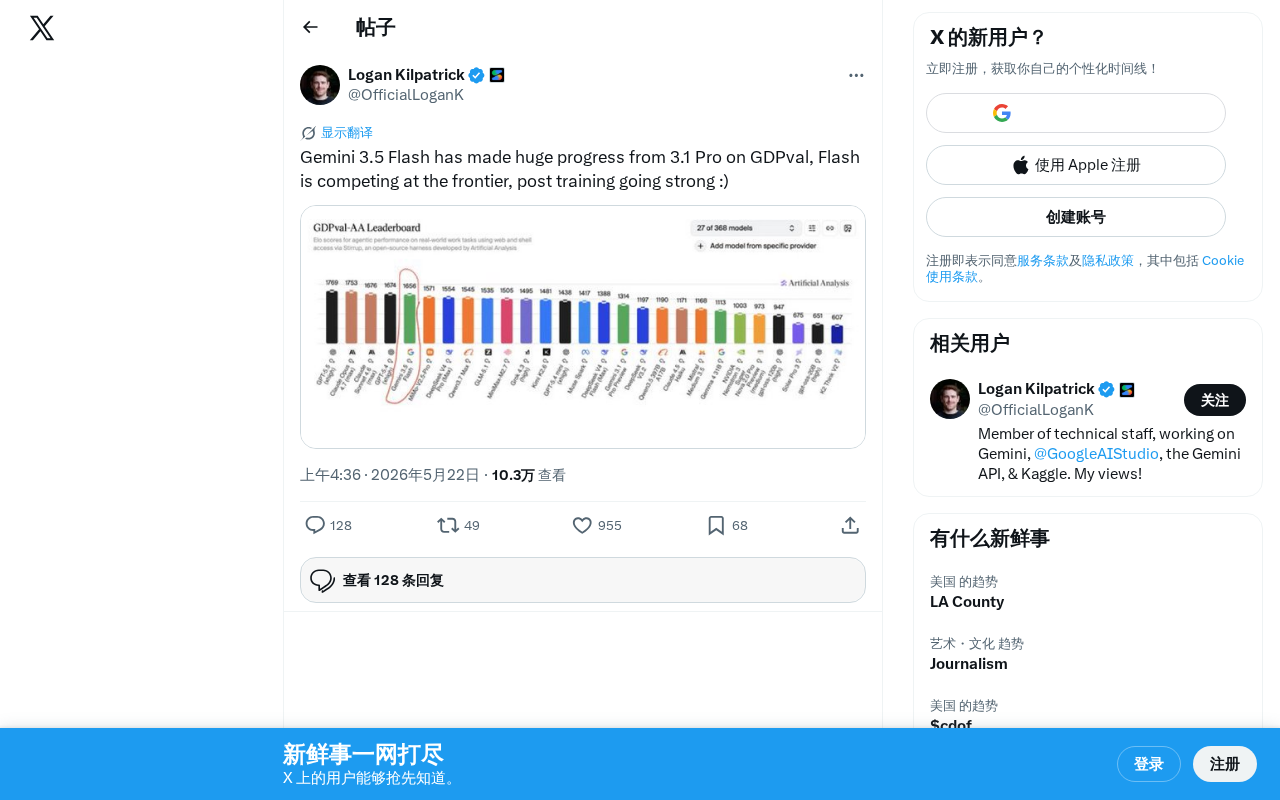
Gemini 3.5 Flash Achieves a Massive Leap on the GDPval Benchmark
Google Gemini 3.5 Flash surpasses Gemini 3.1 Pro on the GDPval benchmark. The lightweight Flash model leverages post-training techniques to approach frontier-level performance, redefining the balance between quality and cost.
 Tech Frontiers
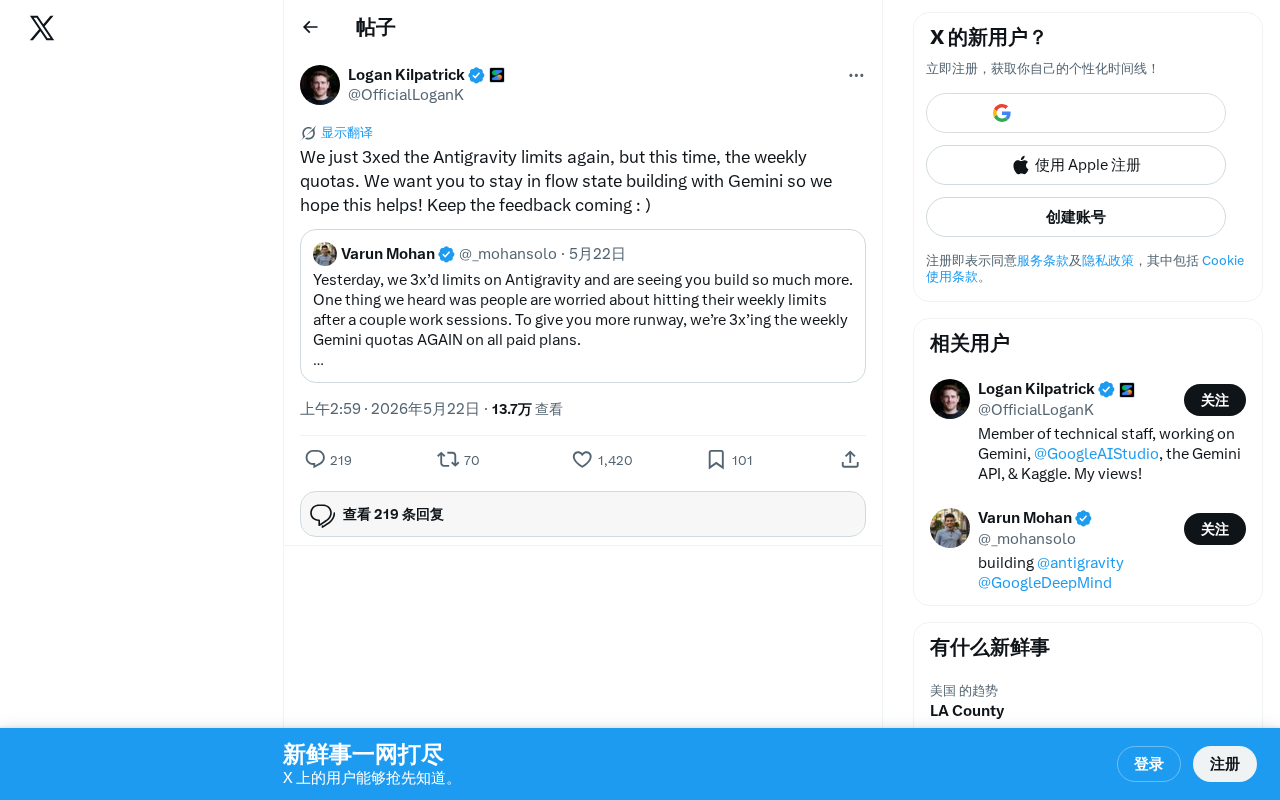
Google Gemini Antigravity Weekly Quota Tripled — AI Coding Without Limits
Google Gemini triples Antigravity weekly quotas following a prior daily quota boost. Analyzing the impact on developers and its strategic significance in AI coding.