Major Firebase Update: Comprehensive AI Integration and Agent Skills Upgrade
Major Firebase Update: Comprehensive A…
Firebase launches major AI-native full-stack development infrastructure updates covering integrations, security, and hybrid inference.
At Google I/O, Firebase announced multiple major updates: deep integration with AntiGravity and Android Studio Agent Mode for one-click development; Agent skills expansion to Android, iOS, and Flutter; AI Logic additions including Google Maps grounding to reduce hallucinations, Template-Only mode to prevent prompt injection, and App Check replay attack protection; plus on-device hybrid AI inference and Gemini 3.5 Flash support. Firebase is accelerating its transformation into AI-native full-stack development infrastructure.
Overview
At Google I/O, Firebase announced a series of major updates spanning platform integrations, AI Agent skill expansions, AI Logic security enhancements, and hybrid AI inference. These updates signal Firebase's accelerating transformation from a traditional backend service platform into an AI-native full-stack development infrastructure.
Two New Platform Integrations
Firebase × AntiGravity One-Click Integration
Firebase now deeply integrates with Google's AntiGravity platform. AntiGravity is Google's AI-powered application development platform that allows developers to rapidly build and iterate on app prototypes through natural language descriptions—similar to tools like Replit Agent or Bolt, but deeply integrated with the Google Cloud ecosystem.
The new guided flow supports one-click Firebase setup with automatic installation of all necessary components, enabling developers to build apps with Firebase directly within AntiGravity. This means with a single click, your favorite Agent platform learns how to leverage Firebase's powerful capabilities for app development. This integration allows AI Agents in AntiGravity to automatically understand Firebase's data models, authentication flows, and deployment configurations, compressing what previously took hours of backend setup into just seconds.

Firebase × Android Studio Agent Mode
Android developers can now use Agent Mode in Android Studio with Firebase Agent skill support. Android Studio's Agent Mode differs from traditional code completion (like GitHub Copilot's inline suggestions)—it's an autonomous agent capable of understanding project context and executing multi-step tasks. It can analyze project structure, read documentation, modify multiple files, and run tests.
The AI Agent can automatically perform the following operations:
- Set up Firestore and Firebase Authentication
- Generate code for Firestore
- Automatically write security rules
Firebase's Agent skills are essentially structured knowledge bases provided to these AI agents (similar to tool definitions in the MCP protocol), enabling the Agent to correctly invoke Firebase SDKs, configure security rule syntax, and handle Firestore data modeling best practices. This dramatically lowers the barrier for Android developers to integrate Firebase, making AI agents powerful assistants in the development workflow.
Agent Skills Expand to Mobile Platforms
Firebase's Agent skills now extend to mobile platforms, supporting Android, iOS, and Flutter. Developers can provide specialized contextual information to coding Agents, integrating and building Firebase apps with higher accuracy and lower token consumption.

Agent Skills are specialized context packages that Firebase provides to AI coding assistants, containing API documentation summaries, code templates, best practice guides, and common error handling patterns. The reduction in token consumption stems from these skill packages being carefully compressed and structured—compared to having an AI Agent independently search and parse complete documentation, pre-processed skill packages convey equivalent information with less context window usage. This is particularly important for models with limited context windows, as the cost of each API call is directly tied to token count.
The core value of this update: AI coding assistants are no longer limited to the web—they now cover mainstream mobile development scenarios, truly delivering a cross-platform AI-assisted development experience.
Enhanced Vibe Coding Experience in Google AI Studio
Firebase brings three important improvements to Google AI Studio:
One-click deployment to Cloud Run: Deploy your first two Firebase apps to Google Cloud's entry-level Cloud Run without adding a payment method. Cloud Run is Google Cloud's serverless container runtime platform that automatically scales (including scaling down to zero instances), and developers only pay for the time actually spent processing requests. The entry tier provides free allowances (approximately 2 million requests and 360,000 GB-seconds of compute time per month), making prototype validation virtually cost-free. Previously, deploying to Cloud Run required configuring Docker containers, setting up CI/CD pipelines, and linking a billing account—all of which are now fully automated.
Natural language connection to Google Workspace data: Through the Google sign-in flow powered by Firebase Authentication, developers can connect their apps to Google Workspace data using natural language, building customized applications for specific needs.
One-click export to AntiGravity: Firebase apps built in Google AI Studio can now be exported to AntiGravity with one click for continued development. Application source code and related Firebase configurations are exported in full.
Major AI Logic Updates
Google Maps Geospatial Data Grounding
Firebase AI Logic adds Google Maps grounding support, allowing developers to connect Gemini models to Google Maps' geospatial data for building location-aware features.
Grounding is a critical technique in the large language model space—it anchors model outputs to verifiable external data sources rather than relying solely on parametric knowledge learned during training. With Grounding with Google Maps, when Gemini models answer geography-related questions, they first retrieve real data from the Maps database, then generate responses based on the retrieved results. This is essentially a specialized implementation of RAG (Retrieval-Augmented Generation) architecture in the geospatial domain.

The core advantages of this feature include:
- Reduced model hallucinations: Based on Google's database of over 250 million real places and businesses, model responses are verifiable
- Real-time data responses: Can answer real-time questions like current business hours, rather than relying on potentially outdated information from training data
- Enhanced user trust: Integrates interactive map components, photos, and Street View visual context, allowing users to visually verify AI responses
Template-Only Mode for Enhanced Security
The new Template-Only mode forces Firebase AI Logic to only execute prompts securely stored on the server side, ignoring arbitrary prompts from the client.
Prompt injection attacks are among the most serious security threats facing AI applications. Attackers embed malicious instructions in user input, attempting to override system prompts and make models perform unauthorized operations (such as leaking system prompts, bypassing content filters, or executing arbitrary API calls). Template-Only mode adopts a design philosophy similar to SQL parameterized queries—just as parameterized queries prevent SQL injection by separating data from code, Template-Only mode strictly separates prompt templates (code logic) from user input (data). Clients can only fill data into predefined variable slots and cannot modify the structure or instruction portions of prompts.
This provides three layers of security:
- Intellectual property protection: Prompts are removed from the device and securely stored on the backend, preventing reverse engineering
- Prompt injection prevention: Clients can only fill specific variables and cannot inject arbitrary instructions
- Updates without app releases: Prompts, system instructions, and model configurations can be updated directly in the console, enabling hot updates
App Check Replay Attack Protection
Firebase introduces App Check replay attack protection with a one-time token mechanism, preventing malicious actors from reusing valid App Check tokens to call the Gemini API multiple times and exhaust quotas.
App Check is Firebase's app verification service that uses device-level attestation (such as Android's Play Integrity API or iOS's App Attest) to verify that requests genuinely come from legitimately installed app instances. A replay attack occurs when an attacker intercepts a valid authentication token and repeatedly uses it to send requests. In AI API scenarios, this is particularly dangerous because each Gemini API call consumes compute resources and quota. The nonce-based token mechanism ensures each token can only be used once and becomes invalid immediately after use, similar to one-time verification codes in banking transactions.
Hybrid AI Inference and Model Updates
Firebase AI Logic now supports specifying on-device models for inference in Android apps, including preview models like Gemini 904 based on Gemma 4.
Hybrid AI Inference refers to applications dynamically choosing to execute model inference on-device or in the cloud based on task complexity, network conditions, and latency requirements. Gemma is Google's open-source lightweight model series optimized for edge devices, with Gemma 4 being the latest version that supports efficient execution on mobile device NPUs (Neural Processing Units) or GPUs. On-device inference advantages include: zero network latency, offline availability, and data never leaving the device (privacy protection), though it's limited by device compute power and typically can only run smaller parameter models. Through Firebase AI Logic's unified API, developers can seamlessly switch between cloud-based large models and on-device small models using the same code interface.
Additionally, developers can now control output image aspect ratios and resolution through image config settings.

Firebase AI Logic now supports the latest Gemini model series, including Gemini 3.5 Flash. The official recommendation is to use Remote Config for managing model names. Firebase Remote Config is a cloud configuration service that allows developers to dynamically modify app behavior without publishing app updates. In today's era of rapid AI model iteration (Google releases new model versions every few weeks on average), hardcoding model names in client code means every model upgrade requires a full app review and release cycle. With Remote Config, teams can switch all users from an older model to the latest version with one click in the Firebase console, and can leverage A/B testing capabilities to compare user experience metrics across different model versions.
Important Migration Notice: If you're currently using Imagine Models for image generation, you need to migrate to Nana Banana models before June 24, 2026, as Imagine Models will be deprecated.
Other Notable Updates
Full Stack App Essentials Template: A new Firebase full-stack app template is available in the Google Application Template Catalog, including Firestore (with security rules), Firebase Authentication, and Firebase AI Logic—a fully configured Firebase stack in just a few clicks.
Crashlytics for Web Coming Soon: Web Crashlytics support is being built on Google Cloud Observability Suite, with support for end-to-end advanced debugging between client and server. Crashlytics is Firebase's popular crash reporting service that has long supported only mobile platforms (Android and iOS), with web error monitoring relying on third-party tools like Sentry and Bugsnag. The web version built on Google Cloud Observability Suite (formerly Stackdriver) will provide complete call chain tracing from browser-side JavaScript errors to Cloud Run/Cloud Functions server-side exceptions—critical for troubleshooting complex issues involving client-side rendering, API gateways, and backend services. Private preview signups are now open.
Summary
This Firebase update clearly reflects Google's strategic direction of deeply embedding AI capabilities into the developer toolchain. From cross-platform Agent skill coverage to AI Logic security enhancements to improved hybrid AI inference flexibility, Firebase is becoming indispensable infrastructure for developers in the AI era. For developers building AI applications, now is the ideal time to explore and adopt these new features.
Key Takeaways
- Firebase deeply integrates with AntiGravity and Android Studio, supporting one-click setup and AI Agent automated development
- Agent skills expand to Android, iOS, and Flutter mobile platforms, achieving higher accuracy and lower token consumption
- AI Logic adds Google Maps grounding, reducing model hallucinations with data from 250 million real locations
- Template-Only mode and App Check one-time token mechanism significantly enhance AI feature security
- Supports on-device model inference and latest models including Gemini 3.5 Flash; Crashlytics for Web coming soon
Related articles
 Tech Frontiers
GitHub Agent HQ Launch: AI Coding Tools Enter the Era of Platform Competition
GitHub Universe unveils Agent HQ platform for unified coding agent management, Copilot upgrades with multi-model support. OpenAI completes restructuring, Anthropic tests new model, NVIDIA open-sources AI models.
 Tech Frontiers
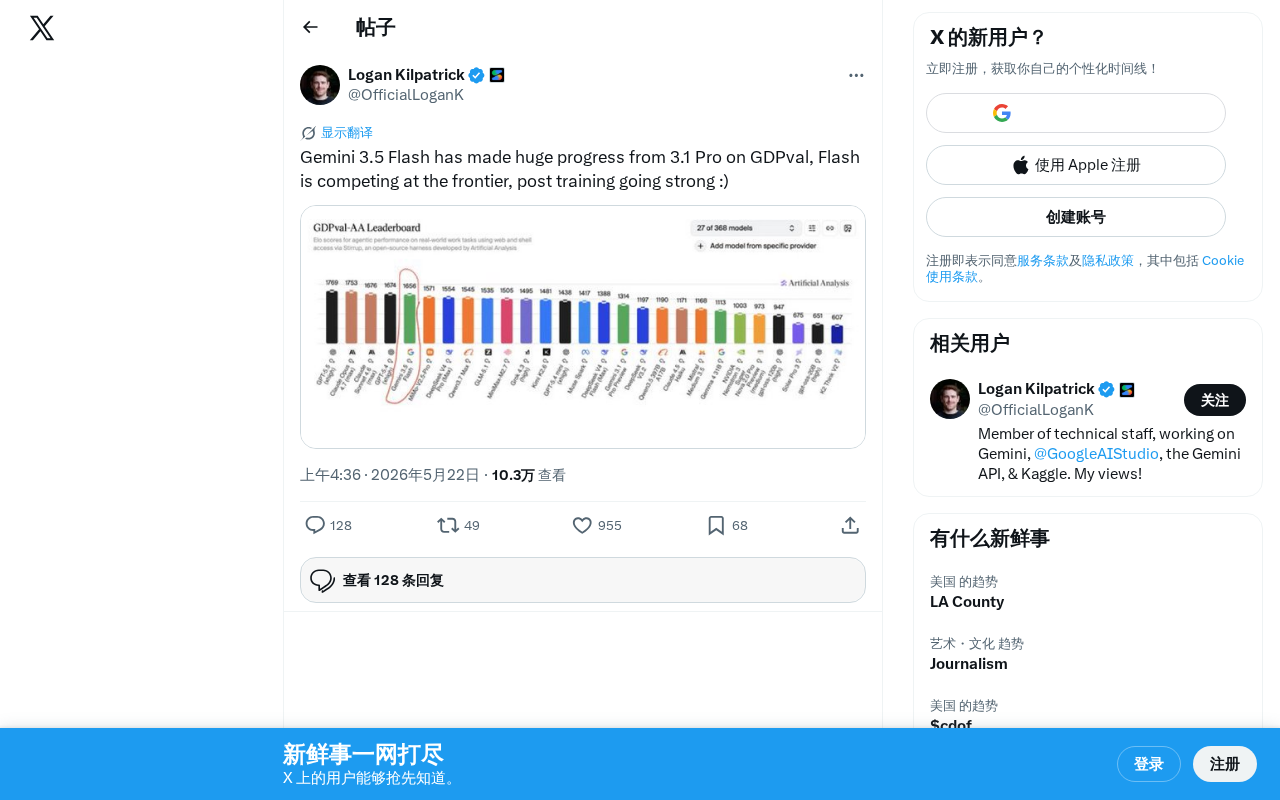
Gemini 3.5 Flash Achieves a Massive Leap on the GDPval Benchmark
Google Gemini 3.5 Flash surpasses Gemini 3.1 Pro on the GDPval benchmark. The lightweight Flash model leverages post-training techniques to approach frontier-level performance, redefining the balance between quality and cost.
 Tech Frontiers
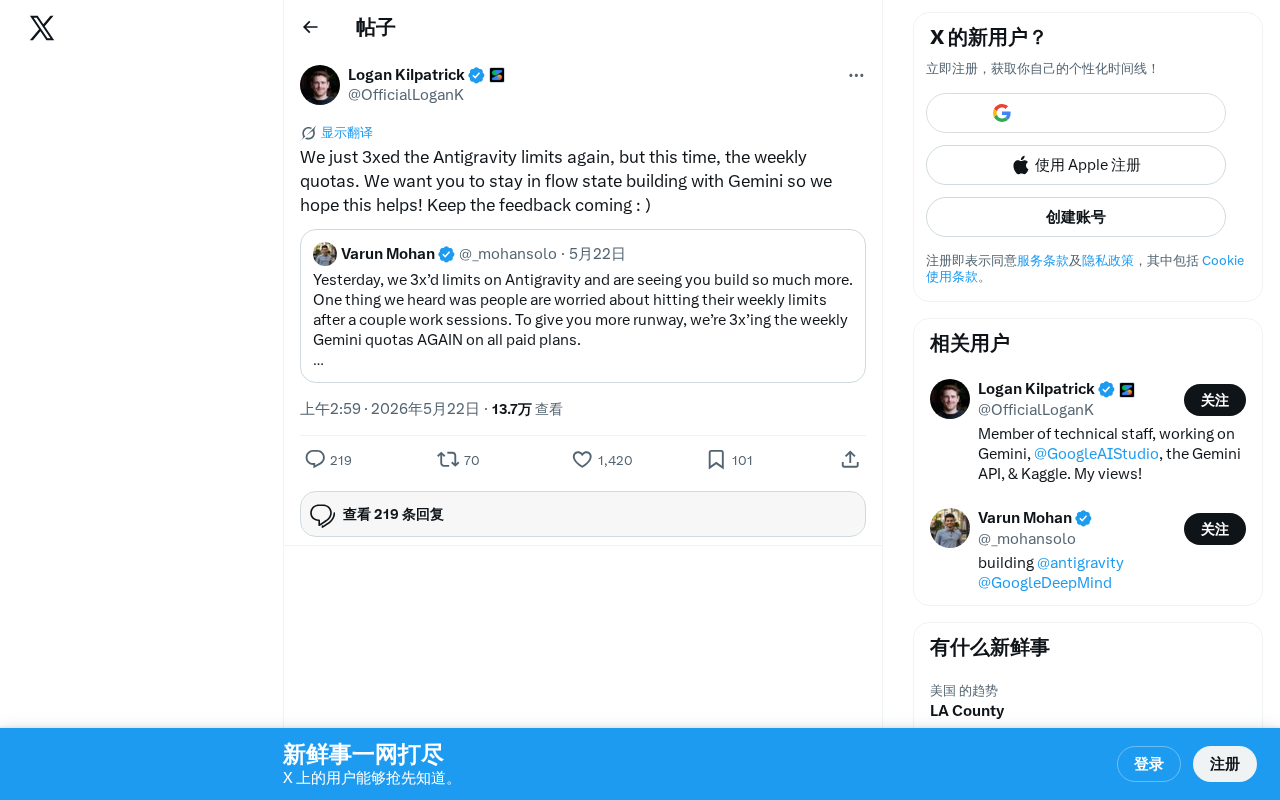
Google Gemini Antigravity Weekly Quota Tripled — AI Coding Without Limits
Google Gemini triples Antigravity weekly quotas following a prior daily quota boost. Analyzing the impact on developers and its strategic significance in AI coding.