OpenAI Codex Tutorials Mass-Copied on Bilibili, Highlighting AI Content Farm Problem

9 Bilibili accounts mass-copied the same Codex tutorial, exposing AI content farm tactics
At least 9 Bilibili accounts published videos with identical titles about OpenAI Codex tutorials within one week, displaying classic content farm characteristics: identical titles, concentrated publication timing, and randomly-generated account names. This behavior exploits trending AI tool search traffic through matrix keyword squatting to crowd out original content, reflecting broader content ecosystem problems amid the AI boom.
The Phenomenon: Same Video Published by 9 Accounts Simultaneously
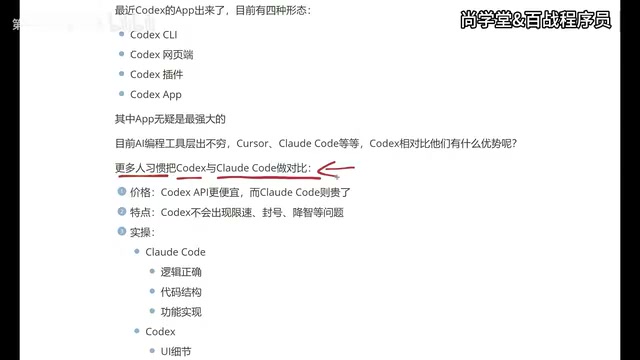
Recently, a striking phenomenon appeared on Bilibili (B站): a video titled "【2026 Latest】Codex Complete Beginner's Guide from Zero to One" was published by at least 9 different accounts almost simultaneously within a single week. These videos share identical titles, with publication dates concentrated between May 25 and June 2, 2025. The accounts involved include names like "楸木泪光," "欧泡欧泡小六," "好运麦兜," "仙女棒不是我," "草莓似草没味嘚," "kk程序员," "蔡蔡小趴菜," and "学习python物资."
This pattern of multiple accounts synchronously publishing identical content is a textbook content farm or marketing account matrix operation. A Content Farm is a business model that mass-produces low-cost content to capture platform traffic and ad revenue. In the Chinese internet ecosystem, marketing account matrices are their typical form: operators register accounts in bulk (typically dozens to hundreds), use automation tools to distribute the same content across multiple accounts, and create a presence-flooding effect in search results and recommendation feeds. The economic logic is straightforward—the production cost of a single piece of content is amortized across the traffic revenue of multiple accounts. Some matrices also simulate genuine engagement through mutual likes and comments to game platform recommendation algorithms.
What Is Codex? Why Did It Become a Content Farm Target?
OpenAI Codex is a cloud-based AI coding agent launched by OpenAI in 2025, integrated into the ChatGPT platform. It can handle multiple programming tasks in parallel, including writing code, fixing bugs, running tests, and creating Pull Requests. As one of the most talked-about AI programming tools, Codex naturally became a hot topic for tutorial content.
Notably, OpenAI Codex has gone through two distinct product phases. The original Codex, launched in 2021, was a code generation model fine-tuned on GPT-3 that served as the underlying engine for GitHub Copilot before its API was discontinued in March 2023. The 2025 relaunch is an entirely new cloud-based coding agent running in a sandboxed environment within ChatGPT, powered by the codex-1 model (a reinforcement learning-optimized variant of o3). The new Codex can autonomously clone repositories, read codebases, execute terminal commands, run test suites, and generate Pull Requests. Its key difference from local coding assistants like GitHub Copilot and Cursor is that Codex operates as an asynchronous autonomous agent—users assign a task and can walk away while the agent independently completes the entire workflow in the cloud. This revolutionary product paradigm made it one of the most watched developer tools of mid-2025.
However, this high-traffic potential also made it a target for content scrapers. When a topic is sufficiently trending, bulk-copying accounts quickly replicate quality content to capture algorithmic traffic.
Typical Characteristics of Mass Content Copying
Identical Titles
All 9 videos have character-for-character identical titles, including punctuation and spacing. Normal content creators discussing the same topic would naturally have their own titling style. Title-level identity is the most direct evidence of bulk copying.
Highly Concentrated Publication Timing
All videos were published within a window of less than 10 days, matching the operational rhythm of marketing account matrices—rapidly copying and distributing after the original content appears to capture search keywords and recommendation traffic. These operators exploit the platform's keyword-matching recommendation algorithm: when multiple accounts simultaneously publish content containing trending search terms (like "Codex," "tutorial," "2026 latest"), the matrix as a whole can dominate search results even if individual video performance is mediocre. This strategy is known as "Keyword Squatting" in SEO—using volume to squeeze competitors' visibility. The use of "2026 Latest" as a future-dated label is a common SEO trick aimed at preemptively capturing search traffic for upcoming time periods.
Suspicious Account Characteristics
The account names like "楸木泪光," "欧泡欧泡小六," and "草莓似草没味嘚" exhibit obvious randomly-generated characteristics with no personal brand identity. Some accounts even have unrelated spam text filling their content sections, further confirming the likelihood of bot accounts.
Content Ecosystem Problems in AI Tool Tutorials
Gresham's Law in Action
When users search for "Codex tutorial," they face a flood of identically-titled, inconsistently-quality results. Creators who invest genuine time in original tutorials may find their content buried under copied material. This problem is especially severe in AI tool tutorials due to high search demand and time sensitivity.
Platform Governance Challenges
Although video platforms like Bilibili have anti-copying mechanisms, identifying bulk publications with slightly modified titles or thumbnails remains difficult. Mainstream platforms typically employ three layers of defense: content fingerprinting (video frame hashing, audio fingerprint matching), behavioral pattern analysis (detecting anomalies in registration timing, posting frequency, and interaction patterns), and user report review. However, copiers continuously evolve countermeasures: mirroring videos, adding borders, adjusting playback speed, or replacing background music can bypass fingerprint detection; using proxy IPs and phone number pools for registration can evade behavioral analysis. Bilibili upgraded its "Creator Protection Plan" in 2024 with an AI-assisted originality assessment system, but determining originality for tutorial content—which inherently features extensive software interface footage—remains a technical challenge. Particularly when the copied content is of reasonable quality, platforms must balance user experience against content diversity.
Practical Advice for Users
If you genuinely need to learn how to use Codex, consider:
- Check official documentation first: OpenAI provides detailed Codex usage guides, including best practices for task prompts, repository configuration (such as writing AGENTS.md files), and permission settings
- Identify original creators: Follow creators with consistent update histories and active community engagement
- Cross-verify information: Don't rely on a single video—compare multiple sources to confirm accuracy
- Watch out for clickbait: Be extra cautious of titles stacking buzzwords like "complete guide," "zero to one," or "master in one session"
Conclusion
This incident isn't about evaluating Codex as a technical tool—it reflects a microcosm of content ecosystem problems amid the AI boom. When AI programming tools become traffic magnets, bulk copying and content farms inevitably follow. As users, developing information literacy and learning to distinguish content quality is more important than ever.
Key Takeaways
- At least 9 different accounts on Bilibili published Codex tutorial videos with identical titles within one week—a textbook content farm operation
- OpenAI Codex, as a trending AI programming tool, has become a traffic target for content scrapers
- Mass copying exhibits typical characteristics: identical titles, concentrated timing, and randomly-generated account names
- Content farming creates a Gresham's Law effect where original quality content gets buried
- Users should prioritize official documentation and learn to distinguish original content from copies
Related articles
 Industry Insights
AI Product Development in Practice: Model Selection, Building Moats, and Paths to Commercialization
Practical strategies for AI product development: why not to train models from scratch, when to use APIs vs. fine-tuning, building product moats, and the full path from evaluation systems to commercialization.
 Industry Insights
No Product Fits Your Needs? Building It Yourself Is the Best Starting Point for Indie Developers
Can't find a product that fits? Building from personal pain points is the best entry for indie developers. Niche needs + AI tools = rapid product creation.
 Industry Insights
Apple's AI Meltdown: The Siri Power Struggle and the Full Story Behind Apple Intelligence's Failure
Deep dive into why Apple's AI strategy failed: faked WWDC demos, Siri's 14-year stagnation, internal AI team wars, the ChatGPT shock, and what comes next.