Qwen + VS Code in Practice: The Full Process of Using AI to Revamp a Webmaster Networking Platform
Qwen + VS Code in Practice: The Full P…
A blogger uses AI tools to revamp a six-year-old webmaster networking feature with low cost and high efficiency.
Blogger Lu Songsong used VS Code and Alibaba Cloud Qwen 3.6 to completely revamp a webmaster networking feature that had been live for six years but remained unused. By writing tens of thousands of words in prompts to precisely guide AI in generating interfaces and code, one person accomplished design and development work that previously required team collaboration. The case demonstrates that AI is best suited for revamping existing business logic, and that domestic large models have reached a high level of practical usability.
Project Background: Using AI to Revamp a Six-Year-Old Feature
In the webmaster community, connections and business opportunities have always been core resources. Blogger Lu Songsong shared an interesting practice: he used AI tools to completely revamp a "Business Opportunities & Networking" feature that had existed for six years but never gained traction, transforming it into a collaboration platform resembling a social networking page for webmasters.
The essence of this feature is to facilitate two-way collaboration between webmasters—helping those with resources find those with needs, and connecting those with technical skills to those with projects. While the functional logic isn't complex, the outdated interface and poor user experience had left it in the awkward state of "existing but unused." In software engineering, this phenomenon is called a "Zombie Feature"—a product module that's already live but has extremely low actual usage rates and sits on the edge of maintenance limbo. Common causes include outdated early tech stacks leading to poor UX, low priority in product iteration roadmaps, and design styles becoming obsolete as aesthetic trends evolve. From a Technical Debt perspective, such features often consume server resources and maintenance costs while generating minimal user value. The traditional revamp path requires coordination among product managers, designers, front-end developers, and back-end developers—long cycles and high costs that cause many such features to remain shelved indefinitely. This time, the blogger decided to leverage AI for a comprehensive overhaul, from interface to interaction.

Tech Stack: The VS Code + Qwen 3.6 Combo
For tooling, the blogger adopted a pragmatic technical approach:
- Code editor: VS Code (with AI programming plugins)
- AI model: Alibaba Cloud Qwen 3.6
- Division of labor: VS Code handles functional interface development, while Qwen 3.6 specializes in designing and generating the networking circle interface

Background on tool selection: VS Code (Visual Studio Code) is Microsoft's open-source code editor that has become one of the world's most popular development tools thanks to its rich plugin ecosystem. In the AI programming wave, VS Code has formed a complete AI-assisted development ecosystem: GitHub Copilot provides real-time code completion, Continue.dev supports connecting to any local or cloud-based LLM, and Cursor is an AI-native IDE deeply built on top of VS Code. The core value of these tools lies in seamlessly embedding LLM code generation capabilities into developers' existing workflows, achieving "human-AI collaboration" rather than "human-AI replacement"—developers retain control over code logic and architecture while AI accelerates repetitive, pattern-based coding work.
Regarding model selection, Alibaba Cloud's Qwen series is a large language model family developed by Alibaba's DAMO Academy. The Qwen 3 series, released in 2025, employs Mixture of Experts (MoE) architecture and Chain-of-Thought enhancement techniques, excelling in code generation, logical reasoning, and Chinese language understanding. Its flagship version matches or even surpasses international top-tier models like GPT-4o and Claude 3.5 Sonnet in multiple benchmark tests. For domestic developers, the Qwen series can be called directly through Alibaba Cloud APIs without additional network configuration, offering low latency, relatively affordable pricing, and more precise understanding of Chinese business scenarios.
This division of labor is well-considered. Functional code logic is completed using a traditional IDE with AI-assisted programming to ensure code quality and controllability, while the more display-oriented, interactive networking circle pages are handed to the large model for generation and optimization, fully leveraging AI's strengths in UI design and content organization.
Prompt Engineering: Tens of Thousands of Words of Refined Requirements
Interestingly, the blogger mentioned that his prompts "probably amounted to tens of thousands of words." This is no exaggeration—Prompt Engineering refers to the technical methodology of carefully designing input text to guide large language models toward producing expected outputs. As LLM applications deepen in practical engineering, prompt engineering has evolved from simple "Q&A style" interactions to a systematic discipline encompassing role assignment, context injection, chain-of-thought guidance, few-shot examples, and constraint declarations. In UI generation and code development scenarios, high-quality prompts need to precisely describe business logic, visual style, interaction behavior, data structures, and multiple other dimensions—the upper limit of model output quality largely depends on the completeness and precision of input information. To make AI accurately understand vertical domain business requirements and generate interfaces and features that meet expectations, meticulous prompt engineering is indispensable. This also demonstrates that building websites with AI is not a "one-sentence-and-done" affair—it requires extensive requirement decomposition, repeated debugging, and iterative optimization.
From "Having a Feature" to "Having Users": The Core Value of AI Revamping

The blogger admitted that this business networking feature had been live for five or six years but never truly served its purpose. This is actually a problem many webmasters and developers encounter: the feature is built, but the user experience can't keep up, resulting in zero adoption.
The core value of AI revamping manifests in three aspects:
- Dramatically reduced refactoring costs: The traditional approach of hiring designers for mockups, front-end developers for page implementation, and back-end developers for API modifications is time-consuming and labor-intensive. With AI, one person can complete the entire process from design to development.
- Rapid iteration and experimentation: Not satisfied with the AI-generated solution? Adjust the prompts and regenerate—the cost of experimentation is extremely low.
- Modernized user experience: The aesthetics and interaction standards from six years ago are outdated by today's standards. AI can help quickly align with current design trends.

Three Insights for Regular Developers
While this case is straightforward, several points deserve deeper consideration:
AI Is Best Suited for "Revamping" Rather Than "Creating from Scratch"
The blogger didn't build an entirely new product from scratch—he revamped an existing feature with established business logic and a user base. AI is most efficient in this scenario: requirements are clear, boundaries are well-defined, and there are reference points for comparison. For developers with legacy projects on hand, using AI to revamp old features offers an extremely high ROI entry point. From a prompt engineering perspective, "revamping" scenarios mean developers can provide richer contextual information (existing feature logic, user pain points, reference interfaces), which directly determines the precision of AI output. "Creating from scratch," lacking a frame of reference, makes it much harder to precisely guide AI through prompts.
Free Features Are Still Worth Investing In
The blogger emphasized this is a free feature but was still willing to invest effort in AI-powered redesign. For platform products, free features are often key to user retention and engagement. Using low-cost AI solutions to improve the experience of such features offers exceptional value for money.
The Practicality of Domestic Large Models Is Rapidly Improving
Choosing Qwen 3.6 over overseas models like GPT was partly due to accessibility considerations, but it also demonstrates that domestic large models have reached a quite impressive level of usability in real projects. The Qwen 3 series' continuous optimization in code generation and Chinese context understanding gives it targeted advantages over general international models when handling domestic business scenarios. For Chinese developers, this is a positive signal worth paying attention to.
Conclusion
Using AI to transform websites is nothing new, but the value of this case lies in its authenticity and pragmatism—it's not a flashy demo but an actual revamp of a real feature with six years of history. It tells us that the greatest value of AI tools isn't in replacing developers, but in enabling one person to efficiently accomplish what previously required an entire team. The combination of prompt engineering, AI-assisted programming tools, and domestic large models is redefining the productivity boundaries of individual developers. If you also have similar "zombie features" on hand, consider trying a low-cost revamp using domestic large models like Qwen paired with VS Code.
Related articles
 Tutorials
Cursor + Codex Dual-IDE Collaboration: A Practical Methodology for Open-Source Project Customization
A complete methodology for open-source project customization based on real-world experience, detailing the Cursor+Codex dual-IDE workflow, seven-stage process, MVP validation, and AI source code reading techniques.
 Tutorials
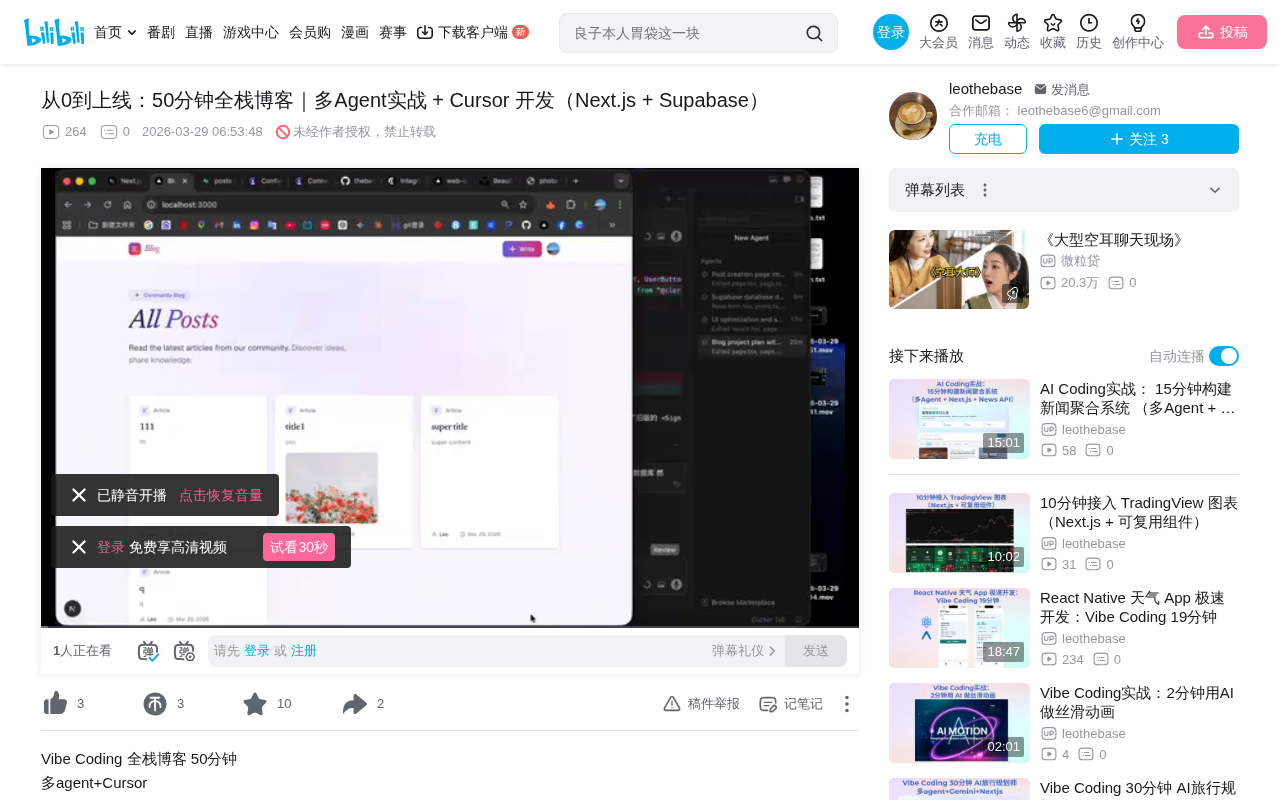
Cursor Multi-Agent in Practice: Building a Full-Stack Next.js Blog in 50 Minutes
Build a full-stack blog in 50 minutes using Cursor IDE's multi-Agent mode with Next.js, Clerk auth, and Supabase. Learn the 4-phase AI Agent workflow and key integration pitfalls.
 Tutorials
Building an AI Software Factory from Scratch: A Cursor Engineer's Hands-On Experience with Multi-Agent Collaboration
Cursor engineer Eric shares practical insights on building an AI software factory: automation levels, guardrail design, parallel Agent management, and scaling to 1000+ Agents for 24/7 development.